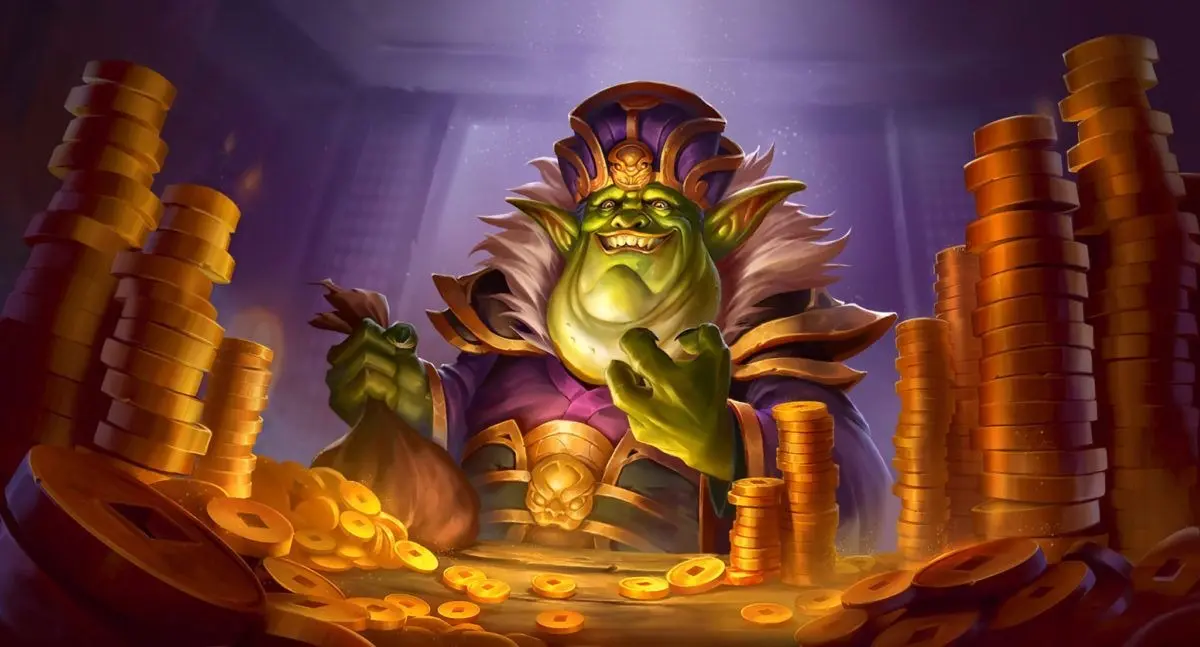
For anyone who spent time wandering through the virtual landscapes of World of Warcraft during its early years, certain nostalgic memories inevitably resurface alongside reminders of the game’s wilder, less regulated days. Among the most common early experiences for players navigating the massive multiplayer online role-playing game was stumbling across a bizarre and eerie sight: a series of lifeless character corpses neatly arranged on the ground. When viewed from the correct perspective or zoomed out from a specific overhead angle, these fallen avatars spelled out a precise URL. These digital graffitis directed curious players to external websites where they could purchase in-game gold using real-world currency.
During the formative eras of the genre, virtual currency was notoriously scarce, demanding hours of tedious grinding, mob farming, and auction house vigilance to accumulate even a modest sum. This intense scarcity naturally spawned a massive black-market economy. Players eager to skip the grind and jump straight to purchasing expensive mounts, high-tier gear, or crafting materials turned to real-money trading, commonly referred to in the gaming community as RMT. Even for players who strictly avoided these illicit platforms and maintained honest gameplay habits, it was utterly impossible to escape the constant promotion. Gold-selling advertisements were ubiquitous, plastered across online gaming forums and brazenly spammed out by bot characters splayed across the bustling streets of major capital cities like Stormwind and Orgrimmar.
Historically, Blizzard Entertainment maintained a relatively lenient stance when dealing with individuals who willingly violated the game’s End User License Agreement by engaging in real-money transactions. Punishments frequently consisted of temporary suspensions, minor currency confiscations, or light warnings that failed to deter determined buyers and sellers. However, developers are signaling a dramatic shift in philosophy for the upcoming release of World of Warcraft: Forever, promising that the era of gentle wrist-slaps is officially coming to an end.
During a recent developer Q&A session broadcast to the community, senior game designer Josh Greenfield addressed mounting concerns from the player base regarding modern economic exploits. Specifically, Greenfield fielded questions about guilds utilizing gold dragon kill points—commonly abbreviated as GDKP—where players bid on dropped loot using accumulated gold, as well as the overarching risks posed by real-money trading in World of Warcraft: Forever. Greenfield emphasized with absolute clarity that Blizzard intends to pursue a strict enforcement policy, stating that the development team will very aggressively punish gold buyers to prevent the internal in-game trading economy from spiraling completely out of control.
Elaborating further on the studio’s historical missteps and future intentions, Greenfield offered a candid assessment of past enforcement strategies. Being completely frank, he acknowledged that the studio has likely been far too lenient on gold buyers over the years. He noted that it had historically been a little bit too easy for bad actors to circumvent previous disciplinary actions, but stressed that the studio is now taking the issue with the utmost seriousness. Drawing from his own personal perspective as a veteran player, Greenfield delivered a stark warning to anyone contemplating skirting the rules. As someone who personally maintains a 22-year-old World of Warcraft account, he pointed out that engaging in illicit trades is simply not worth risking permanent account loss. He advised the community very strongly against participating in real-money trading, reiterating that the potential consequences far outweigh any short-term in-game benefits.
While Greenfield did not explicitly spell out every disciplinary measure in fine detail, his strong wording strongly implied that anyone caught breaking the rules through real-money trading will face permanent account bans rather than temporary suspensions. For years, community discussions surrounding real-money trading have universally centered on the sentiment that enforcement would be significantly more effective if developers abandoned light penalties and instead stripped offenders of their access completely. Whether this zero-tolerance approach will be fully realized upon the game’s official commercial release remains to be seen. Skeptics often point out that players rarely worry about financial status or rule adherence during beta phases, as long-term stakes are virtually non-existent before a wipe or official launch. Nevertheless, hearing that maintaining economic integrity is a top priority for the studio has provided a welcome dose of reassurance to longtime fans.
In a massively multiplayer online game where the level cap remains static and ongoing content updates are specifically designed to introduce engaging activities for characters across all level ranges, protecting the foundational economy is paramount. The absolute last thing any healthy virtual ecosystem needs is runaway, severe inflation that completely destroys the purchasing power of honest players. When inflation ruins the value of trading with other members of the community, it simultaneously kills the economic value of learning, maintaining, and utilizing traditional trade skills. Greenfield stressed during the briefing that the sanctity of the in-game economy forms a fundamental pillar of the overall player experience. He assured the community that Blizzard has implemented sophisticated tuning knobs and administrative tools designed to carefully control supply and demand, allowing the development team to actively balance the economic scales if things begin to drift off course.
The delicate nature of virtual economies is a frequent subject of debate among modern online gamers, particularly as complex player-driven markets become more prominent across various titles. Observing similar economies in action—such as in deep action role-playing games built around player trading for rare and coveted item drops—reveals just how quickly dynamic systems can go completely haywire. A minor exploit, duplication glitch, or unchecked influx of illicit currency lasting even a couple of hours can have profoundly devastating ripple effects on the market price of rare items and basic commodities alike. Consequently, observers within the community hope that developers remain equally prepared to handle whatever unexpected economic anomalies crop up organically through standard gameplay and player ingenuity.
As World of Warcraft: Forever moves closer to its eventual rollout, the true test for Blizzard will lie in the execution of these ambitious anti-cheating and anti-inflation policies. The promise of aggressive enforcement and permanent bans represents a significant escalation in the ongoing war against virtual black markets. For a community that has spent two decades watching gold-selling bots litter the landscape and disrupt economic stability, the shift toward a harsher, uncompromising disciplinary framework marks a critical step toward preserving the long-term health and fairness of the virtual world.