In an era dominated by rapid technological advancement, the digital landscape is increasingly flooded with synthetic imagery. Recently, a professional food photographer scrolling through a local restaurant’s Facebook group encountered a classic flashpoint in the ongoing debate over artificial intelligence and commercial marketing. The restaurant had posted a series of noticeably artificial, AI-generated food images featuring overly glossy textures, impossibly behaving sauces, and bread with a sponge-like appearance. When users began pointing out the digital fabrication, a commenter rushed to the defense of the establishment with a statement that stopped the photographer in their tracks: "Food photography is all pretty much fake anyway. They use fake ingredients and fake techniques to do everything."
As a working professional in the industry, the photographer felt compelled to respond. The encounter sparked a deeper reflection on the intersection of artificial intelligence, commercial marketing, and the shifting definitions of truth and illusion in modern advertising. While many creative professionals adopt an instinctive hostility toward generative artificial intelligence, fearing the obsolescence of traditional cameras and techniques, the reality of commercial photography and digital marketing is far more nuanced. Ironically, the debate touches not just on ethics and transparency, but on the practical business risks of alienating consumers with low-effort digital placeholders.
Everything’s Fake Anyway, Apparently!
To understand why a consumer might casually claim that food photography is inherently fake, it helps to examine the historical roots of commercial styling. In the advertising world of the 1960s and 1970s, practical workarounds were standard practice. Ice cream in studio shoots really was mashed potato because studio lighting ran hot enough to melt dairy in seconds, pancake syrup was often substituted with motor oil, and the milk in cereal commercials was frequently replaced by PVA glue. Burgers were left intentionally undercooked to maintain their plump appearance and then polished with shoe polish for added sheen.
However, that era ended definitively. In 1970, American regulators ruled against Campbell’s Soup for placing marbles at the bottom of a soup bowl to force vegetables to the surface, establishing the legal precedent that the product advertised must be the actual product. Modern advertising codes in the United Kingdom and elsewhere enforce the same principle; regulatory bodies routinely purchase commercial items specifically to compare them against promotional imagery, penalizing brands that misrepresent their offerings. Furthermore, technological advancements rendered many old tricks obsolete. Modern professional flash systems run cold, eliminating the intense heat that once melted ice cream and necessitated mashed potato stand-ins.
How Fake My Photography Actually Is
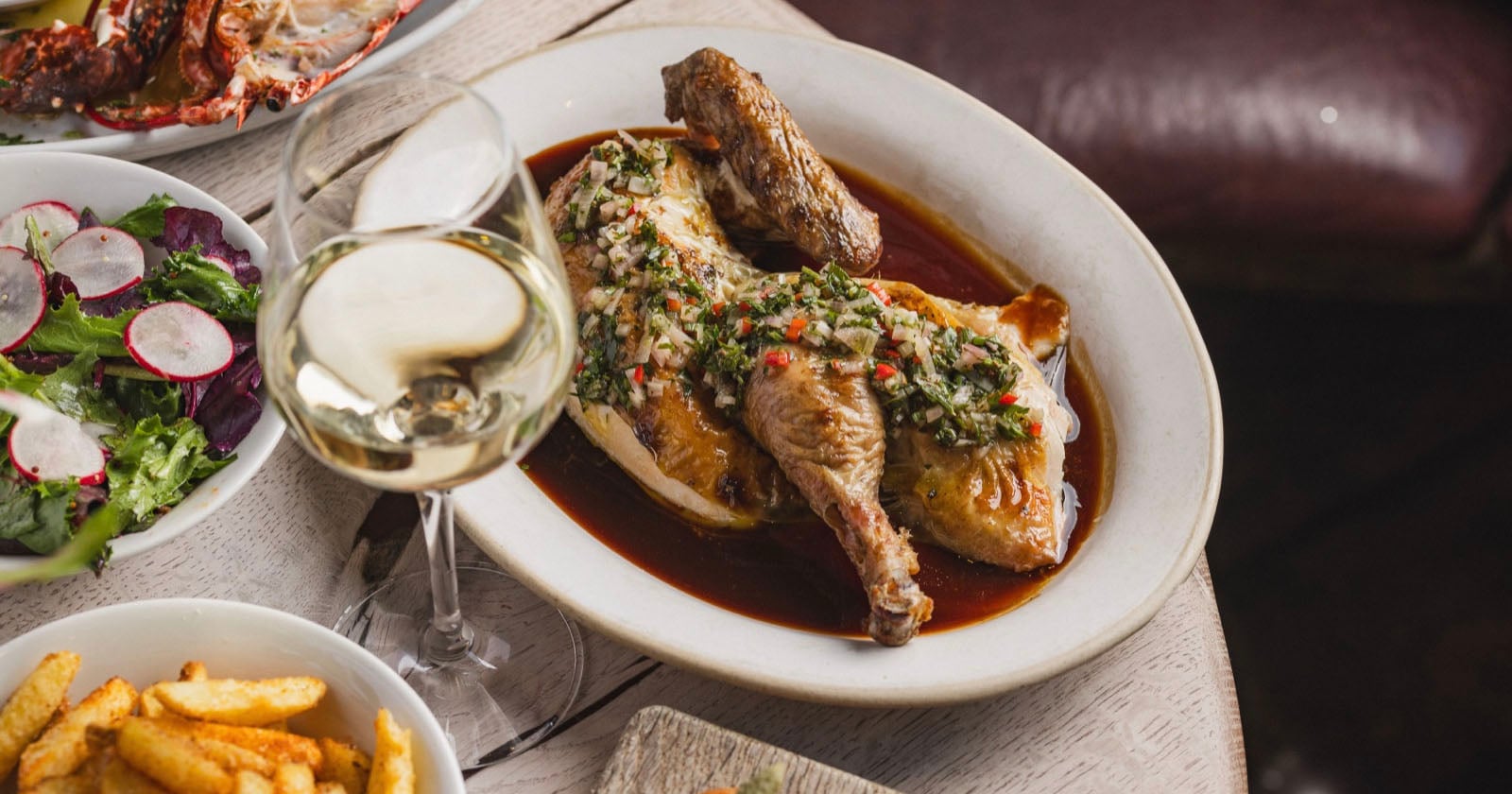
In contemporary professional food photography, the reality of "faking" a shot is remarkably tame. A comprehensive inventory of traditional studio adjustments usually involves little more than placing hidden cocktail sticks inside a dish to maintain its structural integrity during an extended shoot, or occasionally utilizing shaving foam as a stand-in for whipped cream.
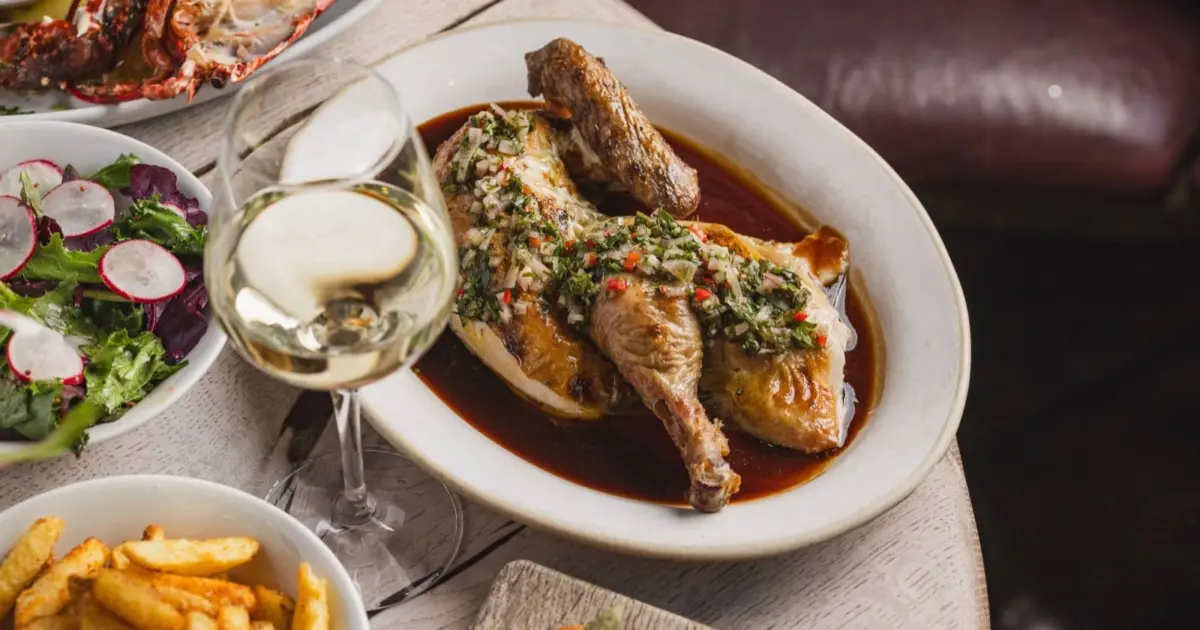
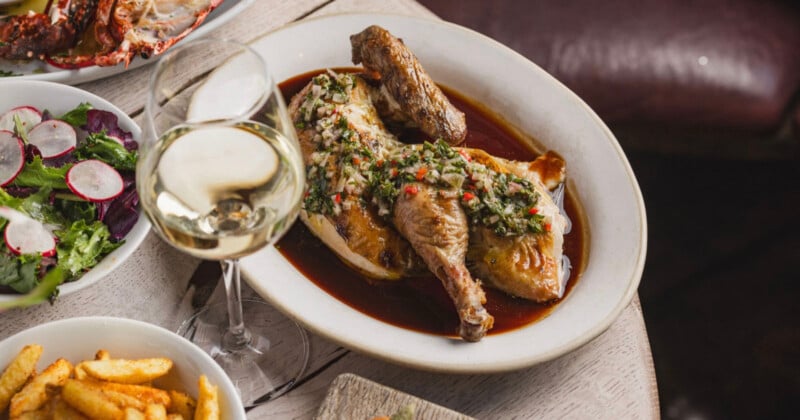
These minor structural aids are hardly deceptive secrets. Ensuring a wrap or a towering burger holds together for ten minutes under studio conditions is standard industry practice, comparable to a fashion stylist steaming a shirt before a portrait session. When a client books a commercial shoot, they are receiving the chef’s actual dish, prepared with authentic ingredients and presented at its absolute best.
Major corporations have occasionally stepped forward to demystify this process. Over a decade ago, McDonald’s Canada released a behind-the-scenes campaign explaining the discrepancy between in-store items and promotional photography. The revelation was surprisingly mundane: the burger in the advertisement used the exact same ingredients—patty, bun, pickles, and condiments—as the burger purchased at the counter. The only distinction was that one was assembled under high-speed kitchen constraints, while the other received several hours of meticulous styling and attention. It was not a different product; it was simply the same food given time to shine.
AI Can’t Photograph a Dish That Doesn’t Exist
The comparison between traditional food styling and generative artificial intelligence highlights a fundamental chasm in commercial integrity. When a chef plates a dish, it reflects their specific culinary vision, portion sizes, garnishes, and crockery. Because that exact dish exists exclusively in one physical kitchen, an AI model has never encountered it. Consequently, generative tools produce a plausible-looking fabrication that customers can never actually order. It is not a poorly photographed version of a real dish; it is entirely fictional.
When delivery platforms like Uber Eats permitted restaurants to utilize AI-generated placeholders for empty menu slots, the results frequently ranged from comical to absurd. New York pizzerias specializing in traditional cheese pies suddenly displayed images of sweet dessert pastries filled with melted mozzarella, while other menus featured burgers crowned with four top buns and sauce bottles bearing illegible lettering. While these glitches provided moments of internet levity, the trend has scaled down to local menus and posters with subtler, yet equally misleading, results.
This dynamic extends far beyond the culinary sector. An AI-generated image of a hotel room, a retail product, or a smiling corporate team does not depict the actual business. When a customer eventually crosses the threshold and experiences a stark contrast between promotional fantasy and physical reality, the inevitable result is consumer frustration and negative reviews. Industry studies consistently indicate that while massive multinational chains possess enough brand goodwill to absorb the fallout of oversold marketing, independent businesses lack that safety buffer, often bearing the heaviest costs for utilizing free digital shortcuts.
What Faking It Says About the Rest of Your Business
The deeper concern for many observers is not merely aesthetic, but psychological and operational. When a restaurant or local business demonstrates an unwillingness to photograph its own offerings, consumers naturally begin to question where else corners are being cut. Online consumer discussions frequently echo a common sentiment: if a business does not dare show an authentic photograph of its product, customers immediately harbor doubts regarding the kitchen, hygiene standards, and overall operational care. Rightly or wrongly, visual transparency serves as a proxy for brand trustworthiness.
Real-world examples underscore the financial peril of ignoring this consumer sentiment. A café in San Francisco faced severe online mockery after displaying AI-generated images of its sandwiches and pastries in its storefront windows. Local backlash culminated in graffiti on the shopfront, forcing the owners to spend hundreds of dollars removing the digital displays and replacing them with physical presentations of their actual baked goods. The supposedly free digital shortcut ultimately proved to be an expensive mistake.
Defenders of AI-generated marketing often argue economic necessity, claiming they cannot afford professional design or photography services. Yet, the barrier to creating authentic marketing materials has dropped significantly. Free design platforms offer extensive template libraries that require no advanced design theory, and modern smartphones are capable of capturing commercial-grade social media photography under decent lighting conditions. The underlying issue is rarely financial incapacity; rather, it is a reluctance to invest even a fraction of an hour into authentic presentation.
Now for the Twist: I Use AI Constantly
Despite the valid criticisms surrounding deceptive imagery, the relationship between creatives and artificial intelligence is rarely binary. Many working photographers integrate AI tools into their administrative and operational workflows on a daily basis. From website development and booking tools to pricing calculators and organizational systems, technological integration has become standard practice for modern freelancers looking to remain competitive rather than fighting an inevitable market shift.
The crucial distinction lies in how these tools are deployed—whether they function as practical productivity aids or as deceptive replacements for reality. Utilizing software to outline the initial draft of a layout, structure informational posters, or streamline backend code represents a sensible application of technology. Conversely, deploying generative tools to fabricate fictional products, nonexistent food, or fake customers and passing them off as authentic commercial documentation crosses a clear ethical line. It transforms a productivity tool into a misleading representation directed at consumers whose trust is essential.
Why the Slop Fails Even When Nobody’s Offended
Ethical concerns aside, generative imagery frequently fails on a purely technical level. Image models fundamentally lack an understanding of page layout, margins, grids, and print bleed requirements. Text generated by AI models is notoriously prone to crowding edges, while resolution and color spaces often fail to meet professional printing standards. Consequently, commercial printing companies are increasingly declining to process raw, unedited AI-generated files.
Even when technical execution appears passable, generative tools suffer from homogenization. Because AI models are trained on aggregate public data, they generate generalized concepts that cause brands to blend together rather than stand out. Local event flyers and business promotions generated through identical prompts quickly begin to look like duplicate copies. Authentic brand identity is precisely what aggregate models are incapable of providing.
People Can’t Always Spot It. That’s Actually Worse.
Statistical studies on human perception indicate that individuals struggle significantly when attempting to distinguish between real photography and AI-generated imagery, frequently performing little better than a coin toss. Peer-reviewed research shows that participants often struggle to differentiate real faces from synthetic ones, sometimes even rating fabricated faces as more trustworthy.
However, this widespread uncertainty breeds a broader skepticism. Consumers increasingly report questioning the authenticity of much of the digital content they encounter, with significant majorities indicating they would trust a brand less if they discovered it used AI-generated people in advertising. Customers no longer need to successfully spot a fake image; the mere suspicion that a business might be using synthetic media casts doubt on every other claim the brand makes.
This environment creates collateral damage for creators of genuine work. Photographers increasingly find themselves defending the authenticity of their real portfolios against unearned accusations of digital fabrication. The widespread adoption of shortcuts by some has introduced a new verification burden for professionals who rely on truth and documentary evidence.

Where I Actually Stand
The professional photography landscape has undeniably shifted. Industry surveys indicate that a majority of professional photographers have experienced commission losses due to generative tools, particularly within generic stock-style commercial work. That particular market segment is contracting permanently.
However, commissions requiring specific, unrepeatable human truth—capturing a distinct dish, a genuine moment, or an actual team—retain inherent value precisely because they serve as verifiable evidence. For businesses seeking authentic representation, the fundamental purpose of professional media remains unchanged.
Ultimately, the choice facing small businesses is clear. While generative tools offer tempting shortcuts, relying on synthetic placeholders risks alienating customers and eroding brand trust. In a marketplace increasingly saturated with digital fabrication, genuine proof of what a business actually offers remains a powerful differentiator.