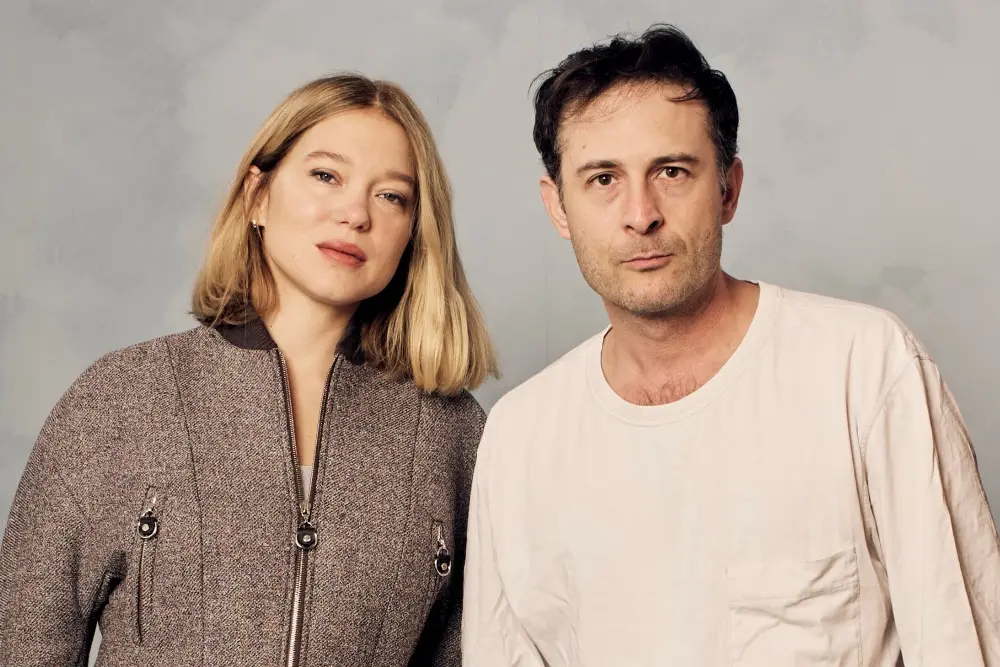
MARRAKECH — Filmmaker Arthur Harari, known for his compelling narrative work and his Academy Award-winning screenplay for “Anatomy of a Fall,” used his platform at the Marrakech Film Festival to address one of the most pressing and contentious debates currently facing the global entertainment industry: the integration of artificial intelligence into the creative process. Speaking candidly during an extensive conversation with renowned film critic and historian Charles Tesson, Harari described artificial intelligence as a “slippery slope” that he would personally prefer to avoid in his own projects. However, this staunch declaration came with a surprising caveat, as the director admitted during the panel that his team indeed utilized a deepfake tool to achieve a critical visual effect in his latest feature film, the Palme d’Or contender “The Unknown.”
The discussion turned toward technology when an audience member asked the acclaimed writer
-director how he views the role of artificial intelligence tools within his artistic workflow. Harari acknowledged the pervasive and rapidly evolving nature of the technology, noting that the modern filmmaking landscape is experiencing a sudden and profound paradigm shift.
“I’m in much the same position as everyone else: this shift toward using AI is suddenly upon us, and it’s becoming not just a possibility, but something increasingly pervasive and tempting,” Harari told the audience in Marrakech. He initially maintained a firm stance regarding his personal creative practices, adding, “Personally, I’ve never used it; for the time being, I don’t see any place for it in my work.”
However, the celebrated writer-director quickly walked back that sweeping statement just moments later as he reflected on the practical realities of bringing his ambitious cinematic visions to the screen. He revealed that his production team had turned to artificial intelligence-driven deepfake technology to execute a pivotal, conceptually complex scene in his latest cinematic outing.
“At one point in ‘The Unknown,’ there is a scene where Léa Seydoux kisses Léa Seydoux, and we had to use a deepfake tool to do that,” he explained, shedding light on the technical hurdles of the body-swap narrative.
Despite utilizing the technology, Harari was quick to emphasize that the implementation was entirely grounded in human artistry and oversight rather than autonomous generation. He pointed out that the software did not operate in a vacuum, stressing that human hands and minds guided every step of the process.
“There was a human behind it. There was always a human involved — someone who programs it, so to speak, and keeps it under control,” Harari said. Clarifying his nuanced stance on the matter, he added, “So, I’m not against it in principle. It’s just that I think we need to ask ourselves what constitutes the essence of what we’re trying to create — right from the writing stage.”
As a writer whose credits include some of the most celebrated screenplays of recent years, Harari expressed a deeper, more profound resistance toward incorporating artificial intelligence into the actual composition of stories. While he conceded that digital tools and artificial intelligence platforms can serve as legitimate and interesting resources for performing basic, straightforward research tasks, he drew a firm line at utilizing them for narrative generation. To go beyond simple background research and allow algorithms to actively craft parts of the writing process, he insisted, represents a dangerous and slippery slope for storytellers.
Expanding on his psychological concerns regarding the medium, Harari compared humanity’s growing reliance on advanced technology to behavioral dependency, drawing parallels to everyday habits that dominate modern life.
“The thing is, we are inherently prone to addiction — look at our phones, for instance; we’re constantly glued to them,” he observed. He warned that crossing the threshold even slightly creates a dangerous precedent, noting, “Once you get a foot in the door, it becomes incredibly difficult not to use it at every turn.”
“The Unknown,” which premiered in fierce competition at this year’s prestigious Cannes Film Festival, stands as a prime example of the high-concept storytelling that characterizes contemporary European cinema. Based on an intricate graphic novel co-written by Harari, the film features acclaimed French actress Léa Seydoux alongside co-star Niels Schneider. In the film, Seydoux portrays an enigmatic, unknown woman who shares a fateful one-night stand with a photographer named David, played by Schneider. The encounter spirals into a surreal psychodrama when David awakens the following morning to discover that he is mysteriously trapped inside Seydoux’s physical body.
The film has generated substantial critical attention, not only for its daring premise and direction but also for the powerhouse performances at its core. Speaking to Variety earlier this year during its festival run, Seydoux reflected on the demanding nature of the project and offered glowing praise for the material, describing the dual-identity role as “the best part I’ve ever played.”
When questioned directly by journalists on whether she fears that the rapid advancement of artificial intelligence and digital manipulation might eventually threaten the livelihoods of filmmakers and actors, Seydoux expressed an unwavering faith in the irreplaceable value of human expression.
“I don’t think so. I think that nothing can replace humanity. I don’t feel threatened. Maybe I’m wrong! But I believe in human nature,” the actress affirmed.
Harari’s appearance in Marrakech is part of the festival’s celebrated Conversation series, an initiative that regularly brings together some of the most influential and visionary voices in world cinema to discuss their craft, philosophy, and the evolving state of the seventh art. This year’s prestigious roster features a formidable lineup of international filmmakers and screen icons, including “Knives Out” director Rian Johnson, Academy Award nominee Luca Guadagnino of “Call Me by Your Name” fame, Palme d’Or winner Cristian Mungiu, celebrated Italian screen icon Monica Bellucci, and other luminaries of the global film community.
The Marrakech Film Festival runs from November 20 through November 28, continuing to serve as a vital international meeting ground for cinematic debate, cultural exchange, and critical discussions surrounding the future of filmmaking in an increasingly digital world.