For many art enthusiasts, encountering the work of Japanese contemporary artist Yoshitomo Nara for the first time feels less like a traditional gallery visit and more like a pivotal personal milestone. Long before his paintings commanded millions at global auction houses or anchored major international museum retrospectives, Nara’s signature portraits of enigmatic, large-headed children functioned as clandestine emotional anchors for the disaffected and the adolescent.
This deep resonance was vividly demonstrated on a chilly autumn evening in New York, where approximately 4,000 visitors formed a snaking queue outside David Zwirner gallery just to catch a glimpse of the opening night of Yoshitomo Nara, the artist’s first solo presentation in the city in nearly a decade. By the end of the first week, attendance figures had surged past 26,000, underscoring the extraordinary and enduring drawing power of an artist whose deceptively simple figurative works speak directly to the complexities of the human condition.
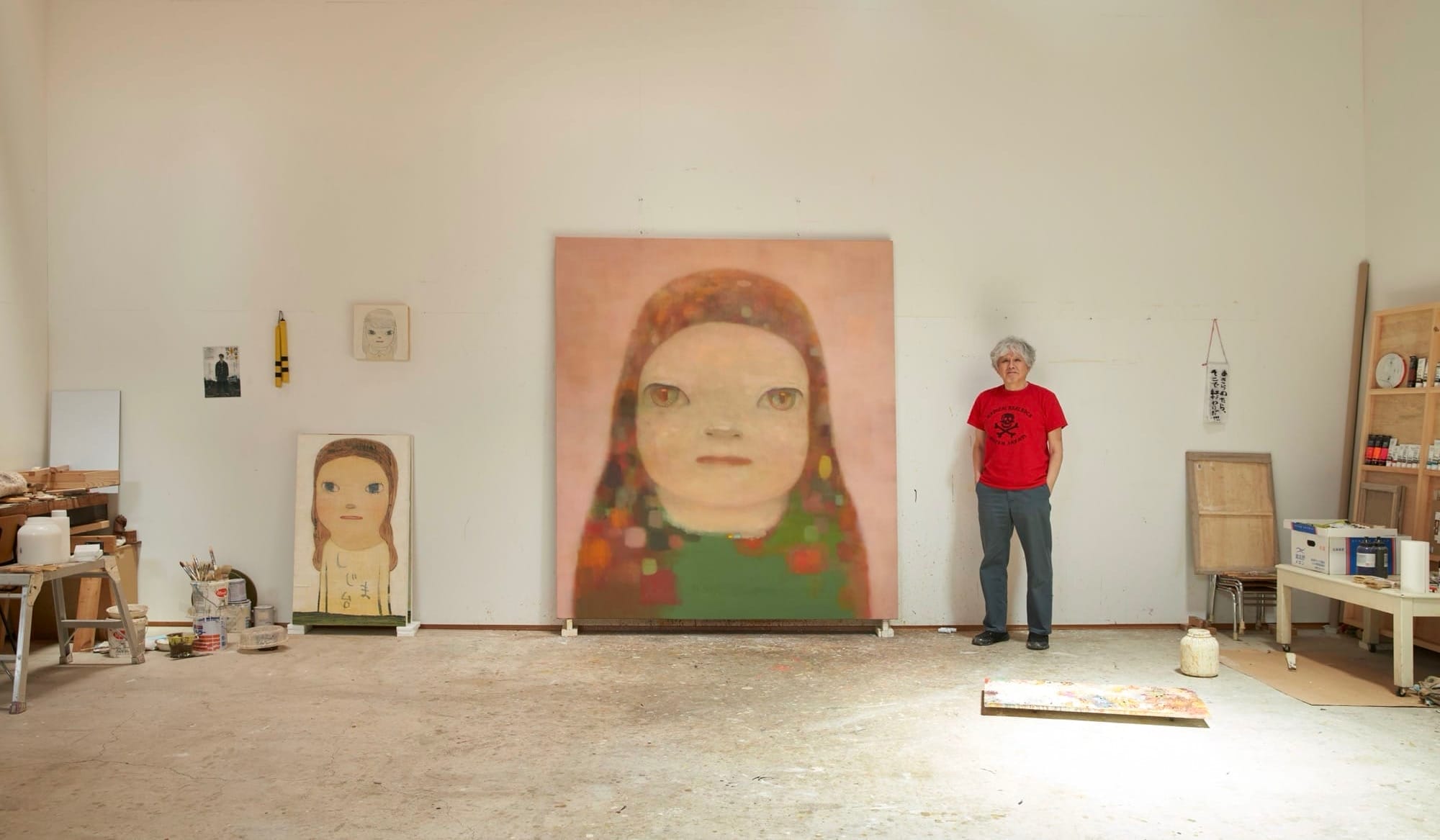
Spanning two of David Zwirner’s sprawling Manhattan gallery spaces, the self-titled exhibition is a monumental undertaking. It brings together nearly 100 works produced over the last several decades, offering a comprehensive survey that moves fluidly across mediums. Visitors encountering the expansive galleries—characterized by polished concrete floors and soaring white walls—are greeted by a diverse array of paintings, delicate works on paper, and monumental bronze sculptures. Together, these pieces trace the evolution of an artistic vocabulary that has remained instantly recognizable, fiercely relatable, and broadly appealing across generations and cultures.
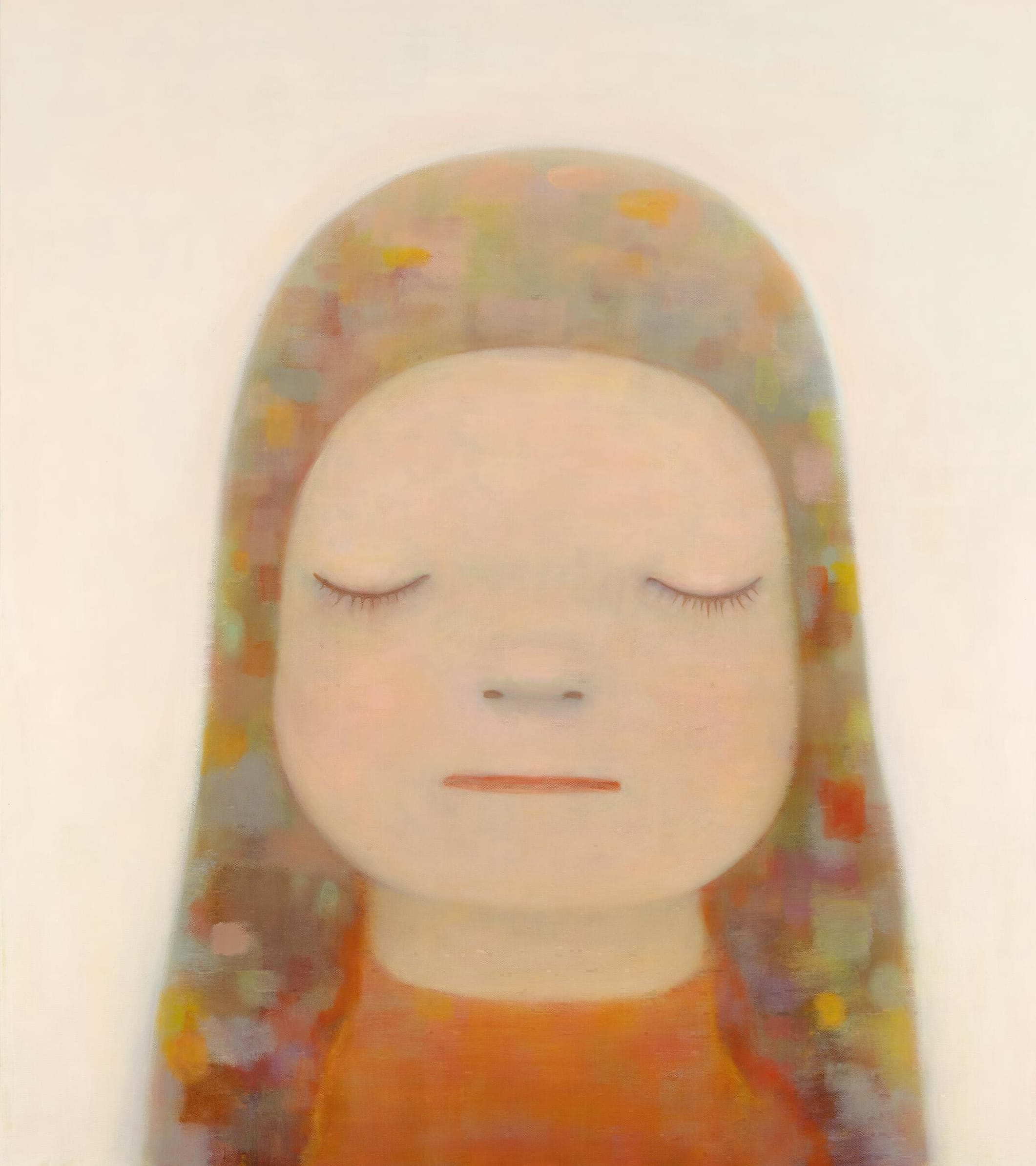
The foundational roots of Nara’s unique sensibility can be traced back to his upbringing in Aomori, a rural region situated on the northernmost tip of Japan’s main island, Honshu. Unlike the frenetic, neon-drenched urban centers of Tokyo or Osaka that often dominate international perceptions of modern Japan, Nara’s childhood was marked by isolation, solitude, and an intimate proximity to the natural world. Flanked by the endless, restless expanse of the Pacific Ocean to the east and the formidable, snow-capped ridges of the Hakkōda Mountains, his early environment was deeply meditative.
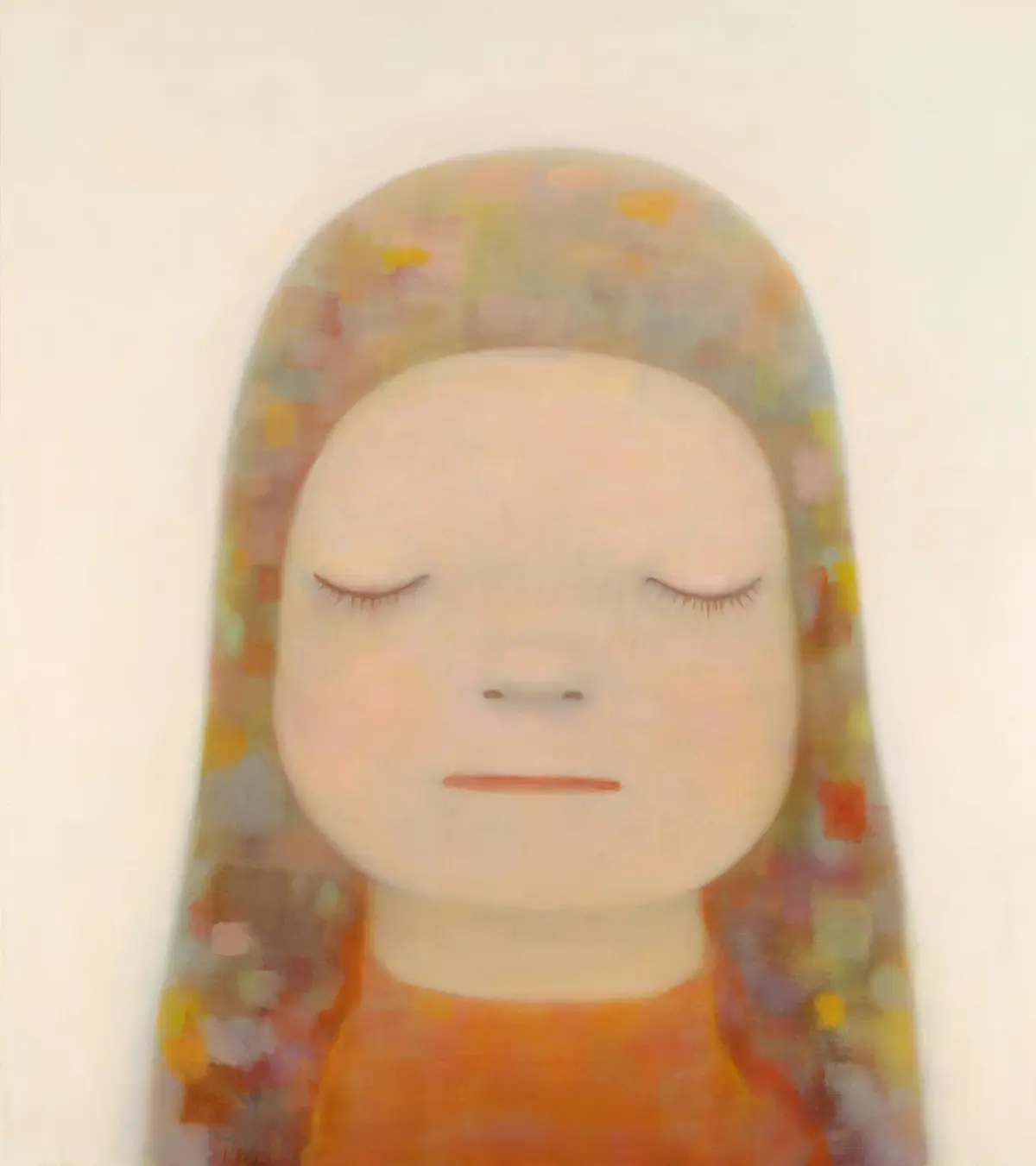
Art critics and curators have long noted that this austere, rural background indelibly shaped his artistic output. Even within his most emotionally charged and politically urgent compositions, there persists a profound underlying sense of calm—a quiet stillness that seems directly derived from a lifelong immersion in nature. This duality defines his iconic subjects: childlike figures whose oversized heads and wide, liquid eyes radiate innocence, yet whose expressions are frequently undercut by subtle skepticism, deep-seated boredom, or quiet rebellion.
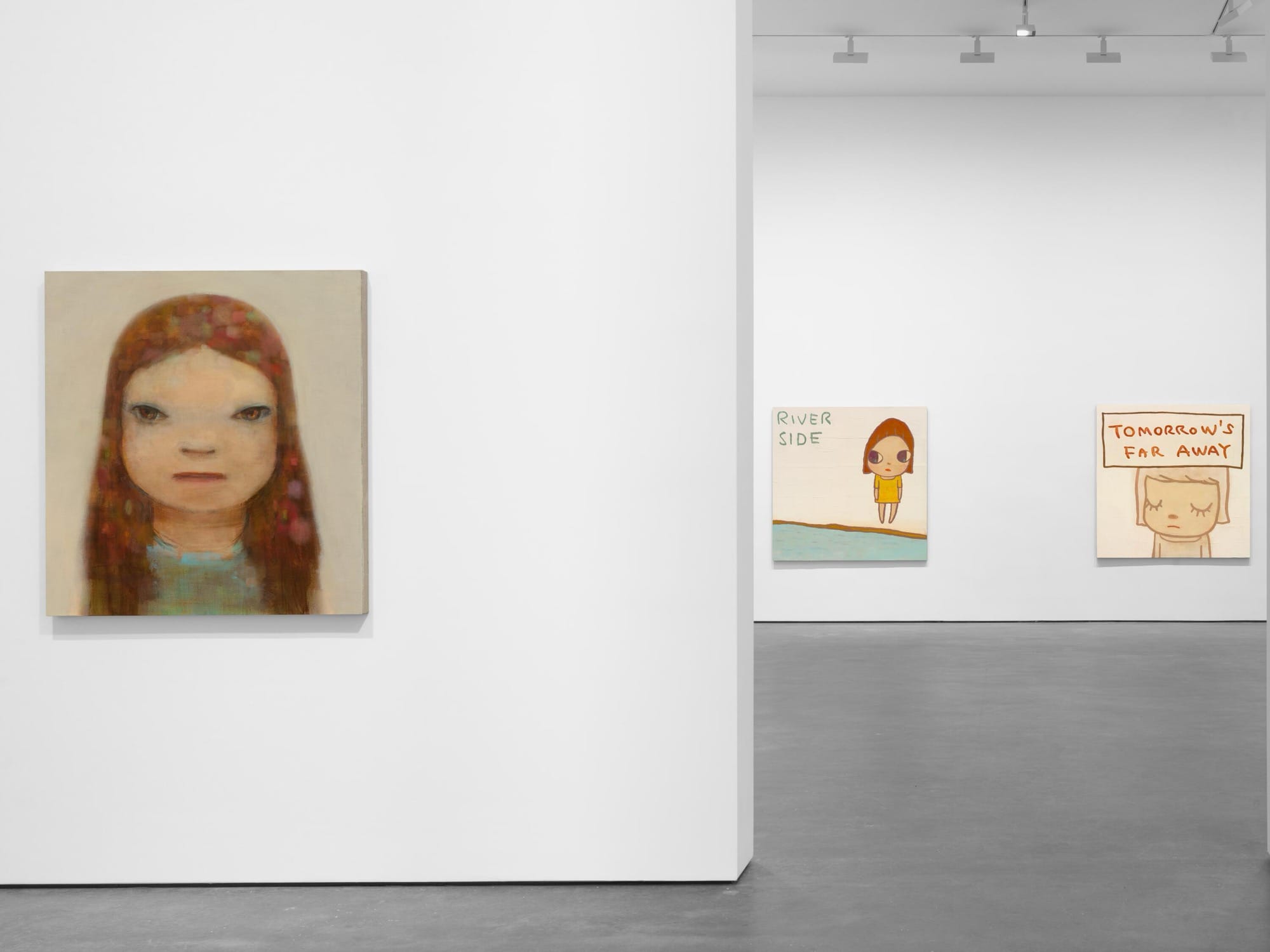
These complex emotional states have made Nara’s portraits a universal mirror for youthful angst and introspection. Ranging in scale from intimate miniatures that demand close, contemplative inspection to towering, larger-than-life representations, his two-dimensional portraits typically emerge from soft, pastel-hued backgrounds. Against these muted, atmospheric fields of color, his figures stare out at the viewer with an unyielding gaze.
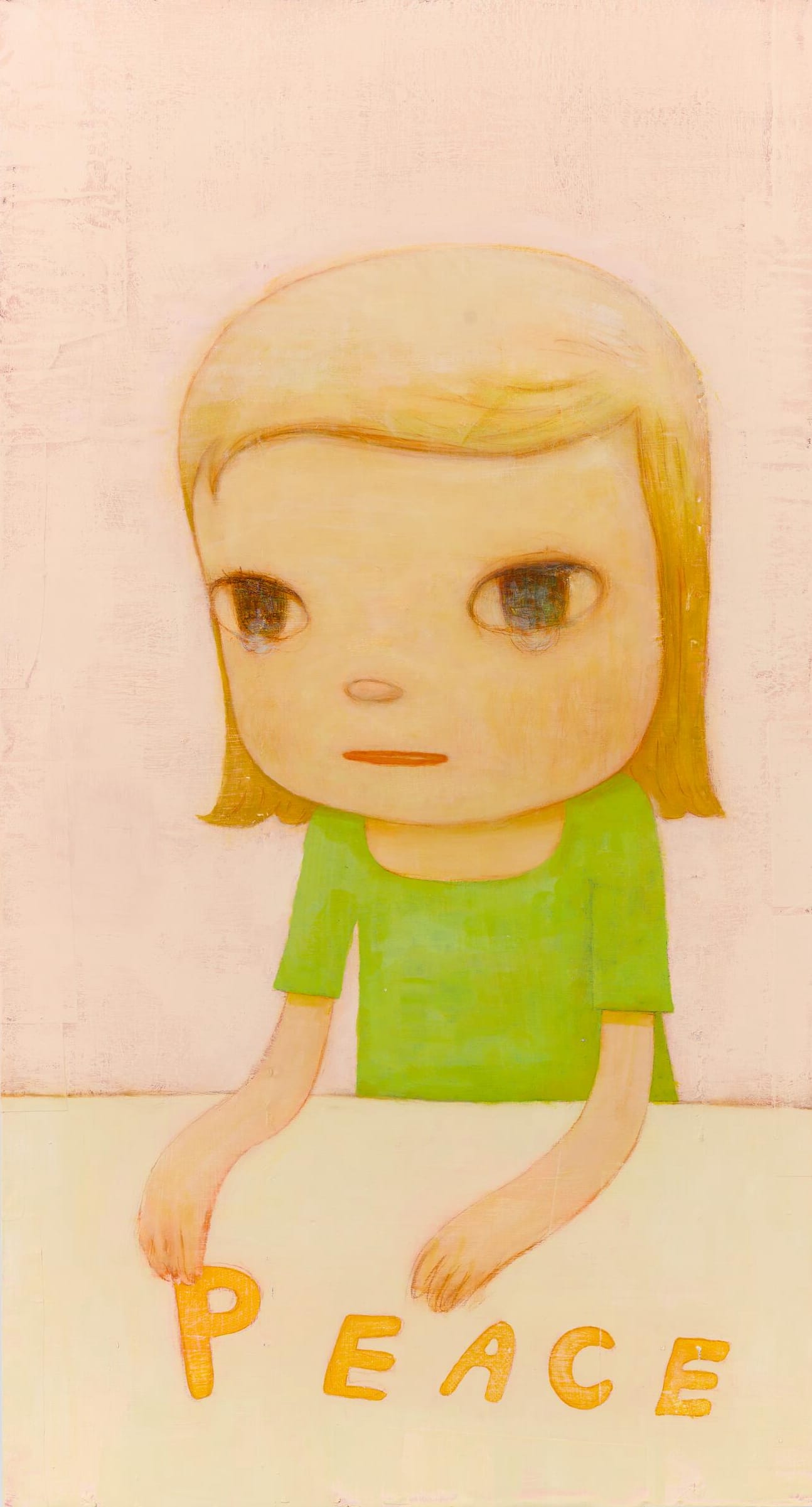
In many of the works featured in the current New York exhibition, this visual vocabulary is paired with pithy, handwritten phrases that hearken directly to collective contemporary anxieties. Text elements such as "world peace" and "tomorrow’s far away" are rendered with a stark, unassuming vulnerability. Rather than functioning as simplistic political slogans, these phrases drip with a palpable sense of longing, speaking directly to the artist’s broader, ongoing concern for the increasingly contentious and fragile state of human relations in the twenty-first century.
While painting and drawing have remained central to his practice for decades, Nara’s inclusion of three-dimensional media represents a vital evolution born out of personal and collective trauma. The artist first began working extensively with clay in the immediate aftermath of the devastating 2011 Tōhoku earthquake and tsunami. That catastrophic natural and humanitarian disaster claimed the lives of nearly 20,000 people and left countless others injured, traumatized, or displaced across northern Japan, striking terrifyingly close to the region where Nara grew up and maintains deep emotional ties.
In the face of overwhelming grief and societal unease, the canvas suddenly felt insufficient to process the raw weight of the tragedy. Nara turned to clay—a tactile, earthen material that offered a physical, grounding reprieve from the sorrow that words and traditional paintings struggled to capture. Sculpting the earth provided a therapeutic, tactile connection to the ground beneath his feet, allowing him to channel his grief into tangible forms.
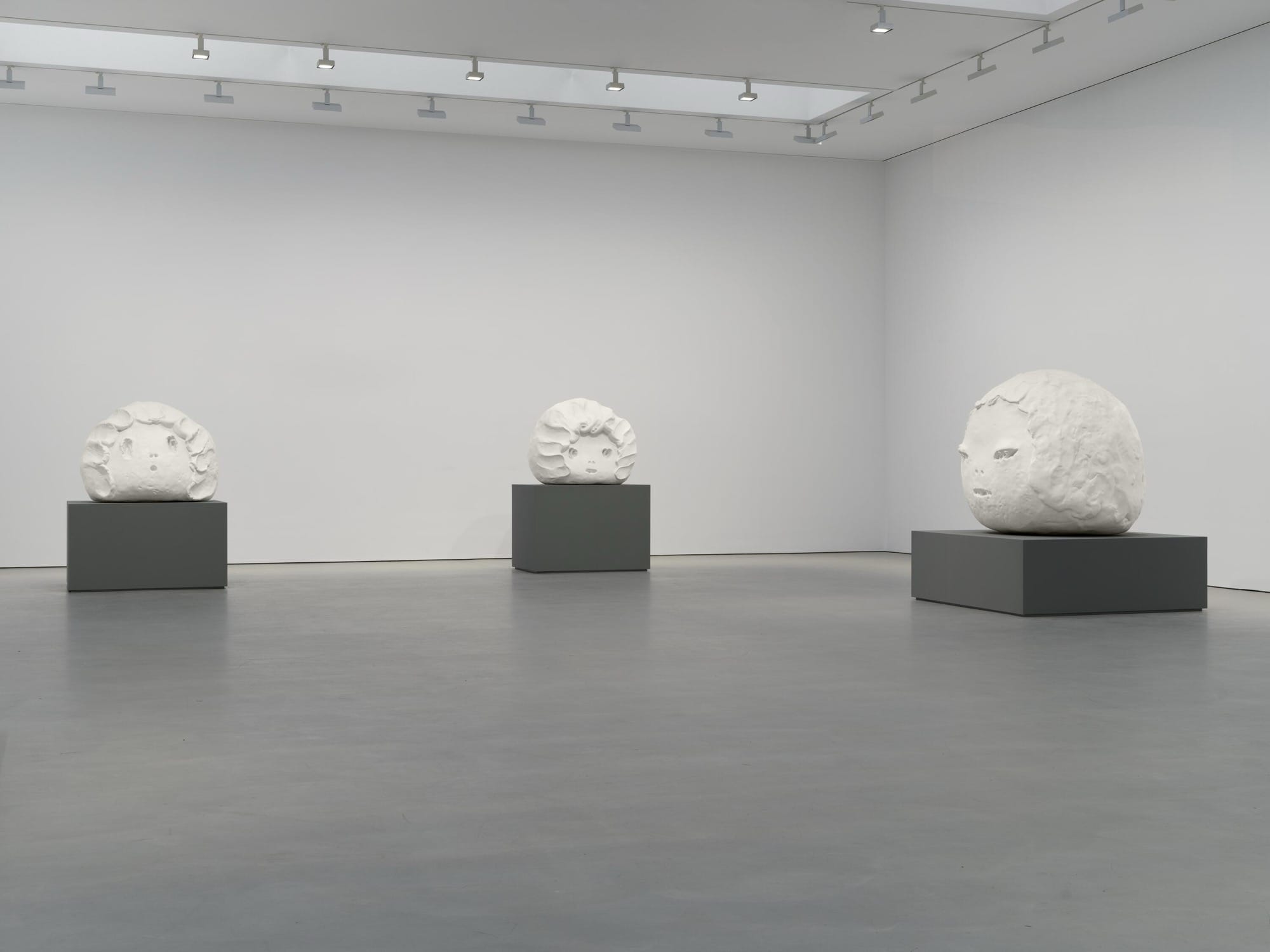
The results of this pivotal shift are prominently featured at David Zwirner in the form of monochromatic bronze sculptures coated in pristine white urethane paint. Based on smaller, earlier ceramic prototypes, these monumental busts and figurative pieces successfully capture Nara’s dramatic foray into three dimensions while echoing the icy, snow-blanketed landscapes of his northern Japanese youth. Despite their industrial materials and impressive scale, the sculptures retain clear, tactile traces of the handmade. Every surface seems to bear the physical imprint of the artist’s touch, as though Nara had shaped each colossal head using an enormous thumb, preserving the intimacy of the studio process within a monumental public scale.
The overarching impulse driving this diverse and prolific body of work remains remarkably consistent and refreshingly straightforward. As articulated in the exhibition’s official statement, Nara "creates art in order to express and communicate what he feels unable to convey in words." His distinctive body of work has steadily evolved through an ongoing, restless search to identify and articulate what is uniquely his: the quiet memory of his upbringing in rural northern Japan at a very specific moment in time, and, above all else, a profound, unwavering concern for humanity—including and especially those individuals who exist on the margins of mainstream society.
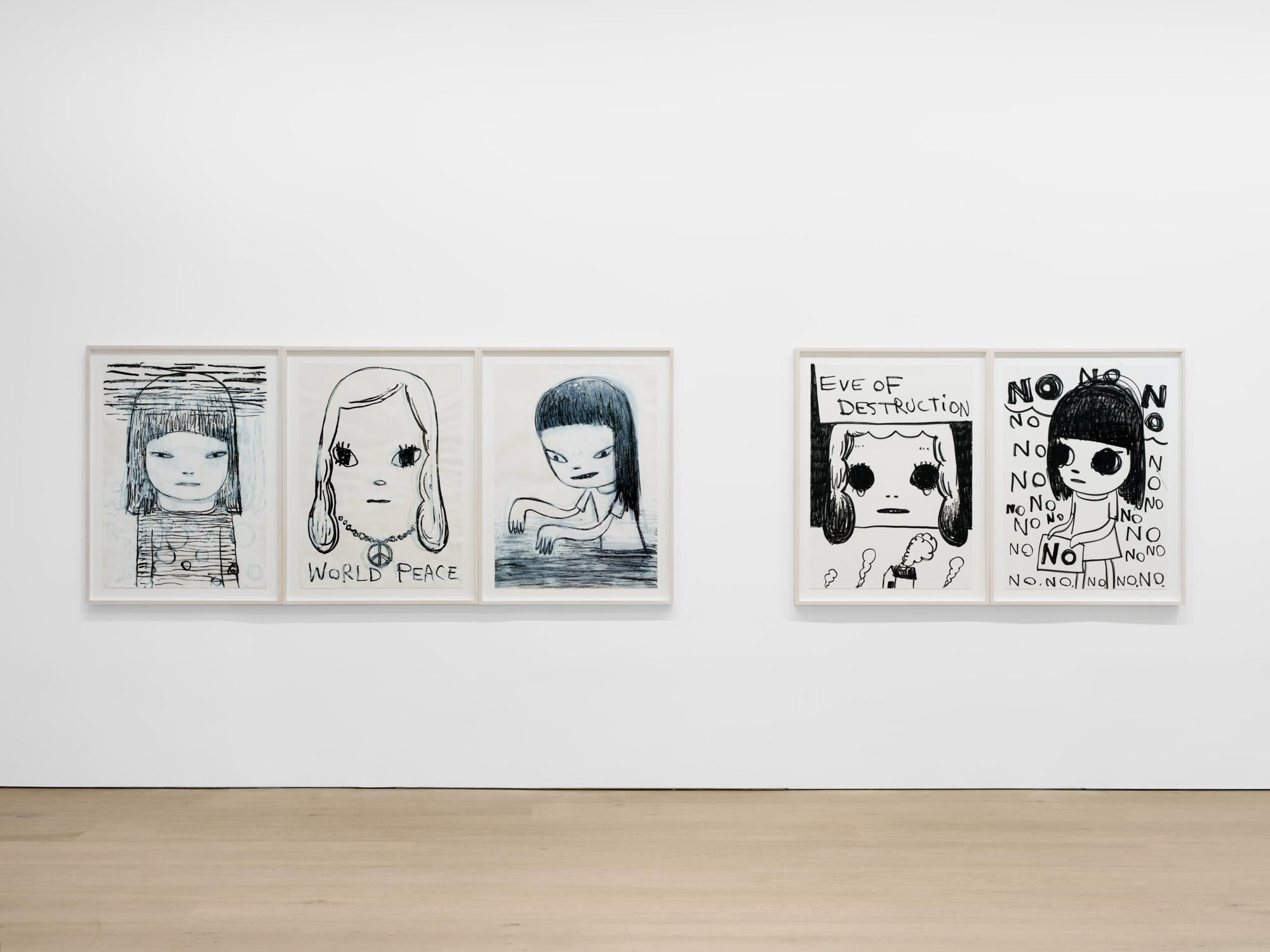
The current presentation at David Zwirner marks another high point in a relentlessly busy period for the artist on the international exhibition circuit. Nara recently wrapped up a major, large-scale public project at the Hirshhorn Museum and Sculpture Garden in Washington, D.C., cementing his status as a titan of contemporary sculpture and installation art. Looking ahead, momentum shows no signs of slowing down; next fall, the San Francisco Museum of Modern Art (SFMOMA) is slated to host a major, career-spanning retrospective of his work, introducing his profound vision to yet another legion of museum-goers.
Until then, the expansive and deeply moving survey Yoshitomo Nara remains on view at David Zwirner in New York through December 12, offering audiences a rare and immersive opportunity to step inside the singular universe of an artist who continues to map the delicate topography of the human heart.