Picture the quintessential cycling tour: you spend hours pedaling down winding rural paths, your legs burning, your eyes fixed on the horizon until you finally roll into a picturesque campsite just as the sun begins to dip. Traditionally, the next hour involves unpacking a tangle of tent poles, wrestling with rainflies, and driving stakes into stubbornly hard ground. But imagine a completely different reality—one where you simply park your ride, step off, and watch the rear of your vehicle unfold like a pop-up book to reveal a fully functional kitchen, a cozy dining nook, and a comfortable sleeping berth, all packaged within the same footprint that carried you down the highway.
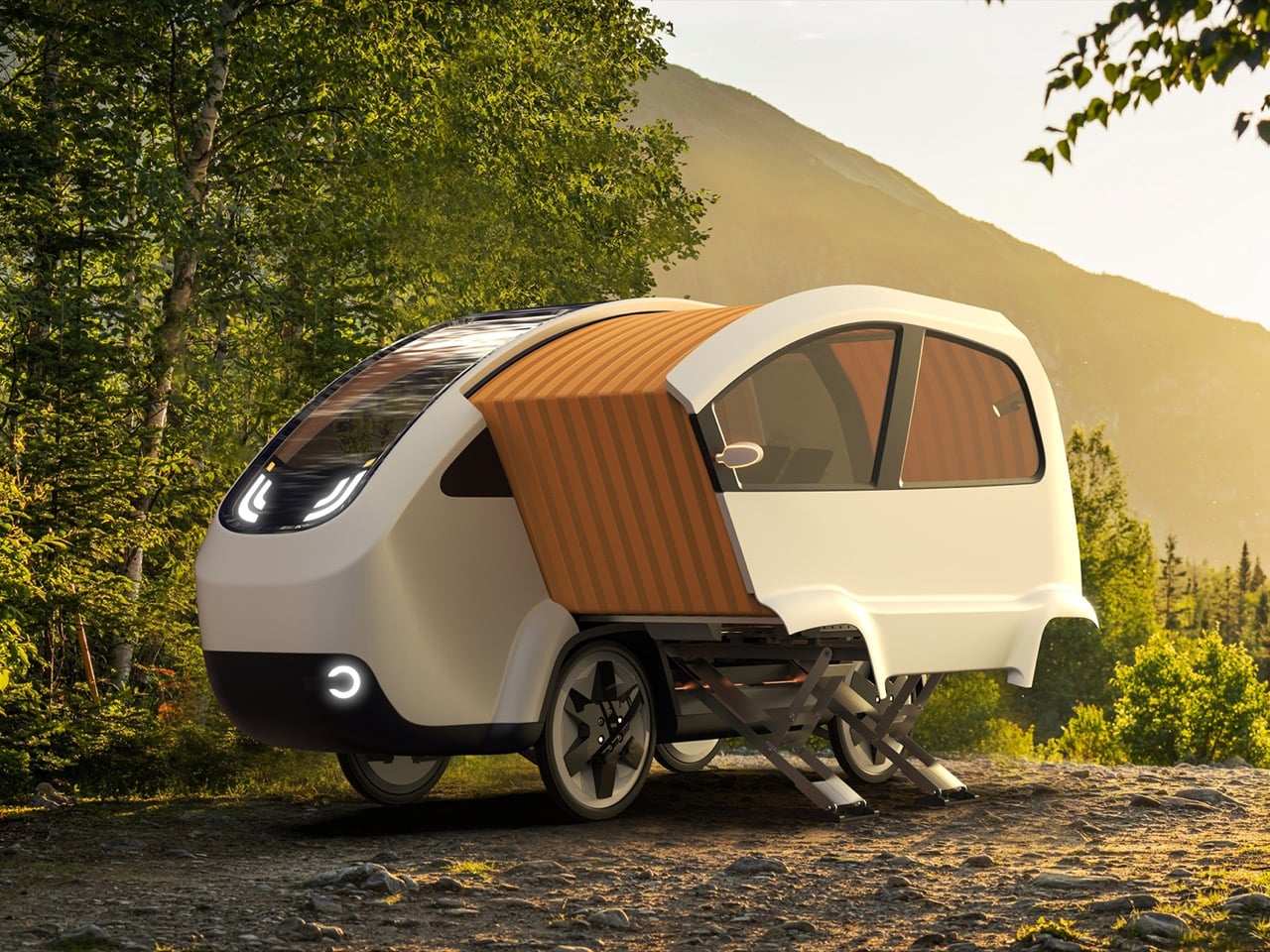
That is the visionary pitch behind Huuselox, an inventive three-wheeled pedal camper that has recently captured widespread attention and recognition at the prestigious European Product Design Award. In a market saturated with predictable camping trailers and heavy, boxy attachments towed behind electric bikes, Huuselox immediately breaks the mold. Rather than relying on rigid, clunky extension mechanisms, this innovative concept leans into the delicate art of origami. It features a striking, pleated orange-and-white flexible skin that expands the cabin’s rear end outward, effectively transforming a compact transit pod into a sheltered, multi-zone living space once the journey comes to an end. It is undeniably a strange-looking contraption, but in the realm of industrial design, that eccentricity is its greatest strength.
The master conceptual mind behind this unconventional vehicle is designer Yu-Chang Wu, who originally dreamed up Huuselox as his bachelor’s thesis project back in 2022 while studying at Hochschule Hannover. Long before earning its recent accolades on the European design stage, the project was born out of a deceptively simple design brief that proved infinitely complex in practical application: allow a solo traveler to cycle effortlessly from one campsite to the next while keeping their entire shelter permanently integrated into their mode of transportation.
Inside the streamlined hull, a carefully organized layout features a reclined seat, a flip-out wooden table, and a dedicated sleeping berth, all sharing a remarkably compact yet efficient cabin. Outside, the accordion-like rear awning extends to cover an integrated cooking station, complete with a built-in stove sheltered beneath the very same folding membrane. While a four-year gap between a university thesis defense and an international award podium is a considerable stretch of time, Huuselox serves as a prime reminder that truly thoughtful design solutions often require patience to find their moment in the spotlight.
An Accordion Fold Opens Up the Campsite Kitchen
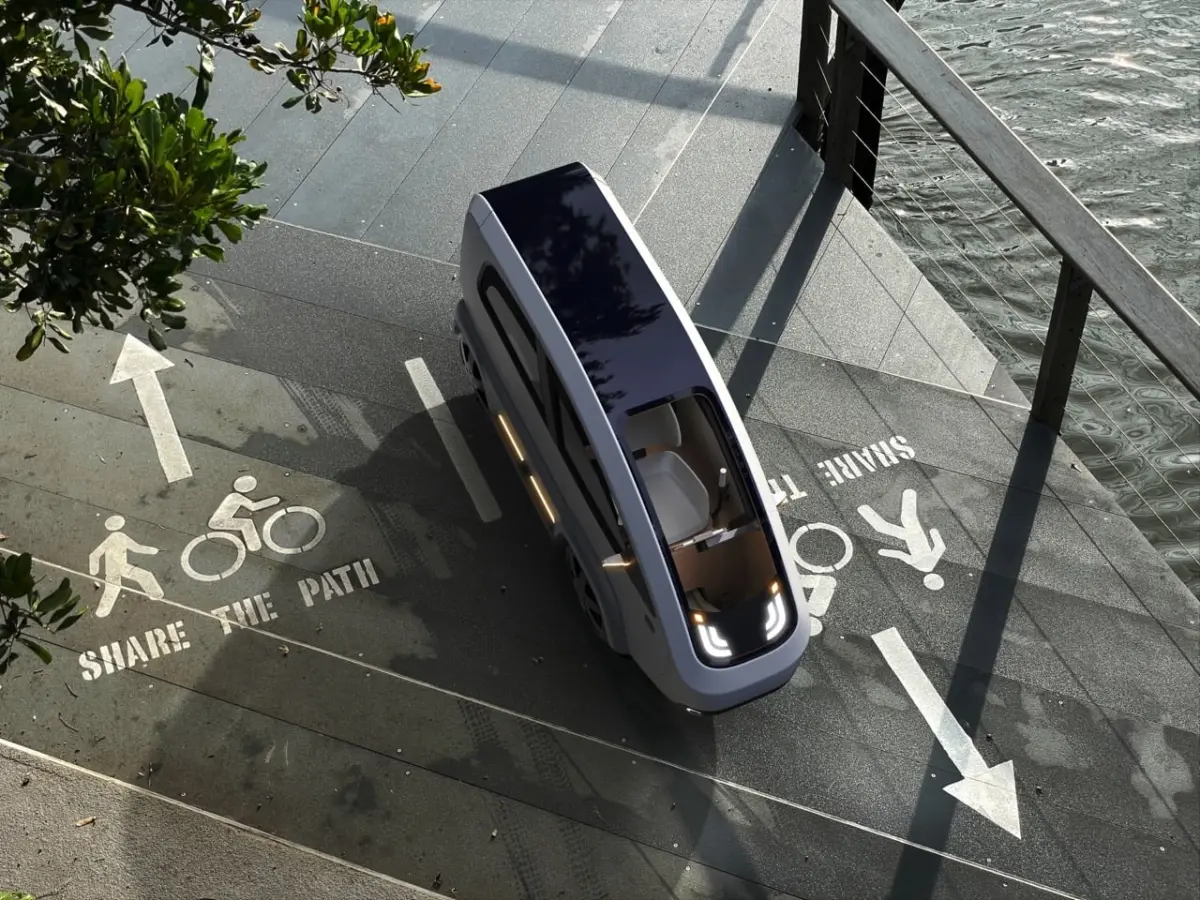
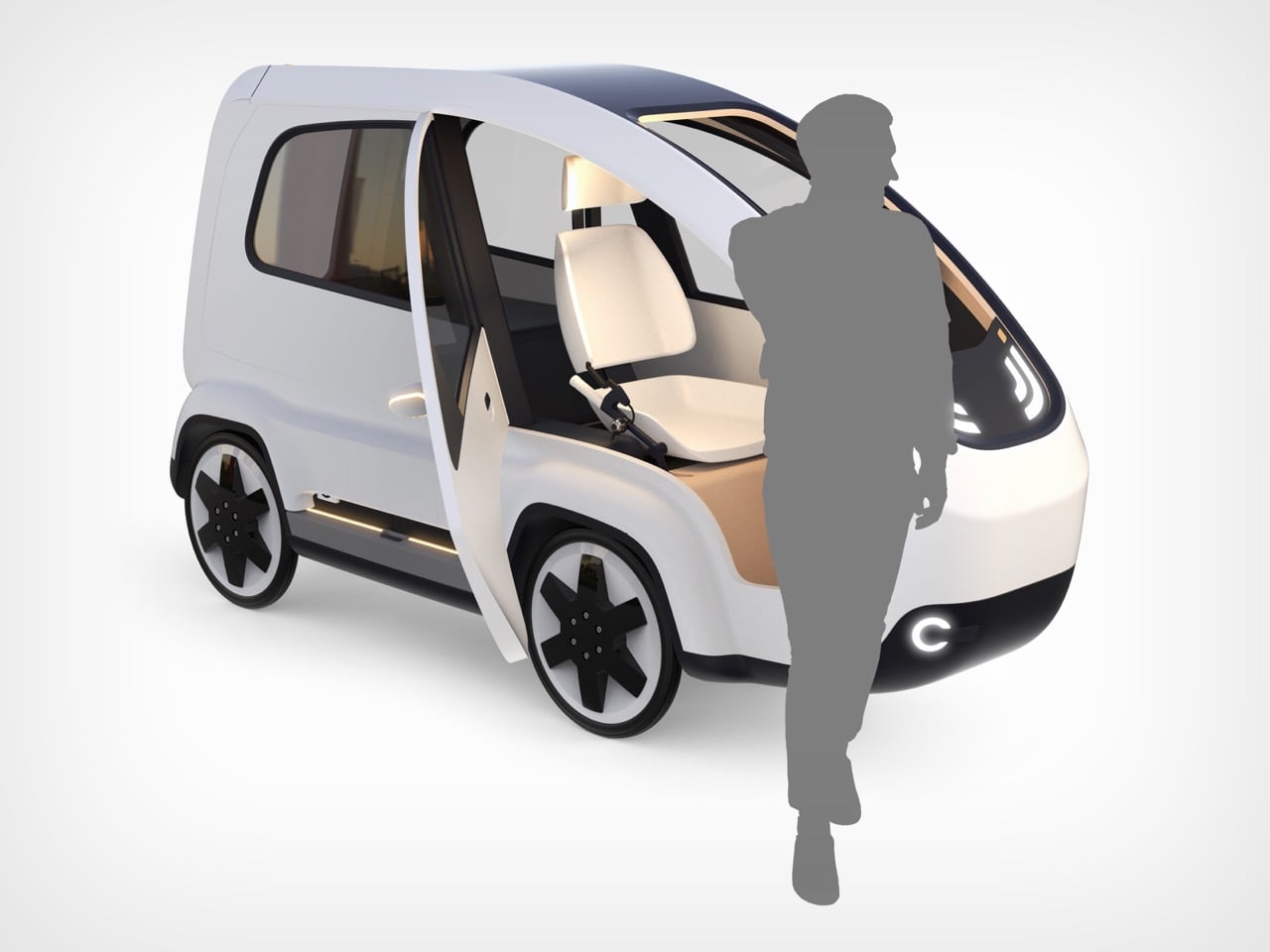
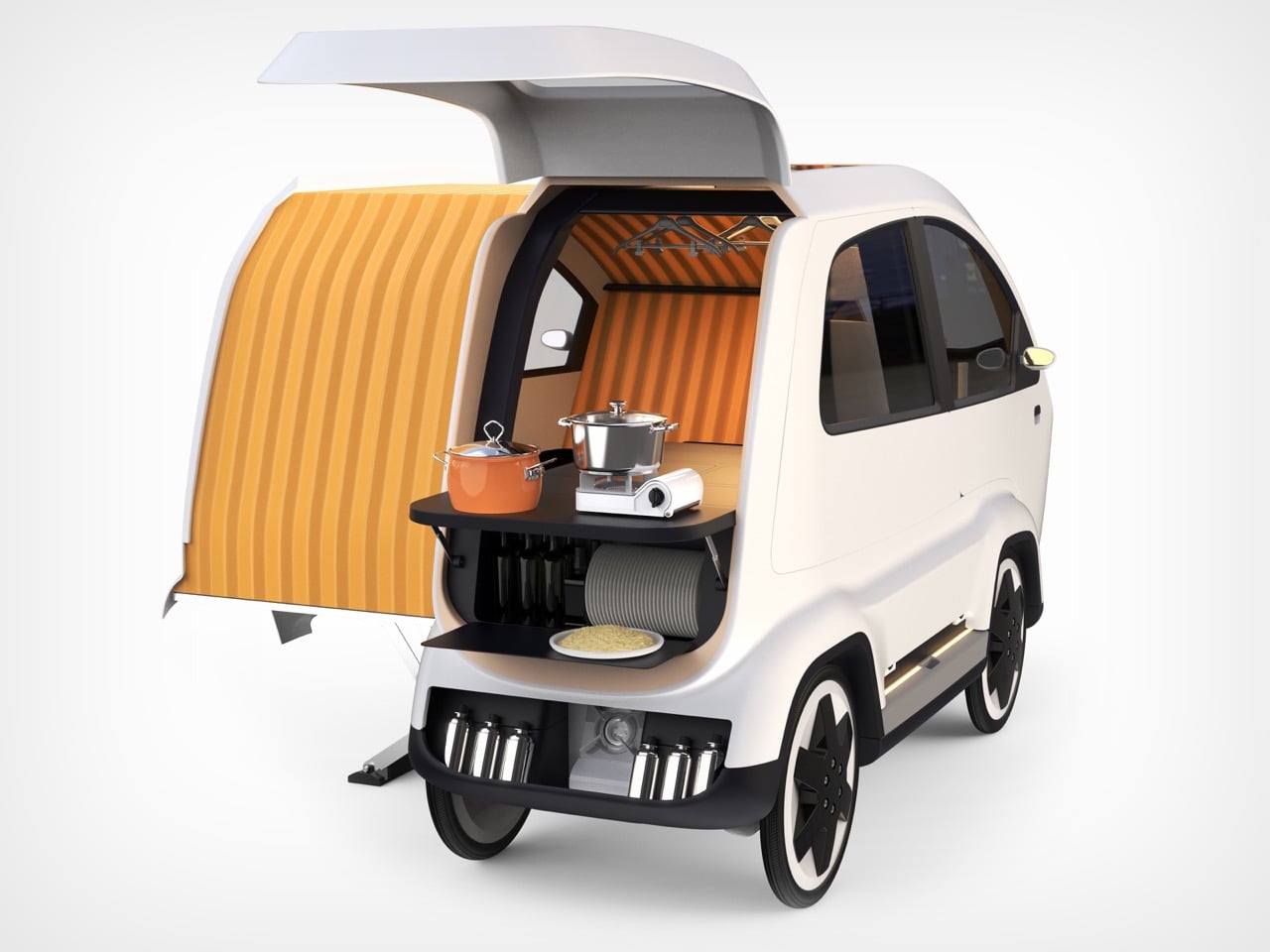
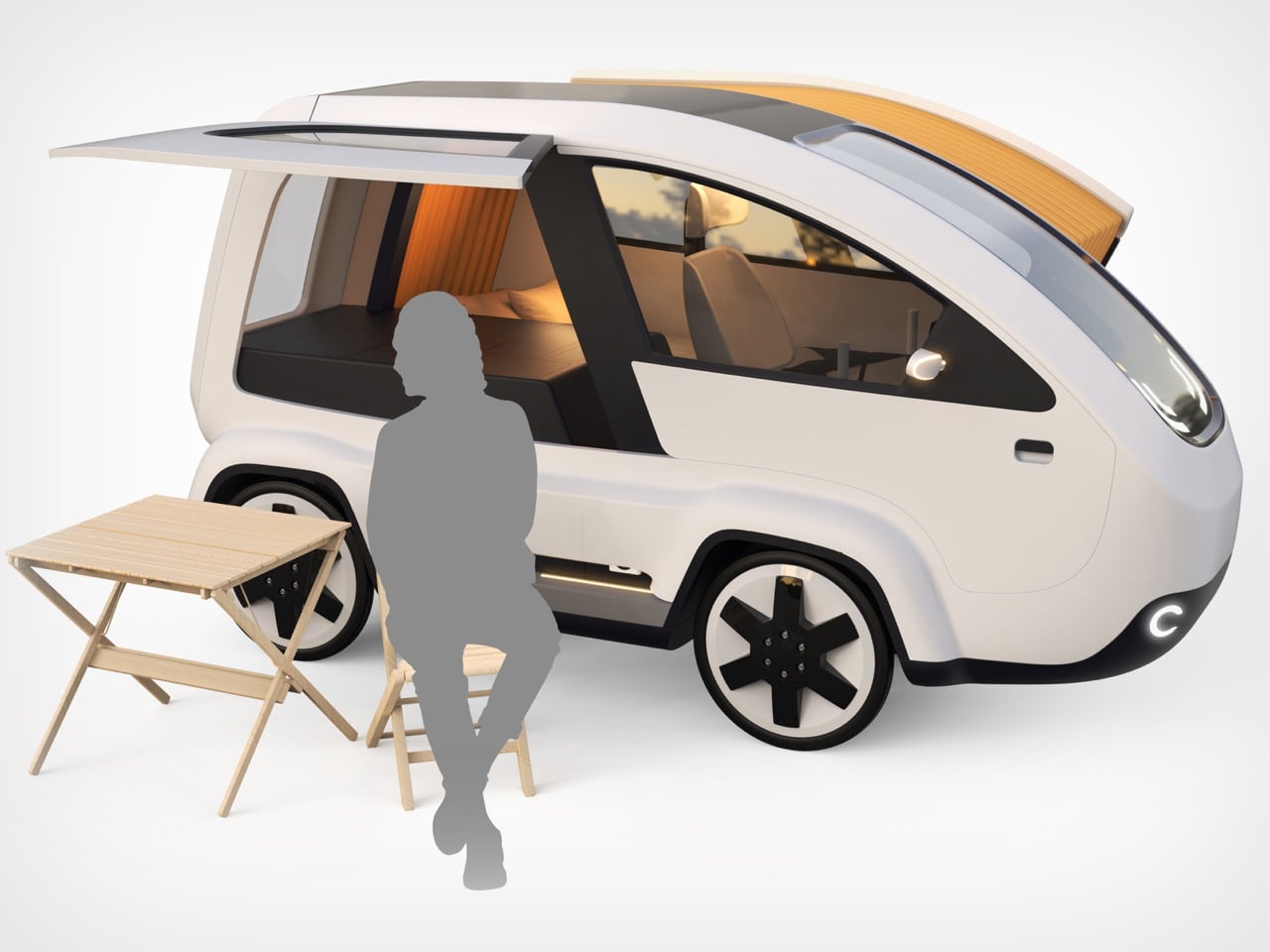
The defining characteristic of the Huuselox concept—and the narrative anchor of its entire design story—is that ingenious rear panel. When fully compressed and folded shut for transit, Huuselox presents the silhouette of a sleek, teardrop-shaped pod. Complete with a wraparound windshield and futuristic running lights, the front half resembles a microcar concept rather than standard camping gear. However, the magic happens upon arrival at camp. As illustrated in the project’s digital renders, the orange-and-white exterior skin fans open in neat, rhythmic pleats.
This expansion utilizes the precise folding logic of a bellows camera or a traditional musical accordion, carefully sheltering a camp stove, a fold-down counter surface, and stashed cookware. The primary objective of this mechanism is to convert the rear of the vehicle into an immediately usable, weather-protected galley without requiring the traveler to pitch a separate kitchen canopy or fiddle with auxiliary shelters. Adding to the vehicle’s insect-like elegance, the cabin doors lift upward and outward in a fluid motion, rising gracefully much like a beetle cracking open its hardened wing cases to take flight.
Within the broader landscape of micro-mobility and bicycle camping, hard-sided bike campers have traditionally attempted to solve the eternal dilemma of limited space by borrowing the sliding-panel mechanisms found in full-sized recreational vehicles. For instance, designs like the Alpencamper Eco Slide Out utilize telescoping hard shells to expand a tiny interior just enough to accommodate a double bed. Huuselox, conversely, takes a decidedly more textile-driven approach by folding a flexible skin. This membrane behaves much more like a high-performance canvas awning than a piece of furniture resting on heavy metal drawer rails.
This engineering choice is exceptionally well-suited for a human-powered or pedal-assisted vehicle where every single gram impacts energy expenditure, even though the current digital renders do not specify the exact total weight of the assembly. Furthermore, utilizing a flexible, pleated membrane grants designer Wu the creative freedom to sculpt the expanding section specifically around human ergonomics and campsite utility, helping to explain why the rear profile evokes the warm glow of a lantern rather than the utilitarian look of a sliding storage drawer.
A Sleeping Berth Behind the Cockpit
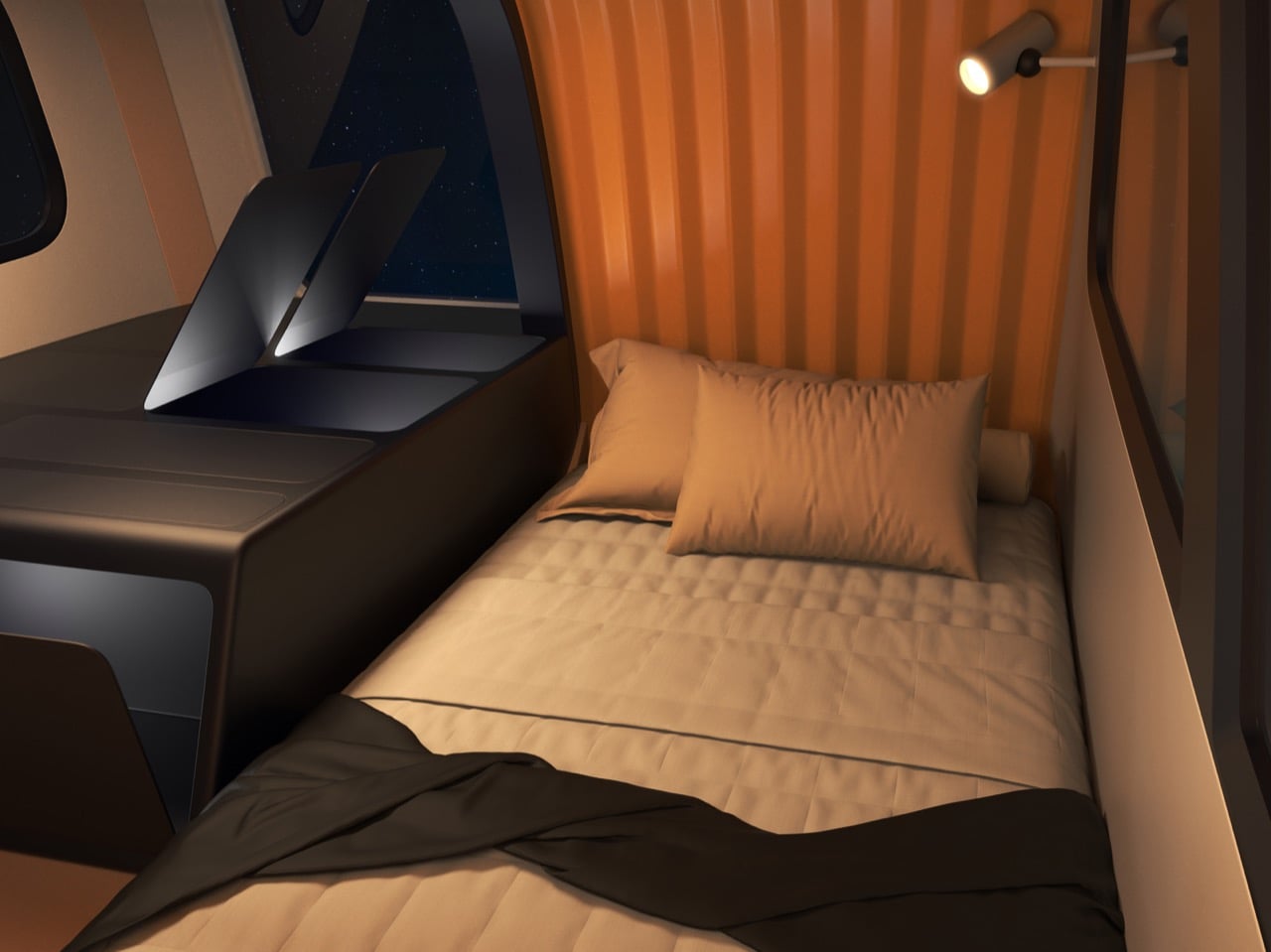
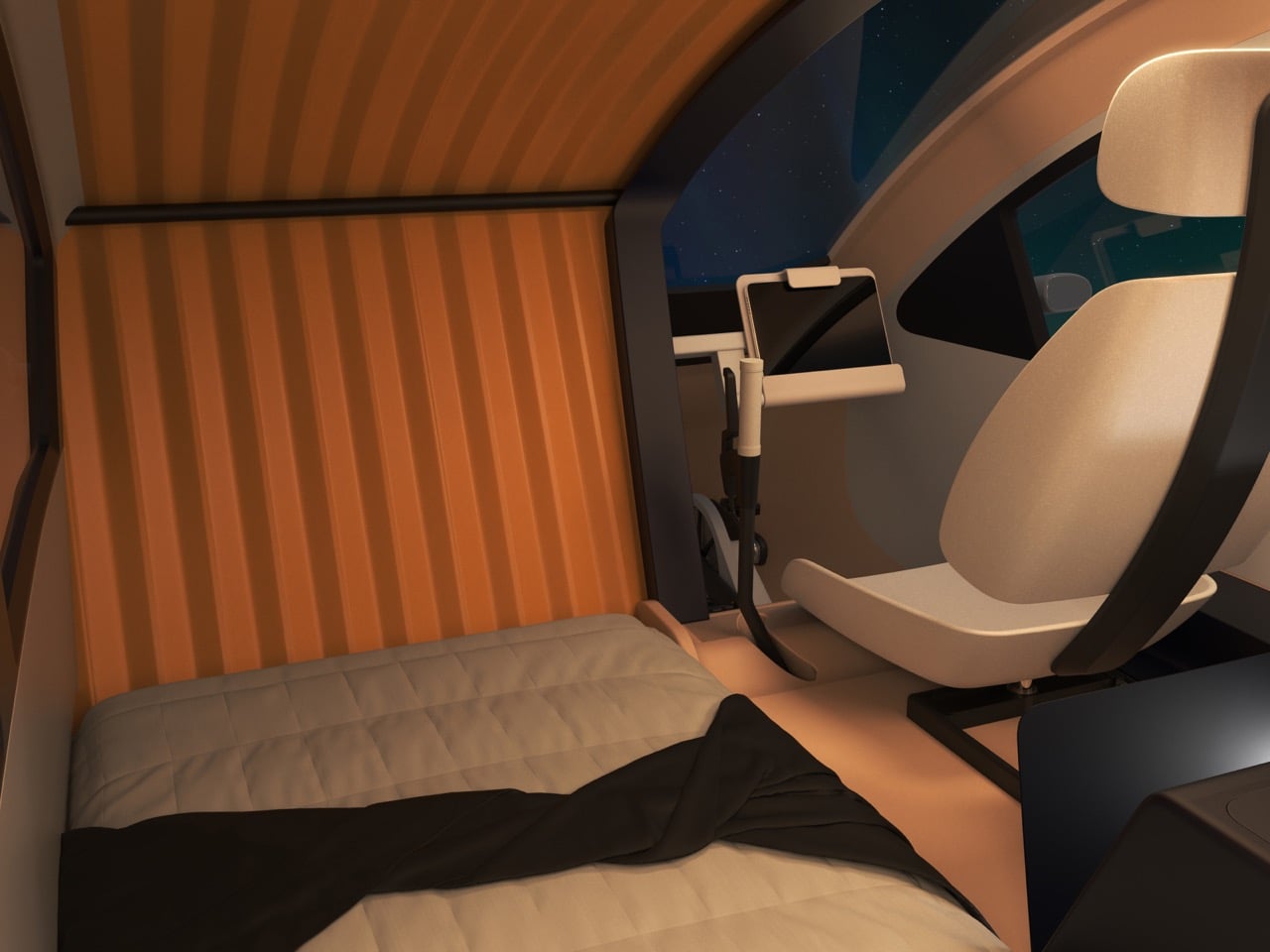
Stepping past the exterior mechanics, the interior renders reveal an interior tailored meticulously for solo adventure. The cockpit centers around a reclined seating position equipped with a tall, supportive headrest, while a dedicated sleeping berth is tucked neatly directly behind the driver’s seat. A ribbed orange interior lining echoes the vibrant color palette and tactile texture of the exterior shell, creating a cohesive visual language that flows seamlessly from the outside world into the sleeping quarters.
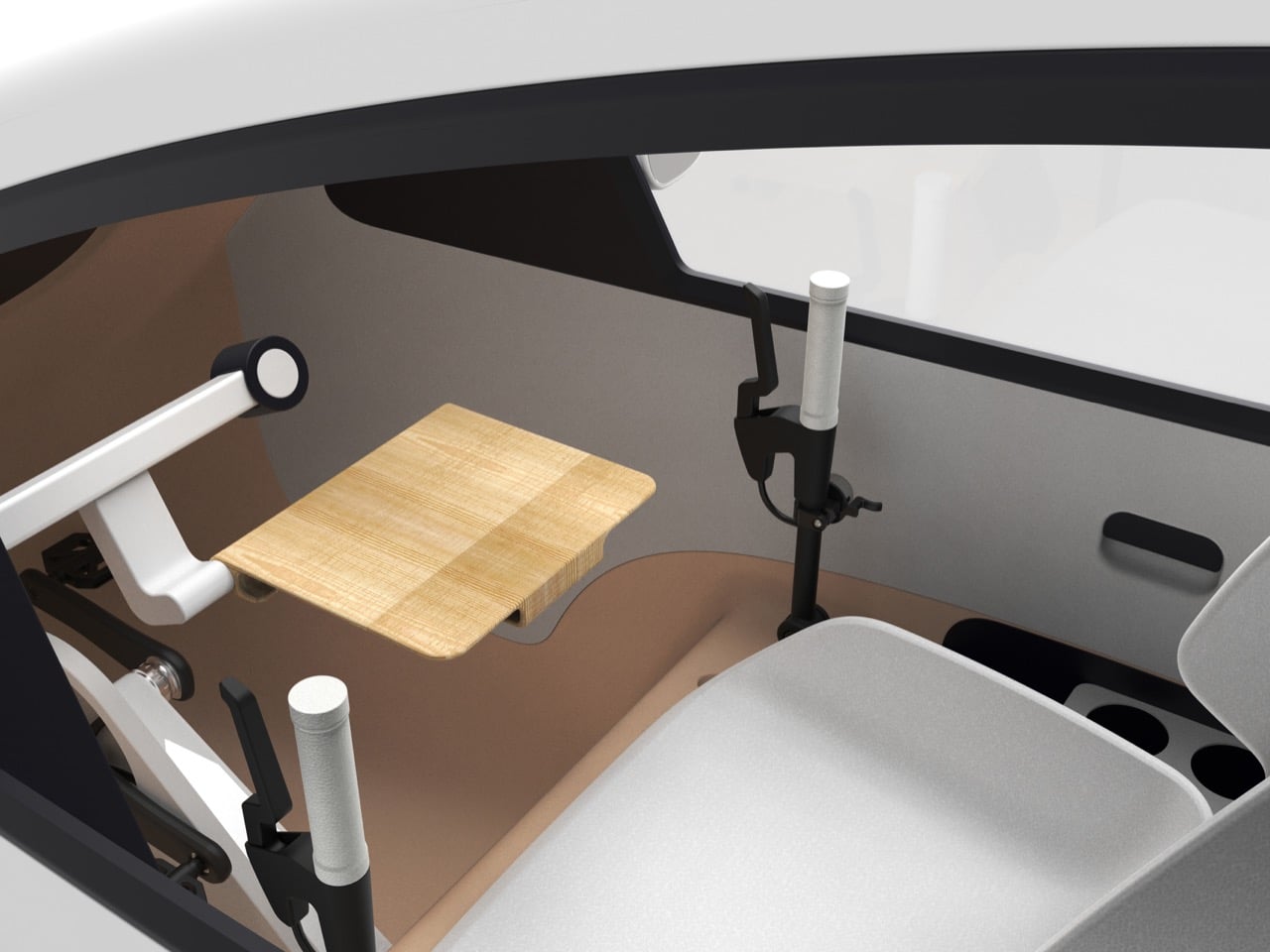
For the modern traveler who cannot entirely disconnect from professional life, a flip-out tray paired with a mounted screen offers a convenient workspace for answering a final batch of emails before drifting off to sleep under a remarkably stylish canvas roof. Additionally, a secondary, wood-topped table mounted on a flexible, articulated arm swings out effortlessly near the front seat. This versatile surface can serve as an eating area or a laptop desk while the vehicle is safely parked at camp. Meanwhile, the visible pedal unit situated in the front reminds observers of the underlying fitness aspect of the journey—effectively functioning as a gym membership with incomparably better scenery than a standard indoor facility.
This strong emphasis on single-occupant intimacy feels entirely deliberate. Other notable micro-camper projects, such as the Hupi trailer, take a similarly minimalist approach by providing a solo cyclist with a fixed protective roof and a compact interior dinette. However, Huuselox distinguishes itself by packaging both the physical shelter and the primary riding position into a singular, unified vehicle. This integration ensures that the campsite infrastructure remains permanently attached to the very machine that propelled the traveler across the miles.
Official descriptions from the design award committee heavily emphasize the vehicle’s sheltered interior cabin, intelligently organized storage spaces, and its capacity for facilitating short-haul trips with minimal setup time—all qualities clearly demonstrated in the conceptual imagery. The entire design philosophy is clearly aimed at maximizing the simple pleasure of hopping effortlessly from one scenic campsite to the next, ensuring the traveler always has a warm place to cook a hot dinner and stretch out comfortably at the conclusion of a long day on the road.
A Thesis Project With a Second Life
The journey of Huuselox began in earnest as Yu-Chang Wu’s 2022 bachelor’s thesis, developed under the evocative programmatic title Space on the Move. Its recent recognition at the European Product Design Award places the project firmly within the Automotive and Transport Product Design sector, specifically under the Conceptual, Design Only, or Prototype category. This classification is an important distinction, as the award celebrates the forward-thinking potential of the concept itself rather than certifying that a finished, production-ready vehicle is currently available for purchase or fully certified for public road use.
The broader international competition regularly attracts visionary entries from more than 80 countries worldwide, historically honoring legendary automotive design powerhouses such as Maserati and Pininfarina. Entering the ranks of such esteemed company represents a monumental leap for a project that originated merely as a university graduation requirement.
In terms of conceptual philosophy, the project shares a close philosophical cousin in the SpaceCamperBike, an innovative electric cargo bike similarly configured to handle riding, working, sleeping, and camping duties as an all-in-one unit without the need for a separate towed trailer. Both designs champion the idea of mounting the shelter directly onto the cycle frame, thereby keeping the rider’s active transportation gear and passive camping gear fused into a single entity.
Ultimately, what resonates most about Huuselox is the sheer ingenuity derived from a single, defining mechanical detail. The pleated, accordion-like shell grants this compact travel pod a striking, unforgettable silhouette alongside a deeply practical justification for expanding outward once the journey halts for the evening. In an era where micro-mobility design can sometimes feel iterative, creative concepts that embrace bold, unconventional forms offer a refreshing glimpse into the future of human-powered outdoor exploration.