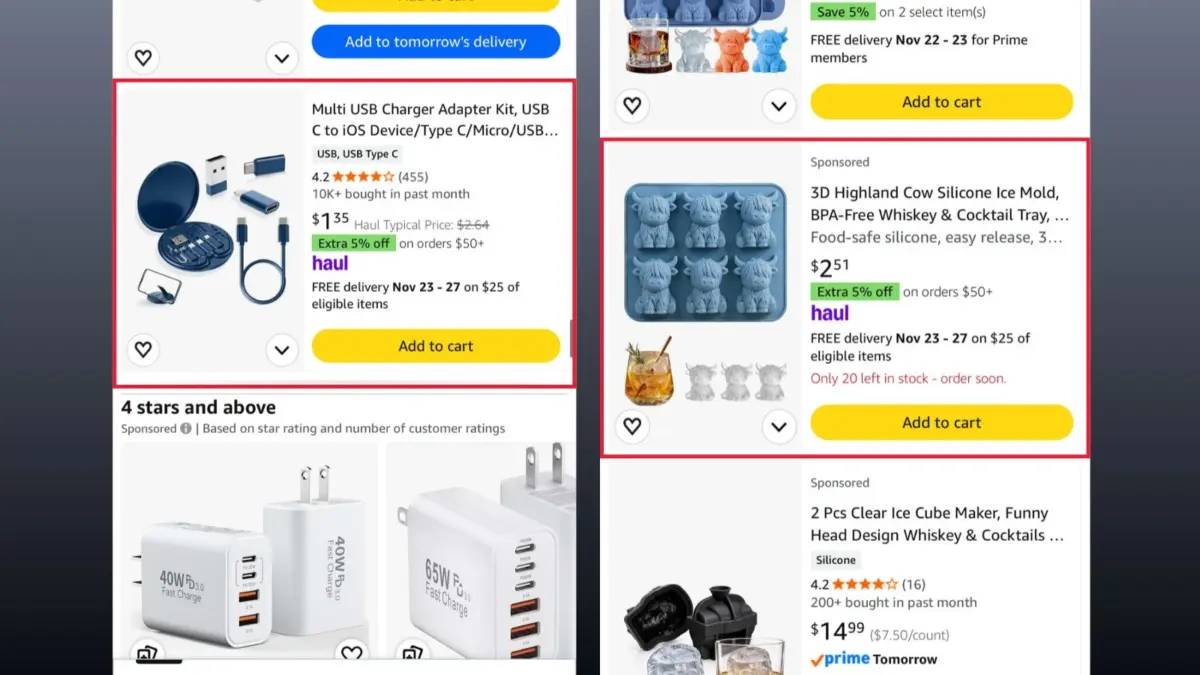
Amazon is currently testing the inclusion of product listings from its budget-friendly Amazon Haul section directly into its main search results, marking a significant shift in how the e-commerce giant presents low-cost merchandise to its massive customer base.
The move brings ultra-cheap goods—traditionally sequestered within a separate, dedicated storefront—into the primary discovery channels that millions of shoppers use every day. By merging these visibility pathways, Amazon is signaling a deeper integration of its discount strategy into the core shopping experience, potentially exposing mainstream consumers to thousands of low-priced items they might not have otherwise encountered while browsing the site.
The initiative follows the late 2024 launch of Amazon Haul, a specialized shopping experience designed to offer heavily discounted, low-cost items that typically feature longer shipping windows of one to two weeks. Many of these products are shipped directly from manufacturers and suppliers located overseas, primarily in China. The storefront was established as a direct competitive response to the rapid rise of alternative low-cost marketplaces that have captured significant market share among price-sensitive consumers, notably platforms like Temu, Shein, and AliExpress.
Since its initial rollout, Amazon Haul has experienced substantial growth in both its product catalog and its consumer adoption rates. According to data provided by the company, the selection of available items on Haul has expanded dramatically, growing more than 25 times over to encompass a catalog of more than 10 million products. Concurrently, consumer engagement has surged, with the number of customers making purchases through the Haul section increasing by nearly 350% year over year.
The economic appeal of the platform remains central to its expansion and strategy. The vast majority of items available through Amazon Haul are priced at less than $10, catering directly to bargain hunters and shoppers looking for everyday essentials, novelty items, and lifestyle goods without a significant financial commitment. Furthermore, the catalog features an expansive selection at the lowest end of the pricing spectrum, with more than a million products priced under $5.
By testing the integration of these deeply discounted listings into standard search results, Amazon is exploring new ways to capture consumer demand at the budget end of the retail market. Historically, mainstream search results on Amazon prioritized faster shipping speeds, higher seller ratings, and prime fulfillment eligibility, which often placed low-cost, direct-from-overseas goods at a disadvantage regarding visibility. Incorporating Haul items into these main search queries could alter the competitive dynamics for third-party sellers on the platform while providing shoppers with a more direct view of the company’s lowest-cost offerings alongside traditional merchandise.
As the retail landscape continues to evolve in response to changing consumer spending habits and the dominance of ultra-low-cost cross-border e-commerce platforms, Amazon’s ongoing test represents a crucial evolution in its strategy to defend its market position and capture the attention of value-driven shoppers across its global ecosystem.