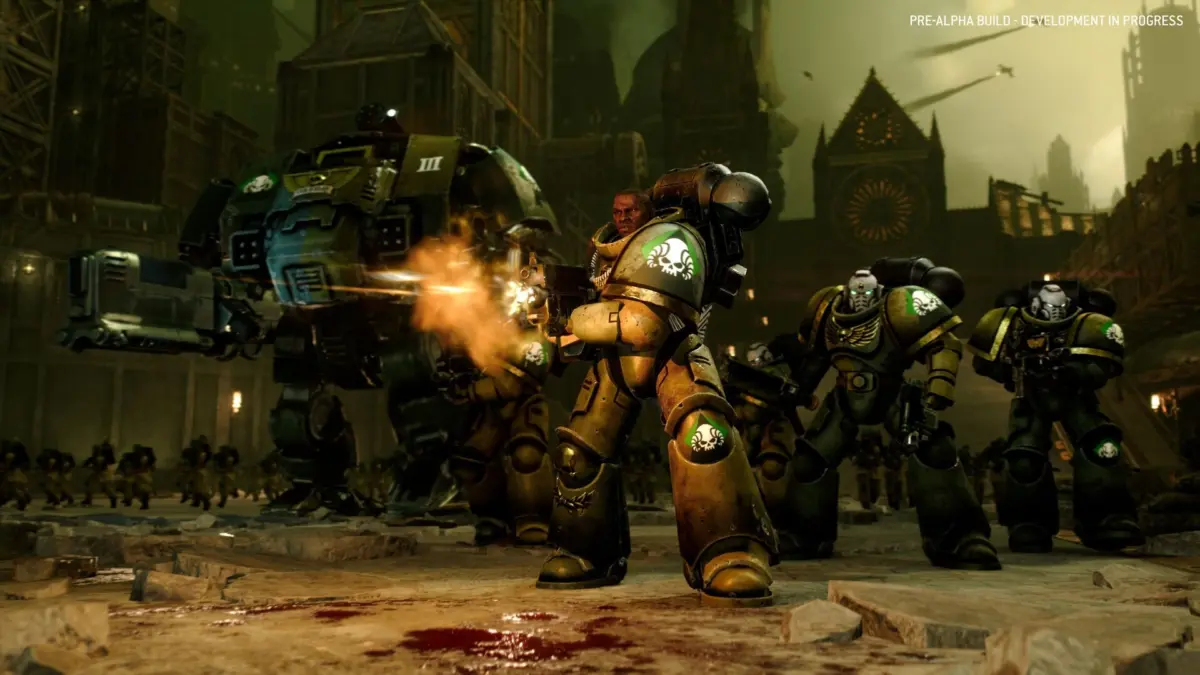
The latest deep dive into Total War: WARHAMMER 40,000 has offered strategy fans a comprehensive look at how the upcoming grand strategy title handles faction asymmetry, narrative campaigns, and the logistical nightmares of commanding transhuman warriors in the grim darkness of the far future. Following a universally praised showing of an early build at Gamescom earlier this year, developer Creative Assembly has continued refining the game through closed friends-and-family playtests. This development cycle recently culminated in a sprawling, hour-and-twenty-minute "alpha strike" livestream that showcased an Ultramarines campaign in motion.
Kicking off twenty-three turns into an active campaign, the livestream directed viewers’ attention to the fierce battle for the Praevoss system. This specific theatre of war features three conquerable planets, accompanied by a hostile gas giant and a desolate dead world that remain entirely off-limits for active combat.
Rather than casting players into a traditional, monolithic sandbox where a single map is slowly painted in a faction’s colors over hundreds of identical turns, Total War: WARHAMMER 40,000 structures its grand strategy around distinct narrative arcs tied to individual star systems. Players must navigate a self-contained mini-campaign within one system before progressing to the next, carrying over a portion—though crucially not all—of the infrastructure, resources, and forces they have cultivated. This structural design appears aimed at addressing a common grand strategy pitfall, where late-game campaigns frequently lose their momentum once a player achieves insurmountable dominance. By introducing soft resets and forcing commanders to adapt to entirely new foes and tactical theatres, the campaign structure promises to maintain a consistent sense of freshness and narrative momentum from start to finish.
Within the Praevoss system, the primary objective for the Ultramarines is straightforward yet daunting: liberate vital Imperial planets from a sprawling and aggressive ork scourge. As the Space Marines push forward and capture specific regions, commanders are presented with distinct tactical and administrative choices. One option available to the player is to "scour the battlefield," a ruthless administrative measure that yields a substantial payout in Requisition resources at the direct expense of raising local Suspicion.
Suspicion management introduces a compelling layer of faction friction that mirrors the deep lore of the Warhammer 40,000 universe. During the demonstration, the player calls down a devastating orbital fleet bombardment to soften up entrenched ork positions prior to a ground engagement. Because civilian populations still reside in the target zones, this heavy-handed tactic triggers an immediate increase in Suspicion.
The mechanic effectively emulates the complex and occasionally tense relationship between the Imperium’s planetary governments and the transhuman demigods dispatched to save them. Space Marines have a long and storied history of falling out of alignment with standard Imperial authorities—most notably seen when the Astral Claws chapter hoarded planetary tithes and became infamous as the Tyrants of Badab, alongside the cataclysmic events of the Horus Heresy. A local planetary governor, naturally, might feel more than a little uneasy witnessing towering angels of death trampling across their world with absolute impunity.
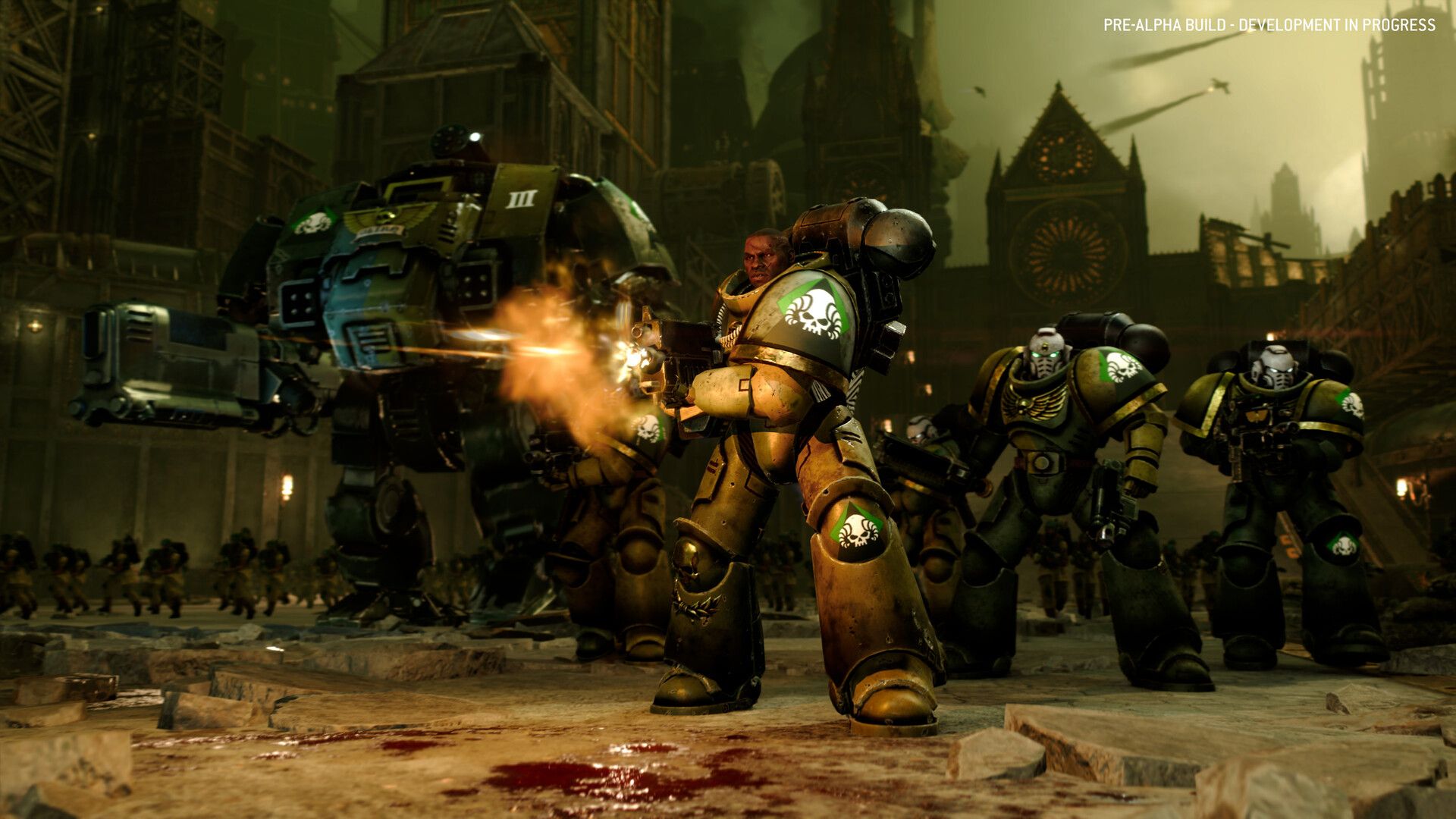
Conversely, playing diplomatically and keeping the civilian populace pacified prevents Suspicion from escalating. This cooperative approach rewards the Space Marine player with Influence points, which can subsequently be spent to secure vital military reinforcements from local Imperial Astra Militarum troopers.
Securing outside reinforcements is more than just a tactical luxury; it is a vital necessity born from another core mechanic designed to reflect the source material: making Space Marines exceptionally difficult and costly to replace. Unlike many factions in traditional Total War titles that easily replenish heavy battlefield losses turn after turn, the angelic warriors of the Adeptus Astartes operate under strict limitations. Lore-wise, it takes a decade of rigorous training and biological augmentation to forge a single Space Marine, and the supply of precious progenoid glands required to cultivate new gene-seed is finite.
The livestream demonstrated that while a portion of battlefield casualties manage to return after a skirmish—thanks to superhuman physiologies that allow them to survive wounds that would prove fatal to normal humans, or through the grim fate of having their nearly dead bodies encased into Dreadnought chassis to fight on—true, fresh reinforcements must be requisitioned from the orbiting fleet. These reinforcements can even be deployed directly into active engagements via drop pods that slam down right on top of enemy lines.
Throughout the long-running Total War: WARHAMMER trilogy, Creative Assembly has consistently prioritized distinct faction identities, ensuring that every race feels fundamentally unique to play. The inclusion of these deeply specialized logistics, custom wargear loadouts, and narrative constraints for vanilla Ultramarines indicates that this dedication to mechanical fidelity is carrying forward into the 41st millennium.
While the livestream provided exhaustive details on how orbital assets function as a critical lifeline for ground forces—acting as a source of devastating bombardments, vital reinforcements, and interstellar transport between planets—it notably stopped short of showcasing direct ship-to-ship fleet battles. For players hoping to command massive naval armadas in the void between the stars, existing titles like Battlefleet Gothic: Armada 2 continue to fill that specific tactical niche.