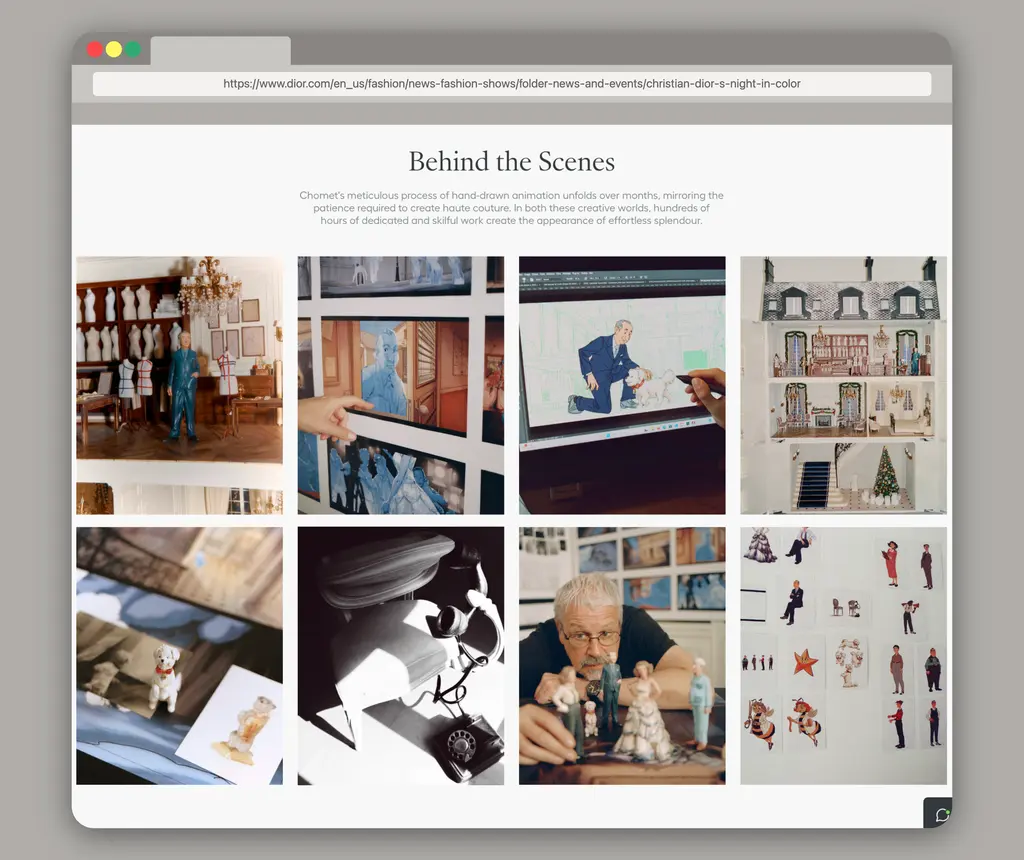
In an era where generative artificial intelligence can conjure a polished commercial in seconds, major brands are investing thousands of hours into tactile, hand-crafted media—and publicizing the meticulous labor behind it. From Levi’s to Apple, heavy-hitting companies are leaning into stop-motion, claymation, and hand-drawn animation, transforming behind-the-scenes (BTS) footage from a forgotten industry archive into a frontline marketing necessity.
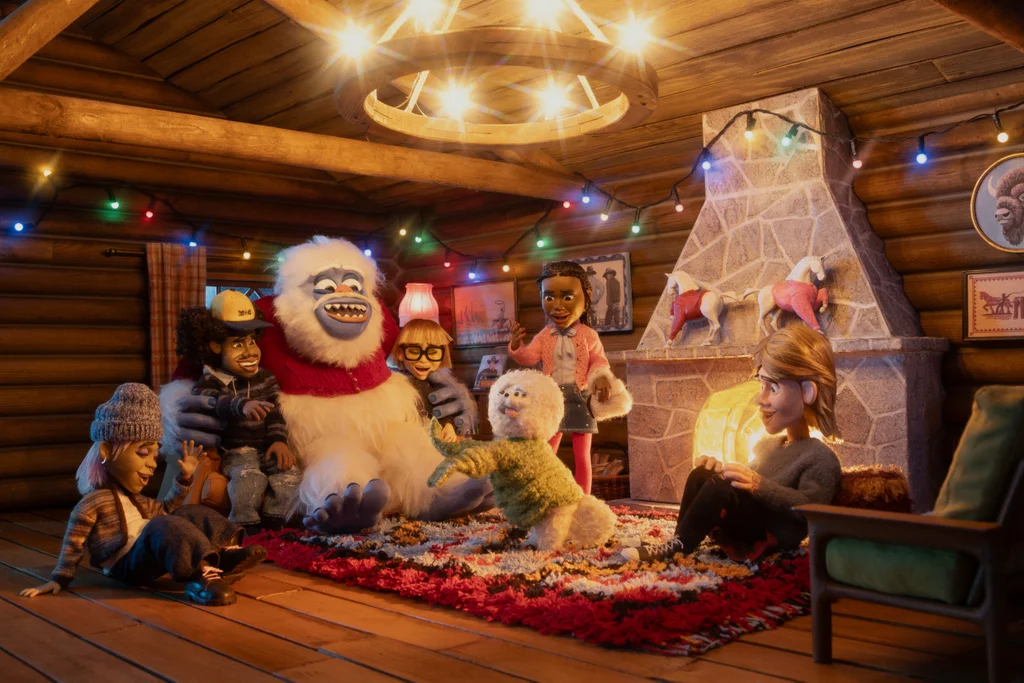
Levi’s stop-motion holiday ad, titled “Let’s Get Fuzzy,” required 2,000 hours to produce. Every element of the spot—featuring tiny sweaters on tiny horses, miniature jeans complete with miniature red Levi’s tabs, and an adorably befuddled yeti character—was crafted entirely by hand. To prove it, Levi’s published a behind-the-scenes companion video across its primary Instagram and YouTube channels. According to Kenny Mitchell, Levi’s global chief marketing officer, that transparency was central to the entire campaign strategy.
“You almost want to make sure that you can show some of the verification and receipts for the hard work, effort, and craft that you’re putting in,” Mitchell says. He recalls watching the campaign debut on TikTok, where an early user comment dismissed the spot as “AI slop.” Literally the next comment underneath read, “No, this is stop motion.”
For Mitchell’s team and the animation partners at production studio Blinkink, who spent four hours on every single second of animation in “Let’s Get Fuzzy,” the BTS film served a dual purpose: granting fans deeper access to the brand’s design process while simultaneously erecting a defense against inevitable artificial intelligence accusations.
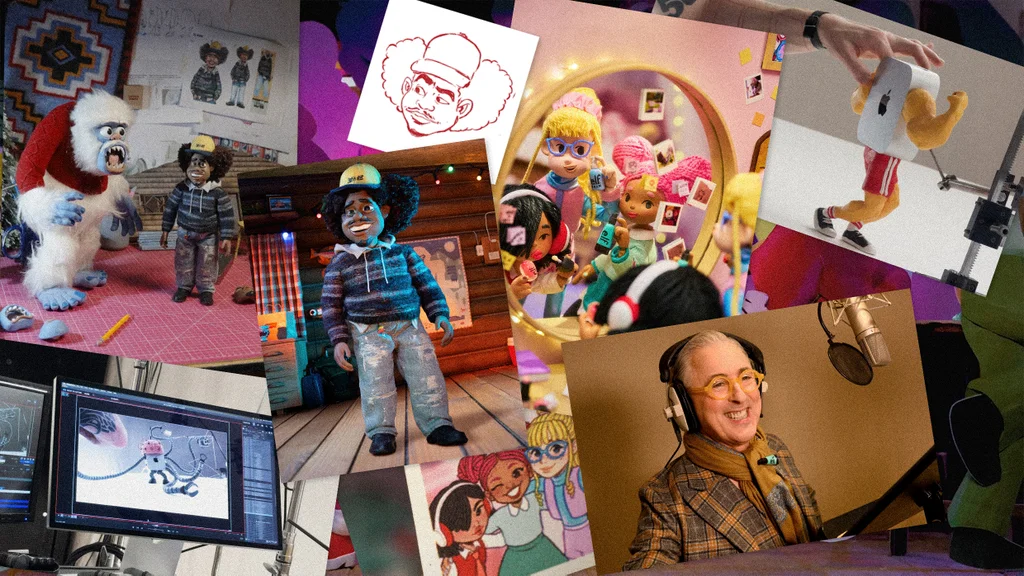
It is a playbook that a growing roster of prominent brands has rushed to adopt. Apple, Anthropologie, Prada, Dior, E.l.f., and Loewe are among the major names that have recently released claymation, stop-motion, or hand-drawn advertisements paired with extensive behind-the-scenes documentation. As public scrutiny and finger-pointing over AI reach a fever pitch, brands are dedicating significantly more time and resources to transparency footage, making BTS content arguably more valuable to consumer trust than the primary ad campaigns themselves.
The Behind-the-Scenes Renaissance
Greg Lotus, global head of production at creative company VML, remembers an era roughly a decade ago when his clients began requesting behind-the-scenes content in mass quantities. At the time, that material was generally geared toward applications for advertising awards rather than public consumption. It languished on brand YouTube channels or agency case study pages, largely hidden from mainstream view.
“It just always seemed kind of silly to me,” Lotus says. “Nobody really cares about the fact that you had a couple days on a set and shot this toothpaste commercial.”
Today’s wave of behind-the-scenes content operates under entirely different rules. First, Lotus notes, it originates from craft-forward brands that already command devoted, passionate fan bases. Second, it highlights artistic mediums that play exceptionally well on modern social video platforms. Prada documented how former Disney animator John Pomeroy drew its holiday campaign “Drawing Prada” frame by frame; E.l.f. filmed actor Alan Cumming reading narration over three adorable stop-motion characters; and Levi’s meticulously detailed the process of designing a tiny red sweater for an equally diminutive yeti. The resulting media serves as undeniable eye candy for social feeds.
Crucially, brands are posting this content directly to their primary social media profiles rather than hiding it away. This intentional shift elevates the BTS video from an industry-facing proof point to an integral, highly anticipated component of the core campaign.

“Before, BTS was something that sometimes the agencies and clients did just to have documented the process,” says Saulo Rocha, an executive creative director at Apple’s bespoke global agency, TBWAMedia Arts Lab (MAL). “It was more of an internal thing, and it very rarely went to YouTube. Even YouTube is far from being what Instagram or Twitter or even TikTok can be to this kind of content.”
From a corporate perspective, the current cultural moment couldn’t be better primed for BTS content to dominate main feeds. Mitchell, Levi’s CMO, points out that in an era of “brand entertainment,” where consumers possess unprecedented access to corporate storytelling, BTS videos allow fans to feel like active participants in the design journey. Simultaneously, the format provides an unmistakable signal of a brand’s commitment to human creativity—and a shield against AI accusations.
“There’s been so much conversation around AI, but what you actually see is a focus from some of the best brands and sharpest minds on creative excellence being one of the big differentiators,” Mitchell says. “There’s a lot of things that AI can do, but we believe strongly—and I think you’re seeing it from others around the marketplace—that this human creativity and the craft connected to it is something that drives a tremendous amount of value for companies. It’s what our fans want to see.”
‘No Slop = Will Shop’
To introduce its new Mac mini device, Apple opted to produce a spot entirely using claymation. MAL partnered with Blinkink on a 43-second commercial called “The Mighty Mac mini.” As a treat for brand loyalists, Apple also published a behind-the-scenes video to its secondary Instagram account, @helloapple. That BTS clip massively outperformed the actual commercial, pulling in 197 million views compared to the spot’s 32 million on YouTube. It is now the most-watched video ever posted by @helloapple and ranks among the broader brand’s most popular social posts of all time.
Apple is no stranger to emphasizing craftsmanship. Alongside MAL, the tech giant has a history of using tactile advertising to underscore its creative focus, such as the 2019 AirPods spot “Bounce,” which used practical effects to turn a cityscape into a trampoline park, or “Fuzzy Feelings,” a 2023 holiday film set in a quaint stop-motion town. Both campaigns included companion BTS videos on YouTube. However, public reaction to the work has shifted notably.

The comment sections beneath the Mac mini @helloapple video feature hundreds of users expressing deep appreciation. “Thank you for hiring human animators to make this,” one viewer wrote. “In a world full of AI commercials, thank you for this Apple,” added another. A third chimed in: “Who else enjoys BTS more than the video itself?!”
Greg Greenberg, an executive creative director at MAL who led the team behind Apple’s 2025 holiday spot “A Critter Carol,” which relied on physical puppets in a handmade forest, notes that the campaign wasn’t initially conceived as a political statement. Still, the team was acutely aware that the hand-crafted ad might enter a larger online conversation. It did, becoming Apple’s most-viewed holiday film ever with 141 million social views, accompanied by a wave of public gratitude.
“Seeing brands go, ‘We know at the core what makes us human; we still believe in the creativity of people,’ that’s a comforting feeling,” Greenberg says. “I think that’s probably why you’re seeing a lot of people respond so positively. And a lot of other brands are probably making very deliberate decisions to go, ‘We need to make our work like this,’ because even if it’s not AI, but for some reason somebody confuses it for that, the internet will have its way with you if it thinks you’ve gone awry from what is the right way to do things.”
Recent campaigns from Prada, Levi’s, E.l.f., and others validate that perspective. Prada’s behind-the-scenes video accumulated 2.8 million views and thousands of comments thanking the brand for avoiding artificial intelligence. Under Levi’s BTS post, a user declared, “Yes!!!! Real art!!! I respect this so much.” An E.l.f. follower encapsulated the prevailing consumer mood with a blunt declaration: “No slop = will shop!”
In an email statement, E.l.f. CMO Oshiya Savur explained the brand’s deliberate choice to exclude generative AI and computer-generated imagery: “We’re human first, human last at E.l.f. AI can be a useful tool, but the ideas and the taste come from people. For this story, we wanted you to feel the care in every frame, because the care is part of the story.”
This widespread consumer fatigue with artificial intelligence creates a positive halo effect for brands that embrace authentic craftsmanship. Conversely, missteps can provoke fierce backlash.
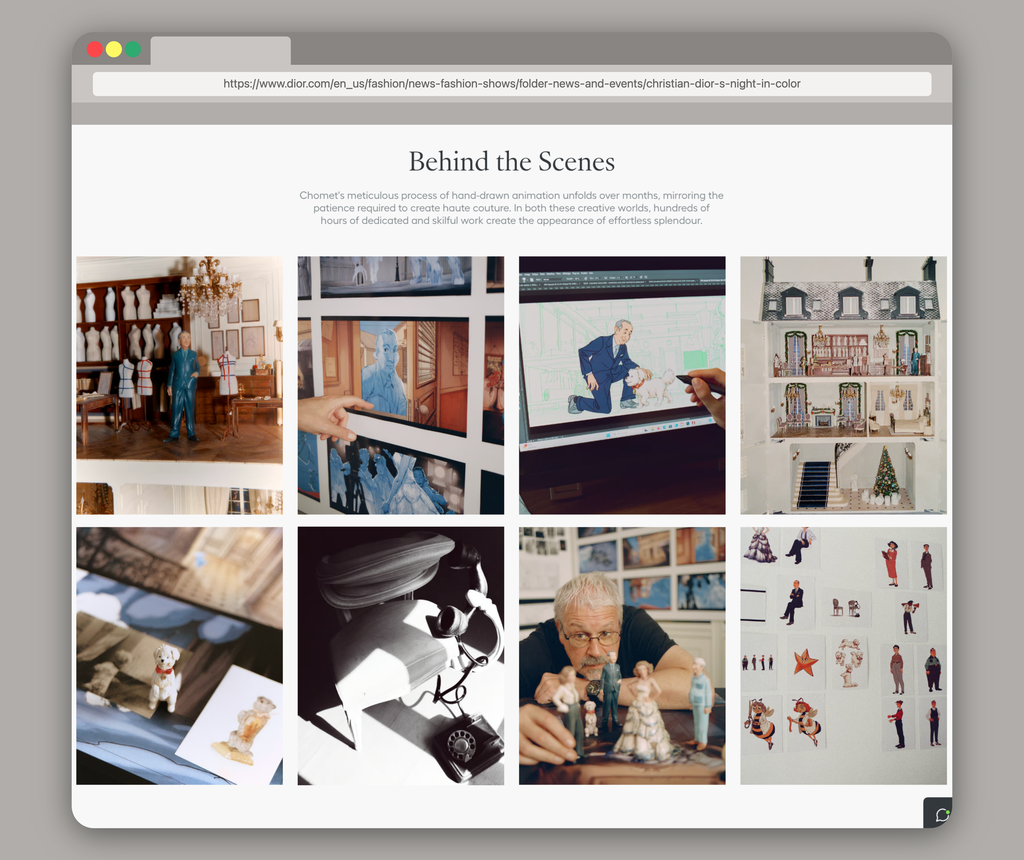
Dior’s seven-minute animated holiday commercial, “Christian Dior’s Night in Color,” was directed by French animator Sylvain Chomet, who appeared in the brand’s promotional BTS video to explain that his team worked using 1940s techniques. Yet, sharp-eyed commenters quickly pointed out visual anomalies resembling AI-generated imagery, including warped lettering, inconsistent eyes, and misplaced finger bones. While the film’s creators defended the work by pointing to an “automated interpolation” system used to generate in-between frames, fans turned against the brand, flooding comment sections with demands that Dior hire real artists. LVMH, Dior’s parent company, did not respond to requests for comment.
According to VML’s Lotus, marketers must recognize the prevailing public bias against artificial intelligence. “People don’t like to be fooled,” he notes.
At a time when brands can theoretically generate endless digital assets instantly, audiences interpret physical craft as tangible evidence of corporate values. The behind-the-scenes video serves as the ultimate proof of authenticity, provided it is executed honestly.
For years, many advertising creatives have worried that artificial intelligence might render their profession obsolete, while agencies increasingly integrate AI tools into their workflows. Yet, industry leaders agree that as AI oversaturation grows, public demand for human creativity scales alongside it.
“There’s always an extreme to every extreme, and there’s been an extreme increase in AI and in questioning what is real and what’s not real,” Greenberg says. “That leads to an extreme on the other side, which is a proliferation of things made by hand. I don’t think that’s going to go away, but I do think, just in general, stuff always evens out.”
Greenberg anticipates that while stop-motion ads may reach a saturation peak, the broader resurgence of human craft is here to stay. Brands seeking genuine consumer relationships will continue investing in human-made art, whether through hand-drawn animation or live-action cinematography shot on physical film. Meanwhile, MAL’s Rocha predicts that consumers are growing increasingly discerning.
“We might get more judgmental,” Rocha says. “I think the more you see of something, the more you become empowered to critique it.” Truly exceptional BTS content will win out, exposing brands that chase the trend superficially. “Some brands will tap into it, but for the wrong reasons. That’s going to be evident, because now we’ll feel smart enough to tell the difference.”
While viewer enthusiasm for behind-the-scenes content will likely fluctuate as the trend matures, its current renaissance offers a validation for creatives that the public still honors their labor—and that brands remain willing to fund it.
“The future may be full of perfectly generated AI content, but I suspect people will continue to gravitate toward work that bears the fingerprints of the makers,” Lotus says. “Maybe it’s the Gen X in me, but I think there’s a chord in everyone that gets struck when they encounter art made by people who cared deeply about the details. The work is great not ‘despite the imperfections,’ but because of them.”