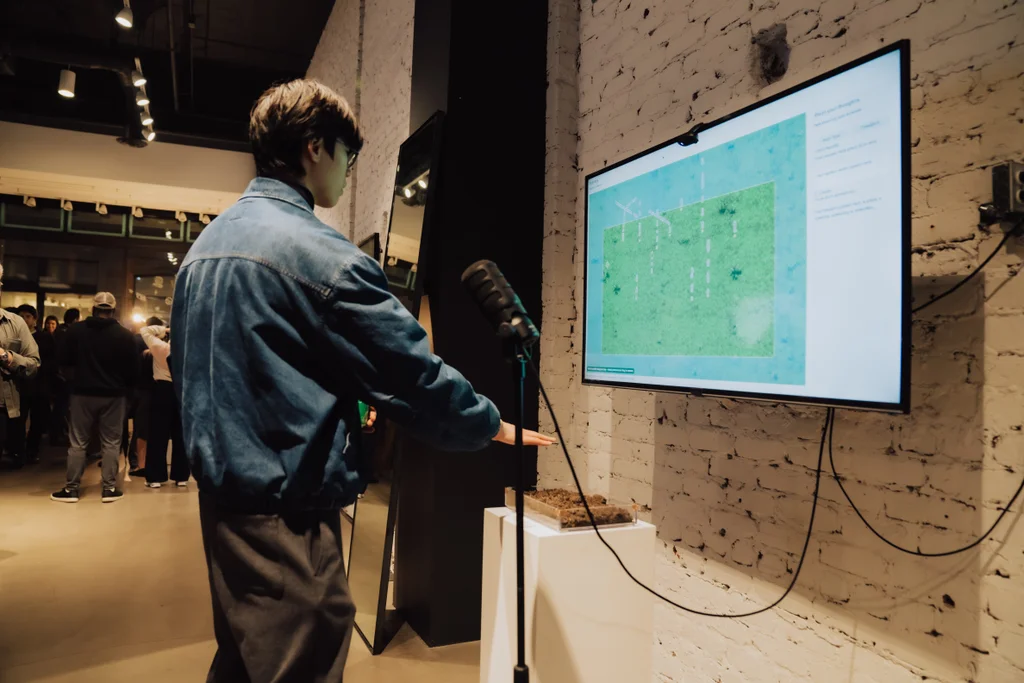
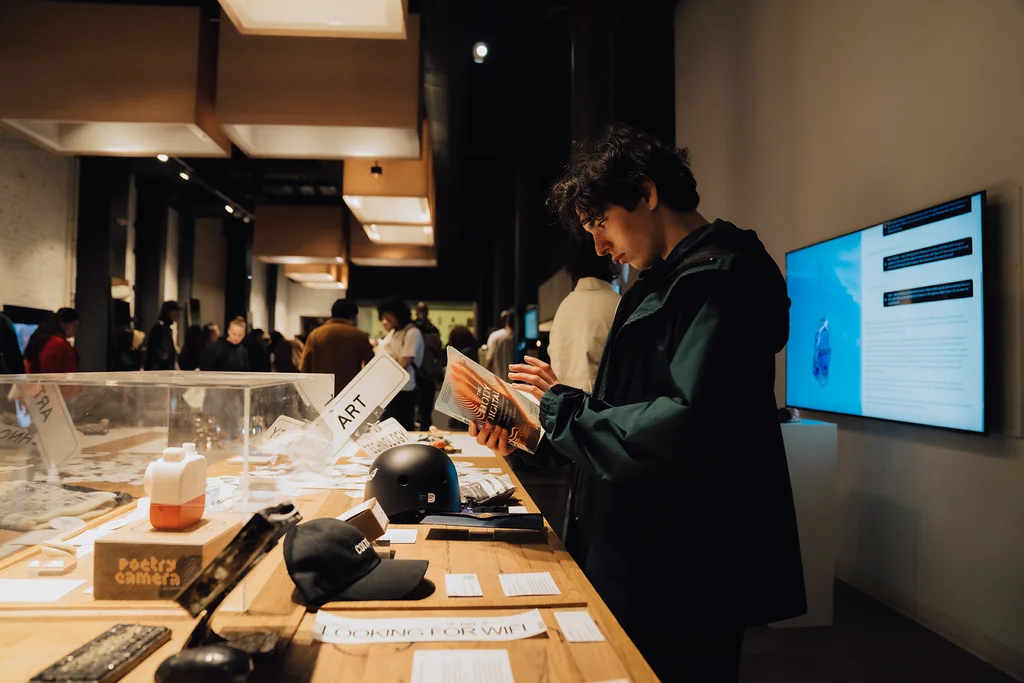
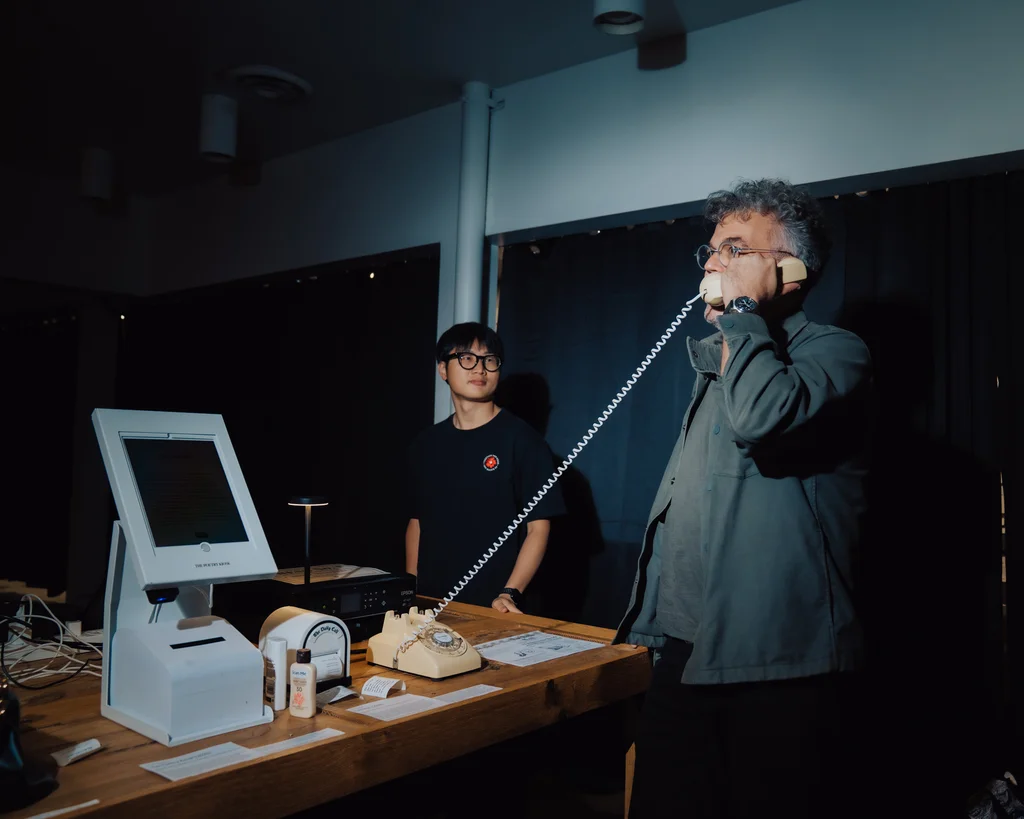
In a spare and cavernous former eyewear emporium just steps away from the luxury storefronts of San Francisco’s Union Square, a motley collection of experimental tech devices is spread out across display counters and pedestals. One is a desktop computer shaped like a cartoon frog. Another is an e-ink laptop operated entirely by buttons made of felt. Nearby sits an artificial intelligence assistant concealed inside a fuzzy parrot, designed to perch comfortably on a user’s shoulder.
These idiosyncratic contraptions represent a burgeoning movement of indie hardware and bespoke computing. While trillion-dollar tech giants prepare to flood the market with highly anticipated, mass-market AI devices, a loose-knit community of creative technologists, artists, and former corporate designers is heading in the exact opposite direction. Instead of competing at a massive, winner-takes-all scale, these builders are handcrafting niche devices that broaden the spectrum of consumer technology and push back against decades of rigid ecosystem lock-in.
"We’ve had so much lock-in and walled-garden effects because of the App Store and because of how hard it is to make hardware," says Liz Dorman, cofounder of the hardware startup Era. "That now is finally changing."
Taking down Big Tech, however, is beside the point for many participants in this creative technology scene. These ambitious and predominantly young technologists are attempting to build alternative devices that serve specific audiences and reflect personal expression. The more commercial among these inventive gadgets are just now beginning to ship, meeting the public at a time when skepticism toward dominant tech institutions is at an all-time high.
"That’s precisely why we need artists to provide perspectives on all this new technology," says Ash Herr, founder of TIAT, the organization hosting the San Francisco exhibition.
A DIY Resurgence
While exact figures measuring the scale of this scene do not exist, creative technology groups, collectives, and regular meetups are emerging from San Francisco to New York. Prominent hubs include TIAT, Physical Futures, Fidget Camp, Gray Area, the School for Poetic Computation, the New Museum’s New Inc., and the Resonant Computing Lab. Many of these builders share academic roots in vaunted computing and human-computer interface institutions, such as Carnegie Mellon’s Human-Computer Interaction Institute, New York University’s Interactive Telecommunications Program, and various labs at the Massachusetts Institute of Technology.
"There are a lot of students who are kind of tired of computers," says Marcelo Coelho, director of MIT’s Design Intelligence Lab. "In many ways, their response is to invent their own computer."
People exploring these concepts frequently describe themselves as creative technologists, though others view their work through the lens of indie hardware, fashion technology, or bespoke "couture computing." The common thread is a desire to break away from the corporate homogeneity that has fueled Silicon Valley giants in recent years.
"Pretty much the story of San Francisco right now is all these people with egos being like, ‘I know what the future is. Let me tell you what the future is.’ And you can’t edit or change anything," Dorman says. "A lot of the underlying stuff that’s happening in creative tech is coming from those feelings of we actually want to take ownership over our technology."
Dorman describes this as a transition toward "couture technology," an open ecosystem where individuals can customize hardware to suit their precise needs. "It’s like you can sew your own shirt, or you can buy it from your favorite creative, or you can get it mass-produced," she explains.
Do-it-yourself hardware is hardly a novelty in the technology industry. Steve Jobs and Steve Wozniak built the earliest precursors to Apple computers in a suburban bedroom. Barry Threw, executive director of Gray Area—a San Francisco-based art and technology nonprofit active since 2008—notes that the open-hardware ethos recurs in cyclical waves. He points to the mid-2010s, when grassroots interest surged around events like Maker Faire, open-source software, printed circuit boards, and microcontrollers from Arduino and Raspberry Pi.
Today, artificial intelligence has lowered the barriers to creation even further. Through techniques like vibe coding, creating digital tools and software applications has become vastly easier. "It makes it more attainable for folks who start doing interesting hardware and software DIY things because the software side of it doesn’t become such a burden," Threw says.
At the same time, AI has spurred a profound cultural backlash. Leading AI laboratories and corporate titans are pursuing advancements at a velocity that has alarmed external observers and industry insiders alike. With a handful of massive companies dictating the trajectory of artificial intelligence, public polling indicates that nearly three-quarters of Americans harbor concerns over what these entities are creating.
"When people have less confidence in the direction of their public services and institutions, not just in tech but in general, I find this DIY ethos happening," Threw says. "They go back to trying to take some agency into their own hands and build their own tools."
In tech hubs like San Francisco, this anxiety is deeply personal. Software engineers, once the undisputed backbone of Silicon Valley, increasingly find their traditional coding roles automated by the very artificial intelligence models they helped train. This shift has triggered an existential crisis over professional futures, channeling creative energy into physical hardware as the next viable frontier.
"Across the technology spectrum, people are searching for where meaning and value and creativity lie when it’s not possible just to be a software engineer anymore because that stuff’s getting automated," Threw says. "As the creativity around software development has been taken over by these AI tools, hardware is kind of the next frontier."
Creating a New Creative Practice
Kelin Carolyn Zhang holds up a compact camera during a video call to take a photo of a face on her computer screen. The device is a standalone camera meant for capturing physical moments, but it features a distinct twist: instead of merely storing a digital photograph, the lens captures an image and utilizes AI to write and print an original poem about the scene on thermal receipt paper.
Poetry Camera began as a casual pet project conceived by Zhang and her friend Ryan Mather in January 2023. Relying on online tutorials, AI coding assistants, open-source circuit boards, and 3D printers, they assembled a working prototype over a single weekend.
"I was like, wow, it’s a lot easier to get started in hardware than I thought," Zhang recalls.
Zhang brought considerable technical background to the project. Armed with a computer science degree from MIT and nearly a decade of experience in digital product design, she had recently left her job as a staff product designer at Twitter following its acquisition by Elon Musk.
"I got a front-row seat to everything and I thought, You know what? I’m kind of done with corporate tech," she says.
Following the public debut of ChatGPT, Zhang anticipated sweeping changes across the tech sector and dedicated a year to exploring an AI-first digital design practice. Poetry Camera emerged as her inaugural prototype. Nearly four years later, the device has evolved into a $349 consumer product with a dedicated following in both literary and technological circles. Anthropic, a prominent AI firm, placed a rush order for a batch to distribute at a corporate event. The product’s success has inspired Zhang to establish a physical product studio named Tenderworld.
"People are excited and delighted by form factors that aren’t just apps trapped behind the screen of a phone or a computer," she says.
"Well, I Want to Change It"
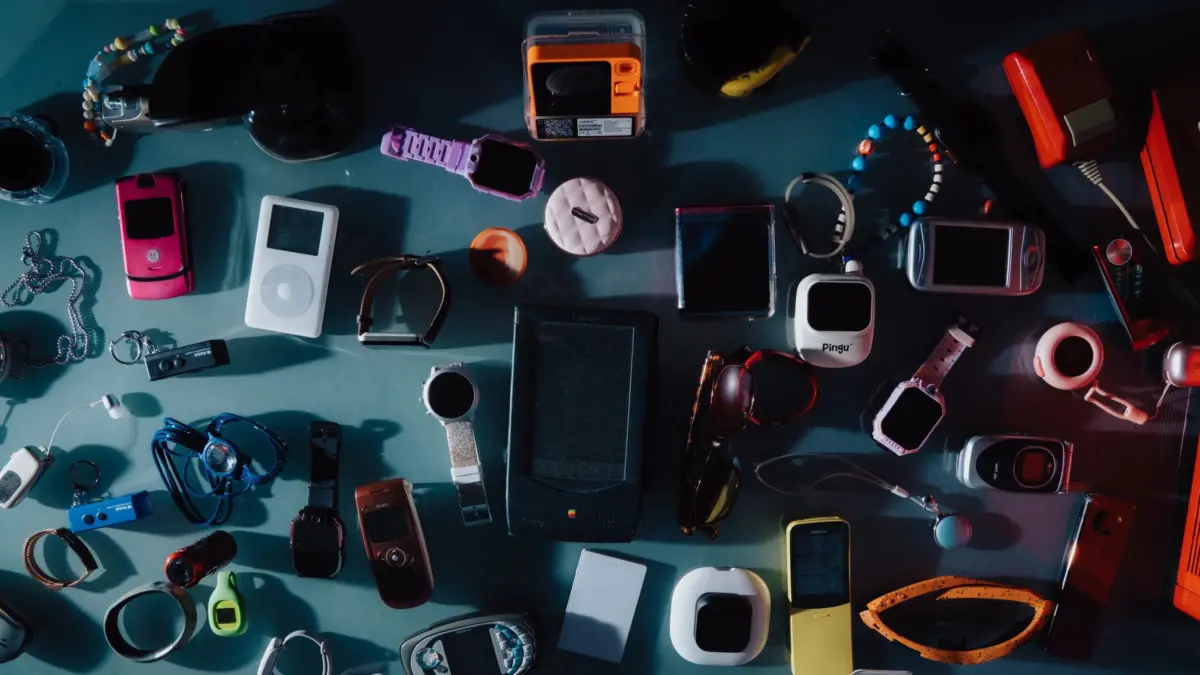
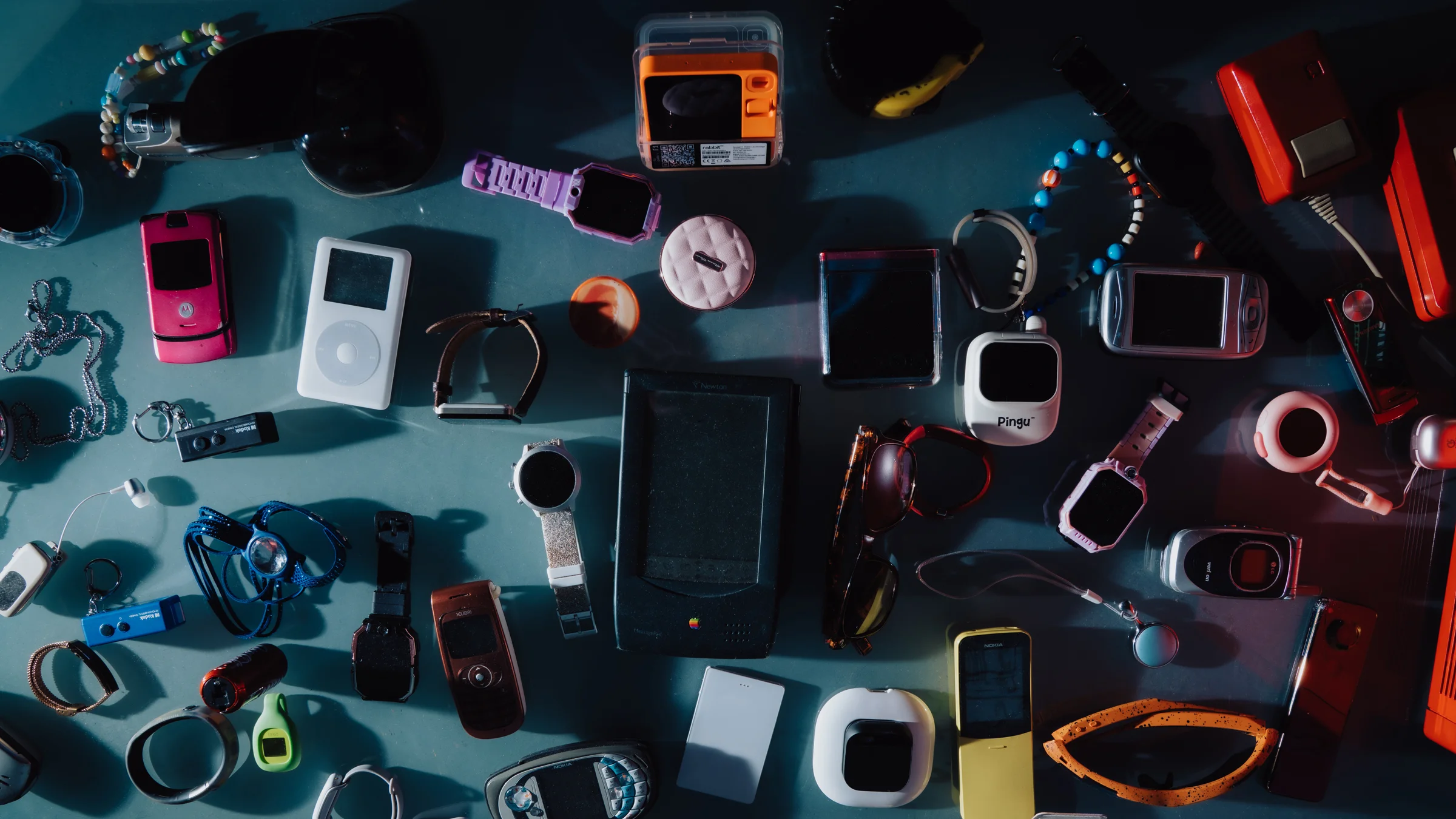
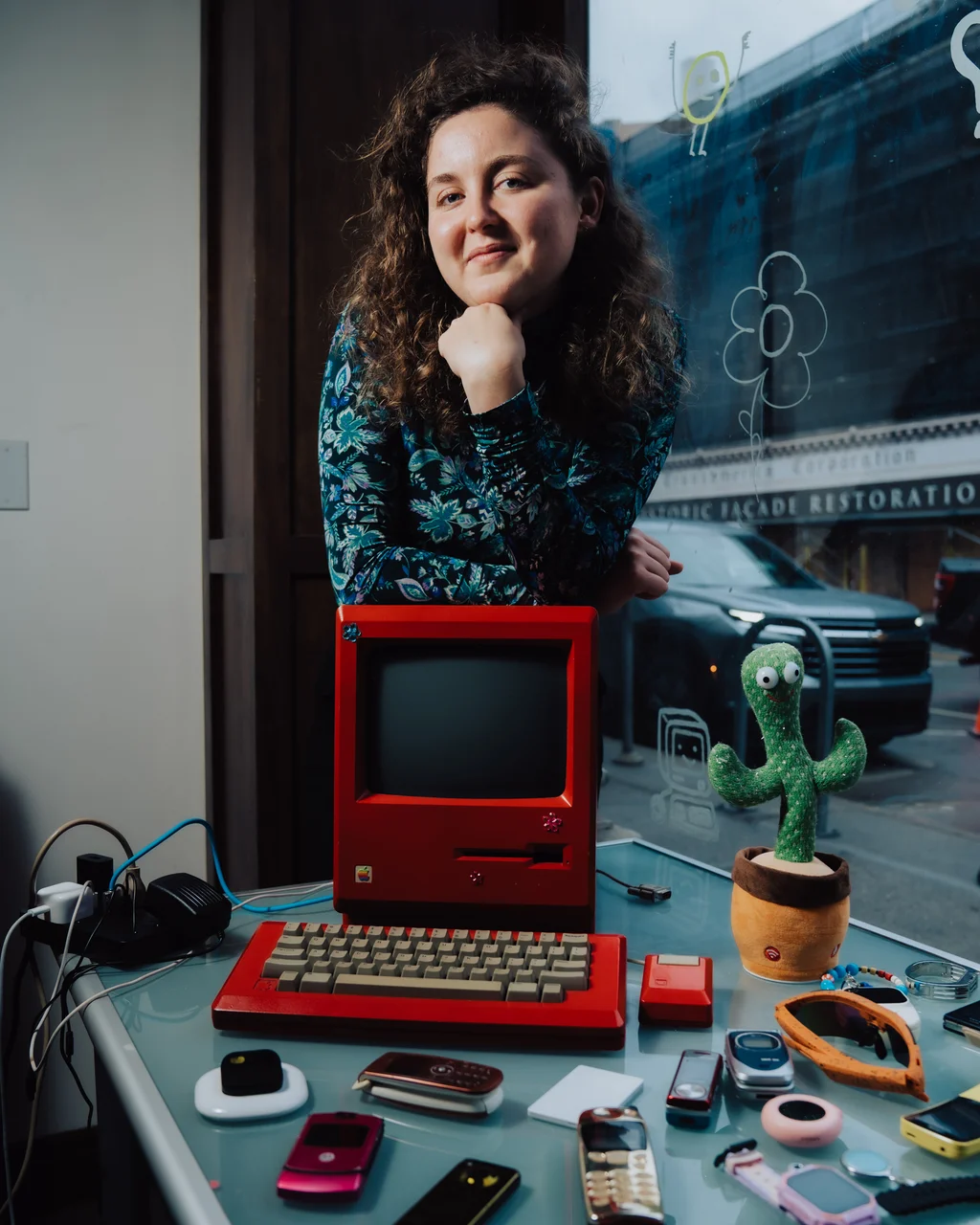
In a storefront window near San Francisco’s Transamerica Pyramid, a display table is covered with vintage consumer electronics spanning five decades. Items include an early Macintosh Newton tablet, 2000s-era flip phones, cassette players, novelty radios, and early wristwatches with integrated cameras, alongside modern misfires like the Humane AI Pin and the Rabbit R1.
The display serves as the office centerpiece for Era, a startup cofounded by Dorman to develop software platforms and hardware for customizable AI devices. The retro items are not for sale; rather, they serve as nostalgic reminders of an era when personal technology exhibited varied physical forms, subtly critiquing the monotonous rectangular slabs dominating modern pockets.
"It hasn’t felt very optimistic recently, especially with all the releases happening by Big Tech companies," Dorman says, while 3D printers hum in the background. "It feels like these companies are not only out of touch with people, but they’re forcing technology onto people that they don’t actually want."
Era has raised more than $11 million in venture funding to give users control over how their devices look and function. The company is developing a puck-like AI core that can serve as the engine for highly customizable hardware built by users. Composed largely of twentysomethings who grew up glued to smartphones, the team seeks to recapture the spirit of early device hacking. Dorman, who spent her youth in New Jersey jailbreaking early iPhones, grew disillusioned when Apple closed those avenues of user customization.
Later, a stint at Humane—the screenless AI wearable startup cofounded by former Apple executive Imran Chaudhri that raised over $240 million—solidified her dissatisfaction. The Humane AI Pin launched to commercial failure, a result Dorman anticipated due to its resemblance to a police body camera and its inflexible design choices.
"I hated the voice and personality we chose for the device. It was the equivalent of giving everyone an iPhone and being like, you can’t change the wallpaper. And I was like, ‘Well, I want to change it,’" she says.
Dorman eventually hacked her own AI Pin to adopt the voice of the narrator from the television drama Gossip Girl, significantly increasing her personal engagement with the hardware. She cofounded Era in 2025 alongside fellow technologists Megan Gole and others who shared concerns about corporate tech trajectories.
"I think something that’s really true across the consumer landscape is everybody feels left behind by AI," Gole says. "Our options right now are join or die. Keep up with the AI bus or be a Luddite and get off your phone."
Era’s platform aims to offer a third alternative, allowing users to build dedicated tools—such as a fridge magnet that offers French cooking lessons or an e-ink display that shows international times with a double-tap—free from constant smartphone mediation.
Make Hardware Weird Again
A few blocks away, a different approach to AI hardware is taking shape within LoveFrom, the closely guarded design firm led by former Apple design chief Jony Ive and backed by OpenAI. Anticipation surrounds the forthcoming device developed in partnership with OpenAI, with industry watchers speculating it could emerge as the defining hardware icon of the artificial intelligence era.
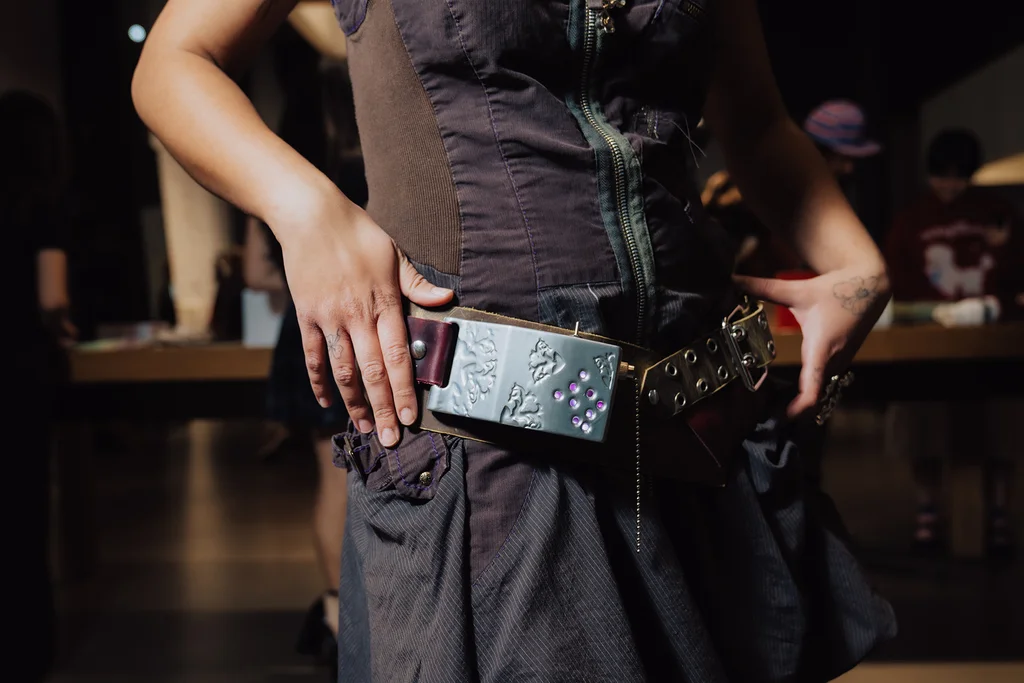
Simultaneously, other entrepreneurs are betting heavily on splintered, niche markets rather than a single dominant form factor. Sebastian Bidegain and Harry Isaac launched their company, Noware, to pursue idiosyncratic consumer electronics. Their debut product, named Puff, is a 128-gigabyte USB data stick encased in a jewelry-inspired housing equipped with a tiny screen for low-resolution animations. Designed to be worn as a necklace or bag charm, it transforms the mundane utility of file storage into an expressive fashion accessory.
"We wanted some of the electronics in our lives to be more expressive and playful and just weird," Isaac says.
Despite manufacturing hurdles associated with partnering with factories in China for small batch runs, Noware successfully funded production through presales. "It’s difficult to manufacture. And that is maybe part of the reason why another bigger company hasn’t done something like this," Bidegain says. "लेकिन I think that’s part of what makes it really cool."
Mina Fahmi sees similar potential in specialized form factors. His startup, Sandbar, has developed an AI ring called Stream. Rather than recording every ambient conversation like some competing pendants and charms, Stream is engineered to capture intentional personal thoughts through an integrated button and a highly sensitive microphone that registers whispered reflections.
"A lot of people want to remember things without pulling out their phone," Fahmi says. "We started Sandbar because we believed we would need new interfaces to fully realize the potential of AI for expanding human expression."
"We’re not out here trying to sell a million units in year one," he adds. "What’s been clear to us is that it’s more important to create a thing that people really get value out of than to litter the earth with electronics."
Tech Gets Personal
At TIAT’s exhibition opening, veteran software engineer Ken Kocienda surveys the crowd. Having helped build the earliest iPhones at Apple and contributed product engineering to Humane, Kocienda represents the established tech guard that many younger builders are examining with a critical eye. Yet, as a programmer since the 1980s, he remains deeply curious about the future of hardware and software integration.
"I think the more personal we make technology, the more willing people are going to be to integrate it into their lives," Kocienda says.
He cautions, however, that legacy computing paradigms rarely disappear entirely. He envisions a future where specialized personal devices coexist with traditional smartphones relegated to utility roles in pockets and bags. "Computing paradigms don’t go away," he notes, pointing out that mainframe computers remain operational today.
MIT’s Coelho believes this wave of grassroots innovation is only beginning. "I think there’s an opportunity for thousands of startups to come up in this space," he says.
While the commercial longevity of these experimental devices remains unproven, TIAT founder Ash Herr emphasizes the immediate value of cross-pollination between traditional tech workers and independent artists.
"I want people who are all in on their full-time tech jobs and people who are more feral to come together, learn, laugh, and ideate," she says.
For the creative technologists driving this nascent movement, the tools are finally accessible, and the opportunity to reshape the physical landscape of personal computing is firmly in their hands.