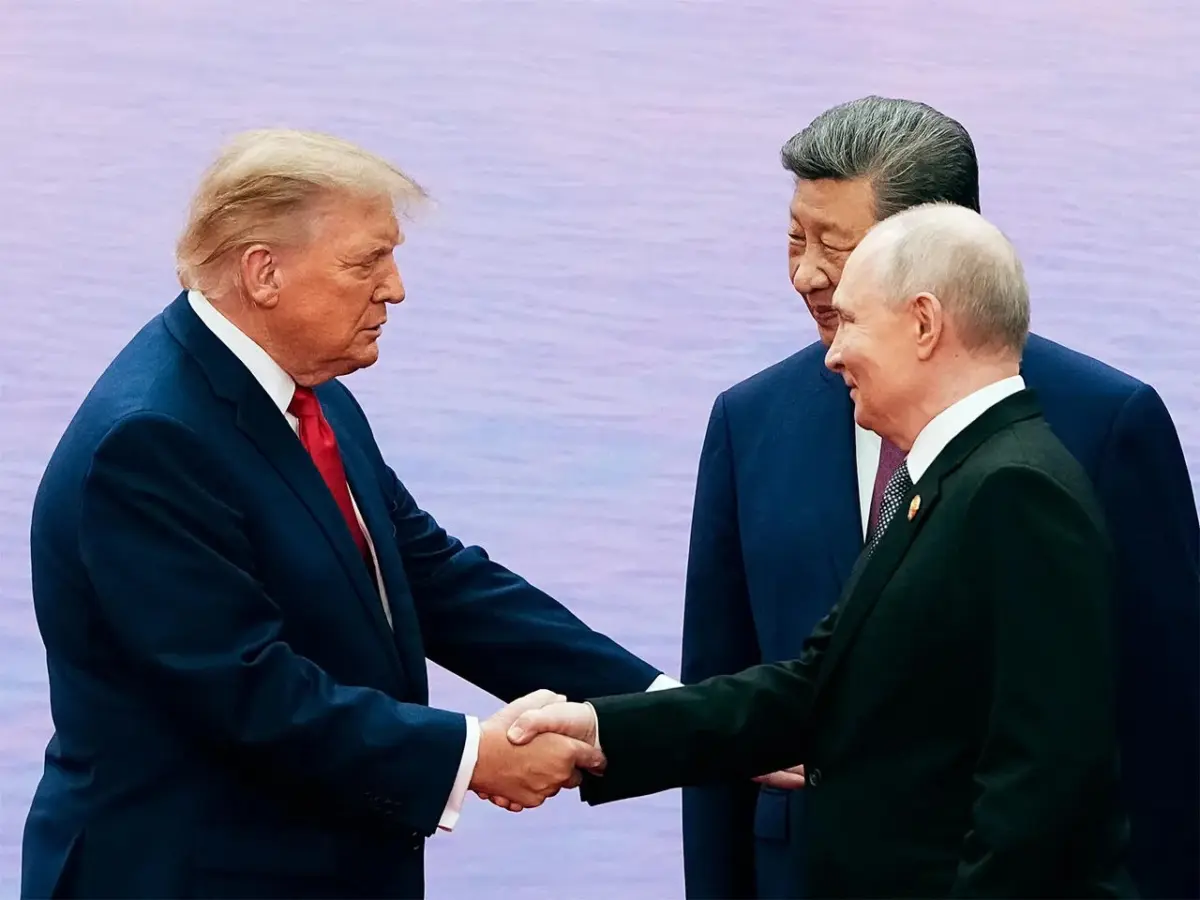
Much hangs in the balance as the presidents of the United States, China, and Russia converge on the tech hub of Shenzhen for a high-stakes trilateral meeting on the sidelines of the Asia-Pacific Economic Co-operation (Apec) summit. As global leaders and corporate executives descend on southern China, observers are left weighing whether this diplomatic gathering will serve as a beacon of hope for international cooperation or merely forewarn of deeper global fallout.
Today’s summit between Donald Trump, Xi Jinping, and Vladimir Putin carries monumental weight. For some international relations analysts, the encounter evokes comparisons to the Yalta Conference of 1945, where the three great Allied powers effectively carved up the post-war world map. Yet, skeptics note it could just as easily mirror the Anchorage summit of last year—a meeting between Trump and Putin that yielded little substantive progress beyond a routine meet-and-greet.
The context of this diplomatic engagement is deeply rooted in economic pragmatism. By choosing Shenzhen rather than Beijing as the backdrop, President Xi has notably avoided framing the summit with overt political undertones. Beijing’s seat of power would have cast a distinctly different shadow over the proceedings, whereas Shenzhen offers a sleek, modern, and commercially driven atmosphere. This week, China’s preeminent tech hub has been dazzling international crowds with elaborate laser-light shows, drawing more than 100 Fortune 500 CEOs to its bustling convention halls.
Apec’s unique structural framework has also played a crucial role in making this gathering possible. Because the forum officially organizes its roster around "member economies" rather than sovereign states, delegations from Hong Kong and Taiwan are able to participate alongside major global superpowers. However, the diplomatic frenzy is slated to reach its crescendo as Trump, Xi, and Putin step away from the urban core of Shenzhen to retreat to the secluded tranquility of the Qilin Mountain Villa. This bucolic setting along Xili Lake feels markedly different from the host cities of the past three bilateral Apec summits hosted by Xi—San Francisco, Lima, and Busan—signaling a deliberate shift toward a more private, high-level dialogue.
The world will learn what occurs within those secure walls soon enough. Yet, regardless of the specific policy breakthroughs or breakdowns that emerge, the mere buzz surrounding the summit is already a major psychological win for the Apec forum. For more than three decades, Apec has successfully maintained an annual fixture on the global calendar for leaders on both sides of the Pacific. At a time when geopolitical fault lines are deepening—and Russia has faced systematic ostracization from traditional multilateral bodies such as the Arctic Council, the G7, and the World Economic Forum—Apec’s foundational premise is being put to the test. The forum’s core philosophy, which posits that economic interests can and should override geopolitical conflict, is proving increasingly prescient in an era defined by intense international friction.
For many in the West, giving accused war criminal Vladimir Putin a seat at the negotiating table remains a bitter pill to swallow. Yet, with so much at stake—ranging from diplomatic efforts to help end devastating wars in Ukraine and Iran to the urgent need to stabilize and lower global energy prices—the summit represents a calculated victory for those who maintain that face-to-face diplomacy, even among fierce adversaries, is a risk worth taking.
If the Shenzhen summit proceeds constructively, it may pave the way for further high-level engagement. There is already speculation as to whether Putin might accept an invitation from the White House to attend next month’s G20 summit in Miami. Naturally, the prospect of a visit to South Beach for some winter sunshine raises eyebrows, but Russian participation in prior multilateral forums has consistently generated friction.
Just last month at the G20 ministerial forum in Atlanta, top diplomats failed to reach a consensus regarding the ongoing war in Ukraine, ultimately choosing to bypass the release of a traditional joint communique. Tensions boiled over when counterparts to Russian foreign-affairs minister Sergey Lavrov declined to participate in the summit’s customary "family photo."
Even so, if the G20 leaders who also hold Apec membership—including Australia, Canada, Indonesia, Japan, Mexico, and South Korea—can manage to share a stage with Russia in Shenzhen, the likelihood of a coordinated Miami boycott diminishes. Welcoming Putin back onto United States soil would undoubtedly draw sharp rebukes from Kyiv and European Union capitals, but four years of sweeping diplomatic isolation and economic sanctions have not compelled the Russian military to abandon its campaign in Ukraine. The central question lingering over the international community is whether a direct, tête-à-tête dialogue could genuinely spark a change of course.
Much is riding on the diplomatic pomp currently unfolding along the tranquil shores of Xili Lake. While there are never any absolute guarantees of policy shifts when global rivals meet behind closed doors, the distinct possibility that the Shenzhen summit will cover significant ground remains an exciting prospect for international diplomacy. As leaders deliberate away from the public eye, the world watches to see if today’s discussions will lay the groundwork for a new era of engagement, perhaps even making us hope for more summits like Shenzhen 2026 in the years to come.