For more than four decades, the primary interaction model between human beings and digital software has been defined by explicit visual controls: buttons, dropdown menus, multi-step forms, and static navigation bars. Ever since the commercialization of the Graphical User Interface (GUI) pioneered by systems such as the Xerox Star and later popularized by Apple’s original Macintosh, interacting with software has required users to navigate complex visual hierarchies. Whether booking travel, purchasing products, or conducting research, internet users have routinely been expected to click through menus, adjust range sliders, complete multi-page forms, accept tracking pop-ups, and manage dozens of browser tabs simply to cross-reference basic information. Consequently, digital interactions have often forced individuals to spend more energy managing software interfaces than achieving their actual goals.
That long-standing interaction model is now undergoing a fundamental shift. Driven by rapid advances in artificial intelligence and large language models, a new design philosophy known as Intent-Driven Design is taking root across the web ecosystem. Grounded in foundational Human-Computer Interaction (HCI) concepts—such as Golden Krishna’s core principle that "the best interface is no interface" and Don Norman’s human-centered design frameworks—this emerging methodology aims to eliminate unnecessary interface friction entirely. Rather than expecting users to learn complex menus or navigate rigid visual funnels, intent-driven tools operate by capturing broad human objectives and silently performing the underlying technical tasks in the background. This transition is forcing user experience (UX) professionals to re-evaluate their core responsibilities, moving away from designing visible interface components toward architecting transparent, intent-directed systems.
The Death of the Multi-Step Interface Process
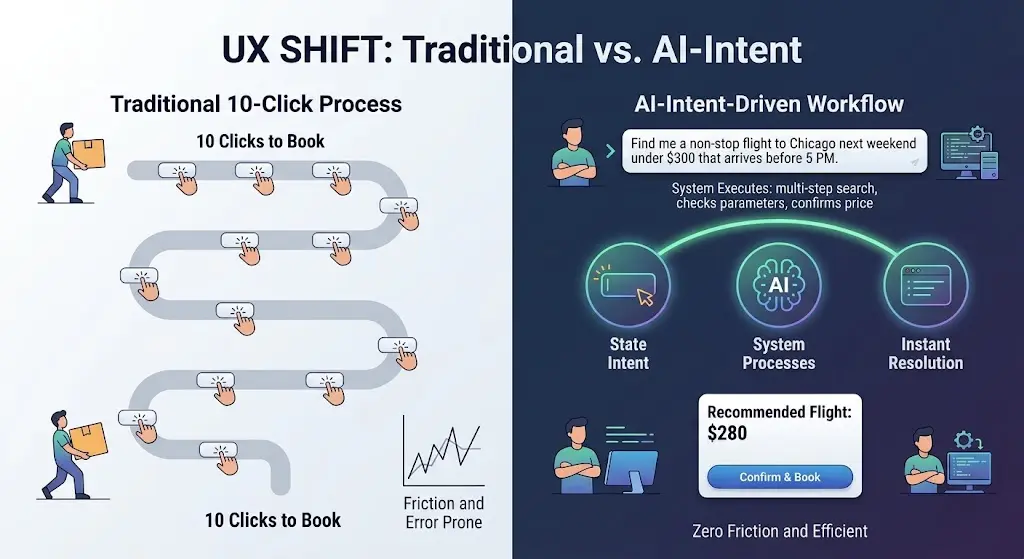
To understand the scope of this transformation, UX researchers emphasize the significant friction long accepted as standard within web interactions. For decades, routine online activities have relied on hyper-interactive, point-and-click workflows. In booking an airline ticket online through a traditional interface, the computer functions merely as a passive data container. The human user acts as the manual orchestrator who must select departure dates, filter parameters, compare flight lengths, cross-check prices across multiple tabs, and execute every micro-step in sequence.

Intent-driven web design reverses this operational dynamic entirely. Instead of forcing the user to navigate the mechanical steps of how a search query is performed, intent-based software asks what the user wants to accomplish. By interpreting natural language inputs—such as a request to find a non-stop flight to Chicago next weekend under $300 arriving before 5 PM—the underlying platform handles the complex, multi-layered search process behind the scenes. The software evaluates options, resolves constraints, and delivers a direct, actionable resolution, compressing a process that once required dozens of manual clicks into a single expressed intent.
Modern Web Platforms Demonstrating Intent-Driven Architectures
This evolution from hyper-interactive interfaces to intent-capturing systems is actively taking shape across accessible web platforms, providing clear examples of how modern tools reduce traditional design friction.
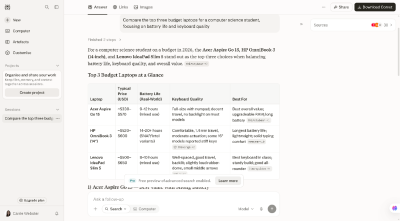
Traditional search engines built during the early web era operated primarily as link directories. Search platforms like Google presented users with a simple input field and rewarded them with a list of ten blue links. The cognitive work of opening multiple browser tabs, skimming lengthy articles, navigating advertisements, and manually synthesizing an answer remained the user’s responsibility. While major search engines are increasingly integrating generative summaries into their primary interfaces, platforms such as Perplexity AI demonstrate fully intent-based information retrieval. Rather than forcing users to navigate multiple external links, Perplexity synthesizes contextual search queries directly, delivering targeted answers that remove the need for multi-tab browsing.
A similar evolution is altering web interface generation itself. Historically, creating digital products required designers to work within visual editors like Figma or manual web builders, spending hours placing visual shapes, selecting color codes, adjusting element padding, and writing structural CSS code. Platforms like Vercel v0 illustrate how generative tools allow users to describe interface requirements using simple natural language prompts. The system dynamically interprets the intent and automatically produces functional, production-ready code components on the fly, eliminating the need to assemble components manually on a visual canvas.
Intent-driven principles are also streamlining task management software, particularly for users facing executive dysfunction or cognitive fatigue. Standard productivity suites often require significant visual maintenance, forcing users to construct lists, organize digital Kanban cards, and assign granular deadlines manually. Free targeted tools like Goblin.tools offer single-purpose AI utilities designed to alleviate task-related stress without requiring account registration or workspace configuration. By allowing users to enter high-level goals, the tool automatically breaks down complex or overwhelming projects into clear, actionable micro-steps.
The Foundational Pillars of Intent-Driven Design
As standard menus, sidebars, and explicit data fields recede, UX designers pioneering intent-driven systems are structuring applications around three central architectural pillars: goal-oriented user inputs, generative interface states, and autonomous agent execution.
First, intent-driven user inputs replace micro-actions—such as manual clicks, dropdown menus, and visual toggles—with high-level goal specification grounded in context and natural language. Guided by established design standards, including Apple’s Human Interface Guidelines on contextual and ambient design, modern systems utilize environmental metadata. By evaluating context such as device state, geographic location, and historical usage patterns, intent-driven applications can anticipate user needs and initiate proactive outcomes without waiting for explicit visual commands.
Second, interface layout is shifting from static visual templates to dynamic, Generative UI. In legacy web design, every user encounters the exact same interface structure regardless of context; an e-commerce platform displays identical navigation bars to a first-time visitor looking for customer support and a returning customer tracking a package. As highlighted in research by the Nielsen Norman Group on AI as a fundamental UX paradigm shift, modern computing is transitioning from command-based interaction to outcome specification. Generative UI renders interface components dynamically on the fly based on the user’s immediate intent. If a user needs to compute complex financial data, the system automatically builds a dynamic calculator widget that recedes once the goal is accomplished.
Third, intent-driven applications alter task execution by shifting from manual user steps to background execution by autonomous AI agents. Traditional interfaces rely heavily on error prevention, frequently interrupting users with confirmation pop-ups to avoid accidental actions. Intent-driven systems adapt Jakob Nielsen’s classic usability heuristics on user control and error recovery by replacing rigid preventive pop-ups with easy post-action reversibility. Because autonomous agents act on the user’s behalf, safety is ensured through prominent undo features, simple prompt revisions, and transparent audit logs rather than intrusive warning modals.
Addressing Oversight, Trust, and the "Black Box" Challenge
While eliminating interface friction offers significant usability benefits, removing visible visual controls introduces notable design and ethical risks. When software acts on inferred human intent rather than explicit point-and-click commands, designers must address critical challenges regarding user agency, transparency, and system control.
A major concern is the potential loss of user control. When an application autonomously makes decisions based on predicted intent, it can easily feel intrusive or patronizing. Research from the Stanford Human-Computer Interaction (HCI) Group emphasizes that automated systems must maintain clearly defined operational boundaries to prevent user frustration. Furthermore, ethical design principles articulated by organizations like the Center for Humane Technology stress that software developers must avoid implementing manipulative default settings. To maintain trust, designers must automate routine execution while ensuring high-stakes actions—such as processing financial transactions, publishing public content, or altering privacy settings—continue to require explicit user confirmation.
Additionally, intent-driven systems introduce diagnostic difficulties known as the "black box" problem. In standard point-and-click interfaces, when an unexpected output occurs, users can easily diagnose the issue by checking whether they selected an incorrect filter or date range. In an intent-driven interface, troubleshooting an unexpected result is inherently more complex. To establish systemic trust, guidelines from the Google PAIR (People + AI Research) framework recommend implementing transparent feedback loops. By clearly displaying how the system interprets user commands—such as providing explicit search status summaries during execution—software enables users to understand machine reasoning, calibrate trust, and correct misinterpretations instantly.
Redefining UX Design Metrics and Professional Responsibilities
The transition toward intent-driven architecture requires UX professionals to re-evaluate their core responsibilities and practical design toolkits. Rather than spending the majority of their time crafting static UI components, rigid forms, or visual layout grids, designers must learn to architect dynamic, generative UI systems that adapt on the fly to user intent. This includes mastering emerging interaction patterns such as ambient feedback indicators, inline contextual prompts, and transparent AI status displays to ensure agent-driven tools remain intuitive, ethical, and human-centered.
Furthermore, this technological shift challenges long-standing metrics used to measure software success. For decades, the digital industry has evaluated product performance using engagement metrics like session length, click-through rates, and page views per session. Web applications were explicitly designed to maximize user time spent interacting with visual components on screen.
The philosophy behind intent-driven design, aligned with Golden Krishna’s vision and the broader Time Well Spent movement spearheaded by the Center for Humane Technology, turns these traditional metrics upside down. Under an intent-driven framework, software success is no longer measured by how visually engaging its components are or how long it retains user attention. Instead, the ultimate test of digital product quality is how effectively the software resolves the user’s goal and gets out of the way. As artificial intelligence continues to reshape digital interactions, the web is entering an era where software value is defined not by interface complexity, but by invisible, seamless task completion.