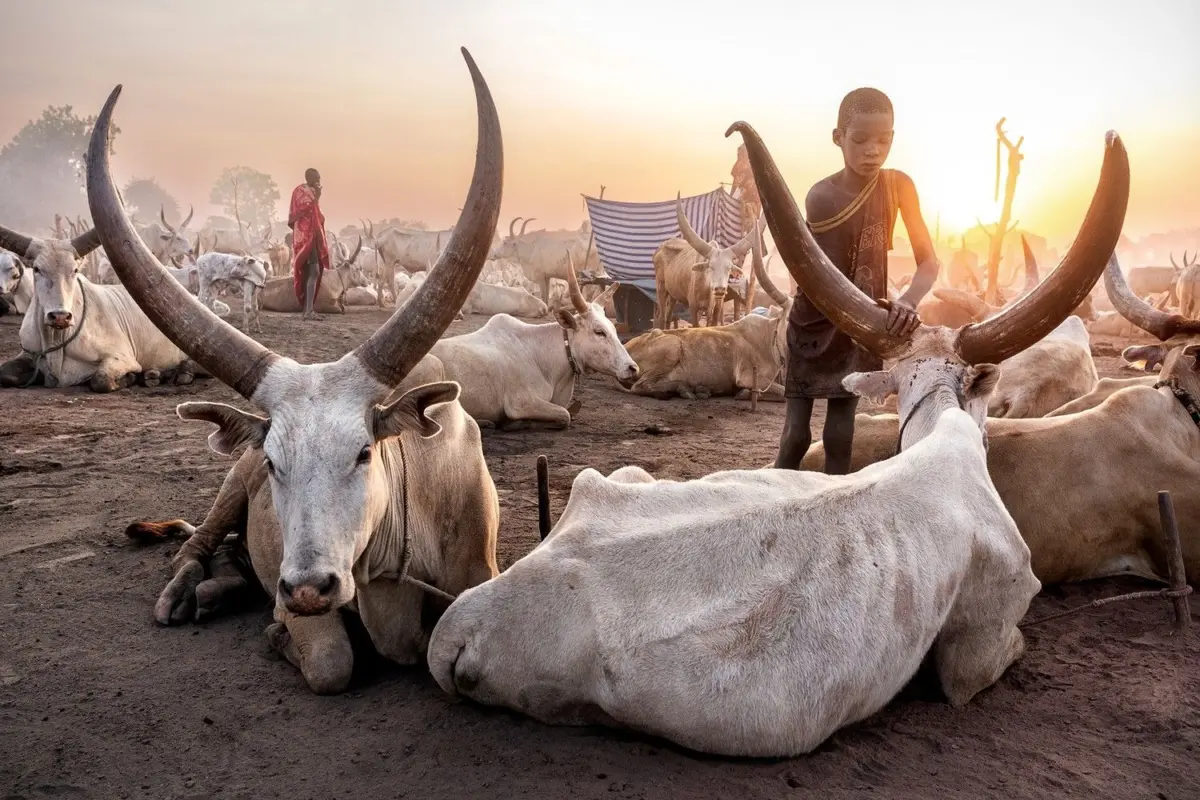
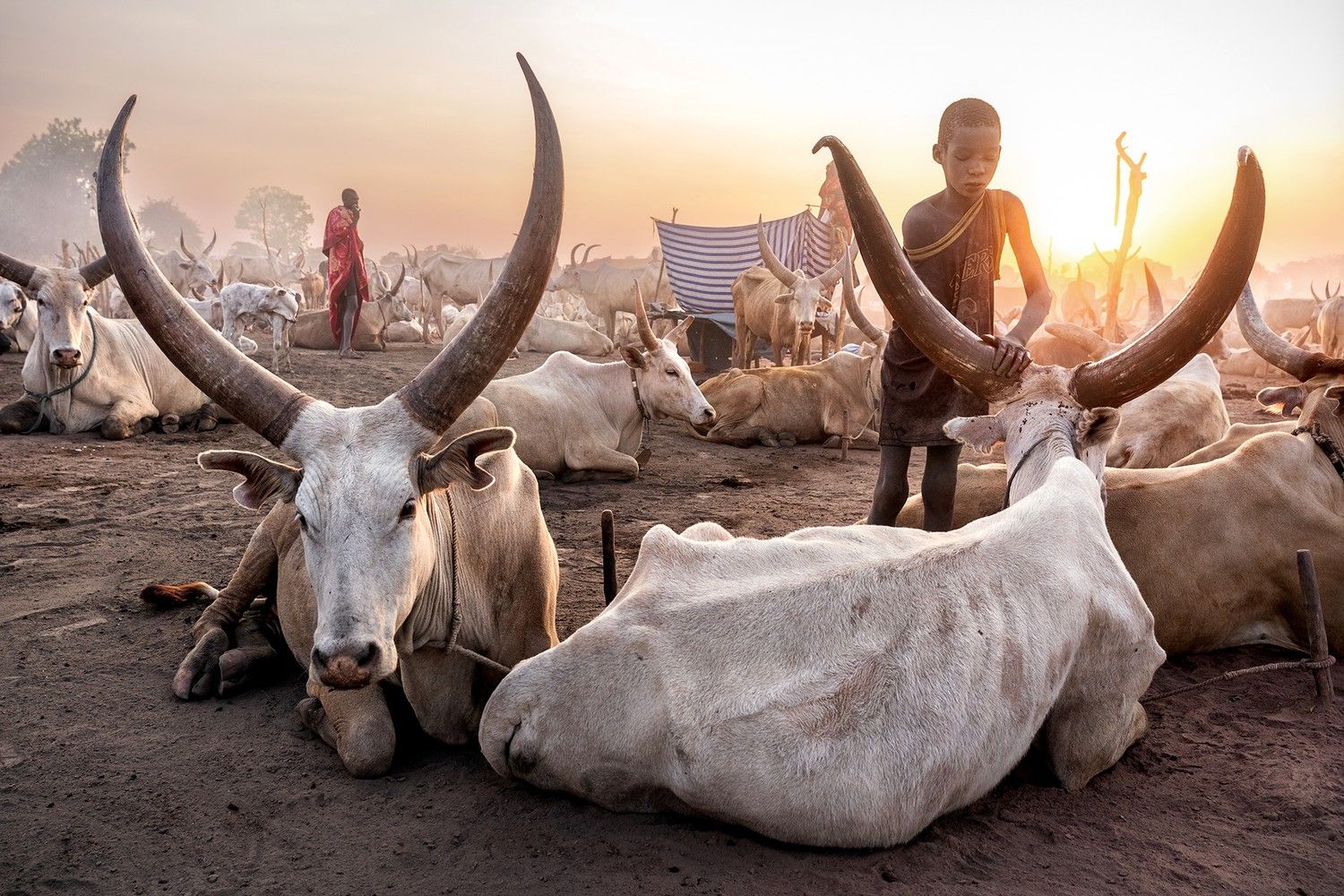
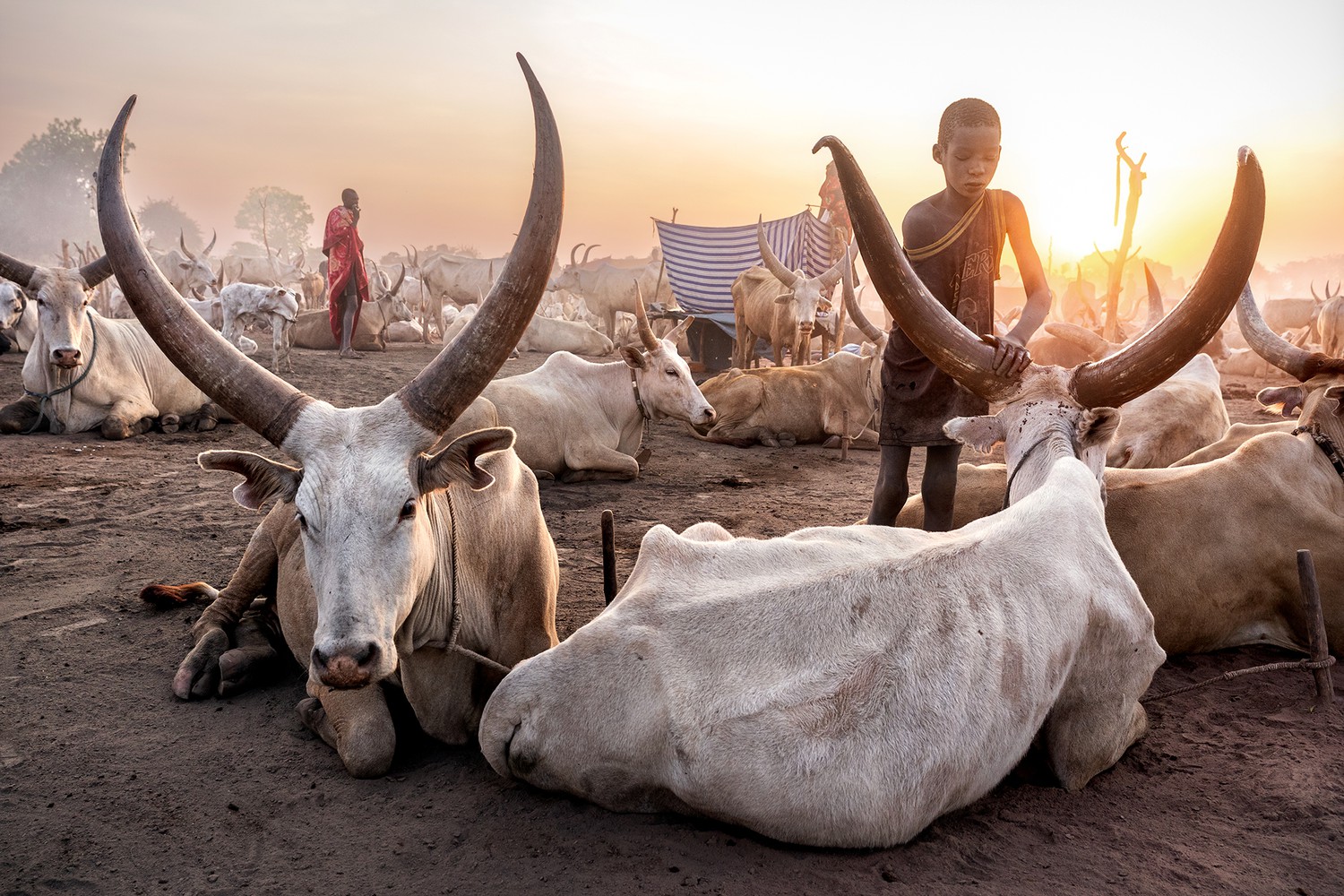
At sunrise, a young boy stands beside a towering white bull, his hands resting naturally on its massive, curved horns. Wisps of smoke drift lazily across the encampment, where dozens of cattle stretch far into the distance, silhouetted against a hazy, glowing orange sky. This evocative scene is just one piece of a striking photographic series titled Childhood Between Cattle and Dust, captured by Italian photographer Roberto Pazzi deep within the traditional cattle camps of the Mundari community in South Sudan.
The powerful collection has recently earned high praise on the international stage, taking home the professional People category win at the prestigious 1839 Awards. Named in honor of the year the daguerreotype photographic process was formally introduced to the world, the annual competition celebrates exceptional talent and vision across a broad spectrum of global contemporary photography.
Aesthetically, Pazzi’s winning images are undeniably breathtaking. They rely on a visual palette defined by warm, golden morning and evening light, swirling clouds of dust, and the dramatic, imposing architecture of giant cattle horns. Yet, beneath their cinematic beauty lies a poignant and challenging depiction of a way of life far removed from the modern childhoods experienced by most people around the world.
Life Bound to the Herd
The Mundari are a distinct semi-nomadic ethnic group numbering between 70,000 and 100,000 people. Their traditional homeland is centered around Terekeka, a region situated north of Juba, the capital of South Sudan. For generations, the rhythm of Mundari society has been entirely dictated by pastoralism—their daily survival, cultural identity, and social standing are inextricably linked to the health and stewardship of their cattle.
While adults manage the broader aspects of pastoral life and defense of the herds, it is notably the children who shoulder much of the daily labor within the bustling camps. Photographer Roberto Pazzi spent significant time observing and documenting this demanding reality, shedding light on responsibilities that begin at an early age.
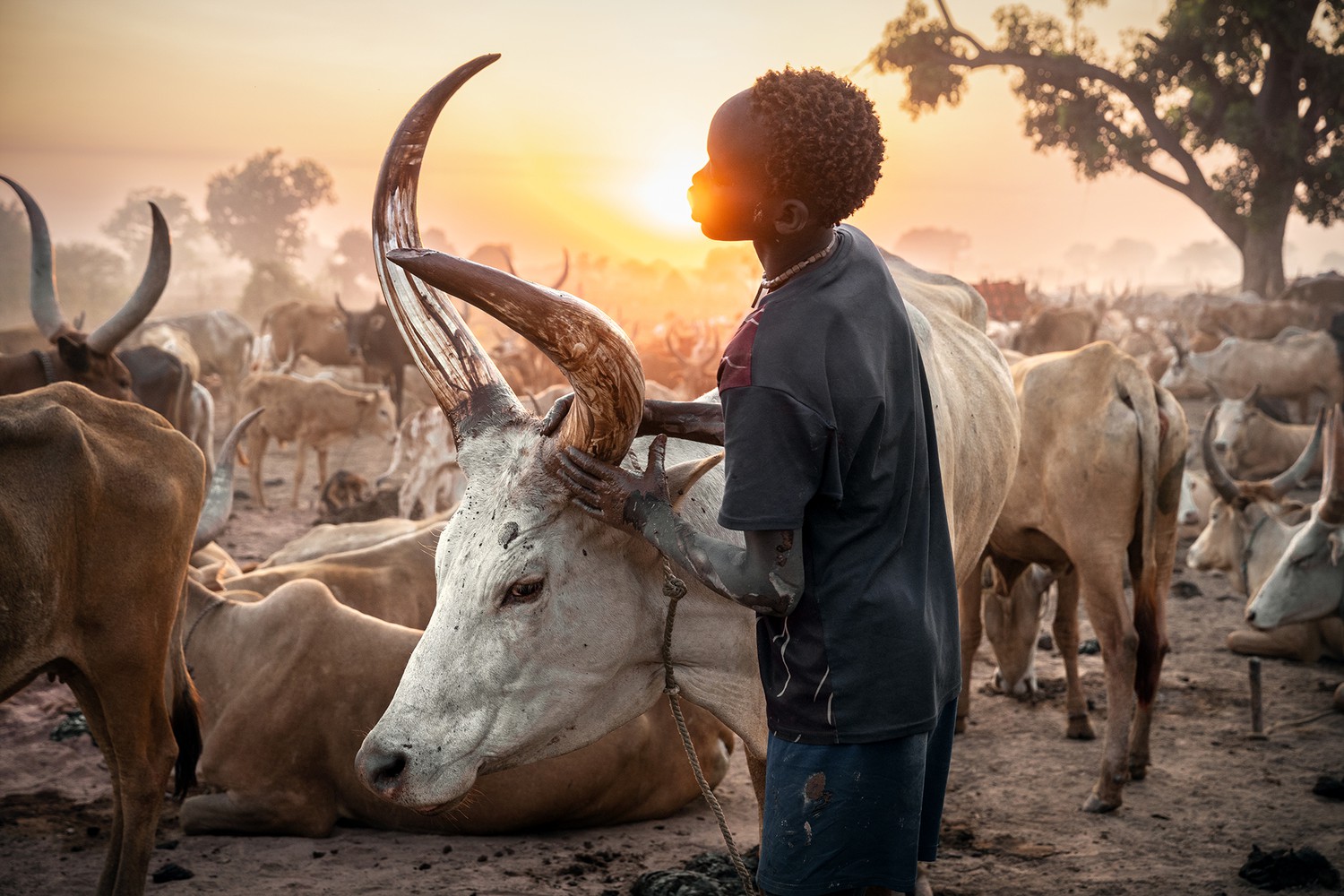
"They collect and dry dung and pile it up to be burned to repel mosquitoes," Pazzi explains, describing the cyclical chores that dominate the children’s days. "The ash, as fine as talcum powder, is rubbed onto their bodies and the cattle twice a day. It is also used as bedding."
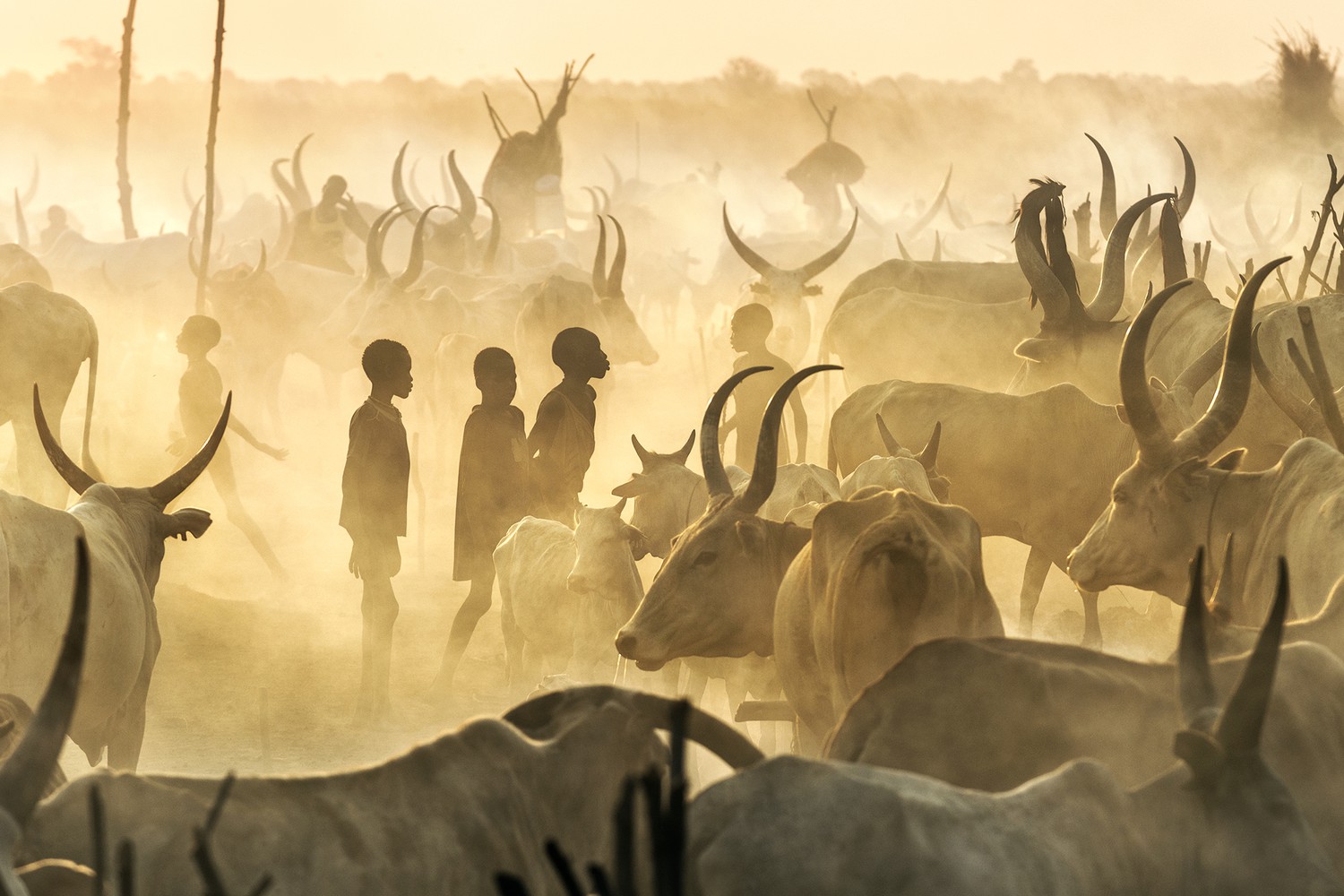
In one striking image from the series, a young boy can be seen meticulously smearing the fine, grey ash onto a bull’s head and long horns, his own arms coated in the powdery residue. In another composition, a group of children stands nearly lost in a golden haze of dust and smoke, completely surrounded by towering livestock whose sweeping horns puncture the horizon in every direction.
Pazzi deliberately harnesses the unique atmospheric conditions of the cattle camps, making the most of the low-angled sun at dawn and dusk. This creative approach allows the dust kicked up by hooves and the smoke rising from smoldering dung fires to catch and diffuse the light. The result is a series of scenes that glow with soft, ethereal tones of gold and amber, while utilizing the monumental forms of the animals to frame and anchor the human subjects.
The resulting photographs successfully straddle the line between intimate portraiture and profound documentary storytelling. Children occupy the absolute center of every frame, yet they never appear isolated from their environment. Instead, Pazzi’s lens portrays them as fundamentally inseparable from the herd, the dust, and the traditional landscape that defines their existence.
The 1839 Awards and Global Recognition
The international prestige of the 1839 Awards continues to grow, with this year’s edition drawing entries from 79 countries, successfully matching its previous record for global participation and cross-cultural representation.
The rigorous judging panel for the competition brought together prominent figures and experts from renowned cultural institutions, including representatives from the Whitney Museum of American Art, Bonhams auction house, Phaidon Press, and Dwell magazine. Amidst fierce competition across multiple categories, the highest honor of International Photographer of the Year was awarded to Giacomo Marchione for The Invisible, an arresting series that explores marine life under the cover of darkness.
Meanwhile, the title of International Discovery of the Year was presented to Dammy Twitch for What If We Lived Gods, a medium-format film series that artfully bridges traditional Nigerian mythology with contemporary everyday life. Pazzi’s victory in the professional People category places Childhood Between Cattle and Dust among the standout documentary achievements of the year.
As global platforms continue to showcase these powerful visual narratives, projects like Pazzi’s offer viewers an unprecedented window into remote cultures, preserving the dignity and daily realities of communities whose ancient traditions continue to face the tests of a changing world.