Few figures in modern cultural history have lived their lives as intensely scrutinized as the members of The Beatles. From the moment Beatlemania erupted across the globe in the early 1960s, John Lennon, Paul McCartney, George Harrison, and Ringo Starr found themselves trapped in a perpetual glare of flashbulbs, screaming crowds, and media attention. Yet, while countless photographers documented every waking second of the band’s historic trajectory, remarkably little has been seen from the perspective of the musicians themselves.
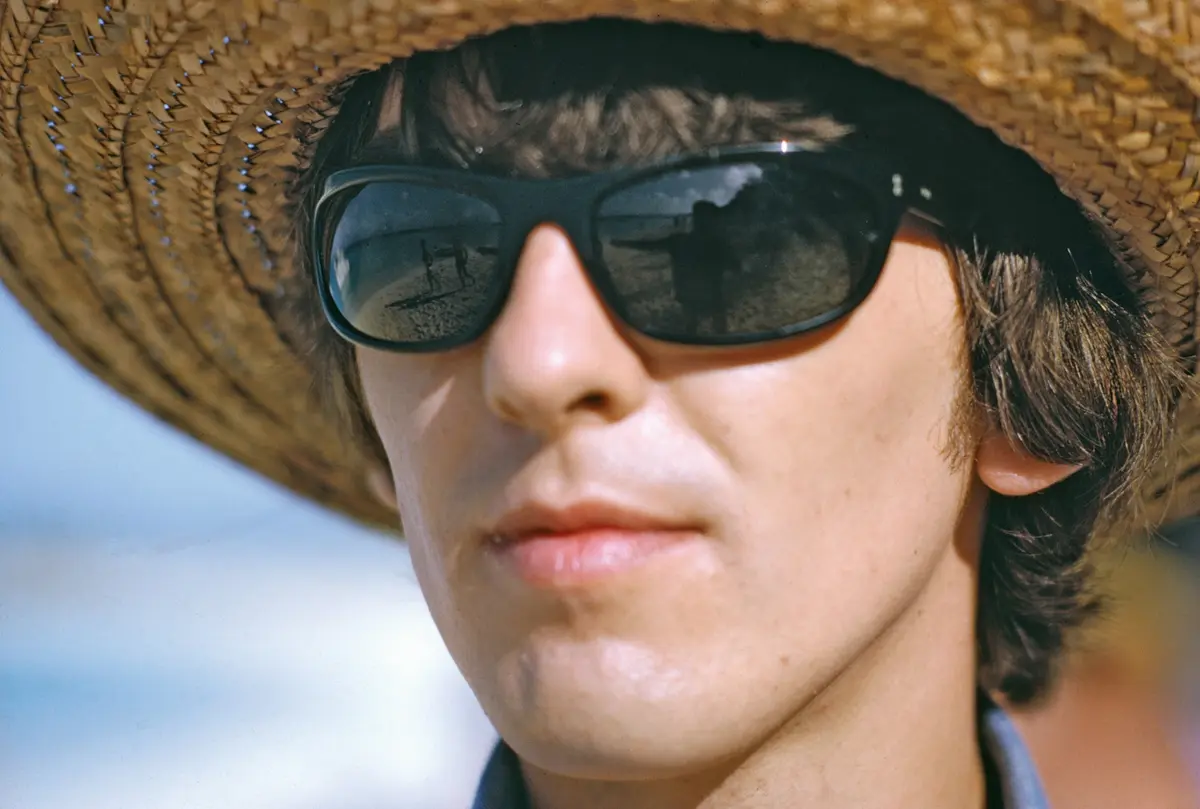
Now, a new publication is offering a rare, unprecedented glimpse into that hyper-exclusive world. Olivia Harrison, the wife of the late George Harrison, has curated a comprehensive treasure trove of her husband’s extensive and previously un-exhibited photography archive. Published under the title The Third Eye: Early Photographs, the book showcases the legendary guitarist’s natural, instinctive eye for framing, composition, and human connection.
Reflecting on the collection during a recent appearance on Monocle Radio’s Monocle on Culture, Olivia Harrison discussed what the photographs capture, shedding light on the quiet, contemplative soul behind the camera. Given that the pictures were taken by one of the 20th century’s most famous musicians—and frequently feature the other three members of that rarefied echelon—the book offers a perspective that is at once fresh, enlightening, and deeply surprising.
George Harrison was often characterized during his lifetime as the "quiet Beatle," an introspective artist who frequently seemed uncomfortable with the deafening roar of global fame. But stepping behind the lens appeared to provide a different way of engaging with the world. Rather than retreating from the gaze of the public, the camera allowed him to return it on his own terms. His photographs reflect both his distinct personality and fleeting, unrepeatable moments in time. More than that, they capture what it was like to be one of only four people on Earth who could never experience The Beatles from an audience’s perspective.
Discussing the project on air, Olivia Harrison explored the philosophy that underpinned her husband’s photographic work. Opening the book, readers are greeted by a striking self-portrait of a young George Harrison staring straight down the barrel of the camera lens, accompanied by a revealing quote from the artist: "I like cameras because you can see things in a different way, and you can make things look how they feel instead of how they are."
Asked what those words mean to her now, years after her husband’s passing in 2001, Olivia reflected on the emotional depth that informed every frame he shot. "Well, George was a very deep-feeling person and knew that everyone had a choice, so when he decided to push the shutter button—that particular moment—is what makes a photograph unique," she explained. "Now I’m looking through the photographs in the book, I really feel like I’m standing right behind him. I’m looking through his eyes. I really feel like I’m in that room."
This intimacy forms the backbone of The Third Eye. Throughout the collection, the images demonstrate that George possessed an innate sense of visual narrative. Whether he was turning his lens toward his fellow bandmates, a beatific Indian sage during their spiritual journeys abroad, or everyday scenes encountered along the way, his technical and artistic choices revealed a man constantly searching for deeper meaning.
This lifelong quest for transcendence is evident in how his style evolved over time. When asked whether the photographs taken during his youth shared the same preoccupations and artistic vision as those taken later in life, Olivia pointed to a continuous thread of spiritual curiosity.
"George was always looking for something—in a day, in a moment—beyond what was there," she said. "I think that’s what got him into the crazy fisheye lens with the red filter. [Today] you can do anything with a camera, but then he was like, ‘I’ve got this red filter because I want to change things. I want to make them, I want to enhance the moment.’ It’s symbolic of his own inner journey and finally getting to the edge of the material world."
While the book contains its share of artfully composed images—such as a striking, unconventional photograph of Paul McCartney lying on the floor of an empty room that resembles a posed fine-art portrait—the vast majority of the collection captures moments of unvarnished joy, spontaneity, and quiet domesticity.
Addressing the unique nature of the McCartney photograph, Olivia noted that it stands out precisely because the environment in which the band operated was usually defined by an entirely different kind of closeness. When George, Paul, John, and Ringo were sequestered together away from the public eye, a profound level of trust dictated the atmosphere.
"When those four were sequestered in a room, there was so much trust there," Olivia observed. "Nobody’s posing—they’re in the same car, they’re in the same room, they’re in the same airplane. All different photographs. Again, whenever you choose to hit that shutter, that’s you. There’s no guard up. They’re completely relaxed, and that’s something you don’t see in any other photograph of them taken by an outsider. They were the insiders."
That insider status was forged in the grueling crucible of their early career, long before stadium tours and global adulation. It was built during the formative years spent sharing fried breakfasts in scuzzy, modest hotels in Hamburg and sleeping cramped in the same bedroom, where personal space was virtually nonexistent and privacy was a distant luxury.
"I know and it’s that exactly," Olivia agreed, reflecting on those shared living conditions where the young musicians had nowhere to hide from one another. "What I always see when they’re looking at each other is that you almost see everything back. What I see on Paul’s face or John’s face is, ‘Oh, it’s you.’"
Among the most compelling visual chapters in the book are the photographs documenting the band’s landmark trips to India, a period that would profoundly influence George’s musical and spiritual outlook for the rest of his life. These images are characterized by a striking abundance of natural light—a quality that goes beyond mere geography or favorable weather conditions. To Olivia, the brightness captured in those frames serves as a metaphor for George’s broader worldview.
"One of the things that the book is trying to express is that we can’t take pictures in darkness," Olivia explained. "We can’t live in darkness, so we each have to choose to let the light in—not only into the camera but into our own lives. What are these images about at all? They are about light, that’s all it is. And how much you choose to let in through the shutter."
Through The Third Eye: Early Photographs, readers and fans are given an extraordinary opportunity to see the 20th century’s most documented band through the tender, perceptive eyes of a member who was there from the inside. It is a testament not only to a legendary guitarist’s artistic versatility, but to a life spent searching for clarity, beauty, and illumination in a world that was often overwhelmingly bright.