By Grace Charlton
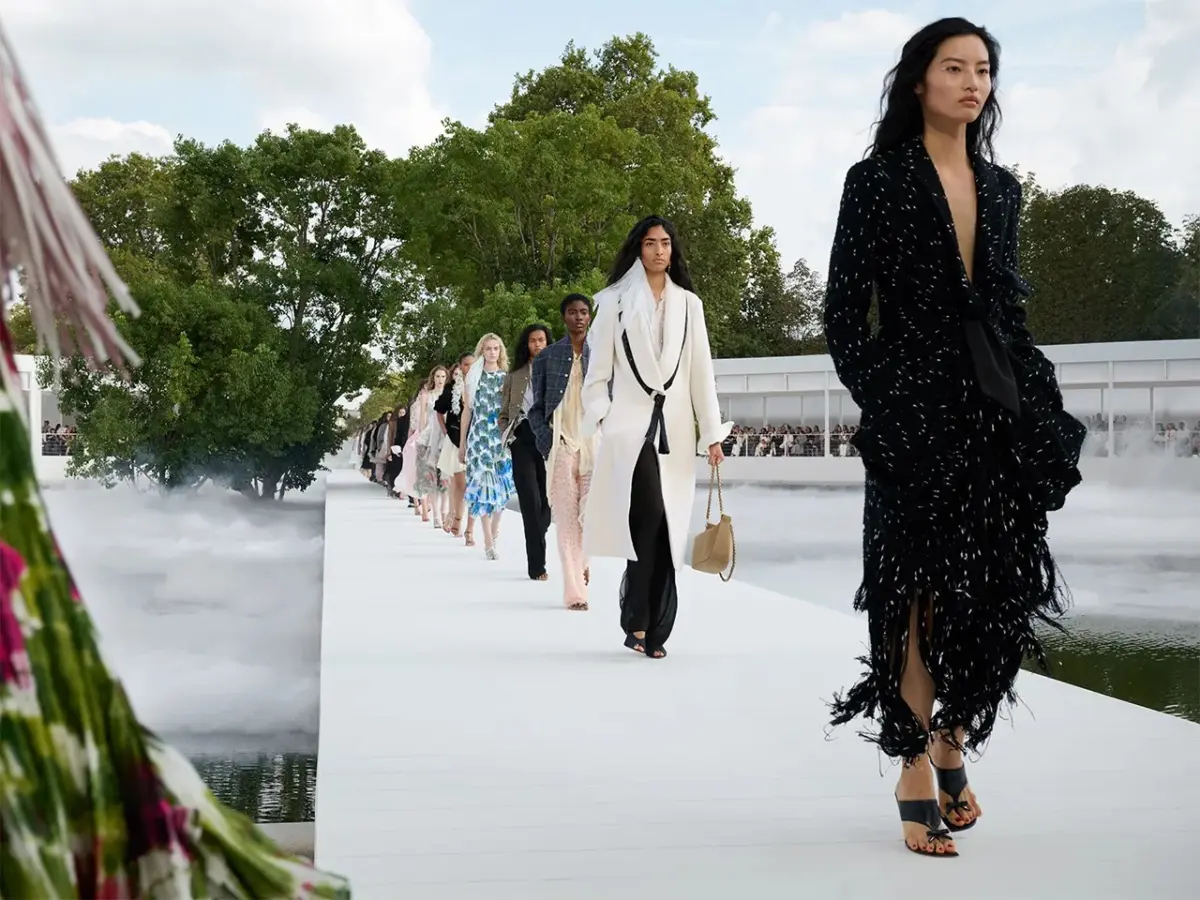
Translucent, weightless pieces emerged as a defining thread on the runways of Paris last week, revealing a fresh and ethereal approach among heritage brands steeped in centuries of tradition. As the spring/summer 2027 edition of Paris Fashion Week drew to a close, a distinct quest for lightness materialized as the central leitmotif across the French capital’s most storied houses. Following a grueling summer marked by punishing heatwaves across Europe, creative directors and designers opted to present collections that shared a remarkably weightless quality, dominated by featherlight, almost translucent fabrics and a palate-cleansing spectrum of soft pastels and understated neutral tones.
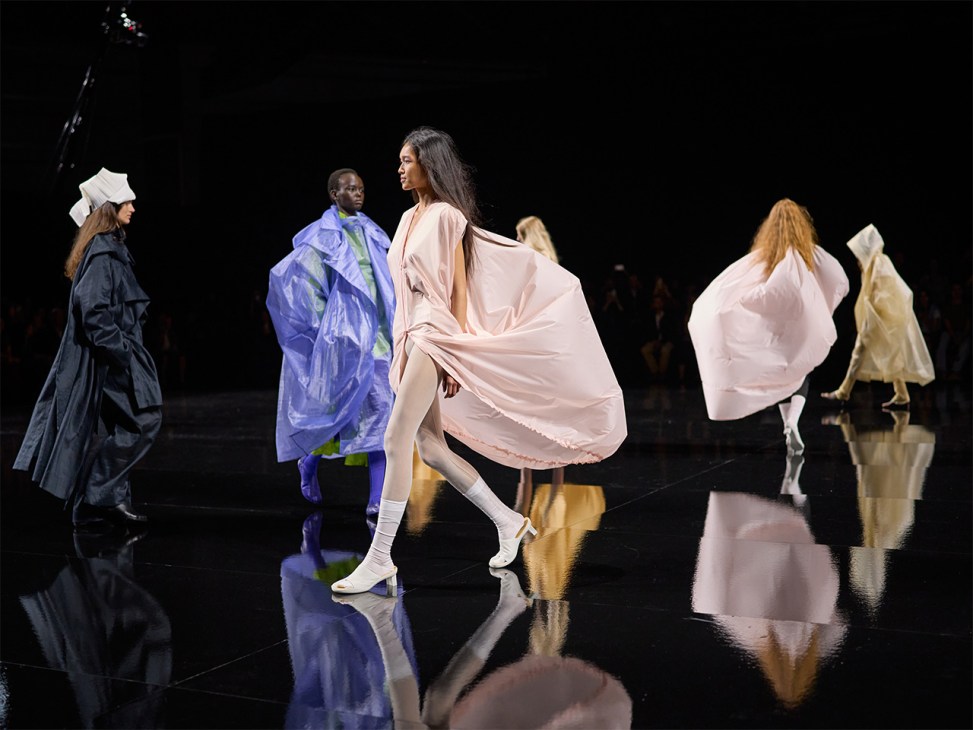
This minimalist shift was visible across various shows. At Issey Miyake, head designer Satoshi Kondo showcased a series of coats constructed from ultrafine ripstop nylon, engineered to balloon behind models like airborne parachutes. Meanwhile, Dior’s Jonathan Anderson set out with a specific spatial ambition: to construct complete outfits so impossibly light and compact that they could gracefully fold up and fit inside a standard shoebox. The evening schedule brought further atmospheric spectacles. Underneath illuminated sculptures depicting swallows frozen in mid-flight, Matthieu Blazy continued to evolve his joyous, forward-looking vision for Chanel. His dazzling debut season gave way to a sophisticated sophomore outing that included gossamer-thin organza sets and a memorable pair of modern Swan Lake tutus, cementing a playful yet refined direction for the historic house.
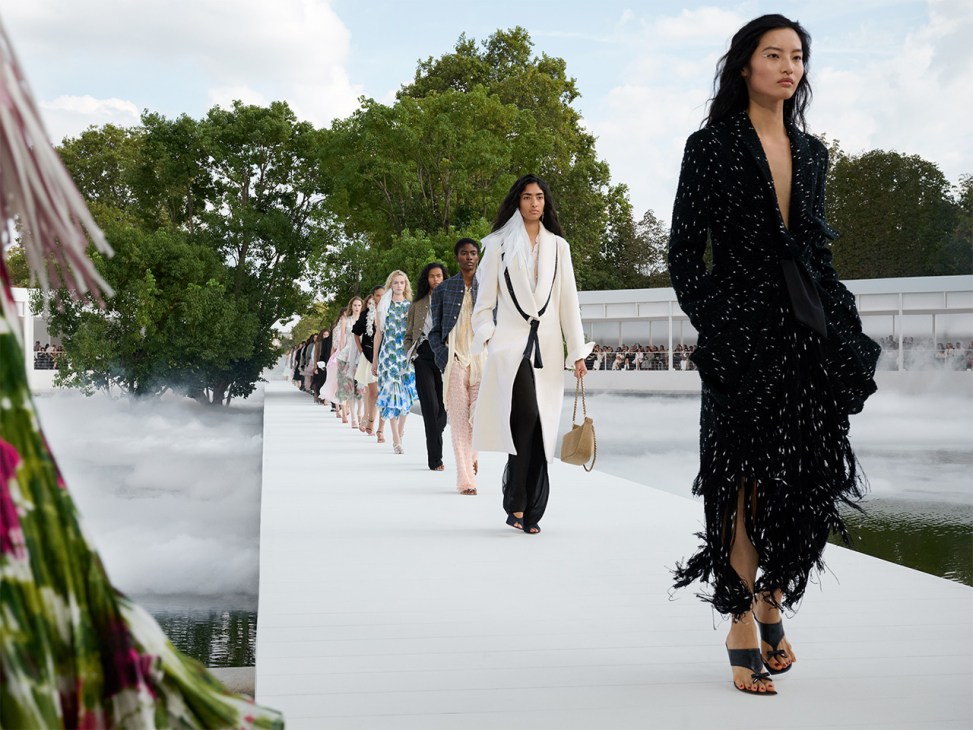
Beneath the delicate aesthetics, however, there was perhaps a heavy-handed metaphor at play. After cycling through a litany of debut and sophomore collections over the past year that heavily relied on paying homage to brand legacies and deep archives, designers seemed eager to literally and figuratively shake off the weight of heritage. The industry appeared ready to emerge from the shadow of the archive and wipe the slate clean. This collective desire for renewal could also help explain the striking abundance of optic-white show sets seen this season, providing a stark, blank canvas for brands ranging from Loewe and Dries Van Noten to Dior and Hermès.
Suspending disbelief appeared to be a necessary psychological exercise not just for the designers, but for the entire ecosystem of the fashion capital. In Paris, the runways unfolded against a complicated political and economic backdrop that could not be easily ignored. The city played host to student-led protests and demonstrations over crumbling school infrastructure and chronic underinvestment in the national education system. Just days prior, the French government put forward a contentious budget featuring €43bn in sweeping spending cuts, all while the country’s national debt continued to deepen and a high-stakes presidential election loomed on the horizon.
No amount of sartorial fantasy and runway innovation could truly insulate the industry from these pressing domestic issues—let alone the broader international headwinds impacting the sector. The ongoing geopolitical conflict in the Middle East and a prolonged economic slowdown in China have continued to exert downward pressure on the global demand for luxury goods, leaving brands to navigate a delicate period of financial scrutiny.
Despite these persistent industry woes, Paris can rest assured that its status as the undisputed global capital of fashion remains remarkably stable. Across continents, the world continues to look to France for validation and leadership in matters of elite taste and luxury. International players, including American brands, buyers, and press, continue to fly in en masse to align themselves with European aesthetic authority. For many emerging global brands, staging group showcases in Paris remains the most effective avenue to reach a broader, more influential audience than they could ever hope to find on home soil.
This gravitational pull is precisely what inspired international fashion bodies to utilize the Parisian stage for broader commercial and cultural diplomacy. The Australian Fashion Council, for instance, sponsored a cohort of 12 homegrown designers to show their latest collections in Paris, bridging the gap between local talent and the global market with presentations ranging from the ultra-minimalist tailoring of Esse Studios to the expressive, colorful narratives of Romance Was Born.
Historically, Australian fashion was largely pigeonholed and sold globally as seasonal resortwear, Marianne Perkovic, the initiative’s chair, noted in discussions with Monocle. The strategy, she explained, is to actively redefine that perception through an aggressive focus on international trade and commerce. By putting Australian fashion and textiles firmly on the global map, the country aims to bolster an important national export sector that currently accounts for €4.46bn each year, necessitating a concerted effort to take domestic designers directly to the world stage.
With crucial government backing, initiatives such as the Australian showcase demonstrate that fashion functions as much more than a commercial enterprise; it remains one of the most potent tools of soft power available. No nation has understood and leveraged this dynamic quite like France and its storied luxury houses, where creative directors continue to employ a degree of wishful thinking to provide audiences with much-needed levity during turbulent times.
Grace Charlton is Monocle’s fashion editor. For more insight and analysis, subscribe to Monocle today.