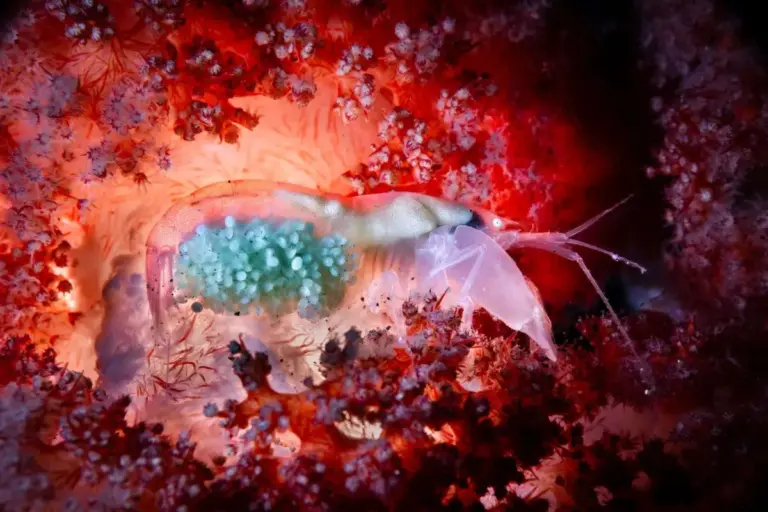
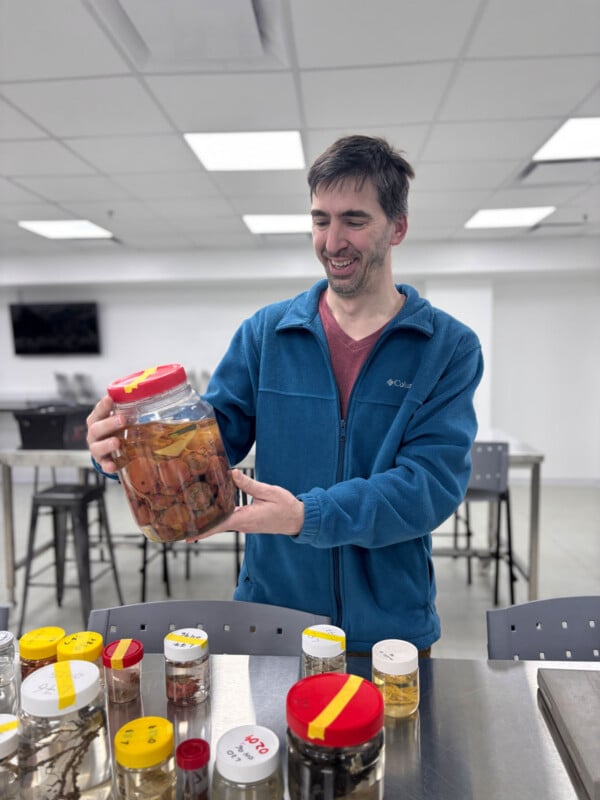
In a stunning demonstration of the speed and power of collaborative modern taxonomy, marine scientists working with the Ocean Census Network have identified 57 entirely new marine species and five new genera following a high-stakes deep-sea exploration. The remarkable discoveries were cataloged during an intensive two-week species discovery workshop that brought together an international cohort of researchers to analyze biological samples gathered from the abyss.
Led by the Nippon Foundation-Nekton Ocean Census in partnership with the Schmidt Ocean Institute, the underlying expedition targeted the rugged and largely unexplored terrain of the Mar del Plata Submarine Canyon. Situated off the coast of Argentina in the South Atlantic Ocean, this dramatic underwater gorge plunges to depths exceeding 3,500 meters, or roughly 11,400 feet. To put that into perspective, the canyon drops to roughly twice the depth of the famous Grand Canyon on land, creating an immense, high-pressure, lightless environment that acts as a natural crucible for unique evolutionary adaptations and extraordinary biological diversity.
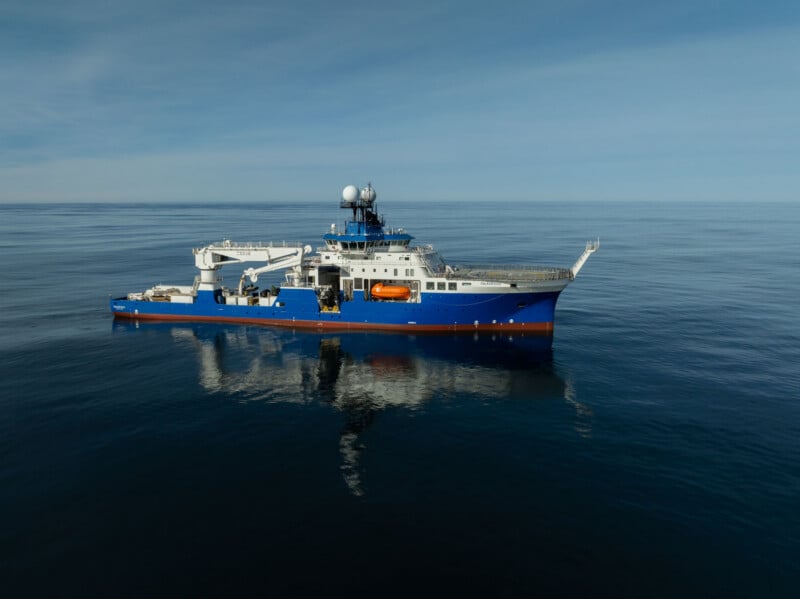
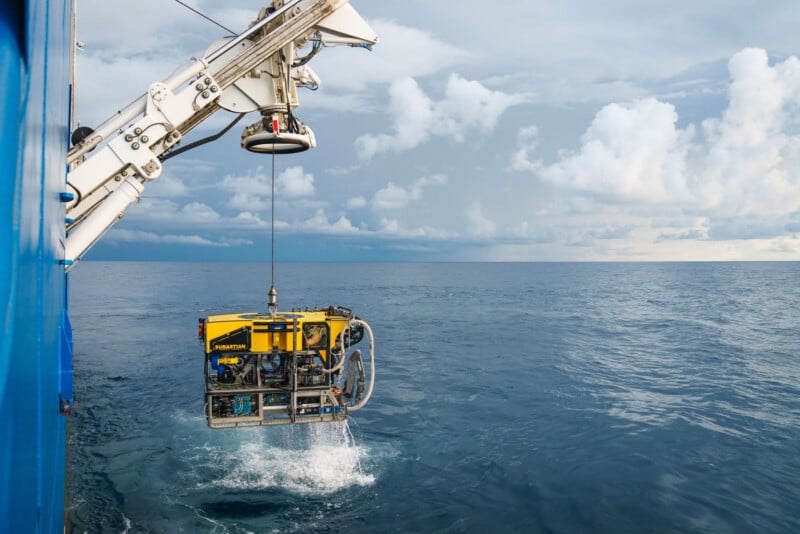
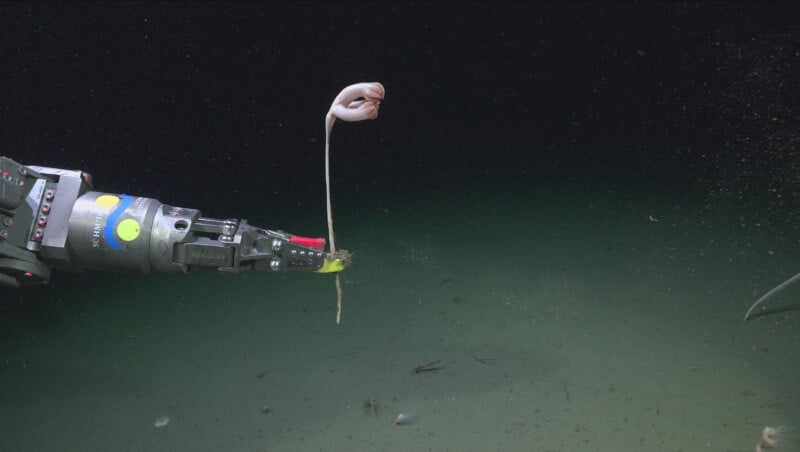
The expedition relied heavily on advanced marine technology to pierce the veil of the deep sea. Researchers operated from the state-of-the-art ocean research vessel Falkor (too), utilizing its sophisticated deployment systems to launch the remotely operated vehicle (ROV) SuBastian. This high-tech robotic vehicle descended thousands of meters into the freezing, pitch-black waters, capturing crystal-clear high-definition video footage and carefully collecting fragile biological specimens using specialized robotic manipulators.
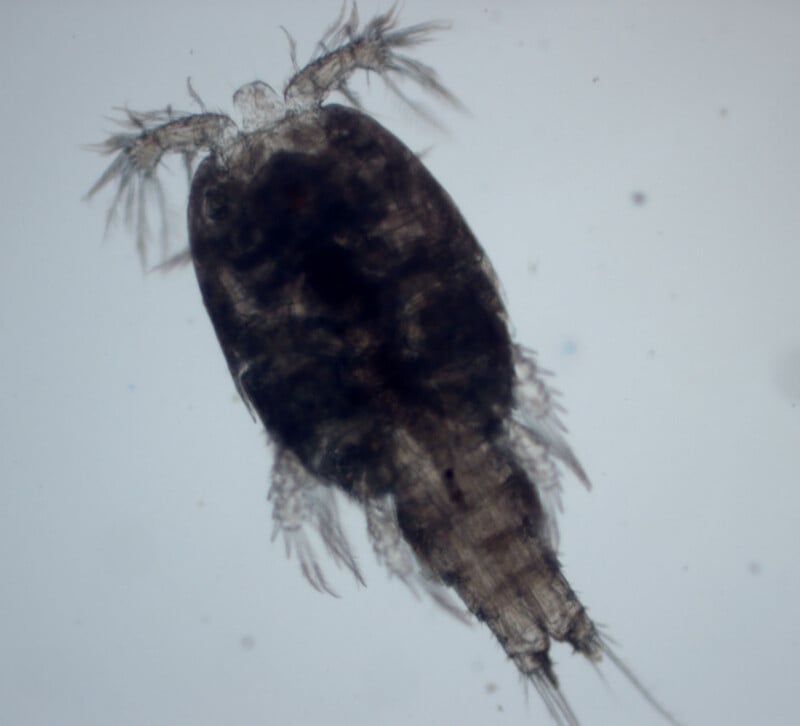
When the scientific team broke down the composition of the 57 newly identified species, the sheer breadth of the canyon’s ecosystem came into sharp focus. The haul included 20 species of copepods, which are small aquatic crustaceans; 22 echinoderms, encompassing deep-sea sea cucumbers and crinoids; 14 cnidarians, featuring delicate octocorals, wispy sea pens, and stony corals; and one scaphopod mollusk. Furthermore, the taxonomic analysis revealed five entirely new scientific genera spanning corals, sea cucumbers, and crustaceans.
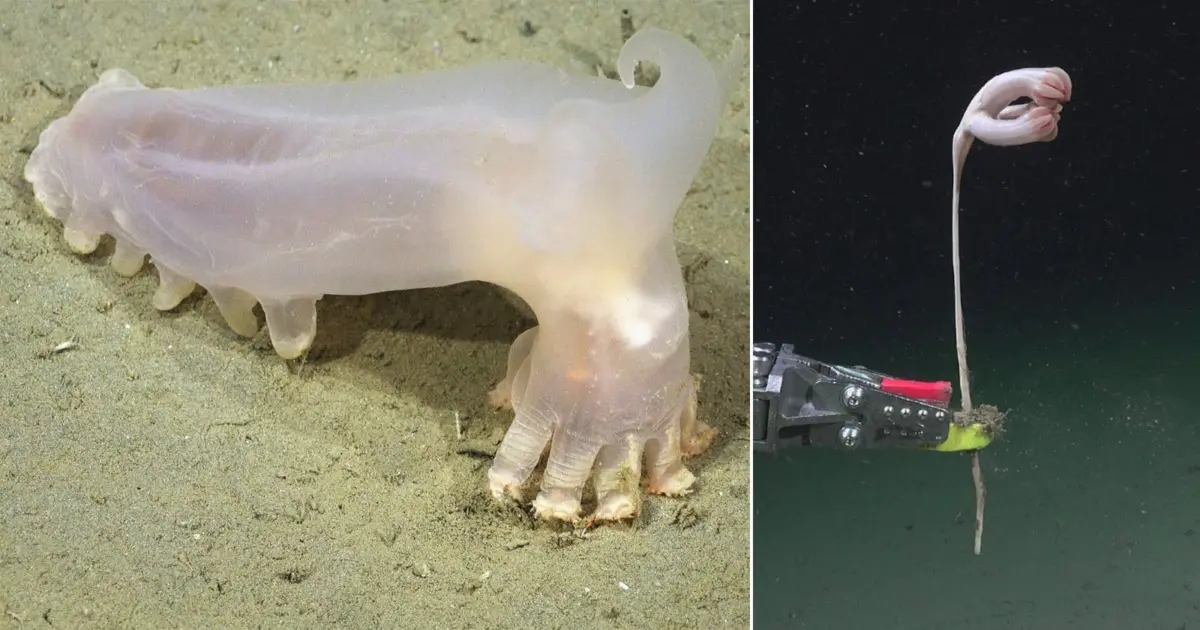
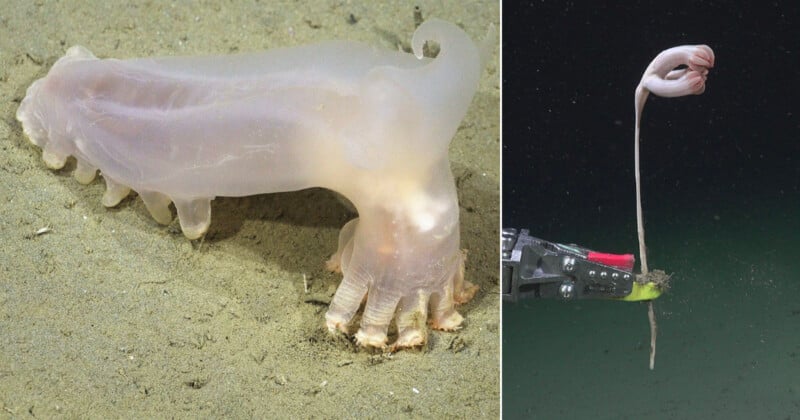
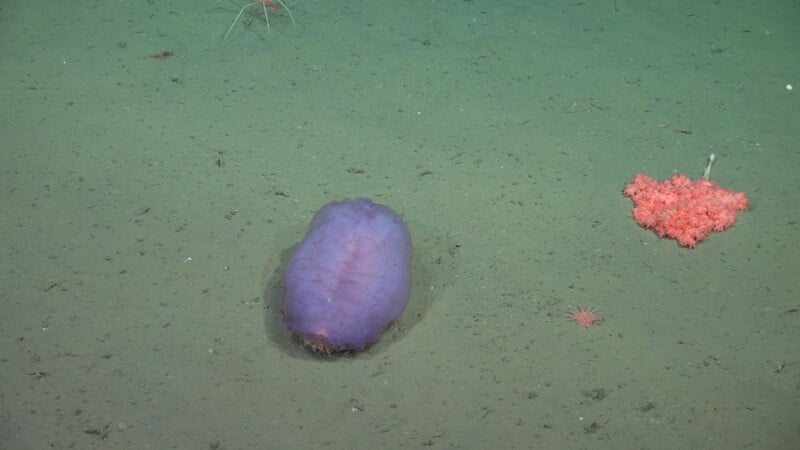
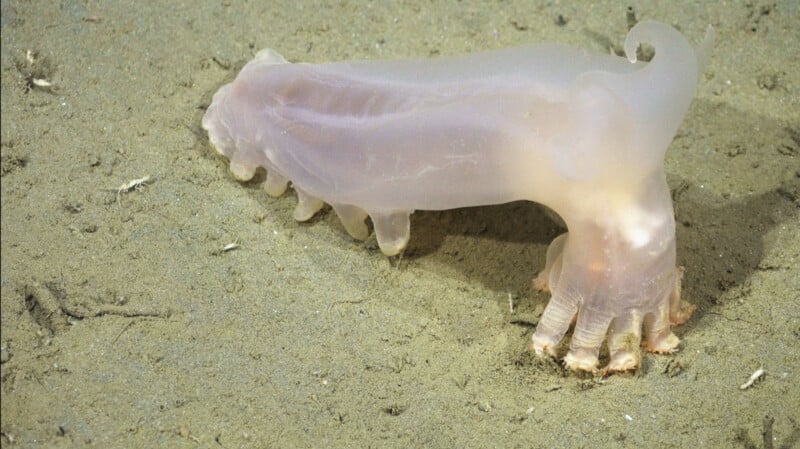
Among the standout creatures brought to light during the research workshop is a striking holothurian given the moniker "Loki the Sea Cucumber," scientifically categorized within the genus Peniagone. Captured in vivid detail along the canyon floor, this translucent, pale pink creature features prominent horned appendages that immediately evoked the mythological Norse god. It stands as just one of up to 10 new holothurian species discovered during the intense analytical workshop.
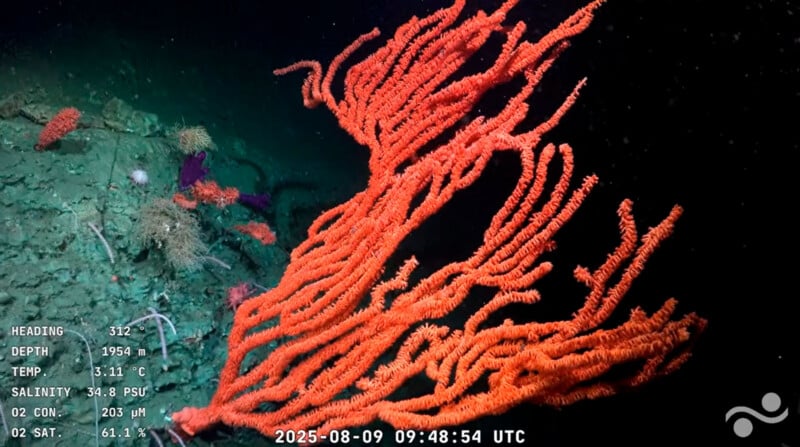
Another visual marvel from the expedition is a bright red-orange octocoral belonging to the genus Orstomisis, which was successfully filmed and sampled at a staggering depth of 1,954 meters below the ocean surface. Researchers also pulled up delicate colonial corals known as sea pens, specifically Pseudumbellula, alongside minute, intricately structured copepods like Pseudotachidius, found dwelling between 1,909 and 2,625 meters deep. Taxonomists note that they have only scratched the surface of their micro-crustacean samples, having examined merely about 10 percent of the copepods collected, yet every single one analyzed so far has proven to be entirely new to science.
Dr. Daniel Lauretta, Principal Investigator from CONICET and the Museo Argentino de Ciencias Naturales, emphasized the critical importance of global cooperation in fields where specialized experts are scarce. He noted that the specialized workshop format dramatically accelerated species identification, fast-tracked the formal recognition of lifeforms previously unknown to science, and provided vital capacity-building opportunities for local early-career taxonomists dedicating their professional lives to the study of deep-sea fauna.
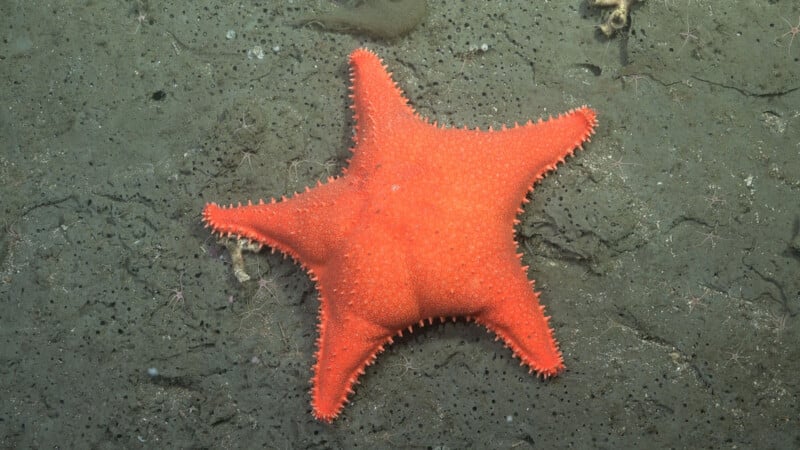
While these extraordinary discoveries are only now being broadly shared with the public, the physical expedition itself took place just over a year ago under Dr. Lauretta’s leadership. During the voyage, the science team captured the public’s imagination by live-streaming portions of their deep-sea dives using ROV SuBastian. Over four million viewers tuned in from around the globe, becoming thoroughly captivated by a bright orange sea star resting on the dark, textured seafloor. Though sharing a striking uncanny resemblance to the animated character Patrick Star from Spongebob Squarepants—complete with an unassuming posture alongside slender brittle stars—the internet-famous starfish was ultimately identified as a known, rather than novel, deep-sea resident.
Despite such viral moments, the overarching mission remains deeply scientific and intensely urgent. Dr. Michelle Taylor, Ocean Census Head of Science, underscored that discovering nearly six dozen new species and multiple new genera within a brief fortnight underscores the immense value of coordinated taxonomic efforts. By uniting Latin America’s regional scientific expertise with international specialists and connecting them to open-access digital platforms like the Ocean Census NOVA framework, the global scientific community is working to overcome historic bottlenecks in marine biology.
The deep sea continues to represent one of the least understood and most elusive ecosystems on Planet Earth. The Schmidt Ocean Institute and its robotic ambassador SuBastian have a proven track record of shedding light on these mysterious habitats, having previously photographed 31 otherworldly deep-sea species in earlier expeditions, alongside rare spectacles like the Casper Octopus, elusive spaghetti monsters, and remarkably diminutive bony fish.
Even with a steady drumbeat of astonishing deep-sea revelations in recent years, marine organizations estimate that as many as 1.75 million ocean creatures may still remain completely undiscovered, waiting in the dark expanses of the world’s underwater canyons and abyssal plains for future explorers to find.