The intersection of Silicon Valley ambition, high-profile scandal, and modern media has once again thrust the world of speculative biotech into the spotlight. In May of 2025, news broke across the technology and business sectors that Billy Evans, the partner of disgraced Theranos founder Elizabeth Holmes, was actively raising venture capital for his own blood-testing startup, a stealth-mode enterprise named Haemanthus. At the time of its initial public emergence, Haemanthus took to its official account on the social media platform X to state explicitly that it was "not Theranos 2.0."
However, the narrative surrounding the startup quickly complicated when filmmakers Nathan Fielder and Lance Oppenheim released their blockbuster post-truth documentary film, You Can See Everything, which debuted in October. In a striking moment within the film, Evans point-blank described Haemanthus as "Theranos 2.0," sending shockwaves through the tech community and media observers alike.
Since its inception, Haemanthus has remained shrouded in a heavy layer of corporate mystery, operating largely in the shadows. The glaring issue hanging over the company is that Evans’ stated plans sound distinctly similar to the revolutionary, yet ultimately fraudulent, approach that Holmes championed at Theranos. That foundational collapse famously led to Holmes being convicted and sentenced to 11 years in federal prison for defrauding investors, a saga that remains one of the defining cautionary tales of modern corporate history.
On social media, Haemanthus has attempted to distance itself from the ghost of Theranos, explicitly claiming that "Elizabeth Holmes has zero involvement in Haemanthus." Yet, the portrait painted by You Can See Everything offers a decidedly different, more ambiguous picture of the relationship and the corporate ecosystem surrounding the startup.
This contradiction has triggered intense curiosity, prompting fans of the film and skeptical biotech observers to dig for any scraps of verifiable information they can find about the company. Thus far, public intelligence on Haemanthus boils down to a very limited pool of resources: a handful of on-the-record statements given to journalists, a scattering of patent applications filed with regulatory bodies, two largely defunct social media accounts, and one striking company wordmark that has become the subject of intense analysis.
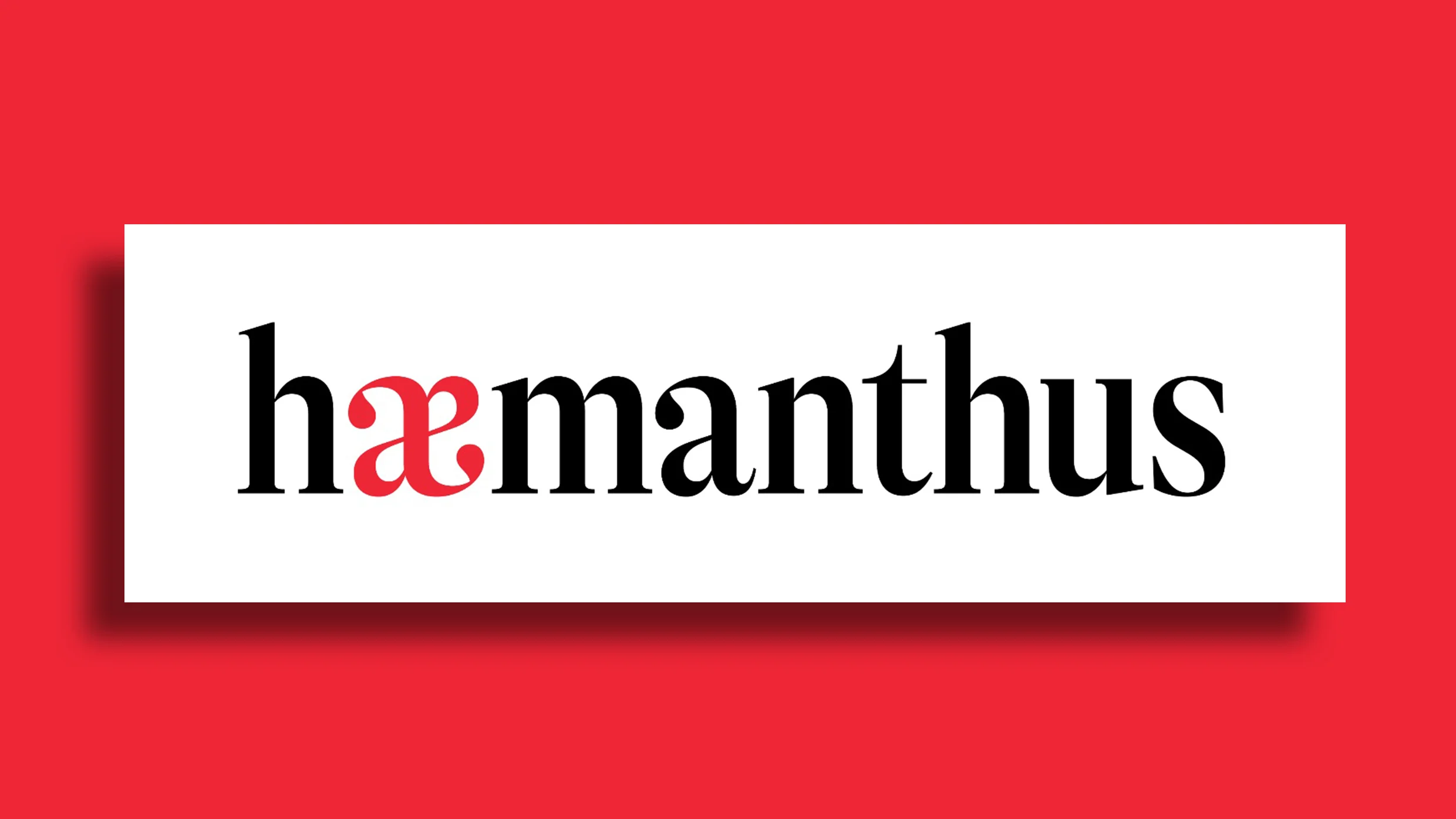
To better understand how the startup is presenting itself to the world, industry observers have turned their attention to the visual identity released so far. When design experts examine the Haemanthus logo—the sole element of a brand identity that the company has revealed to the public—their responses paint a picture of a brand that appears entirely uninterested in following traditional corporate norms or soothing investor anxieties through conventional design language.
What We Know About Haemanthus
Despite the intense public scrutiny generated by the documentary and its association with Holmes, Evans has remained fairly tight-lipped about the internal workings, technological breakthroughs, and daily operations of Haemanthus. In a May 2025 interview with The New York Times, Evans maintained that the company was still operating strictly in stealth mode, declining to offer deeper technical disclosures about how its proprietary diagnostic systems function in practice.
According to marketing materials and internal documents reviewed by The New York Times for that initial report, Haemanthus is pursuing a multi-stage product rollout. The startup’s device will initially utilize advanced laser technology to scan blood, saliva, or urine samples—focusing first on pets—and analyze those biological samples on a molecular level. The company’s long-term corporate vision and ultimate goal, however, is far more ambitious: to develop a stamp-size, wearable version of the diagnostic product designed for human health monitoring.
At the time of that reporting, marketing materials predicted that this human-focused wearable technology would take approximately three years and roughly $70 million in research and development funding to bring to market. To kickstart this ambitious timeline, the Times reported that Evans had successfully raised about $18.5 million from early-stage investors willing to take a bet on the controversial founder’s partner.
As the company works to solidify its commercial foundation, regulatory and intellectual property tracks are moving forward. The U.S. Patent and Trademark Office is currently examining the startup’s official request for a trademark on the Haemanthus name. Meanwhile, records from Google Patents indicate that the company has submitted at least six patent requests centered around Raman spectroscopy systems, which serve as the core diagnostic tool at the heart of the company’s proposed laser-based technology. Among those filings, at least one patent has already been officially granted, offering tangible evidence that underlying technical work is progressing behind the stealth-mode curtain.