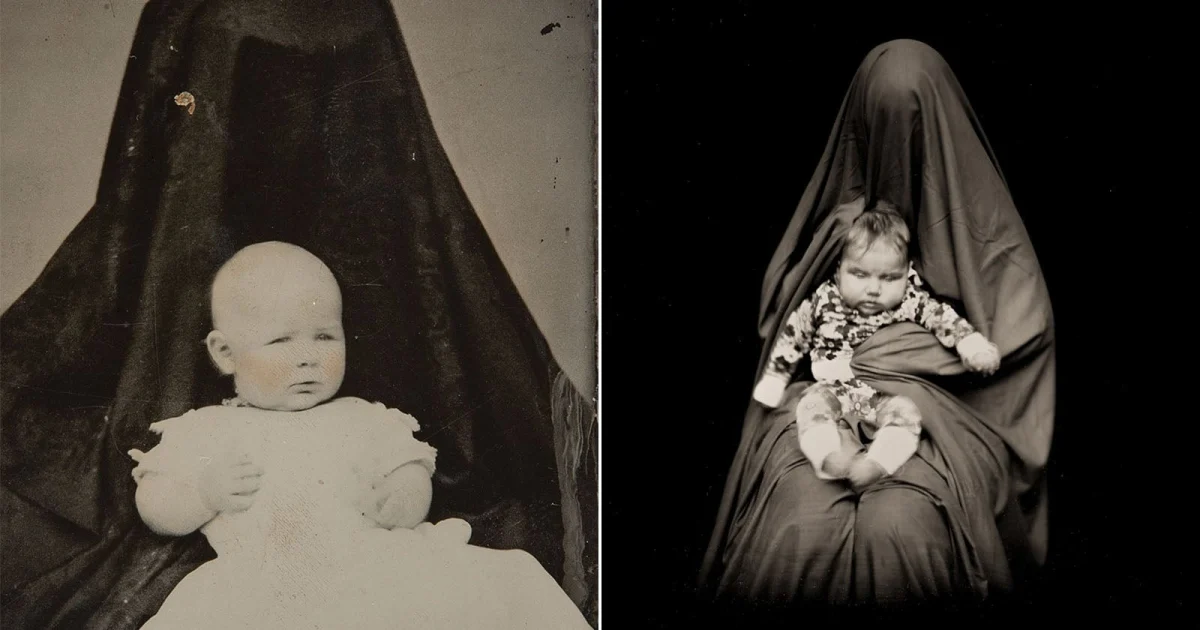
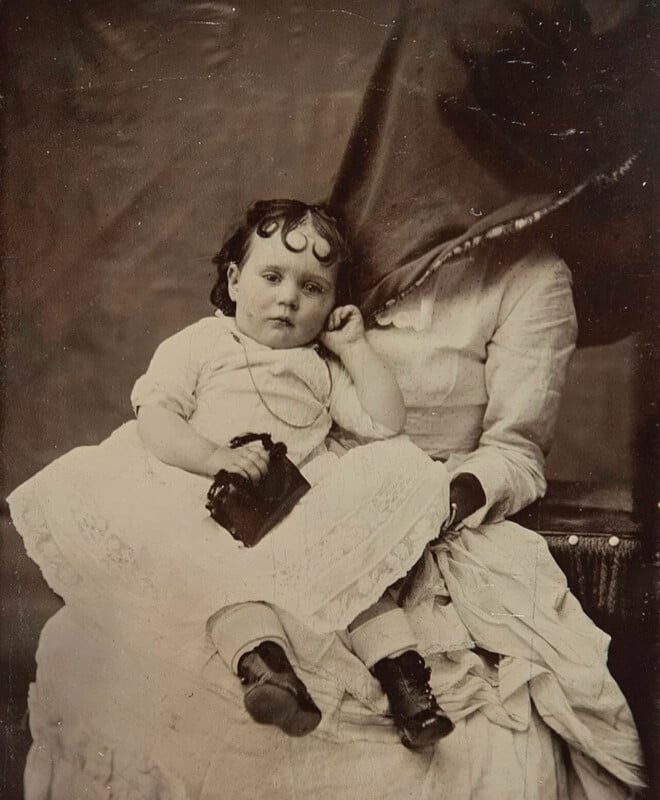
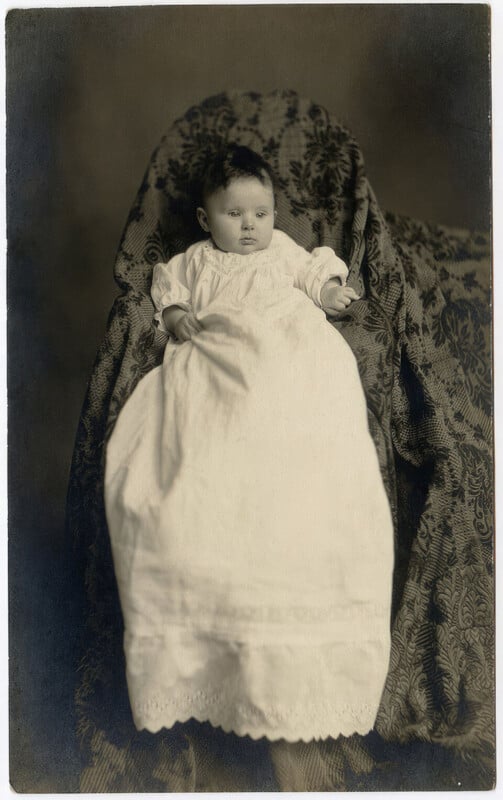
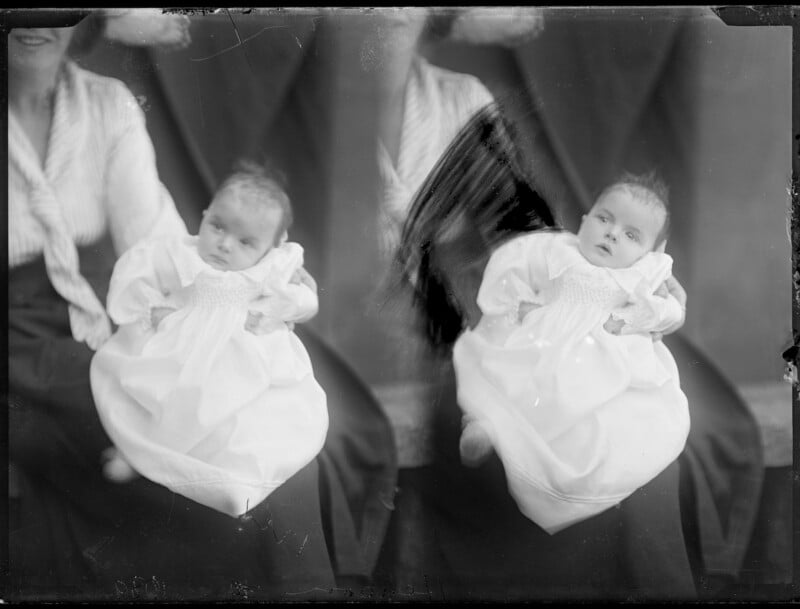
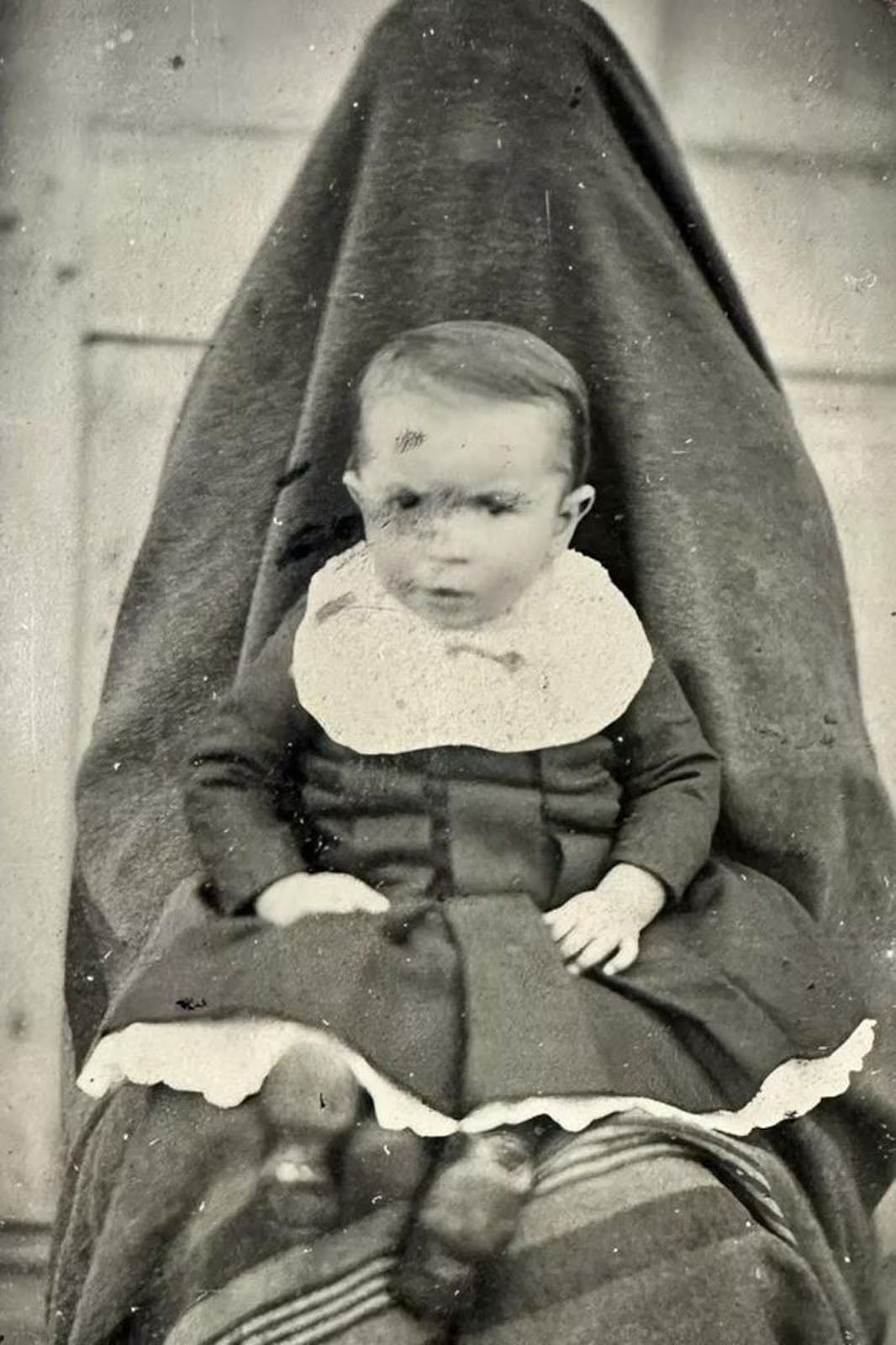
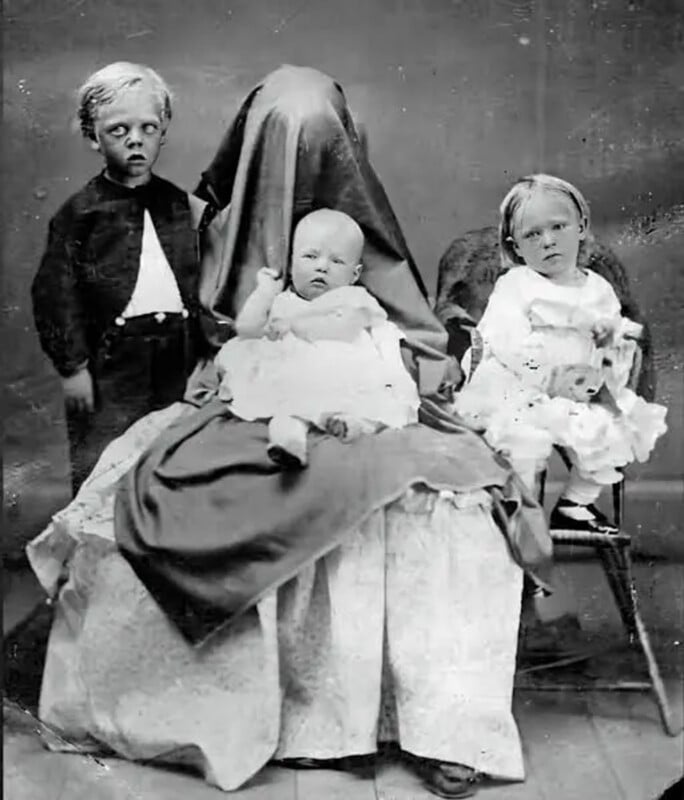
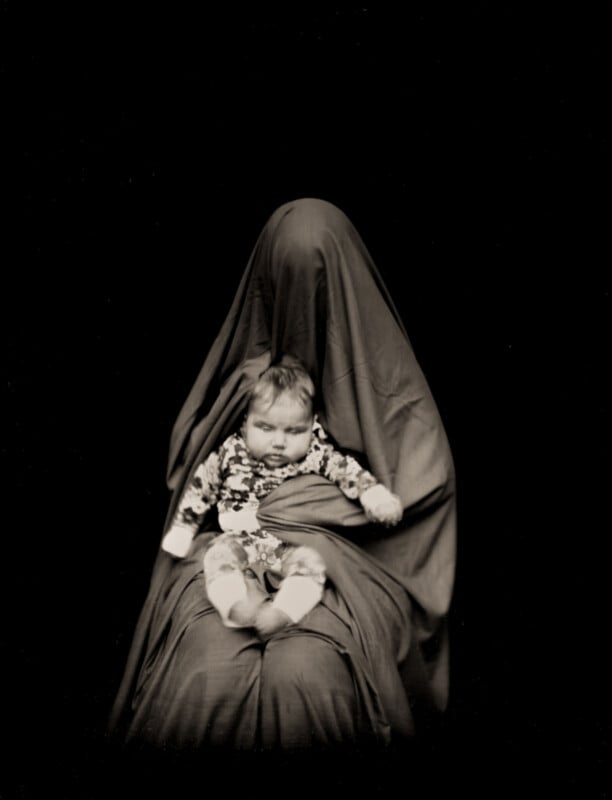
To modern eyes, vintage photographs from the 19th and early 20th centuries can often evoke a sense of the uncanny. Among the strangest of these historical artifacts is the "Hidden Mother" genre, a widespread practice dating back to the infancy of photography and the invention of the daguerreotype in 1839. In these striking compositions, infants and young children are seated upright, often staring curiously into the camera lens, while the adult holding them—frequently the mother—is completely obscured beneath a dark, draped cloth, a shroud, or hidden entirely behind a cloaked chair.
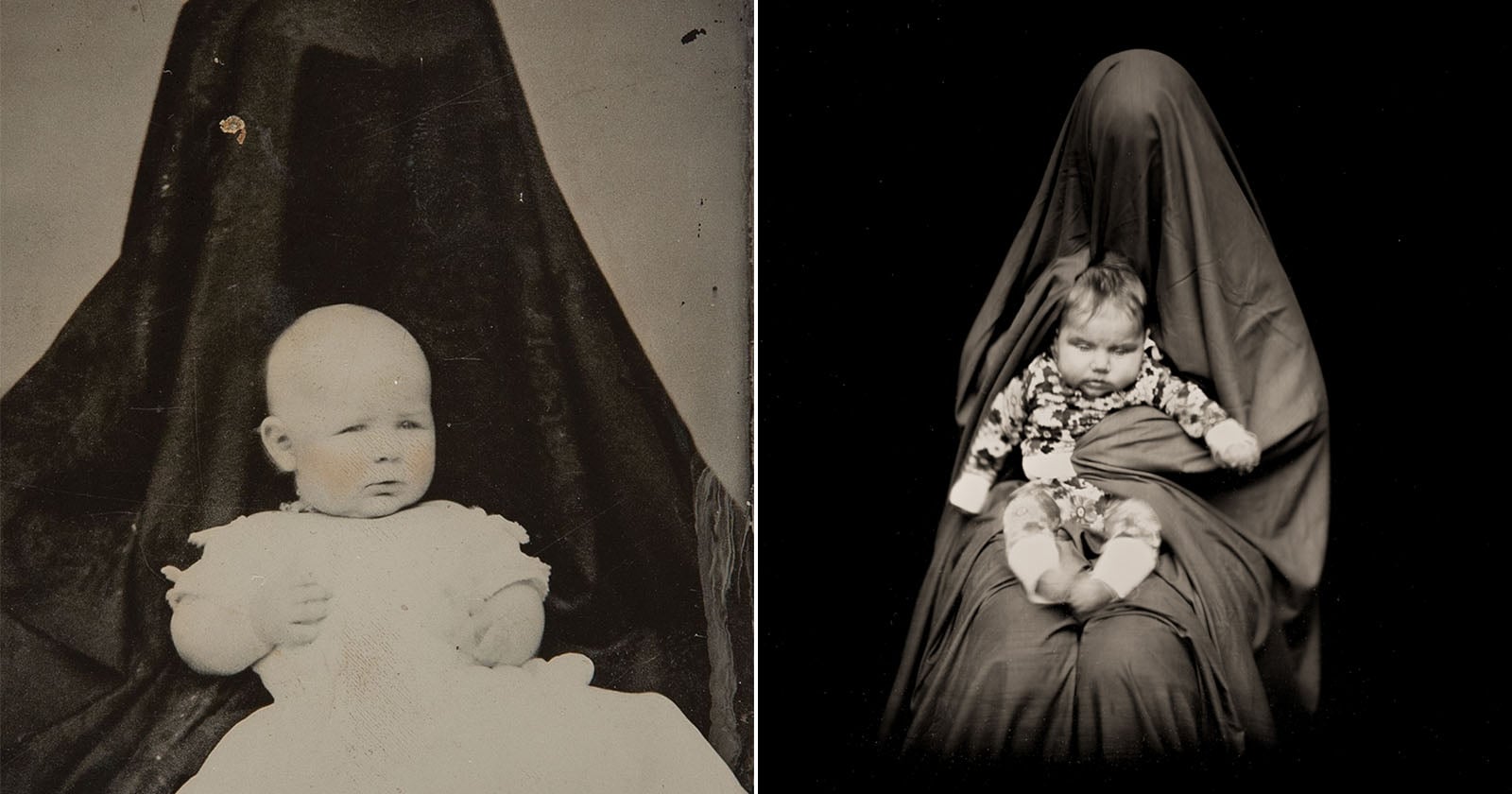
To contemporary viewers accustomed to instant, effortless digital capture, these figures appear eerie, spooky, or deeply confusing. The background figures, intentionally draped to blend into the studio surroundings, ask the viewer to overlook their presence and focus exclusively on the child. While modern sensibilities frequently label these vintage portraits as bizarre or ghoulish, the reality behind the method was rooted in simple, practical photographic necessity.
The Technical Challenge of 19th-Century Exposure Times
The primary driver behind the hidden mother phenomenon was the technical limitation of early photographic exposure times. In the mid-1800s, photographs of children were exceedingly rare, and when young subjects did appear in historical frames, they were often blurred and completely out of focus. Parents desperately wanted clear portraits of their babies and toddlers, and early photographers devised the hidden mother technique as a practical solution. The trend continued well into the 1920s, persisting until camera lenses became faster and plate and film photography advanced to much quicker speeds.
Early photographic methods, including the daguerreotype and the wet plate collodion process introduced by Frederick Scott Archer in 1851, required the camera lens to be open for exorbitant amounts of time. While some exposures took only a few seconds, others required subjects to hold perfectly still for minutes on end. These extended exposure times pushed the absolute boundaries of human endurance. In a modern natural light wet plate studio, a typical exposure time ranges from 6 to 12 seconds depending on the season and available light. While that duration may sound brief to modern observers, anyone who has sat for a wet plate portrait quickly learns that remaining completely motionless for that span feels like an eternity.
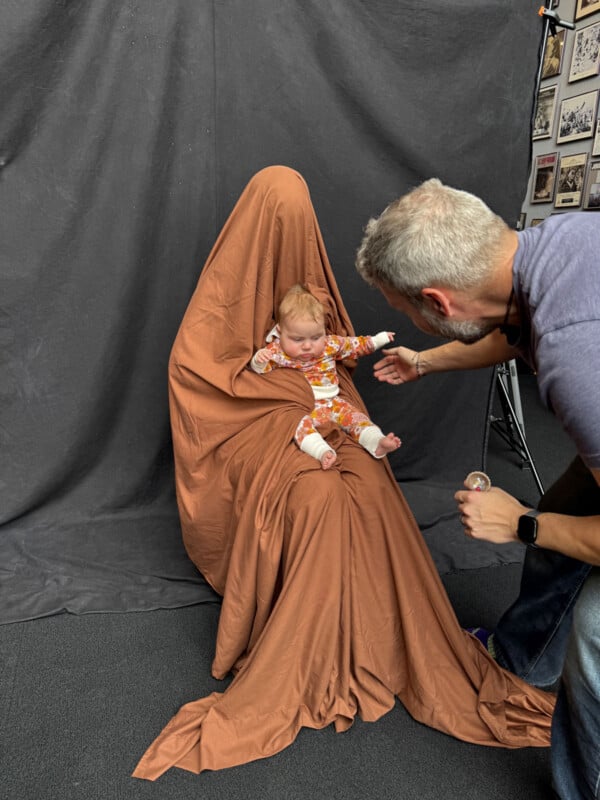
Practitioners of historic photographic techniques keep these traditions alive today to understand the immense patience required by early sitters. Attempting to recreate these historic sessions offers a direct window into the challenges faced by 19th-century families. In a recent natural light studio session, a contemporary wet plate photographer paid homage to the technique by capturing a portrait of a baby named Mazie alongside her parents, Dana and Chris.
Working with a large format camera and a wide-open lens, the modern recreation mirrored the exact conditions of the Victorian era. The young child remained entirely unaware that her mother was shrouded beneath a heavy fabric drape. Because the mother could still provide physical touch and a familiar voice, the baby remained comforted and calm while being stabilized on the chair. This physical support eliminated any chance that the infant might topple over. Historical examples frequently reveal the subtle outline of a supporting arm aiding the child’s positioning. Furthermore, the presence of the father, equipped with a favorite rattle, provided a familiar face in the infant’s field of view to help secure her attention.
Understanding Posing Stands and Historical Misconceptions
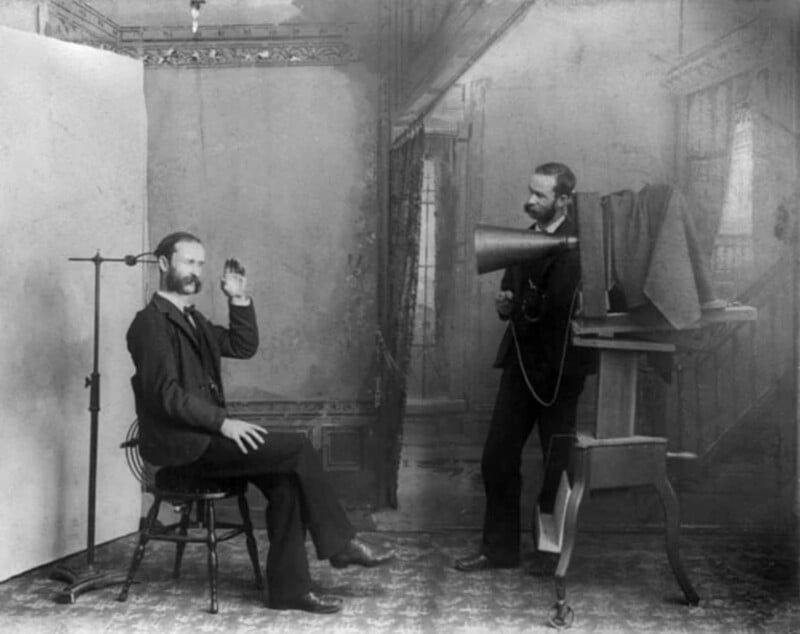
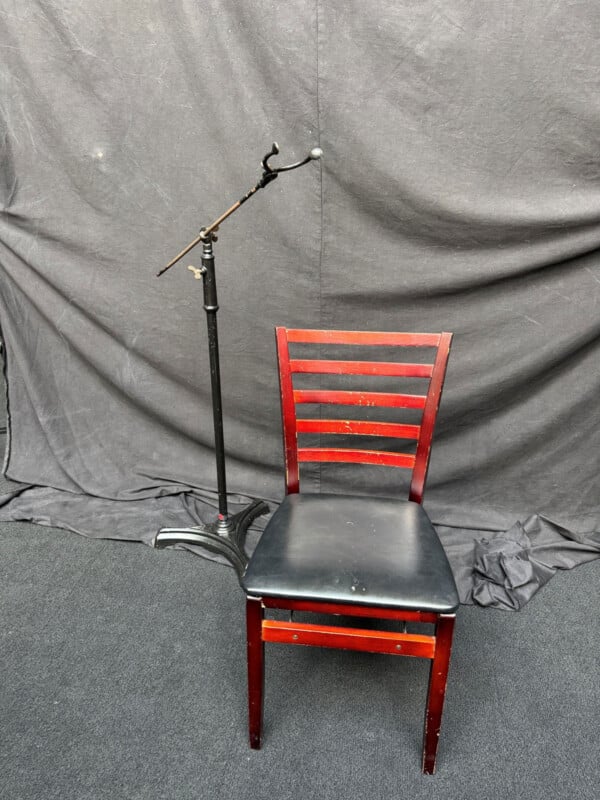
The difficulty of remaining motionless during long exposures was not restricted to infants; adults also found the process daunting. In 19th-century studios, a specialized device known as a headbrace or posing stand became an essential piece of equipment. Without such stabilization, many adults succumbed to the physical pressure of maintaining a fixed posture for ten seconds or longer.
The headbrace secured the sitter’s head, leaving them only needing to worry about the involuntary human urge to blink. Because early photographic chemistry reacted so slowly, a quick blink would typically not disrupt the overall focus of the final image. Today, very few original 19th-century headbraces survive because they became completely obsolete once photographic plates and film grew faster. Authentic examples have been known to command upwards of $10,000 at auction, though contemporary practitioners often rely on modern foundry castings replicated from historical models.
A persistent modern misconception attributes these headbraces to post-mortem photography, with laymen incorrectly assuming that the devices were used to prop up deceased individuals. Historians and photography experts note that this interpretation is entirely inaccurate. The physical strain required to hold a living person steady highlights the impossibility of using such lightweight metal stands to support dead weight.
The Enduring Legacy and Cultural Fascination
The hidden mother craze of the 1800s has inspired a massive wave of 21st-century fascination, frequently grouping these historic records alongside ghost or spirit photography. When rare examples appear on the open market, they command significant financial premiums. The enduring public interest is further demonstrated by published works such as Italian-Swedish artist Linda Fregni Nagler’s 2013 book, The Hidden Mother, which catalogs over 1,000 such photographs and commands high prices among collectors.
When the historical context is fully understood, the seemingly ghoulish records reveal themselves to be tender family portraits born of technological constraints. Nineteenth-century parents and photographers went to extraordinary lengths simply to preserve the likeness of a child. By contrast, modern society enjoys ubiquitous, instant, and virtually free digital photography via cell phones, taking for granted a medium that once required hours of meticulous chemical preparation, composition, and immense patience.
As contemporary digital archives continue to expand, questions remain regarding the longevity of modern visual culture. With only a tiny fraction of today’s digital photographs ever printed into physical reality, software and hardware obsolescence threatens to erase vast swaths of contemporary imagery. In contrast, silver-on-glass ambrotypes and enduring photographic plates produced over a century ago continue to survive, carrying their history intact across the centuries. Until the true legacy of the digital age becomes clear, historical genres like the hidden mother will continue to captivate observers, offering a tangible connection to the ingenuity and dedication of early photographers.