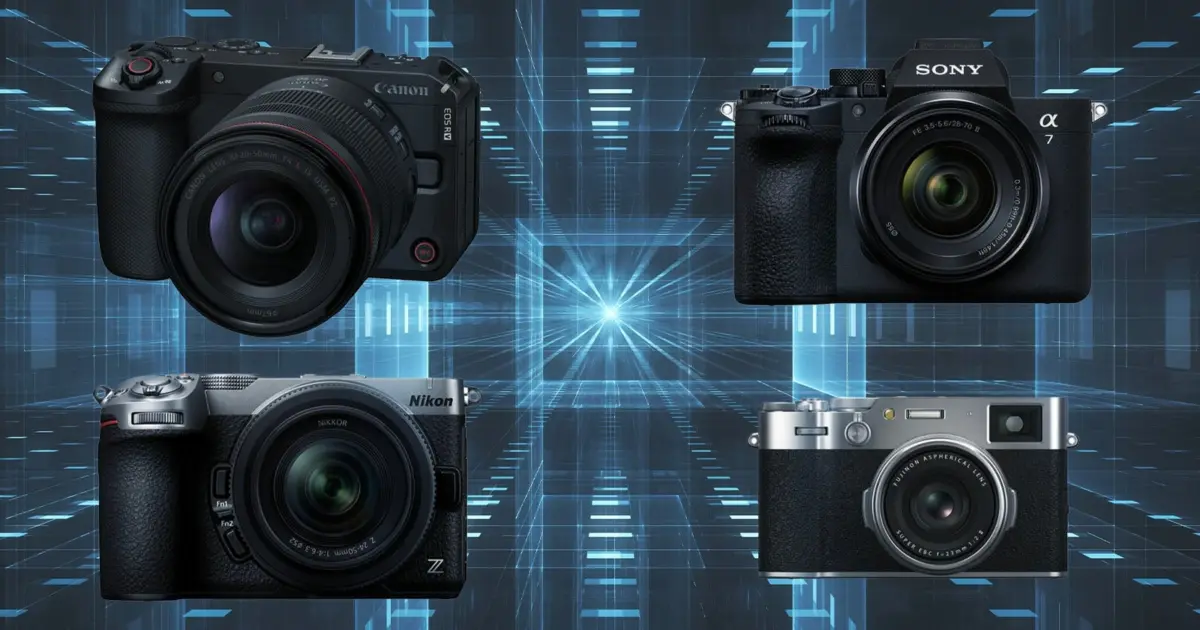
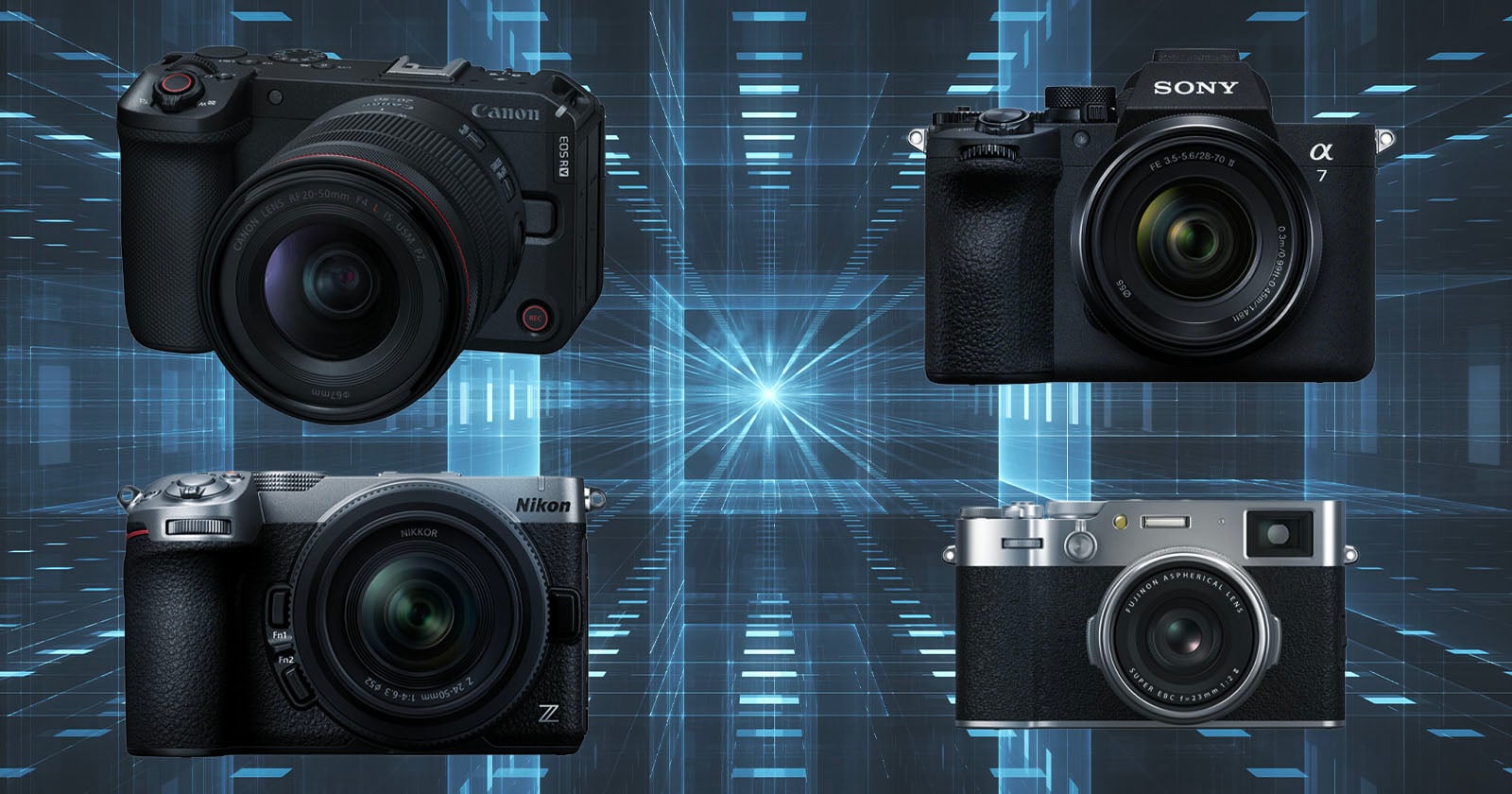
In an industry navigating rapid technological disruption, the world’s leading camera manufacturers are charting remarkably different paths forward. A recent feature published by the prominent Japanese economic publication Nikkei brought together top executives from Canon, Nikon, Sony, and Fujifilm to discuss the evolving landscape of imaging. As spotted by Photo Rumors, the comprehensive interviews offer a rare glimpse into the corporate strategies of the giants shaping modern photography.
Featuring insights from Canon’s Go Tokura, Nikon’s Hiroyuki Ikegami, Sony’s Kenji Tanaka, and Fujifilm’s Koji Matsumoto, the discussions centered on how these historic brands plan to address the existential pressures and opportunities presented by generative artificial intelligence, surging video demands, the dominance of smartphones, and a growing consumer appetite for retro and analog aesthetics. Rather than converging on a single solution, the industry leaders made it clear that the future of photography will be defined by diversity, with each brand betting on a distinct philosophy.
The Experiential Appeal of Compacts and the Rise of Video
For decades, the camera market was driven primarily by an uncompromising pursuit of technical specifications, resolution, and autofocus speed. However, executive leadership notes a profound shift in consumer behavior, particularly among younger generations who are fueling a remarkable resurgence in dedicated compact digital cameras.
According to Canon’s Go Tokura, this new wave of consumers is not necessarily motivated by clinical perfection or ultra-high performance. Instead, they are drawn to the pure shooting experience, willingly embracing minor inconveniences if it means interacting with a tactile, dedicated device.
"Young people are driving the current growth of compact digital cameras. They certainly aren’t buying them just because of high performance or image quality; they enjoy the shooting experience itself, even if it comes with some minor inconveniences," Tokura explains.
This behavioral shift has forced manufacturing strategies to evolve beyond traditional metrics. Up until recently, product lineups were structured rigidly around a matrix of performance tiers and price points. Tokura acknowledges that Canon now recognizes the urgent need to weave elements of style, emotion, and tactile feel into its engineering. Because individuals harbor unique senses of self that they wish to express through imagery, a diverse array of photographic experiences is rapidly spreading across society.
Looking toward the immediate future, Canon is also positioning itself to capture the exploding demand for hybrid content creation. Tokura points to the company’s video-oriented V Series as a primary growth vector, noting that customer demand is dictating a broader expansion of this lineup. Furthermore, Canon sees a critical engineering challenge ahead: developing a richer selection of lenses capable of seamlessly bridging the gap between motion and still capture, ensuring that creators can pivot between video and photography without technical compromise.
Building Foundations and the ‘Smartphone Plus One’ Strategy
Nikon shares several of Canon’s observations regarding shifting market demographics, yet the company is executing a slightly different operational playbook as it stabilizes and rebuilds its product ecosystem. Hiroyuki Ikegami notes that Nikon has faced deliberate challenges in cascading the advanced, high-performance features of its flagship Z9 downward into more accessible, lower-end models.
Completing a comprehensive lineup from high-end professional bodies down to entry-level devices inevitably impacts average selling prices. Consequently, Nikon has chosen to concentrate its major capital investments squarely on next-generation image processing engines, proprietary sensor technologies, and specialized video capabilities. Ikegami describes the brand as being right in the middle of laying these foundational building blocks for the future.
At the same time, Nikon is acutely aware of the ubiquitous presence of mobile phones. As smartphones become increasingly sophisticated and capable of producing everyday snapshots, Ikegami identifies a growing consumer demand for a dedicated "smartphone plus one" device. Such a tool not only offers superior optical reach and creative control but also acts as a battery-saving companion for mobile content creators. Nikon’s product development is increasingly focused on crafting hardware that naturally appeals to these younger demographics, encouraging them to step away from all-in-one pocket devices in favor of dedicated optical gear.
Sony’s Vision: Spatial AI and the Expansion of Content Creation
While Canon, Nikon, and Fujifilm focus heavily on the physical camera body, traditional shooting experiences, and optical craft, Sony is mapping out a radically different corporate trajectory. Kenji Tanaka outlines a vision where the Alpha series of mirrorless cameras becomes deeply integrated into a much broader technological and entertainment framework driven by what Sony terms "Spatial AI."
According to Tanaka, Spatial AI involves capturing the physical world using advanced image sensors to construct a digital twin. Within this digital space, reality can be made more attractive, or alternative ways of presenting it can be simulated. That simulation is then transformed into rich content for people to experience back in the physical world.
The terminology stems from a corporate belief that artificial intelligence should not be utilized merely for operational efficiency, labor savings, or automated image cleanup, but rather as a tool to fundamentally expand the world of entertainment. Ultimately, Sony aims to reach a point where it can generate content tailored optimally for each individual user, leveraging sophisticated spatial recognition and subject tracking technologies developed through its camera divisions.
From this perspective, the Alpha brand is not viewed internally as a standalone camera business that must prop itself up entirely through traditional hardware sales. Instead, its core essence lies in creating foundational value for creators and content consumers alike. This philosophy redefines who qualifies as a creator in the modern digital ecosystem.
Sony’s leadership emphasizes that anyone who produces creative work and inspires genuine human emotion falls under this umbrella. This expansive definition includes not only traditional photographers and film directors, but also dancers, musicians, and athletes. Sony’s strategic objective is to deploy Spatial AI to enhance, support, and expand the creativity of these diverse groups across the entire entertainment spectrum.
Fujifilm and the Unyielding Importance of Fun and Tactile Feel
In stark contrast to Sony’s digital twin and AI-heavy simulations, Fujifilm continues to double down on the philosophies it has consistently championed: photography must remain inherently fun, tactile, and rooted in the physical world.
Koji Matsumoto reflects on how the widespread proliferation of smartphones fundamentally democratized photography, transforming billions of people into active image-makers. Through constant exposure to social media and digital galleries, the general public has developed a much more discerning eye for visual composition, lighting, and mood. Consequently, the demand for dedicated cameras among individuals who care deeply about intentional self-expression has grown significantly, driving Fujifilm’s recent market strength.
To capture this audience, Fujifilm deploys targeted marketing strategies designed to let consumers experience the visceral joy of photography—an emotional connection that smartphones struggle to replicate. By encouraging potential buyers to handle cameras physically at retail stores and hands-on shooting events, the brand taps into a desire for tangible interaction.
This consumer engagement relies entirely on a foundation of optical and mechanical technology cultivated over many decades. Matsumoto notes that finding affection in the tactile, analog feel of turning physical shutter speed and ISO dials, or enjoying the distinct, nostalgic color science of film simulations, is only possible because of accumulated historical expertise. While artificial intelligence possesses the capability to generate endless images from text prompts, Matsumoto asserts that only humans possess the subjective, grounding sense of feeling that allows them to look at a frame and declare with certainty that it is real.