A vase typically relies on a floral arrangement to claim its moment in the spotlight. Once the bouquet has faded and the stems are discarded, even an exceptionally crafted or expensive vessel is frequently relegated to the background, acting as little more than quiet scenery on a shelf or tabletop. That familiar, everyday design dilemma is the focal point of "Photosynthesis," a compelling new exhibition of glass vases by renowned designer Maxim Velčovský. These striking sculptural objects refuse to wait for a florist to grant them a reason to exist. Instead, their bulbous forms, pooling colors, and shifting reflections transform the traditionally empty vase into the absolute main event of a room.
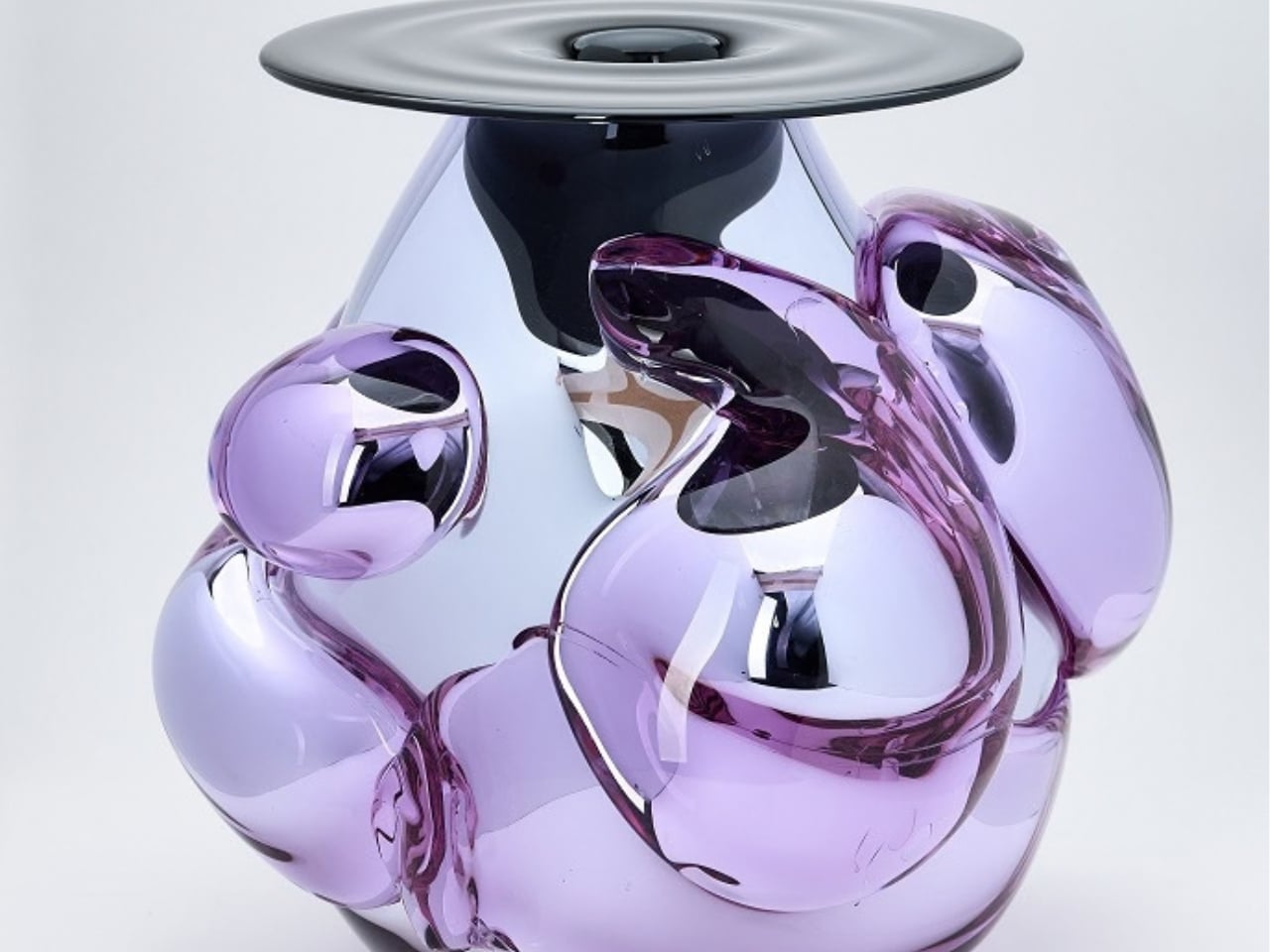
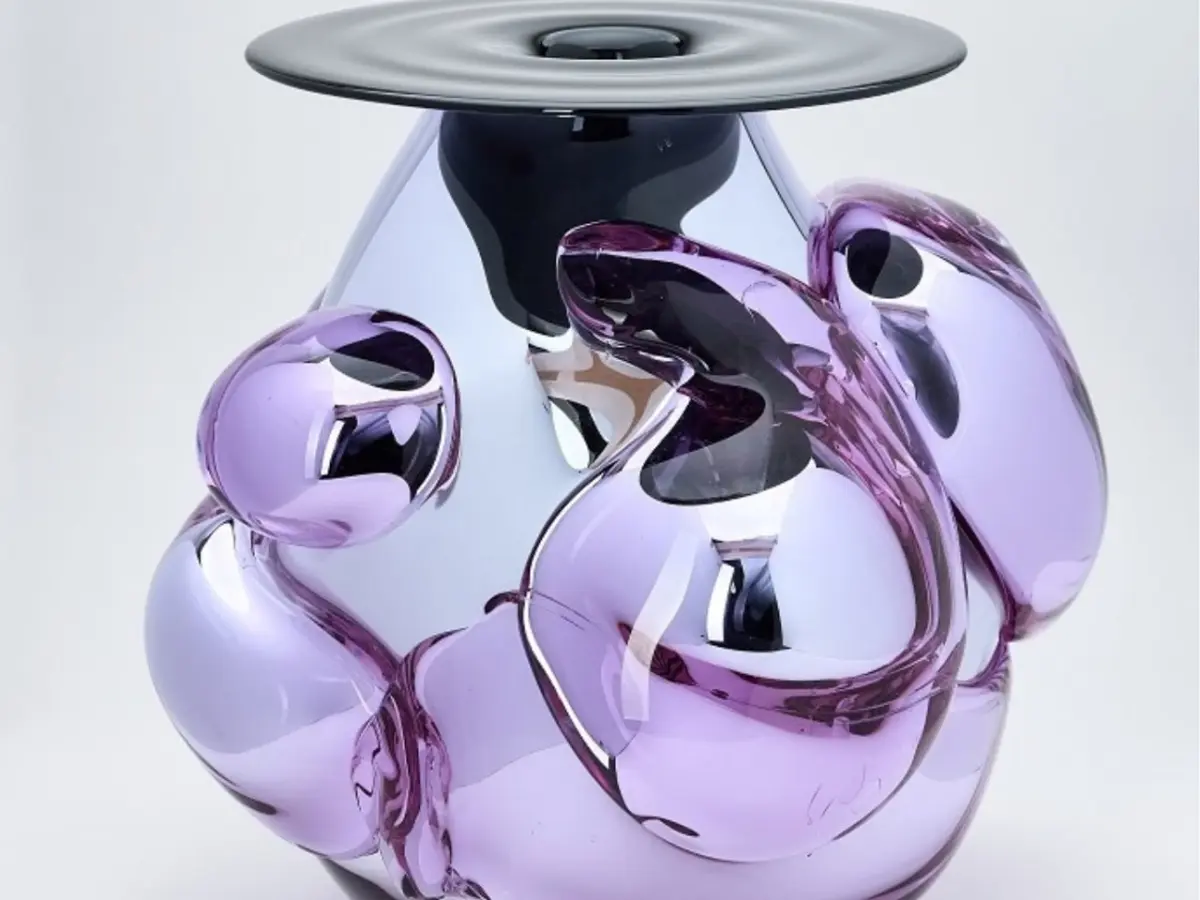
This approach offers a refreshing alternative to the standard objects frequently marketed as "statement pieces." Most interior spaces contain items that owners once loved enough to bring home, only for those objects to eventually fade into the background noise of daily life. Velčovský’s vases, however, depend on an element that a stationary room can never truly hold still: light. As natural illumination shifts and travels across their complex surfaces, different curves emerge from the glass, colors deepen and recede, and playful reflections continually interrupt the transparency. Even when viewed through photographs, the pieces evoke a sense of dynamic discovery, suggesting that a passerby could easily notice a brand-new detail every single time they walked past one.
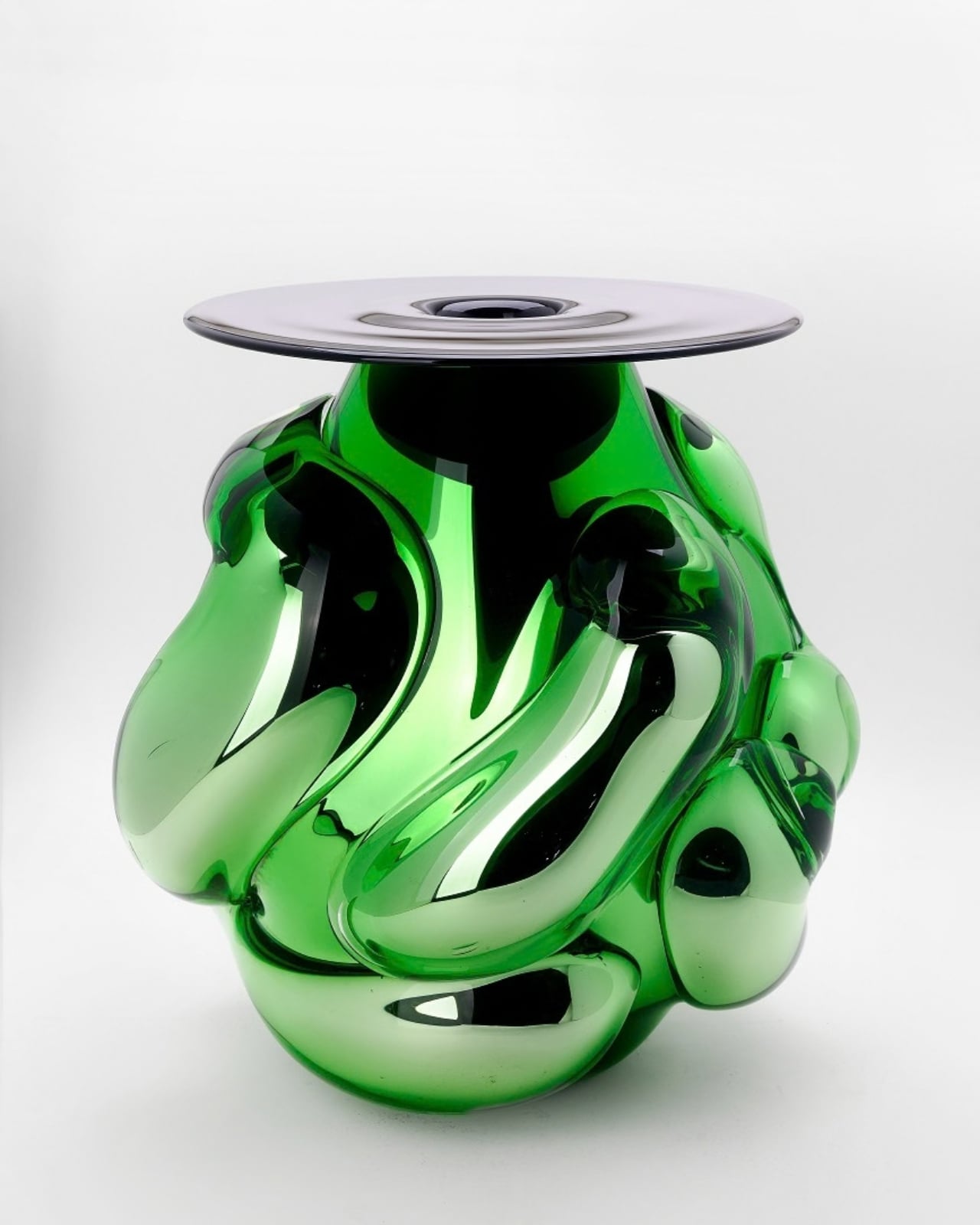
The silhouettes of the vases are delightfully unconventional. Bulbous, organic shapes cluster together around a central vessel, swelling outward like heavy drops of liquid caught in mid-air just before they fall. Several of these sculptural forms are capped with a broad, nearly flat rim, providing an unexpectedly calm and composed finish to all that restless, swelling volume. In one particular piece, a translucent lavender shade folds softly around dark, mirrored surfaces, creating a moody and introspective depth. In another, colliding tones of amber, purple, and smoky gray appear to press against one another with subtle tension, as if the materials are still quietly deciding where they should finally settle.
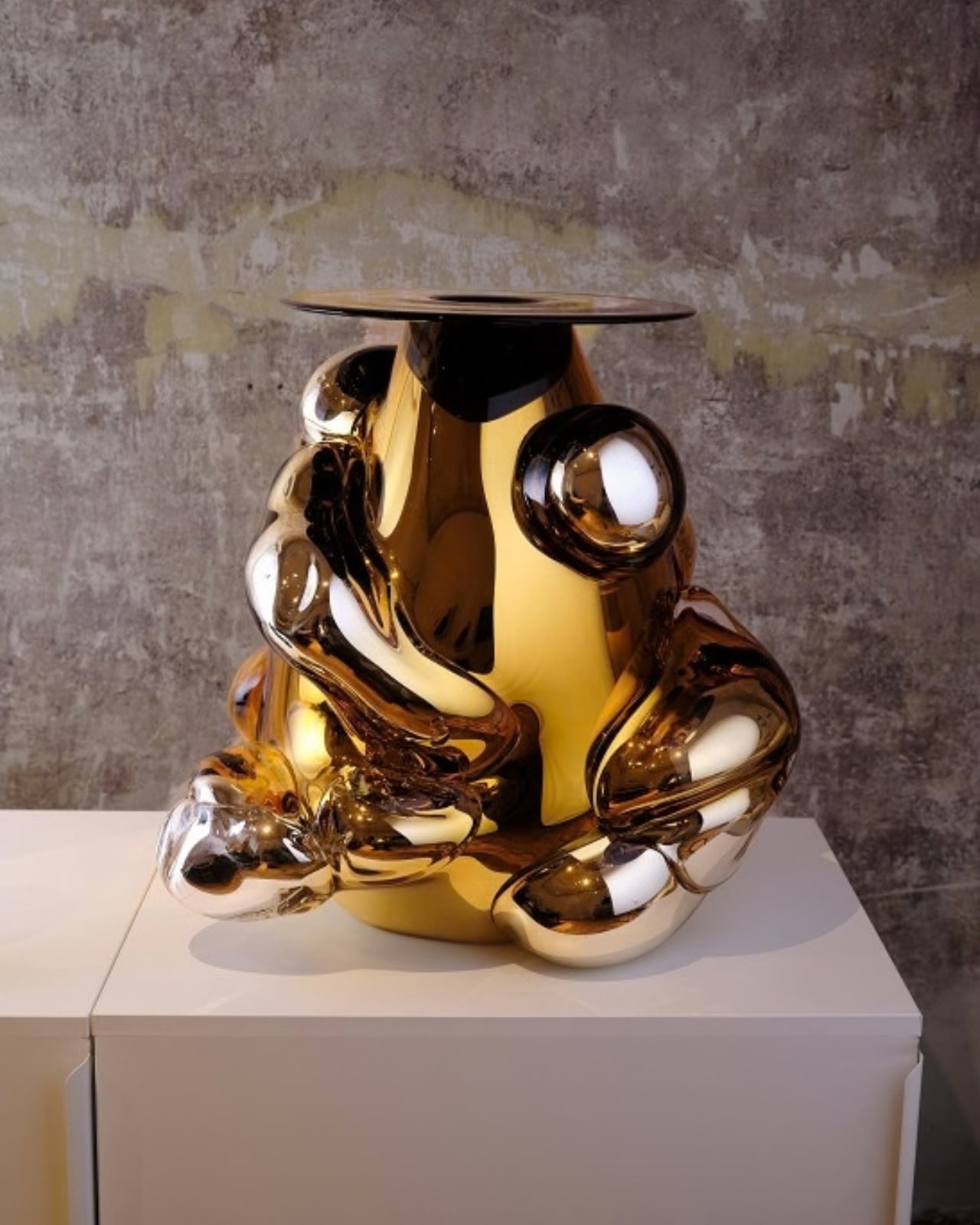
Other pieces in the collection explore entirely different emotional and visual temperatures. There is a striking gold-toned vase that looks remarkably liquid despite its solid, tangible form. Its highly polished surface eagerly pulls in the surrounding room, while its rounded glass protrusions make its exact outline difficult to pin down or measure at a glance. Meanwhile, the blue variations within the series carry a cooler, deeply aquatic character, featuring sweeping curves that mimic a rolling wave folding back into itself. None of these elaborate objects require a carefully curated setting to make a powerful impression; rather, they seem far more likely to actively alter the overall mood of a space than to passively match its existing decor.
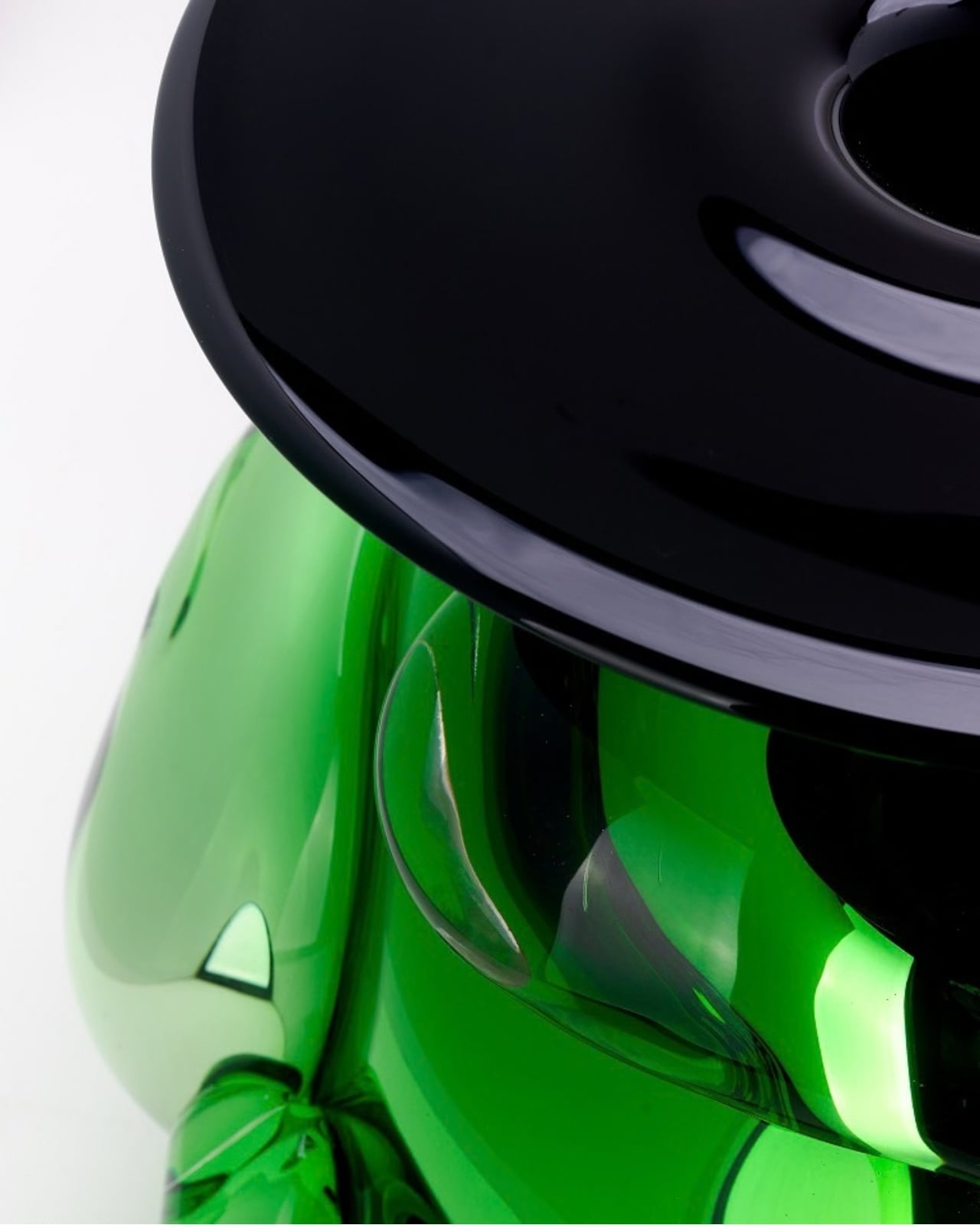
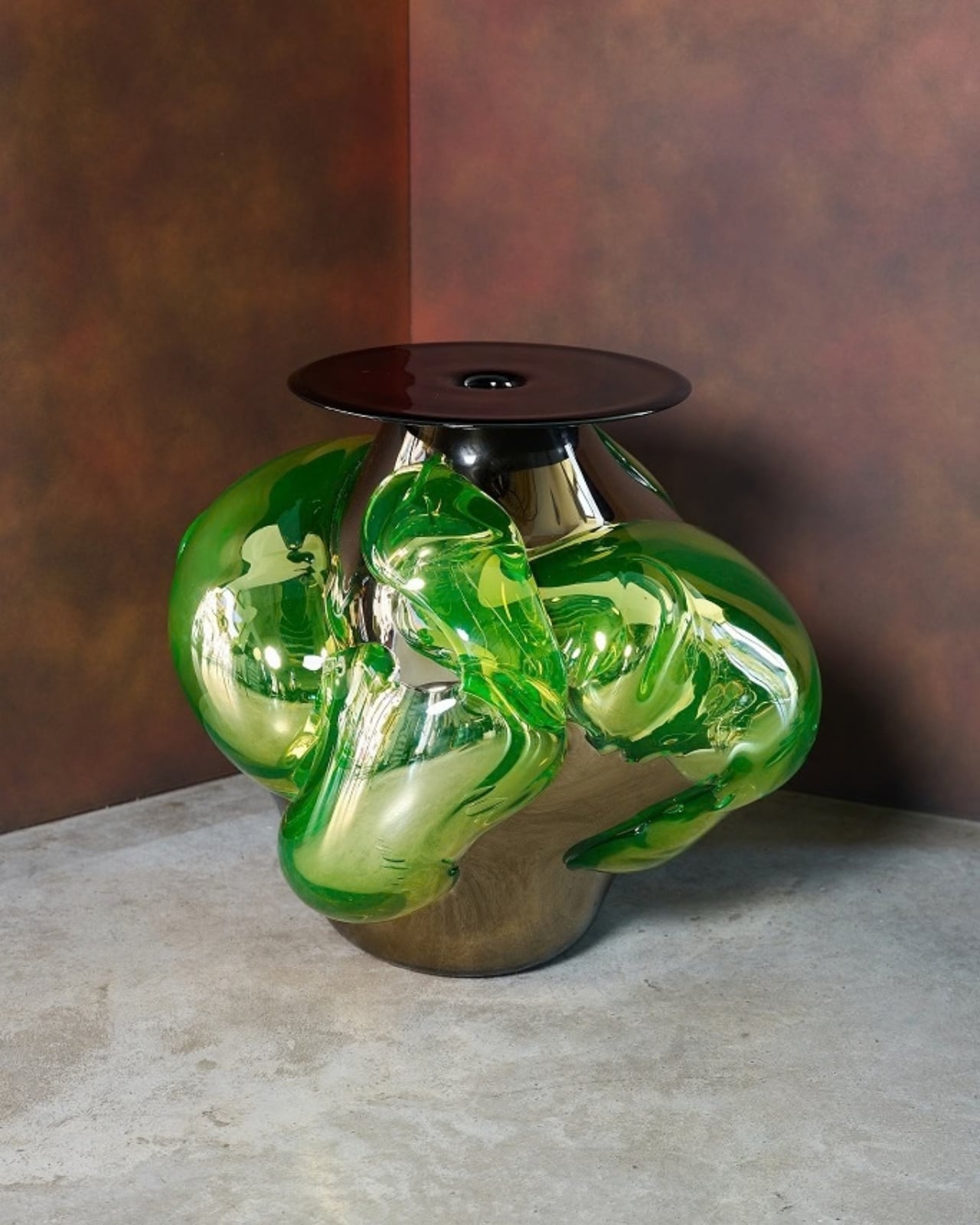
The overarching title of the exhibition gives these sophisticated visual effects a much larger conceptual framework to orbit. In biological terms, photosynthesis is the vital process by which plants harness light, water, and carbon dioxide to sustain life. While Velčovský’s glass creations do not perform that biological function, they successfully borrow its spirit by making light feel genuinely active and alive. Illumination passes freely through the clear areas of the glass, catches intensely on the colored sections, and returns from the highly reflective surfaces looking fundamentally altered. In this context, the vase ceases to be a mere container for something living and instead transforms into a fascinating instrument for watching physical transformation happen in real time.
The exhibition’s accompanying curatorial text pushes this conceptual exploration even further, describing the vases as autonomous bodies resting on the very edge of creation. Art and design theorist Dr. Stephan Hamel interprets a distinct sense of gender-neutral sensuality within their undulating forms. While that level of theoretical interpretation might feel more intense than what the average observer expects from everyday glassware, and while viewers certainly do not need to share that exact perspective to appreciate the physical work, it successfully highlights why these particular shapes are so undeniably compelling. Rather than sitting politely in a state of perfect, predictable symmetry, the vases swell, overlap, and cling to one another with organic vitality.
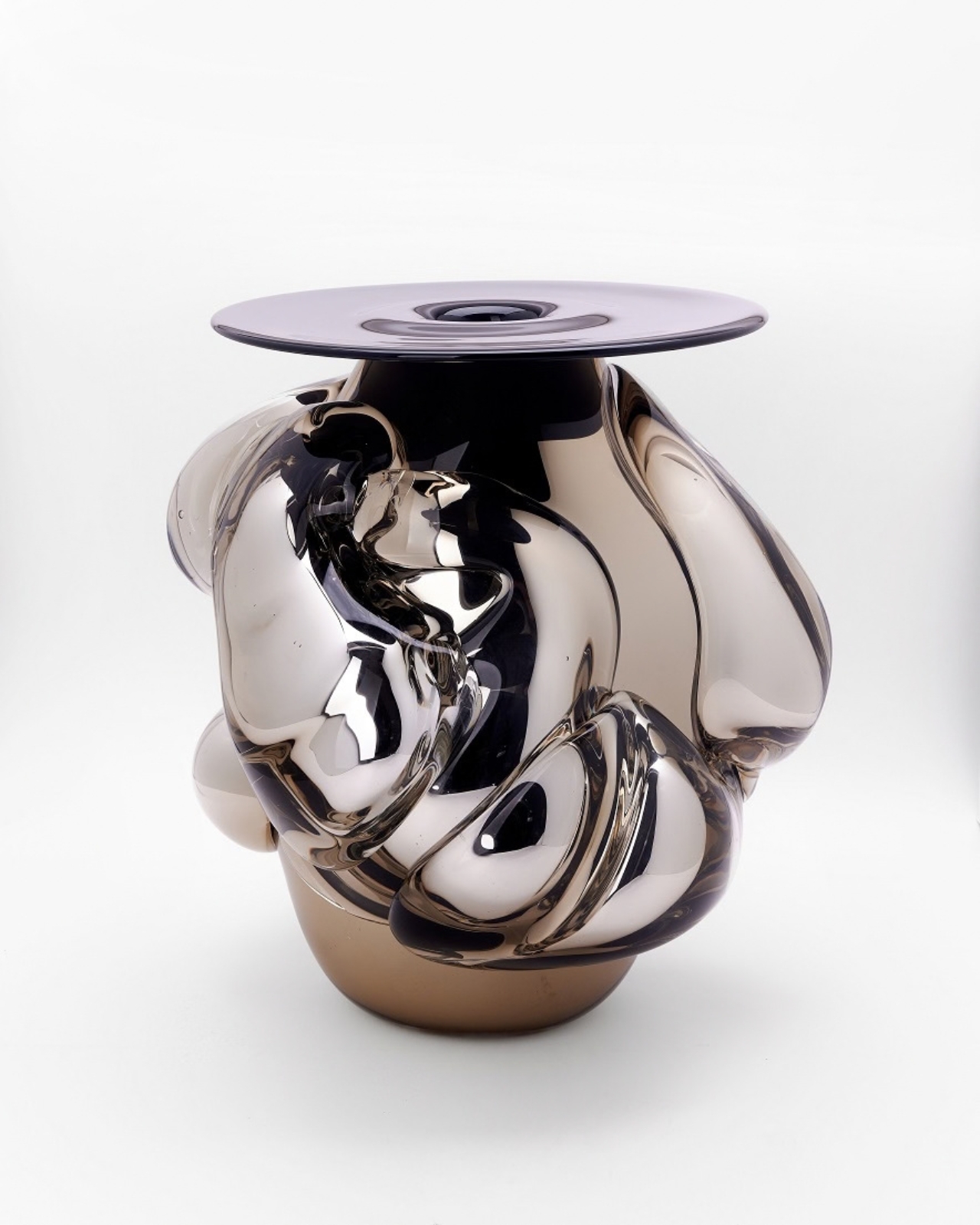
Up close, many of the forms look almost digitally impossible, a quality that makes their genuine material origins all the more remarkable. These intricate pieces were brought to life through traditional craftsmanship at the AJETO glassworks and the newly established Edo Studio glassworks in Svojkov, securely grounding their otherworldly, avant-garde shapes in centuries-old glassmaking heritage rather than computer-generated renders. Velčovský has long maintained a diverse career bridging the gap between functional design and conceptual art, and he also serves as the artistic director of Lasvit. In this latest body of work, traditional craft and conceptual ideas clearly need each other to achieve their full impact.
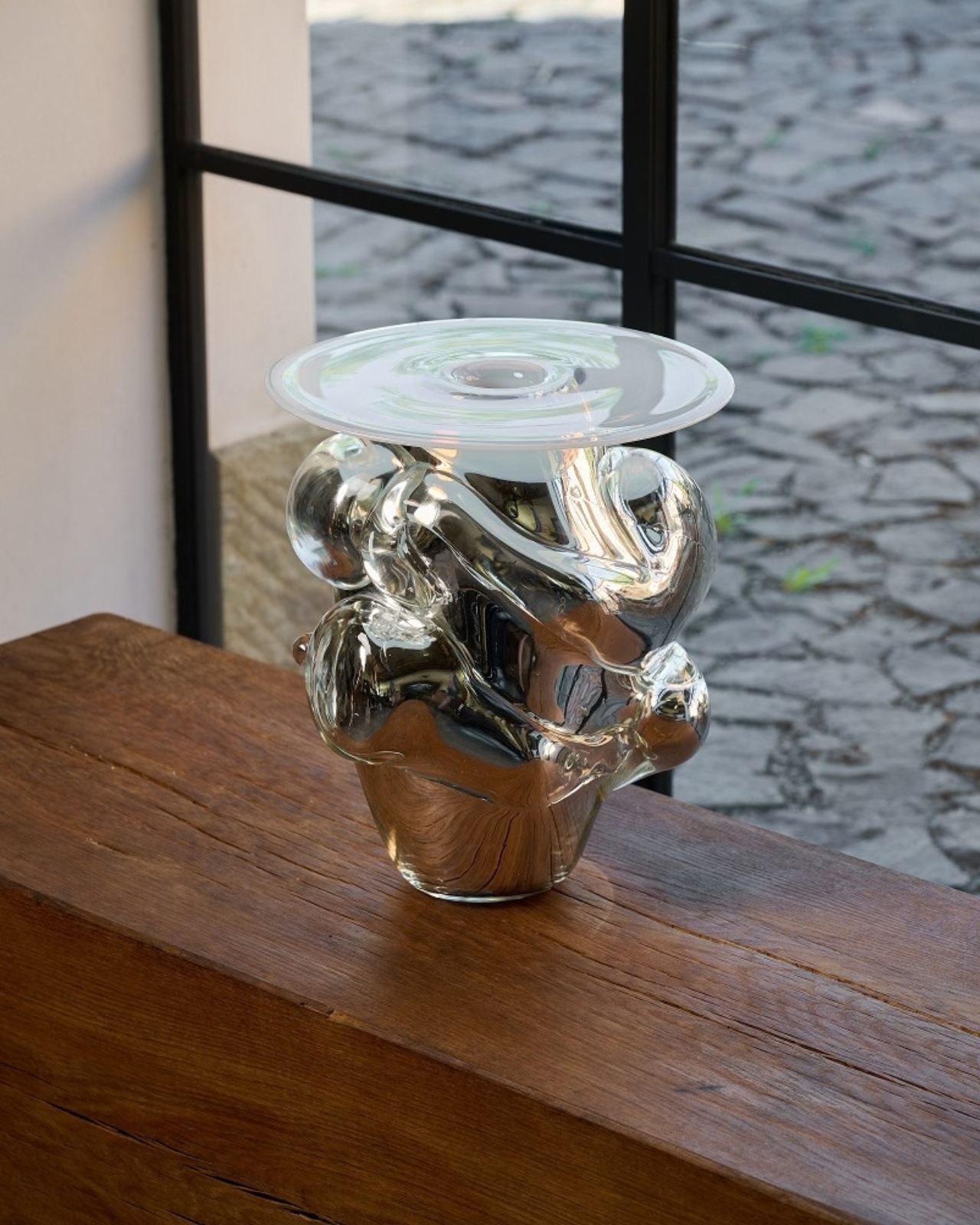
"Photosynthesis" runs from October 7 through October 11 at the historic Riding Hall of Prague Castle as part of the Designblok 2026 showcase. It is a suitably grand and prestigious setting for objects that richly reward a closer look, though the exhibition photography strongly suggests the pieces would be equally absorbing sitting simply beside an ordinary household window. That delightful contrast forms a core part of the collection’s overall appeal. The vases are ambitious enough to carry a heavy conceptual exhibition framework, yet familiar enough to make anyone reconsider the lonely, empty glass vessel currently sitting on their own living room shelf.
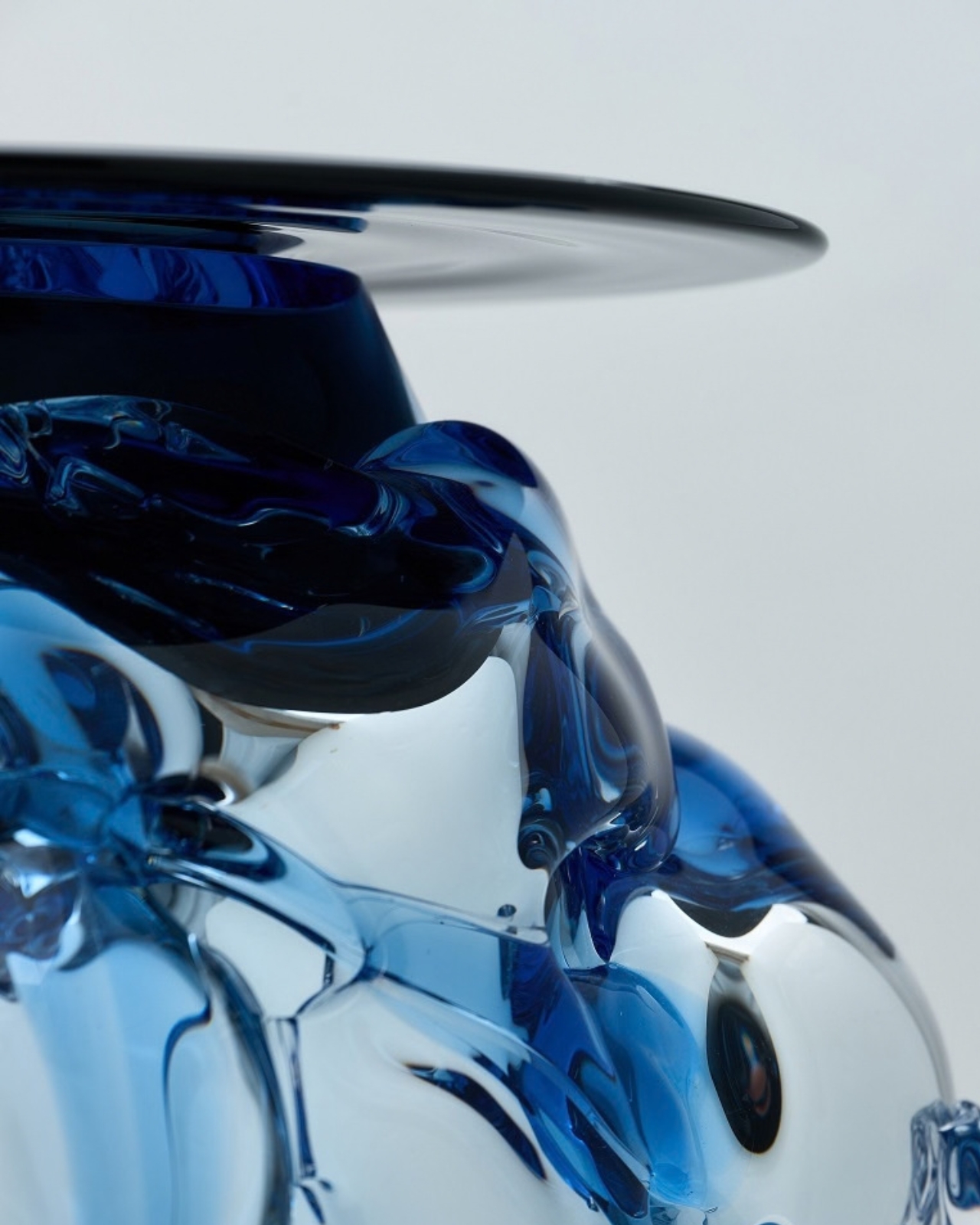
An owner does not need a vase to explain the grand origins of life every single time they glance in its direction. However, there is undeniable value in an object that gently reminds people of how much visual drama can occur simply between a crafted surface and the natural light falling across it. Velčovský’s new collection makes a highly persuasive case that decorative home objects can demand attention and hold a room’s interest without ever requiring a special occasion or a fresh bouquet. While fresh flowers would undoubtedly look lovely tucked inside them, these vases offer a rare temptation: for once, the best choice might just be to leave them entirely empty.