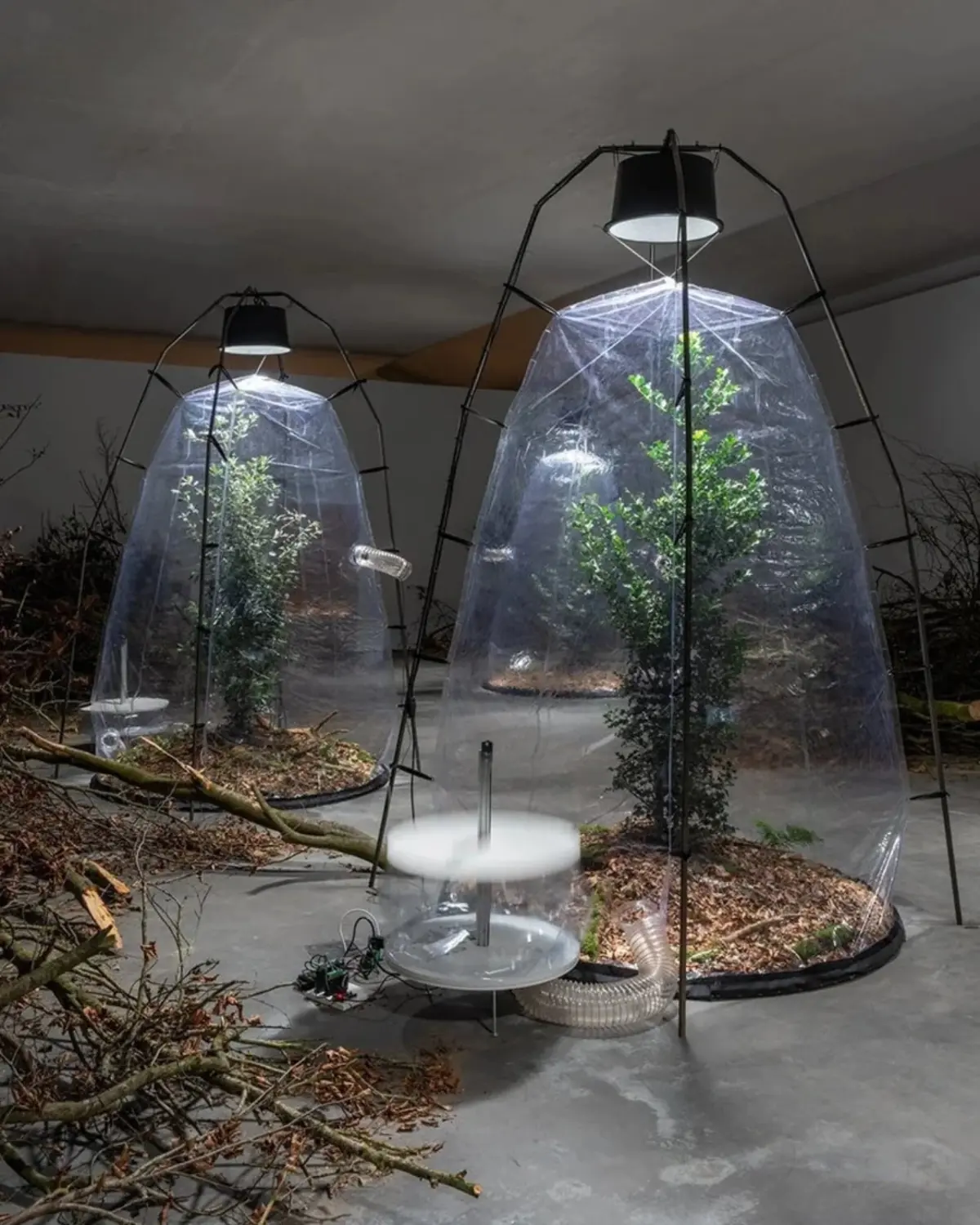
A tree wrapped tightly in clear plastic and tethered to humming machinery looks uncomfortably like a patient in a hospital ward. That striking, unsettling premise anchors Lung Trees, a powerful and provocative installation by Danish artist Rune Bosse that cloaks living trees in the unmistakable visual language of intensive care. Addressing the broad, often overwhelming subject of ecological breakdown, the project tackles an immediate and pressing psychological problem: human attention. By framing environmental degradation through the intimate, fragile lens of medical intervention, the artwork forces viewers to confront our growing dependence on managed, artificial ecosystems, making an abstract global crisis feel jarringly tangible.
Rather than offering the comforting optimism or the neat reassurance of another clever environmental gadget, Bosse presents a scene of profound ambivalence. A living tree inside a life-support chamber is simultaneously an image of desperate care and a deeply disturbing image of failure. The artwork deliberately makes room for both readings, refusing to let the viewer off the hook with a simple narrative. Instead, it asks us to seriously consider a sobering potential future—one in which preserving nature no longer means protecting vast, wild landscapes, but rather managing its survival one enclosed, fragile organism at a time, carrying with it all the heavy responsibility and ethical questions that such a dystopia suggests.
The operational
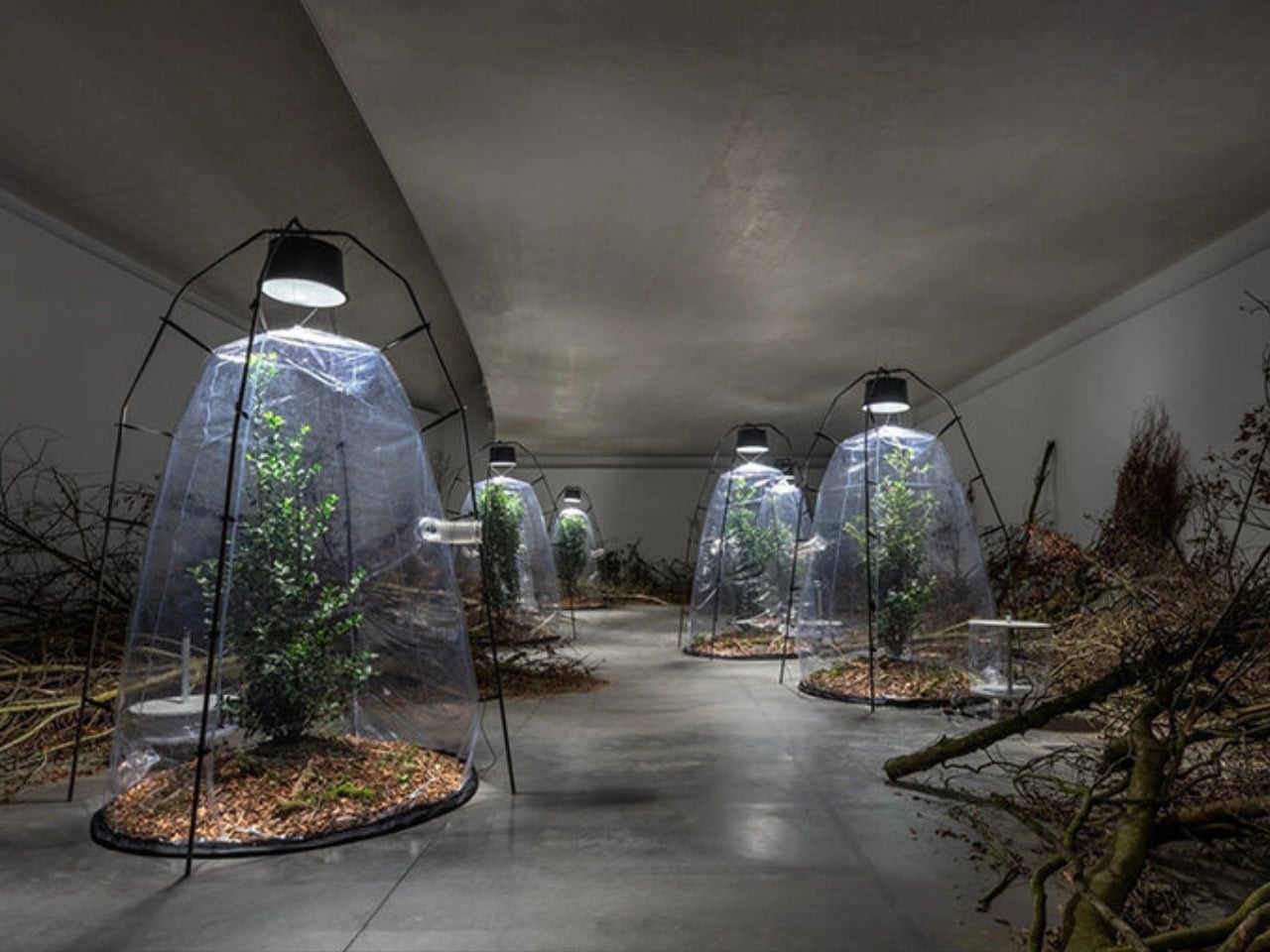
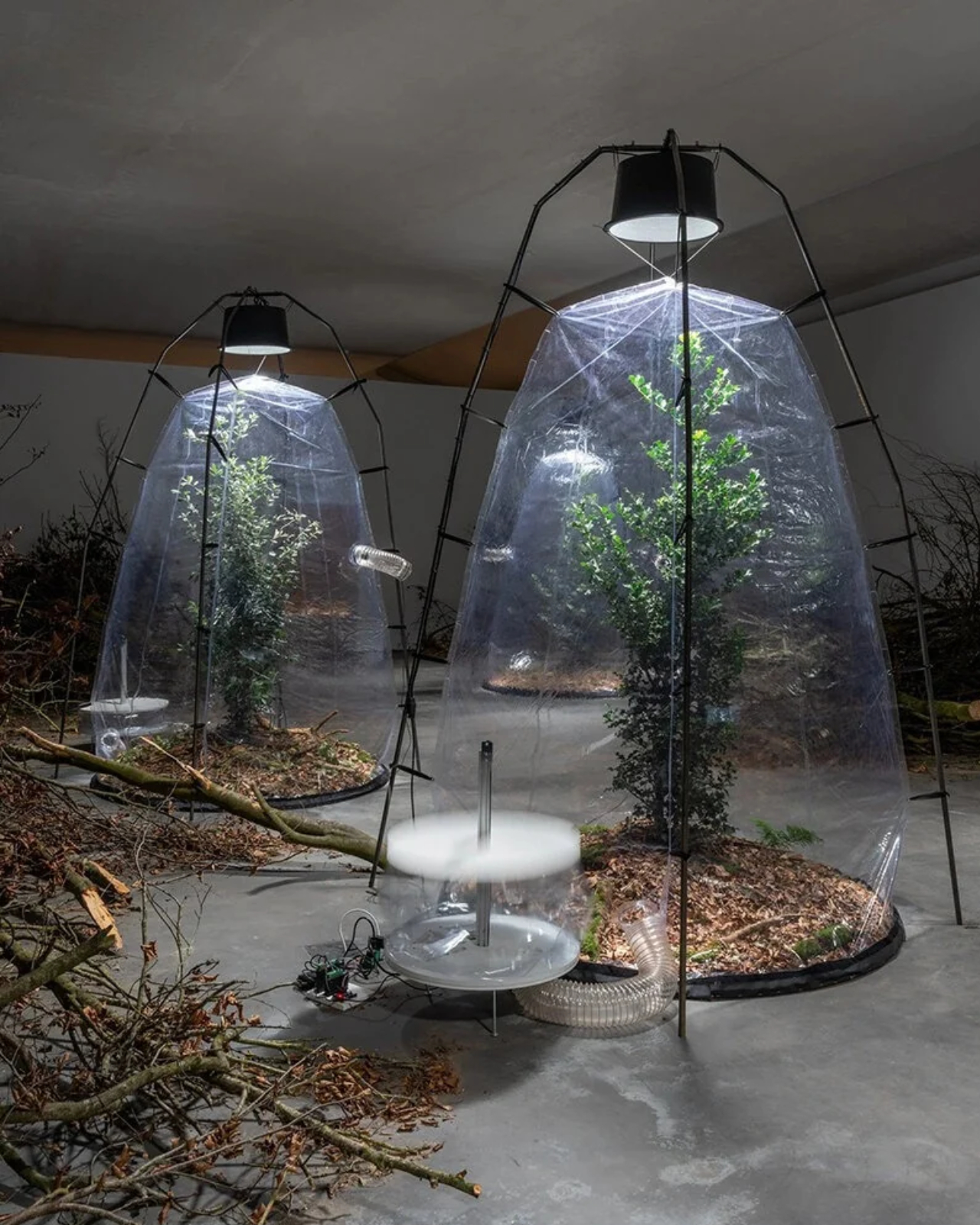
mechanism of this artistic vision becomes particularly clear in a related 2025 installation at Berlin’s prestigious Neue Nationalgalerie, titled Lungetrær / Lungenbaum. Within this Berlin gallery space, a living tree alongside a genuine patch of forest floor is housed entirely inside a transparent PVC membrane, which is itself supported by a rigid metal framework. A mechanical respirator feeds rhythmic pulses of air into the enclosure at steady intervals, causing the flexible plastic walls to rise and fall in unison, mimicking the motion of an oversized, artificial lung. This visible, rhythmic movement serves as a mechanical interpretation of the tree’s complex gaseous exchange with its surrounding environment—not a suggestion that the tree is physically inhaling and exhaling like a human being, but a poignant translation of biological respiration into mechanical life support.
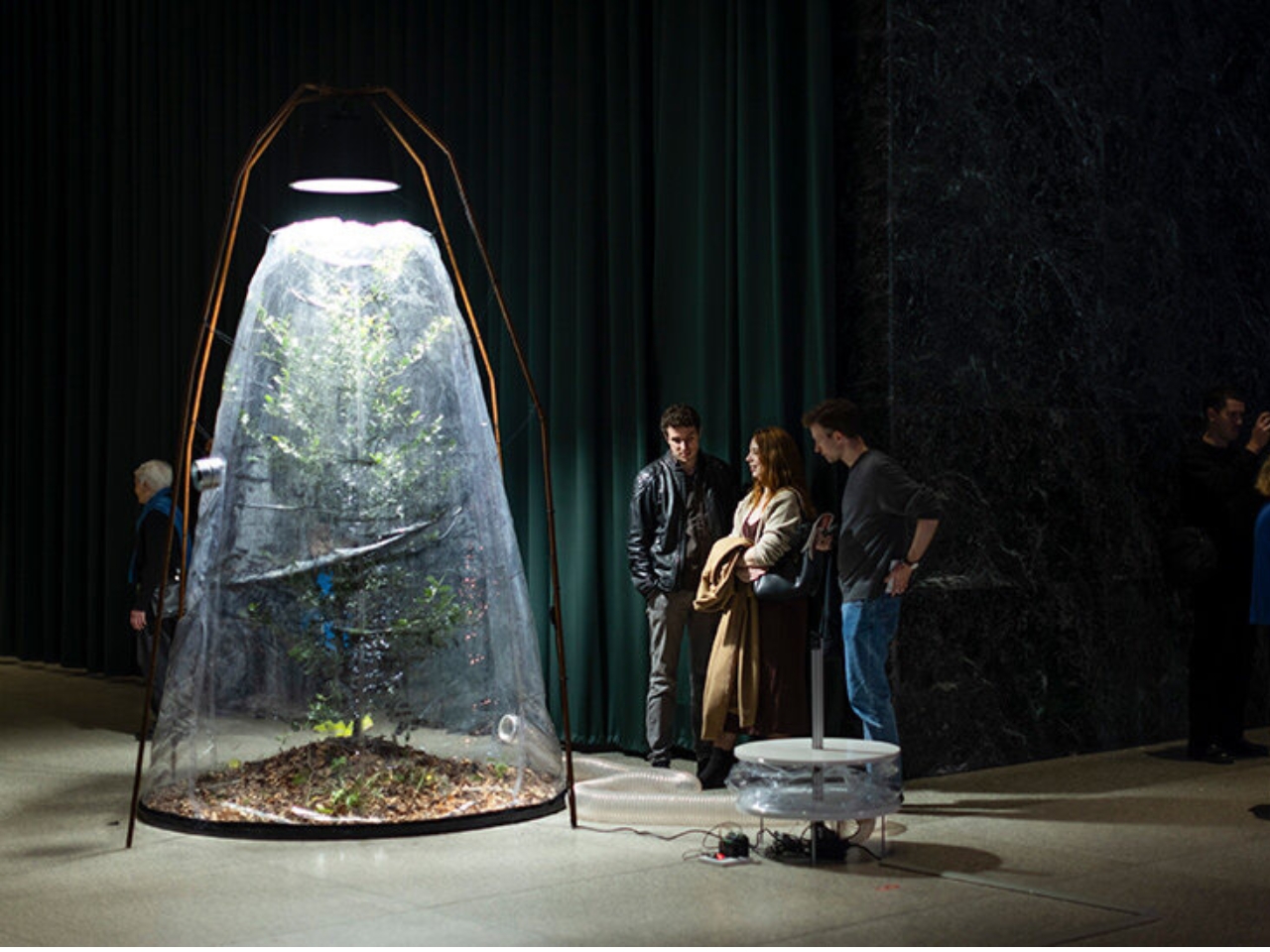
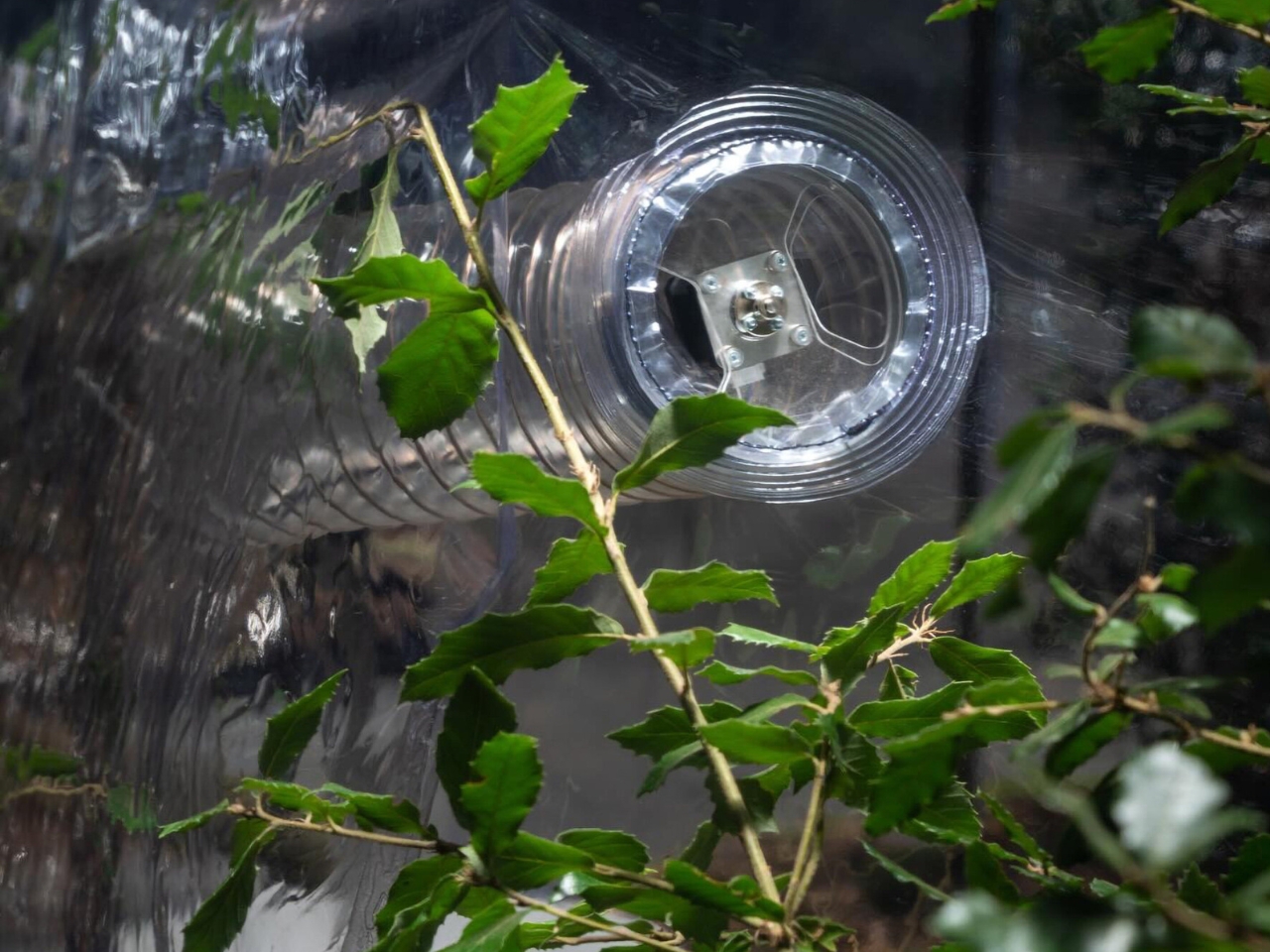
Photographs capturing the Berlin installation reveal a meticulously curated set of details that heighten the emotional and conceptual weight of the work. A suspended gallery lamp hangs directly above the vibrant foliage, while a network of flexible hoses snakes across the floor, connecting the transparent enclosure to a separate apparatus humming nearby. Inside the membrane, a layer of fallen leaves covers the damp ground. These precise details are crucial to the installation’s impact; the inclusion of an authentic forest floor prevents the piece from reading as a simple houseplant trapped inside an elaborate, decorative display case. Meanwhile, the highly visible electrical and mechanical connections make the tree’s total dependence on manufactured equipment immediately legible. For many observers, the exposed hardware carries just as much of the narrative weight as the living tree itself.
The choice of a transparent membrane is an especially effective and layered design decision. Viewers can clearly see the delicate organism being protected inside, yet that very same barrier completely separates it from everything happening on the outside. This dynamic embodies the installation’s central tension: the uncomfortable realization that intense protection can quickly begin to resemble confinement. A polished, opaque enclosure would inevitably conceal too much of that complex relationship, hiding the organism from view and blunting the critique. Here, the clear plastic allows the tree to remain stubbornly visible while making its profound isolation impossible for any gallery visitor to overlook. It is a chillingly sterile and unsettling use of an ordinary industrial material to comment on the fate of the biosphere.
Lung Trees is not an isolated, newly launched piece of environmental technology or a fleeting conceptual stunt; rather, it belongs to a much longer-running artistic practice dedicated to exploring ecological vulnerability. Bosse’s professional relationship with the natural world extends far beyond treating trees as convenient artistic symbols or passive props. His unique educational background includes formal training in both fine art and professional forest and nature management, giving him a deeply technical understanding of plant biology alongside his conceptual sensibilities. At a creative workspace and outdoor forest laboratory at Oremandsgaard in Denmark, Bosse works directly with growing trees in their natural habitat, carefully bending, guiding, and shaping them into living, dynamic sculptures rather than cutting them down. In an interview published by the Danish Association of Visual Artists, he explicitly described wanting to work directly with living nature out of a growing personal frustration with having to kill plants to create traditional museum and gallery artworks.
This hands-on background in forestry and horticulture makes Bosse’s installation significantly more complex and compelling. Keeping a living tree alive within a gallery space introduces relentless daily obligations, maintenance routines, and ethical stakes that a fabricated sculpture or a dead specimen would never bring. The gallery display transforms into a grueling act of biological maintenance, and the surrounding machinery stands as stark physical evidence of that heavy obligation. Even so, the artwork is intentionally not presented as a practical blueprint or a viable engineering solution for rescuing the world’s vanishing forests. Its profound artistic force instead comes from demonstrating how profoundly limited, fragile, and uncomfortable that kind of desperate rescue mission looks when it is stripped down to a single, carefully managed enclosure.
Ultimately, a viewer does not need Lung Trees to accurately predict the exact timeline of future ecological collapse for the artist’s central image to achieve its powerful effect. The tree is genuinely alive, the machinery is relentlessly visible, and the act of caring for nature is shown to be terribly complicated rather than effortless. The lasting impression left by the installation is a lingering awareness of how much continuous, exhausting attention even a single enclosed tree demands. That realization serves as a useful and sobering measure to carry far beyond the walls of the gallery: contemplating the immense physical and technological effort required to sustain just one isolated organism makes leaving room for a flourishing, self-sustaining living forest outside seem considerably less extravagant, and infinitely more urgent.