For decades, the pedestrian mall stood as a distinct urban relic across North America, born out of a mid-century panic to save ailing retail districts from the relentless onslaught of indoor shopping malls. Installed typically between the 1960s and 1980s, these car-free enclaves represented a desperate attempt to recapture the vitality of traditional downtowns. Yet, as car-obsessed populations migrated en masse from city centers to expanding suburbs, simply closing a few blocks to automobile traffic proved to be an insufficient bandage against generational shifts in shopping habits and urban design.
Few of those original pedestrian malls managed to survive into the 21st century, even as pedestrianized zones successfully wove themselves into the permanent fabric of cities around the globe. Now, however, the pendulum is swinging back. Next month, a one-kilometer stretch of London’s iconic Oxford Street will be officially pedestrianized, finally resolving a longstanding, polarized debate over the love-it-or-hate-it high street.
Across the Atlantic, a similar evolution is unfolding with renewed momentum. Today, cars once again get caught in the familiar gridlock on downtown Vancouver’s Granville Street, but the memories of a transformative summer remain fresh. For several months, a five-block stretch of this once-bustling, now-struggling corridor was closed entirely to vehicular traffic and handed over to people. Originally conceived as a short-term urban intervention to carve out a vibrant outdoor gathering space during the 2026 FIFA World Cup, the plein-air party proved so overwhelmingly popular that the city council voted to extend the experiment through September 7.
Just as the barricades, picnic tables, café seating, outdoor games, and public art installations have been packed away for the approaching winter months, local leaders and residents are voicing calls to bring the pedestrian zone back—perhaps for good. City officials see a broader future for the initiative. As Councillor Lisa Dominato noted in an interview with the Canadian Broadcasting Corporation, the vision extends far beyond temporary activations. City planners are exploring the potential for year-round and longer-term closures, with eyes already set on next summer.
As the enthusiasm in Vancouver vividly attests, North America has developed a newfound, serious interest in opening up streets where people can safely stroll, linger, and connect. After years of political hesitation and debate, Seattle has finally banned private cars from the street fronting its famed Pike Place Market for a major portion of the year. Similarly, Madison, Wisconsin, converted State Street into a pedestrian zone last year, while Philadelphia pedestrianized a key stretch of the Benjamin Franklin Parkway earlier this year.
At the same time, the sometimes-tired, enduring pedestrian malls of the 20th century are undergoing deep, strategic rethinks. Calgary’s Stephen Avenue completed the first phase of an extensive revitalization project in late June of this year. Meanwhile, civic leaders in Minneapolis are actively debating how to best revive Nicollet Mall, a signature Lawrence Halprin design that James Corner Field Operations previously spruced up. These refreshed, modern iterations can aptly be called "pedestrian mall 2.0." They form part of what Kelly Gregg, a professor at the University at Buffalo’s School of Architecture and Planning, describes as a broad new cultural moment of questioning the long-held societal prioritization of automobiles in urban centers.
Pedestrian Mall 1.0: Urban Renewal and Small-City Success
The modern history of the North American pedestrian mall began in earnest with a modest two-block stretch of Burdick Street in Kalamazoo, Michigan, in 1959. Over the course of the mid-20th century, more than 200 cities across the continent followed suit, converting downtown thoroughfares into pedestrian-only oases. Out went the asphalt, traffic lanes, and painted markings; in came shade trees, park benches, drinking fountains, and artful decorative pavers.
The mastermind behind the Kalamazoo revamp—as well as subsequent revitalization plans in Fresno, California; Fort Worth, Texas; Rochester, New York; and Honolulu, Hawaii—was Austrian-American architect Victor Gruen. Gruen’s stated ambition was to recreate the lively pedestrian experience of his native Vienna. Cities flush with federal urban renewal funding eagerly hired him and his peers. Their shared mission was clear: keep shoppers coming downtown instead of drifting toward the shiny new, auto-centric shopping malls rising on the urban fringe—many of which, ironically, were also designed by Gruen himself.
In the end, however, the suburban shopping malls prevailed. Professor Gregg points out that the mid-century pedestrian mall strategy was ultimately a losing economic bet. The design interventions were simply unable to counter the massive economic restructuring and demographic shifts that cities were facing at the time.
The economic and social backlash in some places was swift. Toronto’s summertime Yonge Street Mall, for instance, lasted a mere four years, operating from 1971 to 1974 before public and political pressure forced its reversal. In other cities, the decline was agonizingly slow. Chicago’s State Street Mall limped along for nearly two decades until city leaders finally put the strip out of its misery in 1996 through a major redesign that reintroduced car traffic and reduced the width of the sidewalks. Chicago’s core downfall, urban historians note, was banning private cars and bicycles while still permitting heavy buses to rumble down the corridor. Instead of enjoying a pleasant, leisurely stroll, pedestrians were forced to choke on diesel fumes. (Today, Minneapolis finds itself grappling with a remarkably similar design dilemma.)
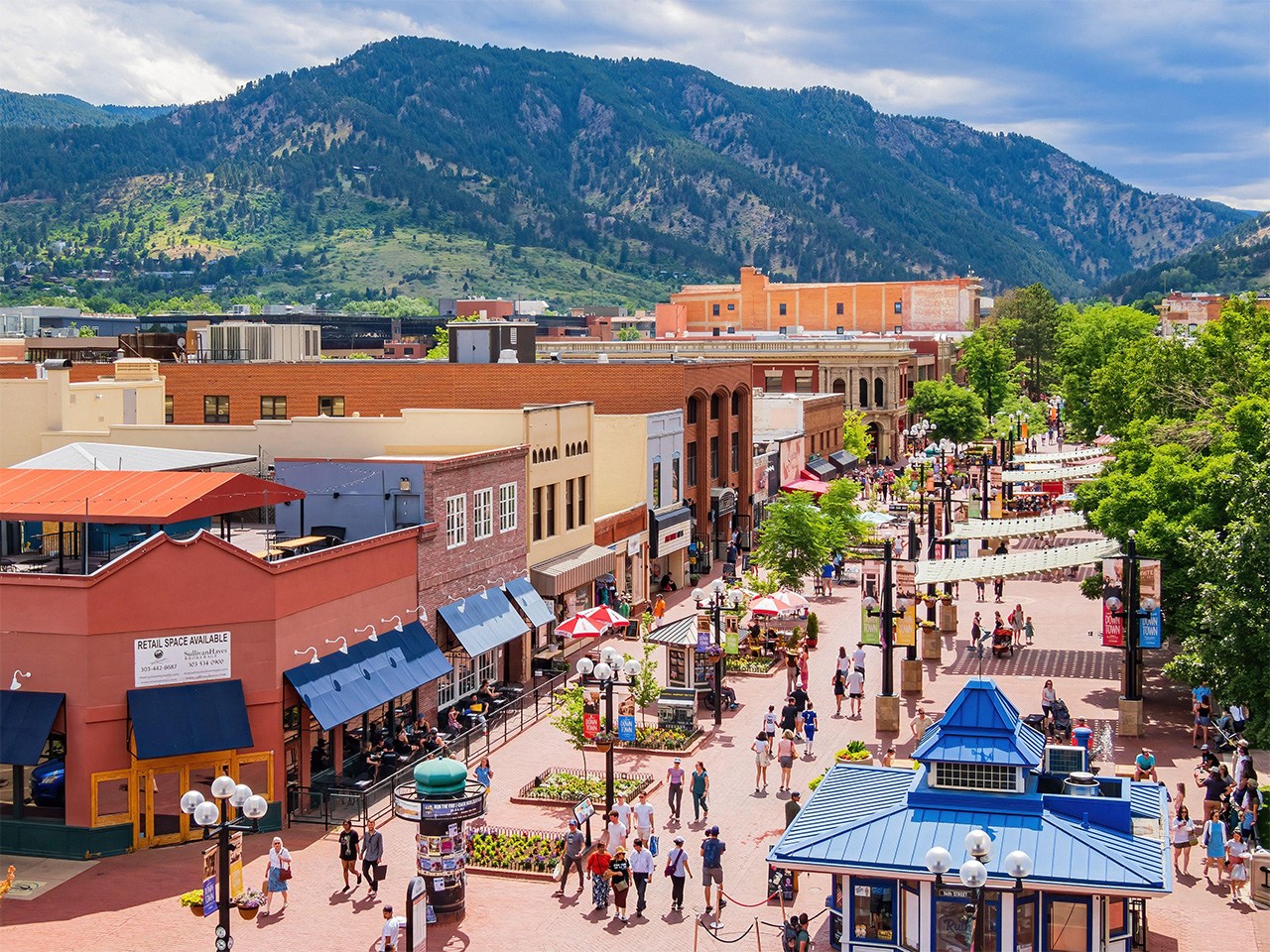
Big metropolises like Toronto and Chicago largely proved to be outliers, with the majority of successful pedestrian malls actually flourishing in smaller university towns. While not all of these survived—Gruen’s mid-century designs were systematically erased from Kalamazoo in 1998 and scrubbed from Fresno in 2017—one common thread among the pedestrian malls that have successfully persisted is the presence of a nearby university. Pedestrian malls have thrived in places like the Pearl Street Mall in Boulder, Colorado, and The Ithaca Commons in New York state, where a steady, reliable stream of student foot traffic guarantees commercial and social vitality.
Pedestrian Mall 2.0: Big-City Revival
Pedestrian malls located within charming college towns have historically had an easier run than those situated in major urban centers, which must continuously grapple with higher rates of retail vacancies, property crime, unhoused populations, and open-air drug use. Concerns over public safety perception partly doomed many 20th-century pedestrian malls, as the complete absence of moving vehicular traffic occasionally made downtown streets feel isolated and insecure after dark.
The modern wave of pedestrian malls, however, is no longer fixated on artificially resurrecting a bygone era of traditional downtown shopfront retail. Downtowns today are no longer solely about retail, as Professor Gregg observes. The pedestrian malls that have successfully adapted are shifting their focus toward entertainment, nightlife, bars, and diverse dining options.
This evolution was clearly evident on Vancouver’s Granville Street, a designated entertainment district where roughly one in four shopfronts sits vacant. Jane Talbot, president and CEO of the Downtown Vancouver Business Improvement Association, emphasizes the urgency and creativity required to revitalize the area. The association is fighting hard to save the street, recognizing that when people are given compelling, tangible reasons to visit Granville Street, they will show up.
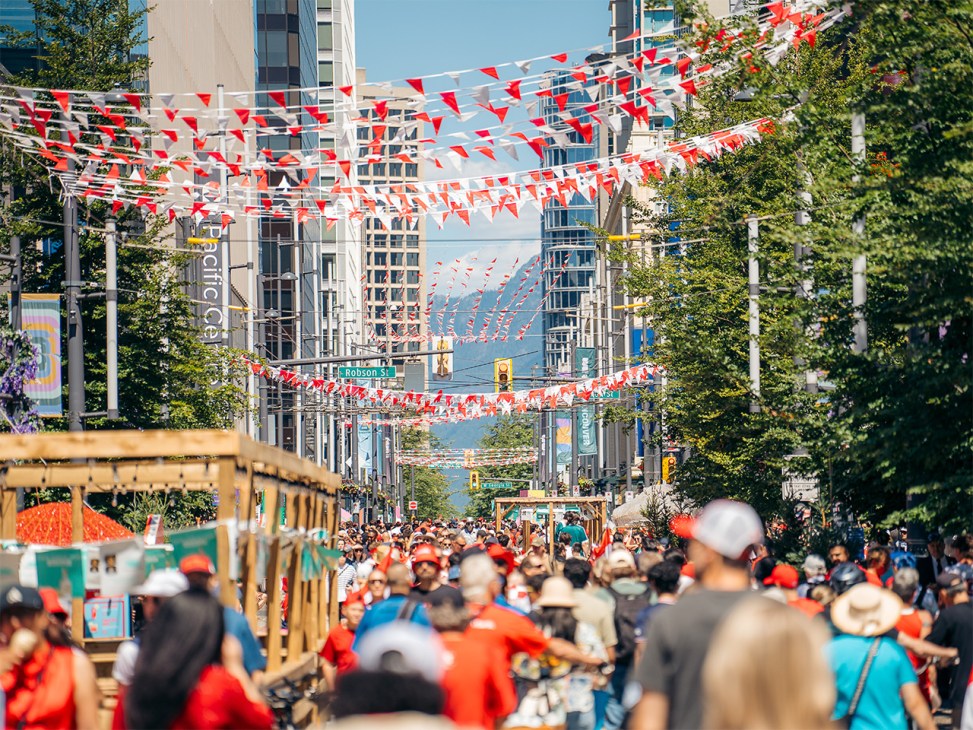
To drive engagement, downtown Vancouver’s programming team filled the temporary pedestrian zone with an eclectic summer calendar of activities: free cotton candy, outdoor DJ sessions, an International Cat Day celebration, a celebrity lookalike contest, and even a morning baby rave for families. While the extensive lineup might occasionally resemble the entertainment schedule of a cruise ship, modern urbanites are increasingly drawn downtown by intensive, creative programming.
In Vancouver’s case, the hyperactivity during the frenzied summer months serves a dual purpose: it matches the city’s seasonal rhythm before winter hibernation sets in, and it acts as an astute political strategy. Talbot notes that a short-term, seasonal approach to pedestrianization is a tactical move that helps disarm critics who oppose permanent change, making them far less likely to push back against a temporary rollout.
The flip side of this incremental approach, Gregg warns, is that cities can easily become trapped in a "permanent temporary" state, remaining perpetually unwilling to invest in durable, high-quality urban design. When New York’s former transportation commissioner, Janette Sadik-Khan, pushed to close Times Square and five blocks of Broadway to vehicular traffic in 2009—widely viewed as the vanguard of 21st-century North American pedestrianization—it still took nearly a decade to replace flimsy, fold-up café furniture with permanent, Snøhetta-designed stone benches. As urban design critic Diana Lind has aptly written, seeing moveable chairs in a major public space increasingly feels like a design cop-out.
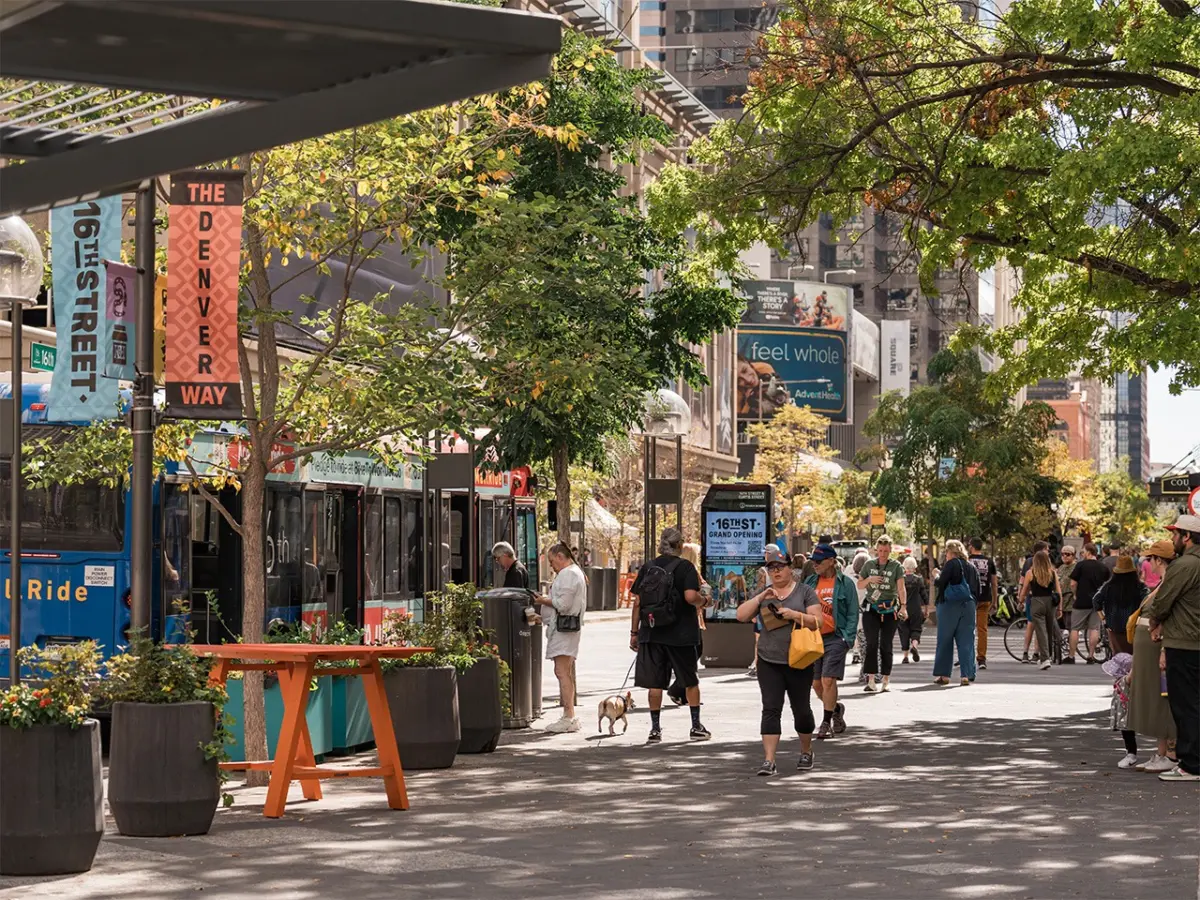
One major city actively bucking this trend of temporary setups is Denver, whose 16th Street Mall was a late arrival to the movement, but one that arrived backed by serious architectural star power. Architects I.M. Pei and Henry Cobb collaborated with renowned landscape architect Laurie Olin to design the stretch, which opened in 1982 to immediate public adulation and design plaudits. The corridor was celebrated for its character-defining carpet of diamond-patterned, charcoal-grey, light-grey, and Colorado-red granite pavers, visually inspired by Navajo blankets and rattlesnake skin.
Nearly a year ago, the downtown Denver street officially reopened following a massive $175 million (€151 million) revitalization project that replaced ailing locust trees with a healthier, more robust canopy, upgraded subterranean utilities, and introduced modern seating and play areas. By December of last year, the strip had successfully rebounded to pre-2020 levels of vibrancy, according to data from the Downtown Denver Partnership. Yet, in a telling sign of the times, the street dropped an important moniker during its grand reveal: it is simply known as 16th Street now, with no "mall" to be found.