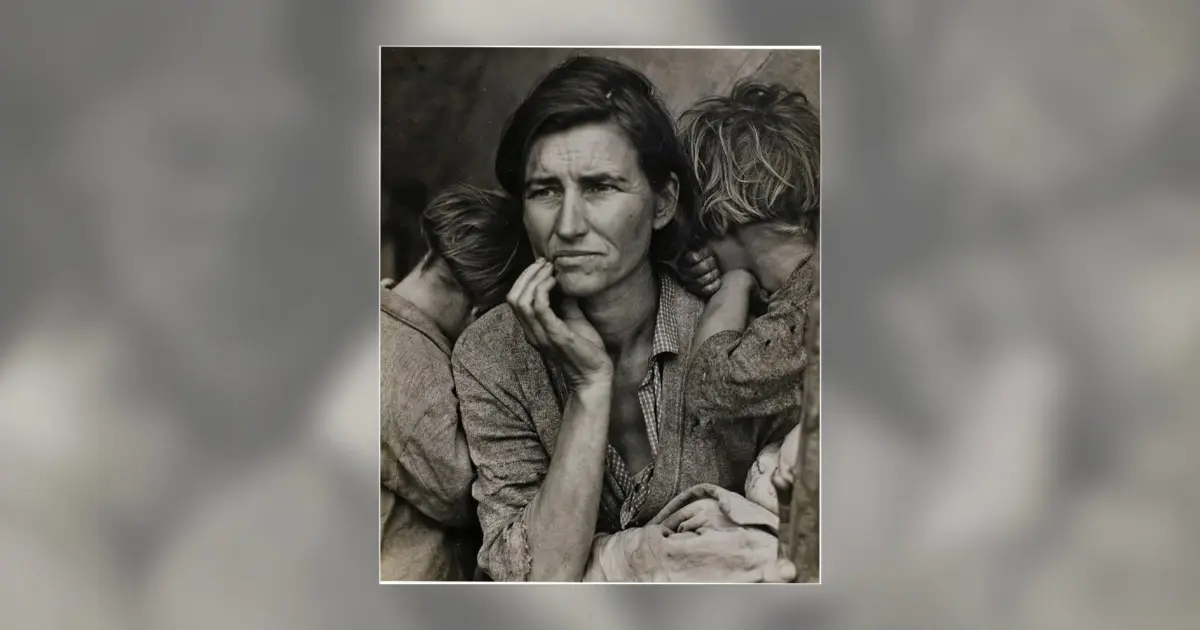
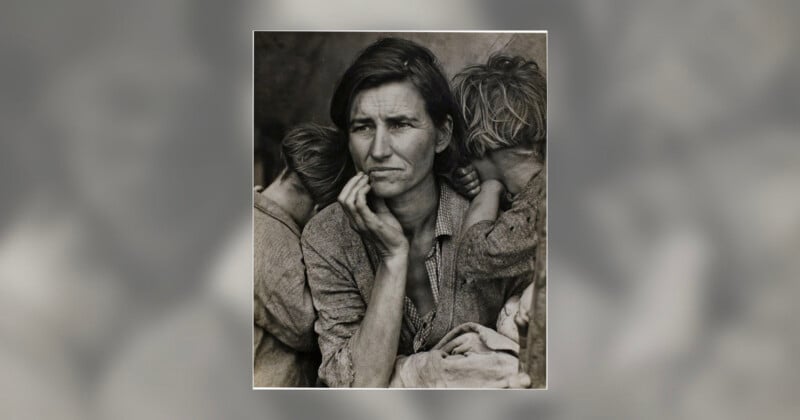
Sotheby’s has launched its October prints and photographs auction, featuring a remarkable catalog of historical and contemporary works, but two standout lots have immediately captured the attention of collectors, curators, and photography enthusiasts worldwide. Leading the online event is an exceptionally early, vintage print of Dorothea Lange’s iconic 1936 photograph, Migrant Mother, which is making its debut appearance at public auction and carries a pre-sale estimate of $100,000 to $150,000.
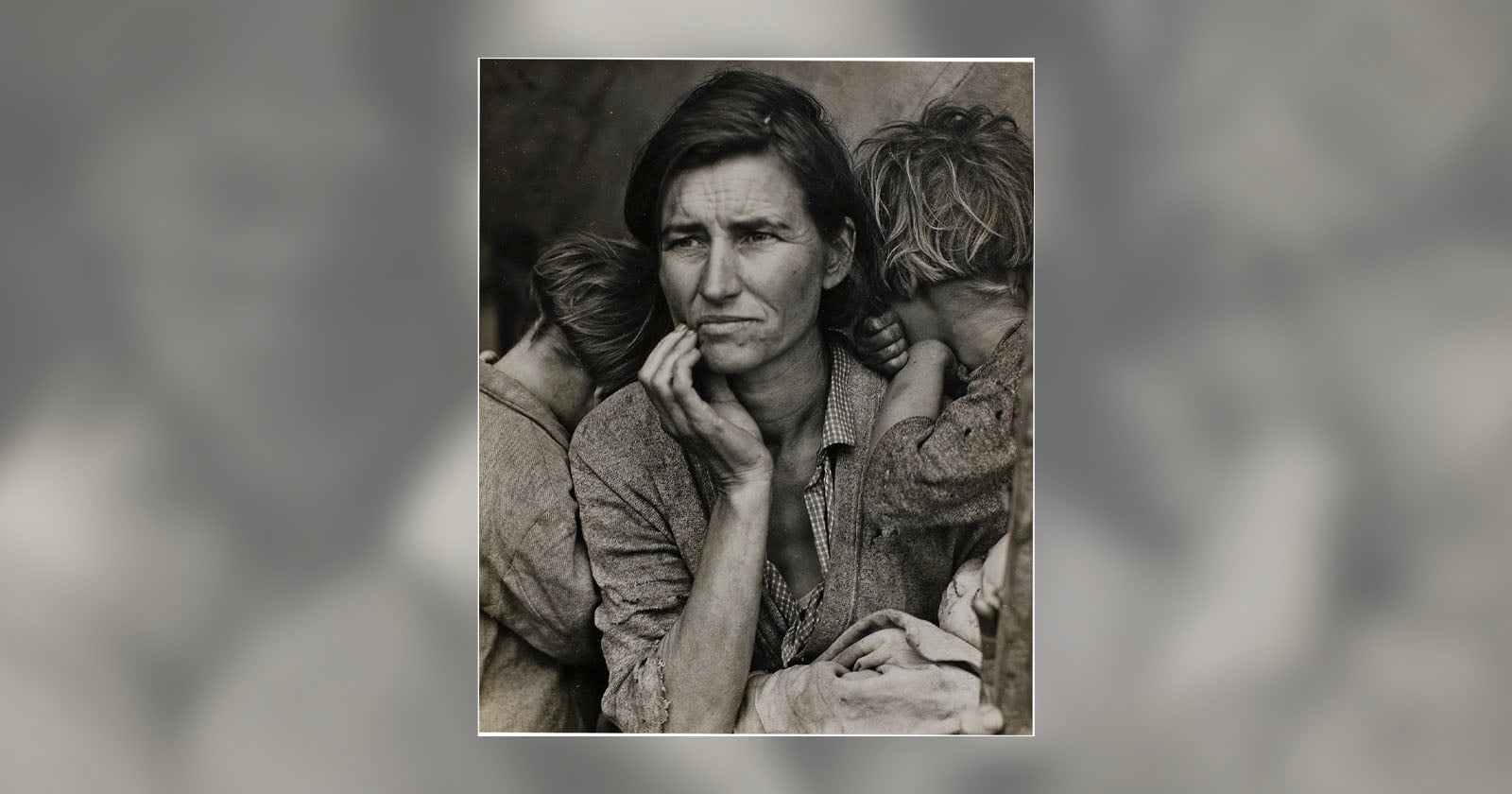
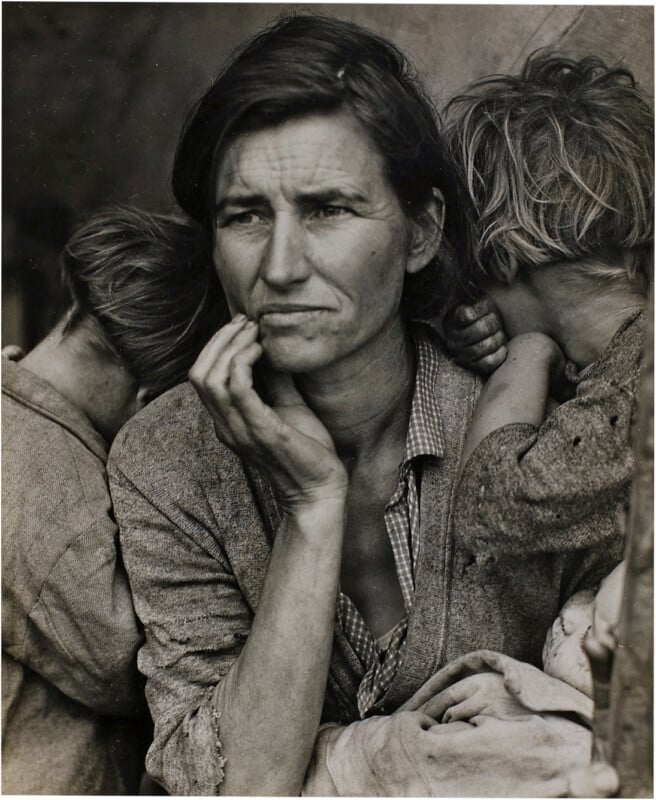
Widely regarded as one of the most famous photographs ever taken, Lange’s defining image of the Great Depression ranks alongside Steve McCurry’s Afghan Girl as one of the definitive portraits of humanity in the 20th century. According to Sotheby’s, Lange captured the photograph in March 1936 while working as a documentary photographer for the Resettlement Administration, a federal agency established in 1935 that later evolved into the Farm Security Administration. The image immortalizes Florence Owens Thompson and her children, turning them into an enduring symbol of American hardship, resilience, and poverty during a turbulent economic era. However, the specific print currently up for auction captures the image at a notably rare and early moment in its historical timeline. Executed in 1936 and likely printed between 1936 and 1937, this version holds unique physical characteristics that distinguish it from the countless reproductions that have circulated over the past century.
What makes this particular print so extraordinary to photography historians is not merely its age, but its physical preservation. The work retains the original Resettlement Administration credit stamp on the reverse or border area, providing direct provenance to its governmental origins. More fascinating still is a minute detail in the composition itself: the thumb of Florence Owens Thompson is visibly resting in the lower right-hand corner of the frame. Sotheby’s notes that this distinctive detail was subsequently cropped out or removed from later printings of the negative as the image was standardized for mass publication and historical archiving.
The story behind the creation of Migrant Mother remains one of the most legendary anecdotes in photojournalism. The photograph was made at a pivotal, transitional moment in American history. Although the worst years of the Great Depression were theoretically beginning to recede, unemployment remained widespread and deeply entrenched, forcing thousands of displaced migrant laborers to travel continuously in search of precarious, seasonal agricultural work. Lange had spent nearly a month on the road documenting these grim conditions across California on behalf of the Resettlement Administration.
On her return journey to Berkeley in March 1936, Lange passed a roadside sign directing travelers toward a makeshift camp of stranded pea pickers near Nipomo, California. She later recalled continuing down the road for some distance before a profound professional and human instinct compelled her to turn back. Yielding to that impulse, she entered the squalid camp and approached a family living in temporary tents. Working methodically with her heavy 4×5-inch Graflex camera, Lange produced a sequence of increasingly intimate compositions. The session culminated in the now-iconic portrait of Thompson, her weathered face etched with deep worry and exhaustion, while her young children turn their faces away from the camera and lean heavily into her shoulders.
Within days of the shoot, Lange’s photographs of Florence Owens Thompson were rushed into print, appearing in the San Francisco News as part of a hard-hitting series of articles describing the desperate circumstances facing migrant agricultural workers in California. While the iconic image was not included in the very first article published on March 10, it made its dramatic debut the following day, illustrating a piece titled "What Does the ‘New Deal’ Mean to This Mother and Her Child?". Publication brought immediate national attention to conditions that had previously remained largely invisible to the urban populations of the East and largely ignored outside the isolated agricultural communities of the American West. Although neither Lange nor her newspaper editors could have possibly anticipated the photograph’s future cultural significance at the time, the image quickly assumed a powerful life far beyond its original journalistic purpose, becoming a universal emblem of maternal sacrifice and economic despair.
Alongside the Lange masterpiece, the Sotheby’s auction features another monumental photographic work of contemporary significance: Hiroshi Sugimoto’s large-scale print, Radio City Music Hall, New York City. This striking piece is part of the Japanese photographer’s celebrated and long-running Theaters series, for which he uses a large-format camera and a remarkably simple conceptual premise: keeping the shutter open for the entire duration of a feature-length film. The resulting long exposure compresses an entire movie—every frame, scene, and movement—into a single, luminous, and ethereal shot of a glowing white movie screen surrounded by the grand architecture of historic cinema halls.
Sugimoto’s Radio City Music Hall, New York is widely considered one of the most compelling portraits of the famous Art Deco venue ever created. The vast, ornate interior of the theater is rendered in breathtaking detail, illuminated entirely by the accumulated light pouring off the projection screen for hours on end. During the course of the long exposure, the physical audience completely disappears from view, leaving behind only the subtle, residual evidence of human presence in the ambient illumination that fills the cavernous space. The staggered rows of plush seating and the glowing aisle lights create a rhythmic pattern of converging architectural lines, activating the picture’s perspective structure and drawing the viewer’s eye directly toward the radiant, blank screen at the front of the hall.
Beyond its artistic merit, this specific print of Sugimoto’s Radio City Music Hall commands a high pre-sale estimate—ranging between $200,000 and $300,000—due to its exceptional rarity and physical specifications. It is print number one from an extremely limited edition of just five. Measuring an impressive 47 by 58.75 inches, the monumental scale of the work enhances its immersive qualities, and it holds the distinction of having never been offered for public auction before, making it a prized acquisition opportunity for institutional collectors and elite photography aficionados.
The broader October Prints and Photographs auction at Sotheby’s includes a wide array of significant historical and contemporary images spanning the history of the medium, with collectors participating through the online bidding platform. While the market for fine art photography continues to evolve, the appearance of museum-quality artifacts like the early vintage print of Lange’s Migrant Mother and Sugimoto’s pristine cinematic meditation highlights the enduring power of photographic prints as both historical documents and high-value cultural assets.