Few start-ups make as much noise during their first one hundred days as Yi Design. In the spring of 2021, the Chinese ceramic tile and brick company began knocking on studio doors in Jingdezhen, widely celebrated as China’s historic porcelain capital. Their mission was straightforward yet monumental: they asked to buy leftover ceramics from local producers, collecting the broken plates, bowls, mugs, and discarded shards that typically ended up in local landfills. Once acquired, these fragmented pieces were transported to the company’s specialized factory located just outside the city center.
The resulting pile of high-grade porcelain—weighing millions of kilograms—provided the essential foundation for the business’s early product development and instantly inspired its guiding corporate slogan, “We move mountains.” By tackling a persistent industrial waste problem at its source, Yi Design positioned itself at the intersection of environmental stewardship and high-end design, transforming discarded refuse into architectural assets.
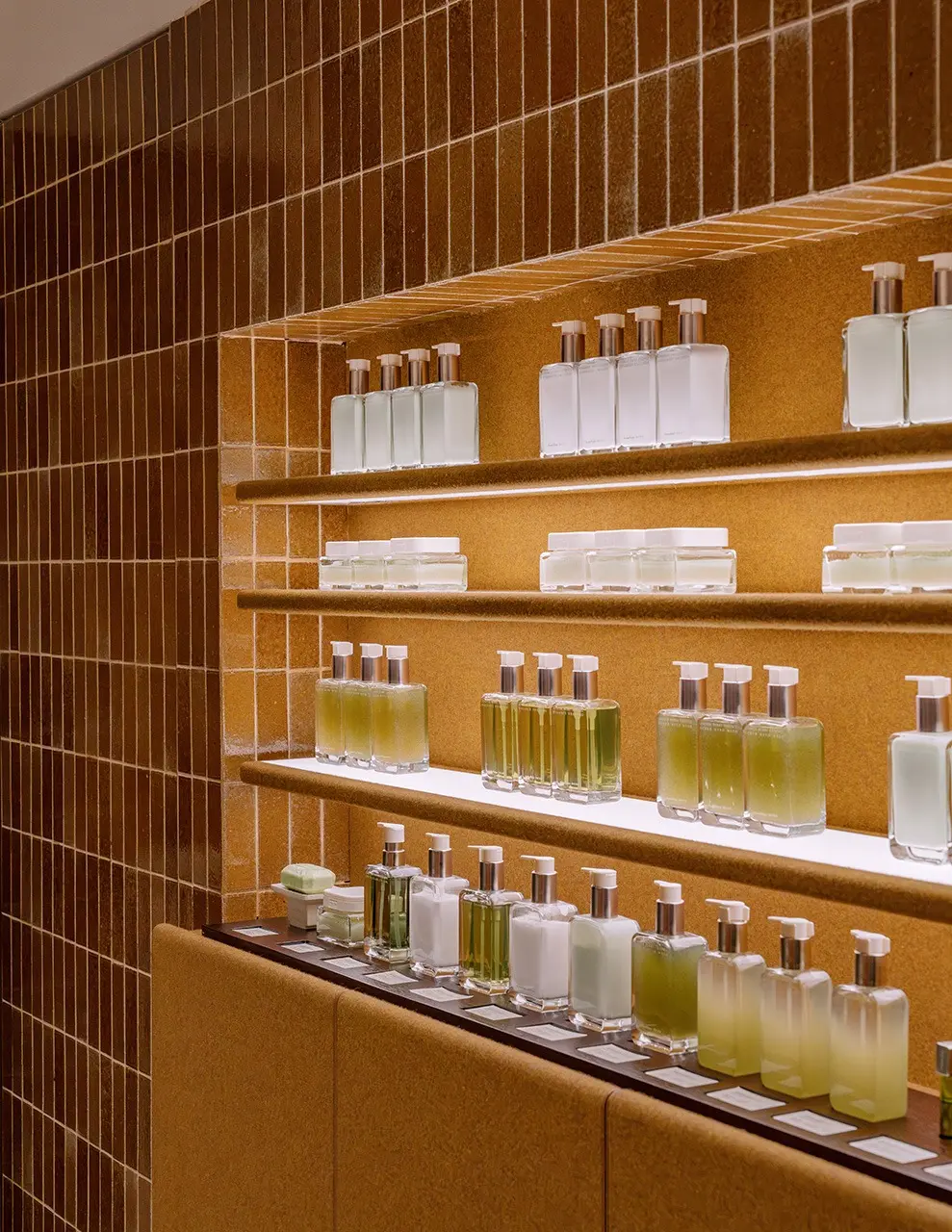
The journey from discarded pottery shards to luxury retail fixtures has resonated strongly with prominent names across the global design and fashion industries. Today, customers including prominent Chinese luxury fashion brands Erdos and Icicle are utilizing the company’s flagship product, the YiTile—which is manufactured using an impressive 70 percent recycled materials—to kit out their retail spaces and flagship boutiques.
This domestic success has rapidly catalyzed international expansion. Yi Design has cultivated a growing footprint in Japan, the United States, Australia, and South Korea, largely propelled by design- and eco-conscious clients across Europe who are eager to incorporate sustainable materials into their physical spaces.
“Cos is extremely supportive of us and global studio Brinkworth is using our tiles for its New Balance shops,” says Caroline Cheng, the 63-year-old founder and creative director of Yi Design. Speaking to Monocle at the company’s headquarters in Shanghai, Cheng reflects on a brand that now spans multiple outposts, including operations in Jingdezhen, the slower-paced creative hub of Dali, and an international presence in London.

Cheng’s personal background is as distinctive as her business model. Born in the United Kingdom to parents originally from Hong Kong who were scions of the historic Amoy soy-sauce empire, she grew up surrounded by the inner workings of a massive family enterprise. However, rather than following a path into the condiments industry, Cheng charted a course dedicated entirely to the world of ceramics. Over decades, she established herself as a respected practitioner and academic; her own fine art ceramics sit proudly in the permanent collections of leading global museums, and she shares her expertise as a tutor at Central Saint Martins College of Art and Design in London.
Her route into professional entrepreneurship began decades earlier, in 1991, when she joined Hong Kong’s renowned Pottery Workshop. Operating as a center based across multiple locations in China, the institution focuses on teaching students the intricate art of handmade ceramics, equipping them with practical skills and providing viable career pathways after graduation. Having spent years nurturing the next generation of ceramic artists, Cheng has recently transitioned operational leadership of that educational endeavor to her daughter, allowing her to dedicate the vast majority of her time, energy, and creative vision to scaling Yi Design.
The impact of Yi Design’s material innovation extends far beyond fashion boutiques and retail interiors. The brand’s product portfolio also includes the YiBrick, an award-winning permeable brick manufactured almost entirely from recycled materials. This sustainable architectural element has successfully captured the attention of the architectural community, earning a coveted place in the material libraries of some of the world’s most prestigious design and architecture firms, including Foster + Partners, Brinkworth, and Heatherwick Studio. By offering structural elements that combine ecological responsibility with aesthetic refinement, the company has managed to bridge the gap between heavy industrial sustainability and high-end architectural specification.
Despite working with global heavyweights and scaling its international footprint, the business remains grounded. Cheng notes that the company is currently breaking even and emphasizes that she is in no rush to chase rapid, speculative fortunes or hyper-growth for its own sake. Instead, as interest in Yi Design’s products continues to grow within influential creative and commercial circles, her primary focus is on refining the production process itself. Specifically, she is working to lower the carbon emissions generated by her kilns, exploring methods such as firing ceramics at cooler temperatures or engineering a complete operational transition to renewable energy sources.
“In China, every business likes to explode but I want to do it slowly until one day paying a premium for recycled ceramics is suddenly something that everybody can do,” Cheng explains, offering a measured philosophy for long-term industrial change. Through patient iteration, artistic pedigree, and a commitment to transforming mountains of forgotten waste into objects of enduring utility and luxury, Yi Design continues to reshape what is possible in contemporary material culture.