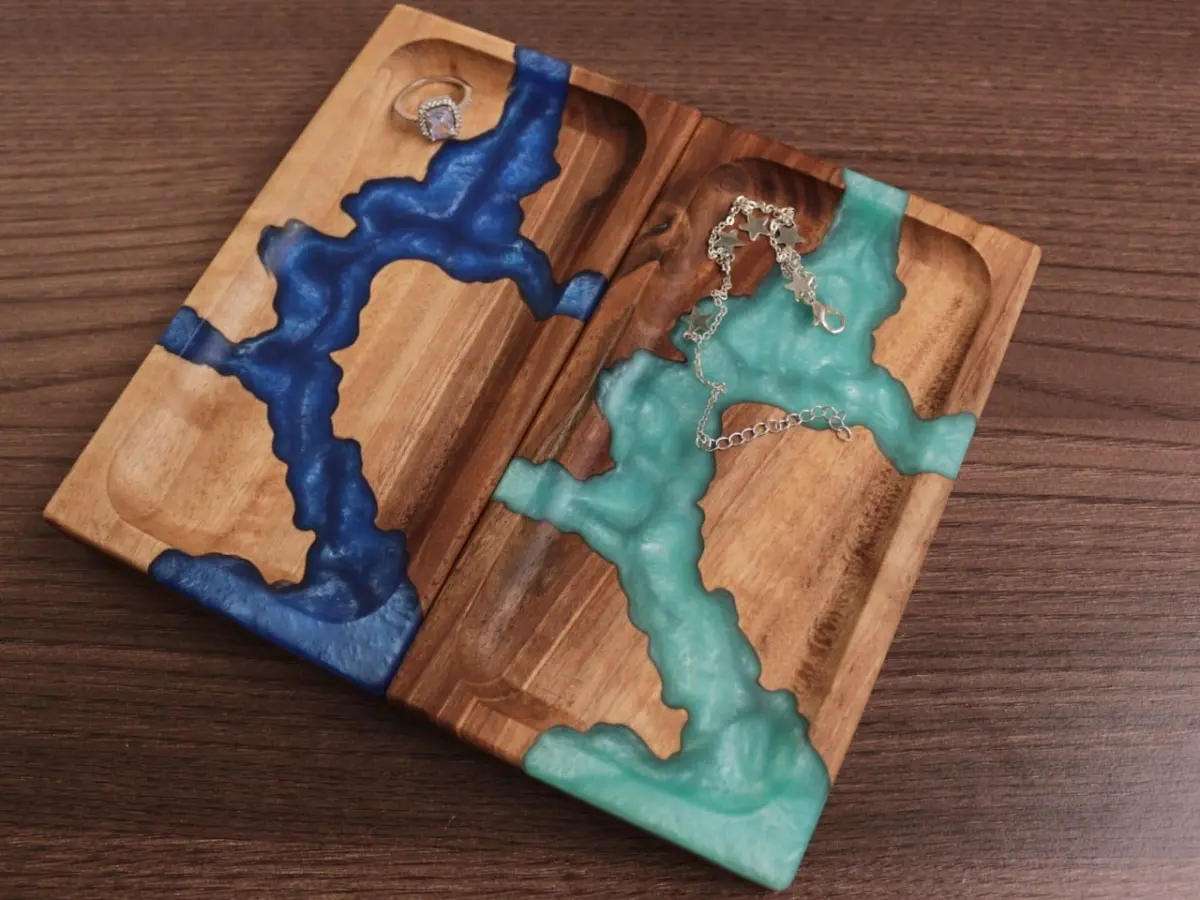
Most everyday accessories designed to keep our living spaces tidy are engineered to fade into the background. Traditional jewelry trays, valet trays, and catch-alls usually serve a strictly utilitarian purpose: they are meant to disappear beneath whatever clutter you drop into them at the end of a long day. While that design philosophy succeeds in keeping nightstands, entryways, and desks visually quiet, it leaves very little to appreciate when your pockets are empty, your keys are in your hand, and your rings are back on your fingers. A fresh design approach from independent maker Cihan Binekci of Latves Design takes the exact opposite route, transforming the humble valet tray into a striking focal point that is arguably prettier when empty than most are when full.
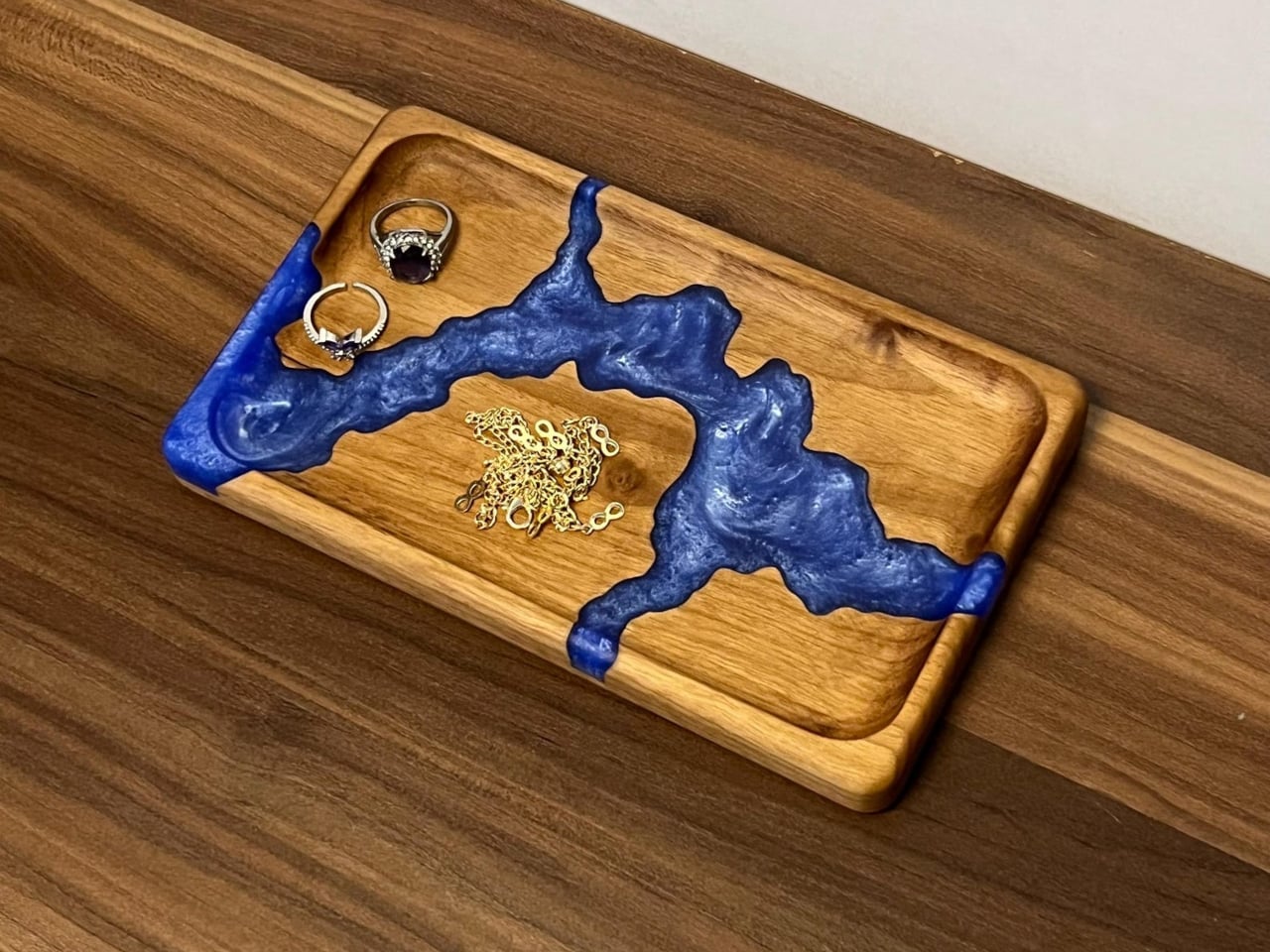
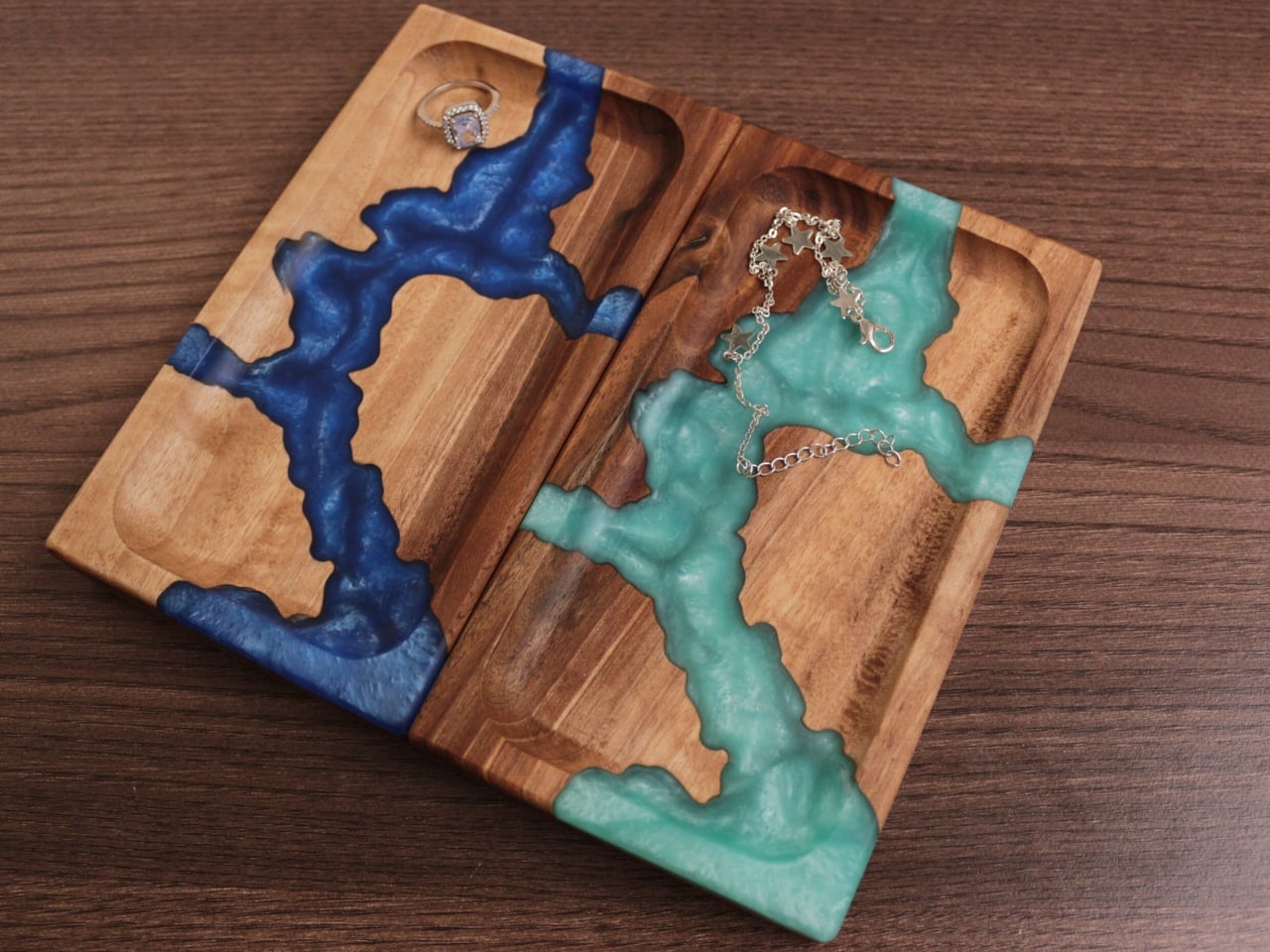
Handcrafted from rich American walnut and infused with vibrant resin, Binekci’s latest creation reimagines the drop zone as a canvas. Rather than relying on predictable geometry or sterile manufacturing techniques, this handmade tray features irregular ribbons of vivid color that carve completely across the warm, organic grain of the wood. The resin does not follow a neat stripe along the center, nor does it sit politely around the raised perimeters like an applied border. Instead, it cuts dynamically across the recessed surface, branching organically between distinct patches of walnut wood and occasionally weaving all the way out to the tray’s outer rim.
The interplay between the natural timber and the synthetic material introduces a compelling visual tension. The designer offers these resin accents in a variety of hues, each designed to evoke a completely different interior mood. Brilliant shades of blue look particularly lively against the dark, chocolate-brown tones of the walnut grain, while alternatives like green, red, and understated black offer entirely distinct aesthetic personalities. Despite their vivid saturation, the wandering, unpredictable borders of the resin keep the patterns from ever feeling like a mass-produced, factory-printed design. Every single tray carries its own unique geological mapping of wood and color, ensuring that no two pieces are ever identical.
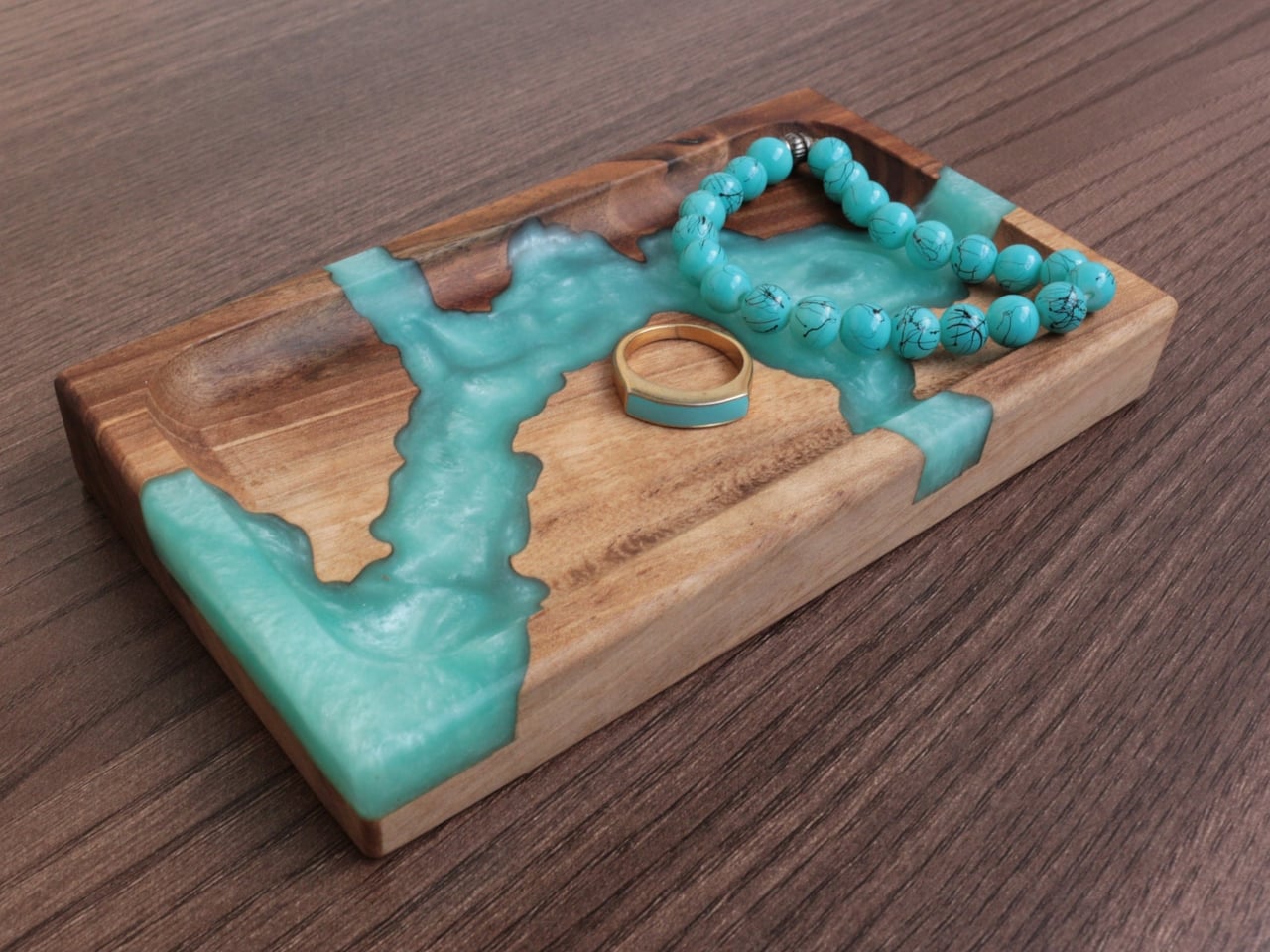
This striking meeting of divergent materials naturally calls to mind traditional artisanal concepts, most notably kintsugi, the centuries-old Japanese art of repairing broken pottery with a lacquer dusted or mixed with powdered gold, silver, or platinum. By highlighting the fractures rather than attempting to disguise them, kintsugi elevates the repair into a celebrated part of the object’s history. While these handmade walnut trays are brand new and do not utilize damaged or reclaimed timber, they share a profound philosophical kinship with that Japanese tradition. The resin seams and branching pathways become focal points to notice, contemplate, and appreciate, even though the colored polymer occupies significantly more physical space than a delicate golden mending line.
Beneath its artistic presentation, however, the object remains a functional piece of everyday decor designed to perform a specific domestic task. A tray must ultimately fulfill the practical requirement of keeping everyday carry items from scattering across fine furniture surfaces. To achieve this, the tray features a shallow, recessed center that provides a designated, secure place for a wristwatch, wedding bands, house keys, or pocket change to land the moment you walk through the front door. The raised wooden edge acts as a physical boundary, making the contents far less likely to roll off the nightstand or desk, though it deliberately avoids dividing the interior into rigid, separate compartments.
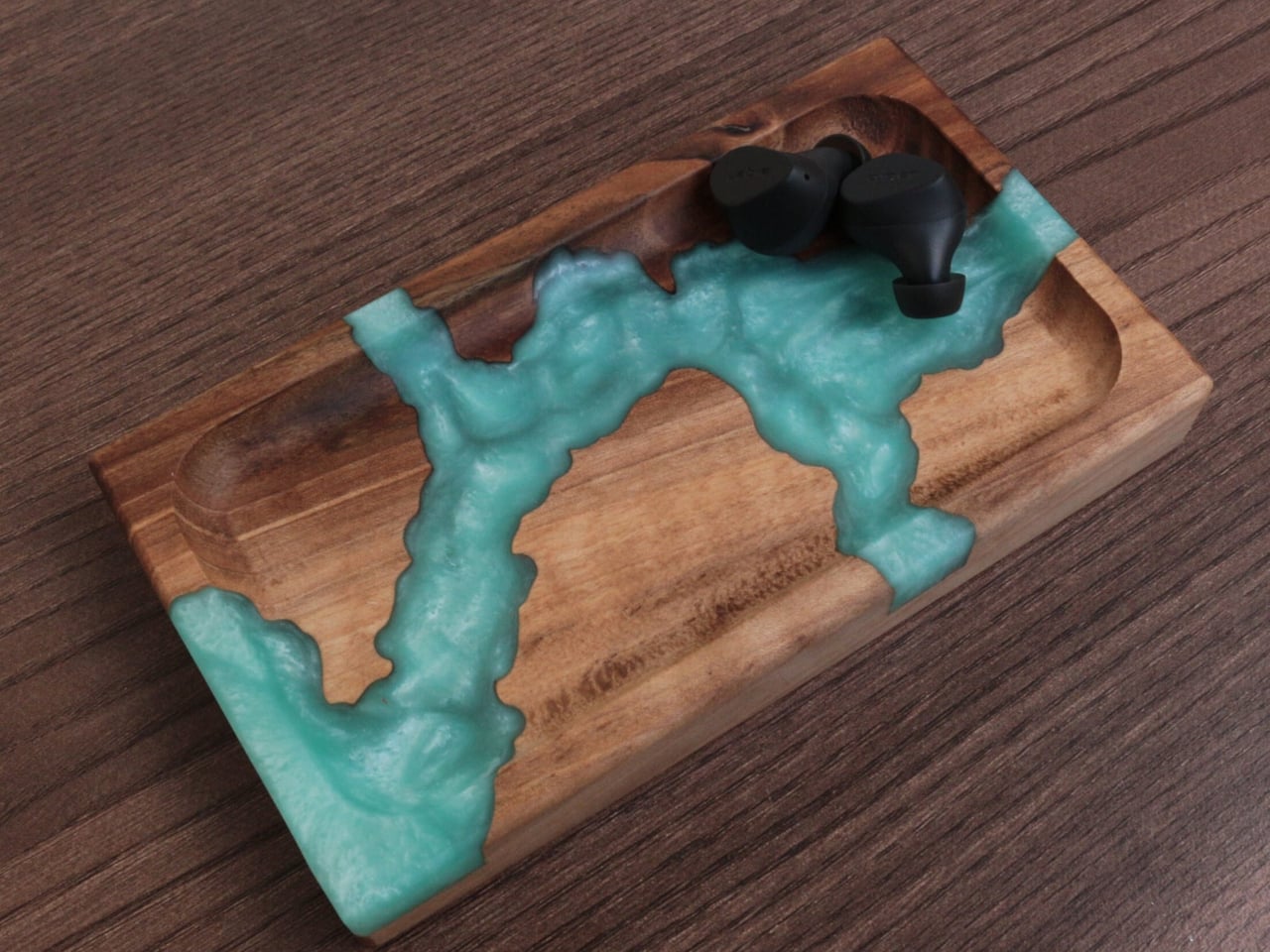
Because the interior remains an open basin rather than a segmented grid, the tray is naturally better suited for a curated handful of daily essentials rather than an expansive, overflowing jewelry collection. This simplicity allows it to transition effortlessly between different rooms and domestic environments without ever feeling out of place. It can sit comfortably on a bedside table to cradle a favorite timepiece and a pair of cufflinks at night, or it can be relocated to a home office or executive desk to corral paper clips, binder clips, and other small stationery supplies within arm’s reach of a computer keyboard. To protect the tactile warmth of the natural wood against the rigors of daily use, the maker finishes the walnut with a durable hardwax oil, a specialized coating designed to safeguard the surface against incidental water rings and oily fingerprints.
Embracing handcrafted work inevitably introduces a degree of unpredictability that factory-produced organizational goods go to great lengths to avoid. Because natural walnut grain varies wildly from one board to the next, and because the resin’s wandering edges are poured by hand, buyers cannot expect any single tray to match a promotional photograph with absolute precision. That inherent variance is central to the appeal, but it also places a premium on material and color selection. A vibrant blue resin seam can instantly energize an otherwise mundane nightstand, injecting a splash of contemporary color into a bedroom, whereas a deep, solid black resin might sit much more quietly alongside darker, heavier antique furniture.
Admittedly, a tray this expressive and visually loud is never going to completely disappear into a matched set of traditional bedroom furniture or minimalist decor. For purists who simply require an invisible, utilitarian receptacle to dump loose pocket change out of sight, this design might present a bold compromise. Yet, for anyone who appreciates the small daily rituals of modern living—such as the deliberate end-of-day ceremony of unhooking a watch, emptying pockets, or slipping off a favorite ring—the solid walnut provides a familiar, tactile place to land while the wandering resin gives the eye something genuinely captivating to notice.