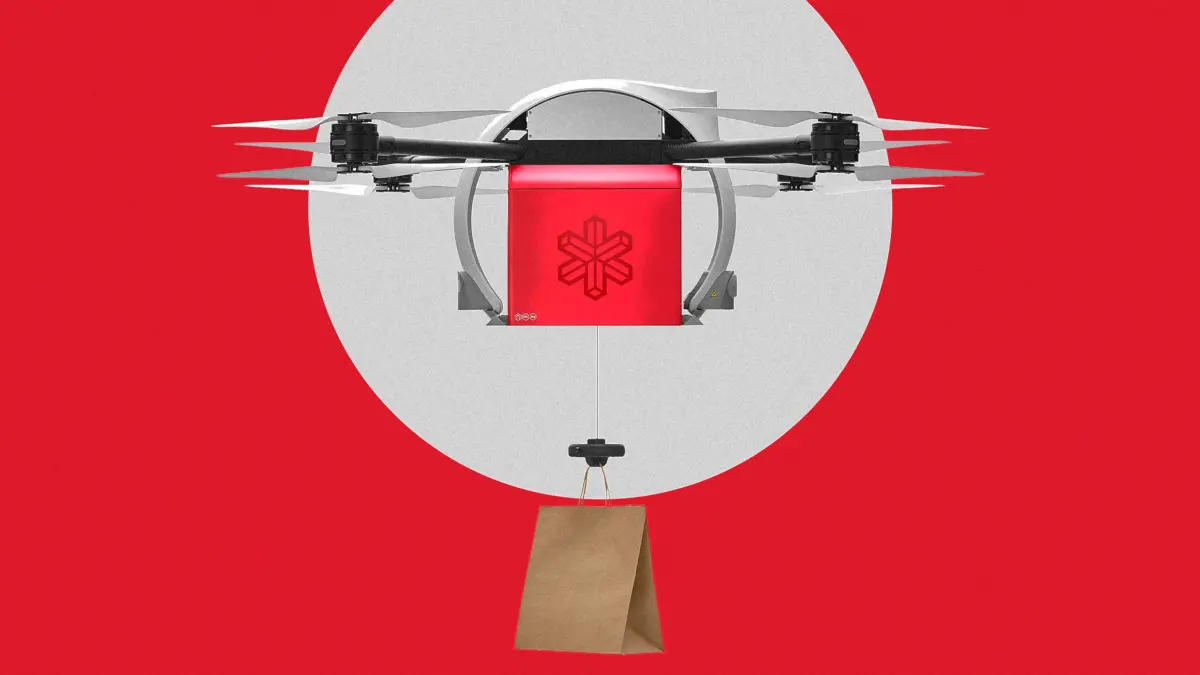
Drone delivery company Matternet is setting its sights on making everyday commercial deliveries a seamless part of the urban sky, with a targeted commercial rollout for its newly developed logistics system slated for the second half of 2027. To achieve this ambitious vision, the company has engineered a completely updated version of its last-mile logistics architecture centered around the M3, a more powerful autonomous drone capable of carrying payloads of up to 11 pounds. Alongside the aircraft, the system features redesigned, lower-cost dock stations and specialized drop boxes designed to be installed directly on the premises of participating restaurants, retailers, and healthcare facilities.
The initial U.S. partner for this upcoming deployment is Dave’s Hot Chicken, signaling the company’s intent to capture a share of the burgeoning fast-casual food delivery market. According to Matternet CEO Andreas Raptopoulos, the overarching concept behind the M3 architecture is to transform drone delivery from a novelty into a foundational utility—something that is largely invisible, dependable, and low-cost. Raptopoulos envisions businesses connecting to the Matternet delivery network in much the same way a modern building connects to municipal water or electrical power supplies.
The introduction of the M3 places Matternet directly into a nascent U.S. drone delivery market that continues to grapple with a complex matrix of regulatory hurdles, occasional opposition from local residents, and limited geographical availability. Despite these persistent challenges, the U.S. landscape already features four major established players operating in the commercial space: Amazon Prime Air, Flytrex, Wing, and Zipline.
Among these competitors, Amazon Prime Air has established an active operational footprint, flying commercial deliveries from sites situated across the Dallas-Fort Worth area, Houston, Phoenix, Detroit, and Tampa. Amazon’s current fleet is capable of carrying packages weighing up to 5 pounds within a 7.5-mile radius, and the tech giant has laid out aggressive expansion plans to reach the suburban communities of nearly 500 cities and towns by the end of 2026. In contrast, Matternet’s M3 system remains at least nine months away from initiating commercial service, and the company has not yet disclosed specific order volumes or projected route counts for the upcoming platform.
While the domestic market navigates these incremental steps, the international landscape—particularly in China—reflects an industry moving at a much faster pace. Beijing has increasingly showcased the viability of the so-called low-altitude economy to the rest of the world, driven by massive investments and supportive regulatory frameworks. Major Chinese tech and logistics players have turned autonomous aerial delivery into an everyday reality for millions of urban residents.
Meituan, for instance, began exploring the potential of drone delivery as early as 2017 and successfully launched its first commercial service in Shenzhen in 2021. The scale of operation in China has expanded dramatically in the years since, with Meituan surpassing 1 million commercial drone orders worldwide by the end of June. Demonstrating the practical integration of this technology into mainstream commercial operations, the company recently launched a dedicated McDonald’s drone delivery route in Shanghai, proving that fast-food logistics via aerial autonomy can achieve high-volume, repeatable success in densely populated urban environments.
Against this backdrop of rapid international adoption and domestic competition, market research firms project significant financial growth for the global drone delivery sector. Estimates for the total market value in 2026 vary widely depending on the analytical scope, with some research reports placing the market at approximately $360 million, while others project a robust valuation of $5.06 billion. Looking further ahead over the next decade, more optimistic industry forecasts anticipate the global drone package delivery market expanding to reach $20.98 billion by 2034, underscoring the long-term economic potential that companies like Matternet are positioning themselves to capture as they refine their technology and prepare for the 2027 commercial launch.