Across the cultural landscape of London and beyond, the unwritten rules of social engagement continue to evolve in unexpected ways. In most metropolitan circles, it remains a firmly established convention of politeness to arrive at a residential dinner invitation bearing a bottle of wine. Two bottles, perhaps, for those with a more accelerated pace of consumption. Yet, there exists a delicate social threshold where this well-intentioned gesture transitions from a mark of graciousness into an awkward faux pas that risks rendering the giver appear distinctly unrefined.
Reflecting on personal social missteps, the memory of an early transgression remains vivid. Years ago, an invitation to the home of a professional contact hinted at a potential bridge between working life and genuine friendship. En route to the residence, a bottle of champagne was purchased—an offering intended to convey enthusiasm and high regard. Upon arrival, however, the address revealed itself to be a remarkably grand London townhouse. When the doorbell was pressed, a butler answered, his expression immediately tightening with visible dismay as his gaze dropped to the modest off-licence carrier bag. With a cool, clipped intonation, he offered to take the coat alongside the, er, shopping—making it unmistakably clear that the sparkling wine would advance no further than the hallway. It did not.
While contemporary thirty-somethings may approach hosting with different sensibilities—or perhaps eschew traditional dinner parties altogether in favour of morning wellness routines and kombucha, driven by the fear of missing out on a personal best at Barry’s—the psychological scars of such social miscalculations linger.
A recent invitation to an estate in Mallorca, named grandly after the resident family, brought those old anxieties rushing back. The property was the sort of epic homestead where a hypothetical "Tuck House" moniker would inevitably evoke the imagery of a roadside diner rather than an ancestral seat. The familiar dilemma arose once more: should one arrive empty-handed, or run the risk of bringing the wrong bottle? In short, might the host simply be too grand to receive gifts?
Seeking counsel, a message was dispatched to a friend named Olaf, the guest of honour for the evening. Olaf assured that a bottle would indeed be an acceptable offering, a reassurance supplemented by the addition of a copy of Monocle tucked neatly into a tote bag to bolster the chances of a smooth entrance. The hostess herself proved to be the absolute epitome of barefoot chic, immediately dissolving any lingering apprehensions and leaving the visitor feeling like the very personification of generosity. Whether the contribution ultimately found its way into a culinary reduction sauce mattered little; the ordeal was navigated successfully, entirely free of what might be termed "butler rash."
Such social anecdotes frequently surface in casual workplace discussions. During a recent newsroom exchange, a recollection was shared regarding a mid-week gathering at a friend’s flat where an attendee arrived accompanied by none other than Anjelica Huston. The comedic core of the story lay in the host’s utter cluelessness; entirely unaware of the cinematic icon’s identity, the host cheerfully treated her as a routine, last-minute plus-one.
Unfortunately, the narrative landed with the weight of a deflated soufflé. Upon scanning the room, the speaker realized that a junior colleague—someone who had been barely out of diapers at the height of Huston’s cinematic prominence—wore an expression closely resembling the butler’s look of silent judgment. A confession followed: the younger desk neighbour had no frame of reference for the name whatsoever. Subsequent glances around the office revealed a flurry of surreptitious smartphone searches, highlighting a stark generational divide and underscoring the urgent necessity of updating one’s repertoire of anecdotes.
Beyond the traditional drawing room and the modern office, social etiquette faces entirely new frontiers in the digital realm—specifically regarding the appropriate response to tragic announcements on Instagram. While feeds are ideally populated by architectural photography and comforting reels of puppies rescued from rivers, they are occasionally punctured by sombre dispatches announcing the loss of a parent or the diagnosis of an obscure tropical disease.
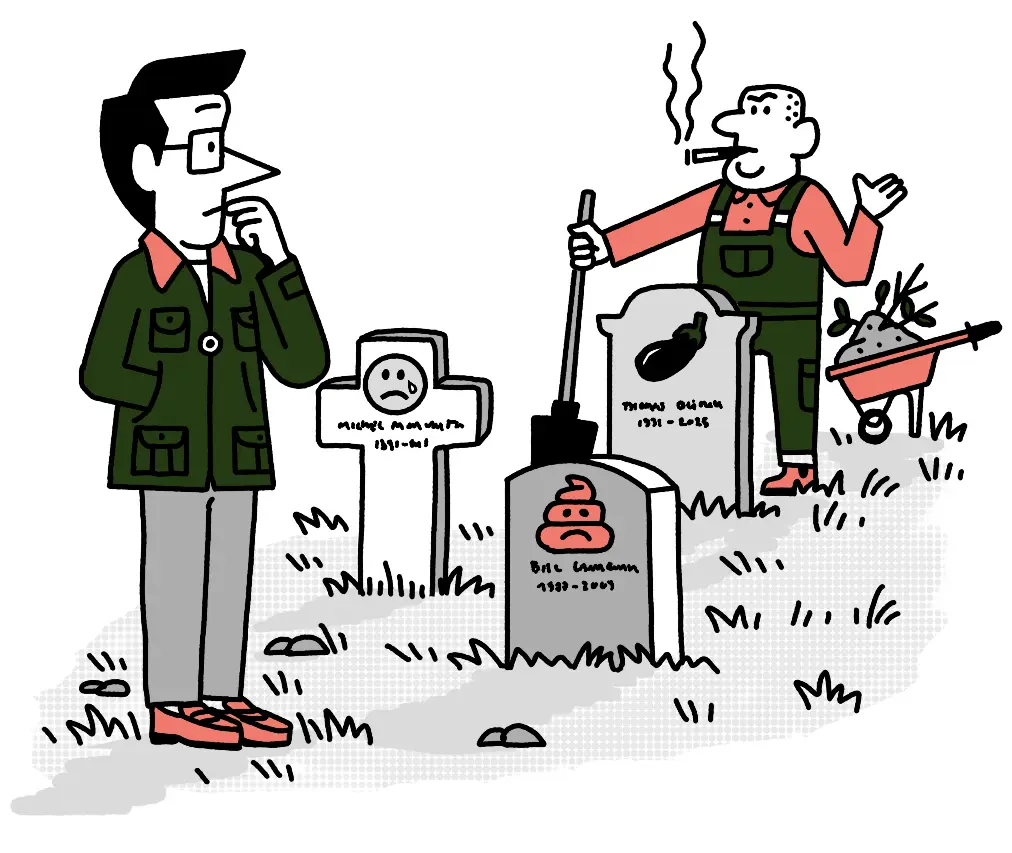
Observing the varying reactions to such heavy news reveals a fascinating, if unsettling, spectrum of digital manners. A striking number of users simply press the "like" button—prompting the question of whether an automated thumbs-up is genuinely a suitable reply to the news that a friend’s family has been imperilled in the Amazon rainforest. Stranger still, a recent post concerning the death of a user’s father elicited a response consisting solely of a single poop emoji. One can only assume that enterprising stonemason influencers are already hard at work designing emoji headstones. Yet instances like these prompt broader questions about the state of contemporary digital discourse, leaving observers to wonder who these anonymous commenters might be, and whether they possess even the foggiest notion of who Anjelica Huston is.