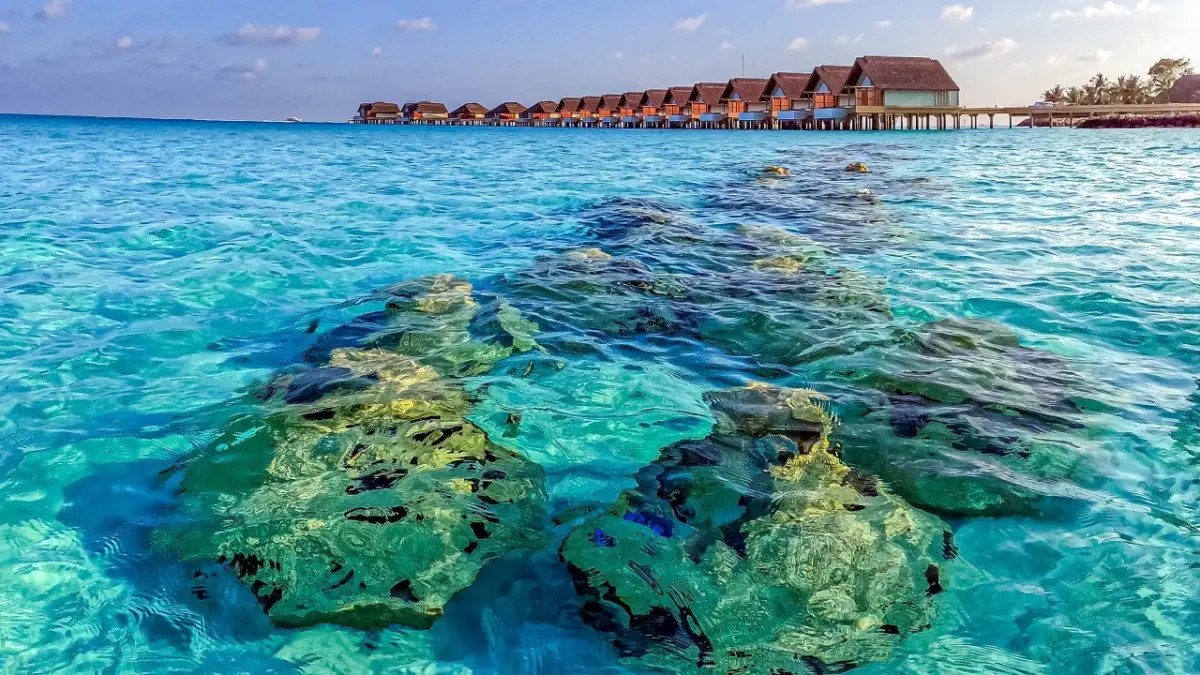
For years, the standard approach to saving an eroding beach has been a losing battle against the ocean. On a tiny island in the Maldives, where rising tides and shifting currents steadily swallowed away the pristine coastline, the conventional remedy was sand dredging. Resorts and coastal authorities would routinely pump sand back onto the shore to replace what was lost to the sea. Yet, this method has long been recognized as a costly, temporary fix. Worse still, traditional dredging frequently damages fragile marine ecosystems, smothering coral reefs and disrupting local habitats. Resorts often find themselves trapped in an endless cycle, with some pumping sand 365 days a year just to maintain a receding shoreline.
Two years ago, however, a Marriott resort on the island decided to experiment with a radically different approach. Instead of fighting the ocean with brute force, the resort partnered with researchers to repair the beach using a smart, artificial reef designed by the Massachusetts Institute of Technology.
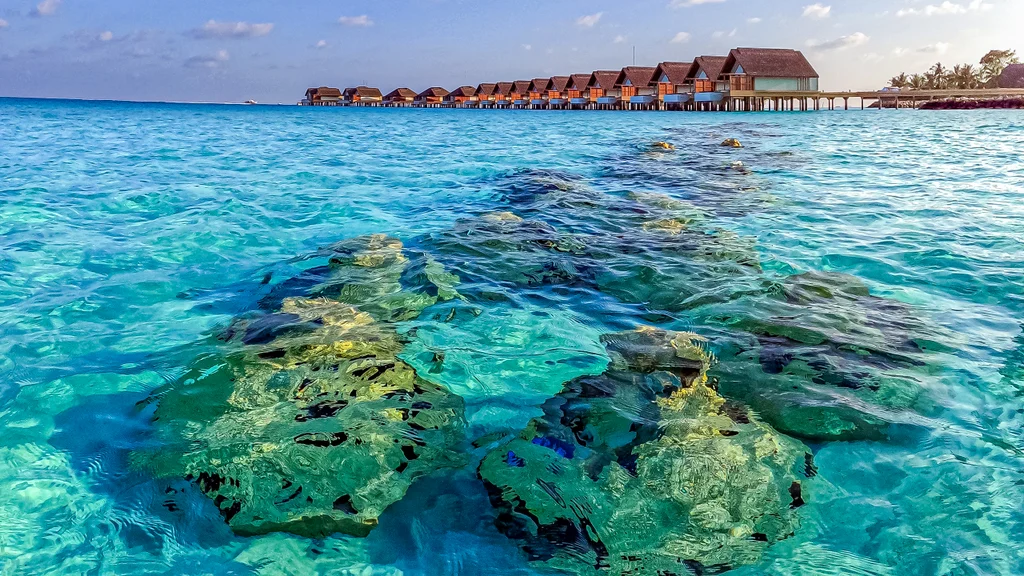
The results have stunned coastal engineers and environmentalists alike. Within just six months of installation across a 300-foot stretch of shoreline, the depth of the beach grew by an astonishing 90 feet. Now, two years later, that same beach has completely doubled in size, providing a wide, stable expanse of sand where erosion once threatened vital infrastructure. Beneath the surface of the water, the artificial reef has transformed into a thriving marine habitat, now teeming with new coral growth, fish, and sea anemones.
Building on this dramatic success, the initiative is moving out of the experimental phase and scaling up for global deployment. Coastal Assembly, a startup that officially spun out of the MIT research late last year and successfully secured $4.4 million in a round of funding this summer, is now bringing the technology to other vulnerable coastal regions.
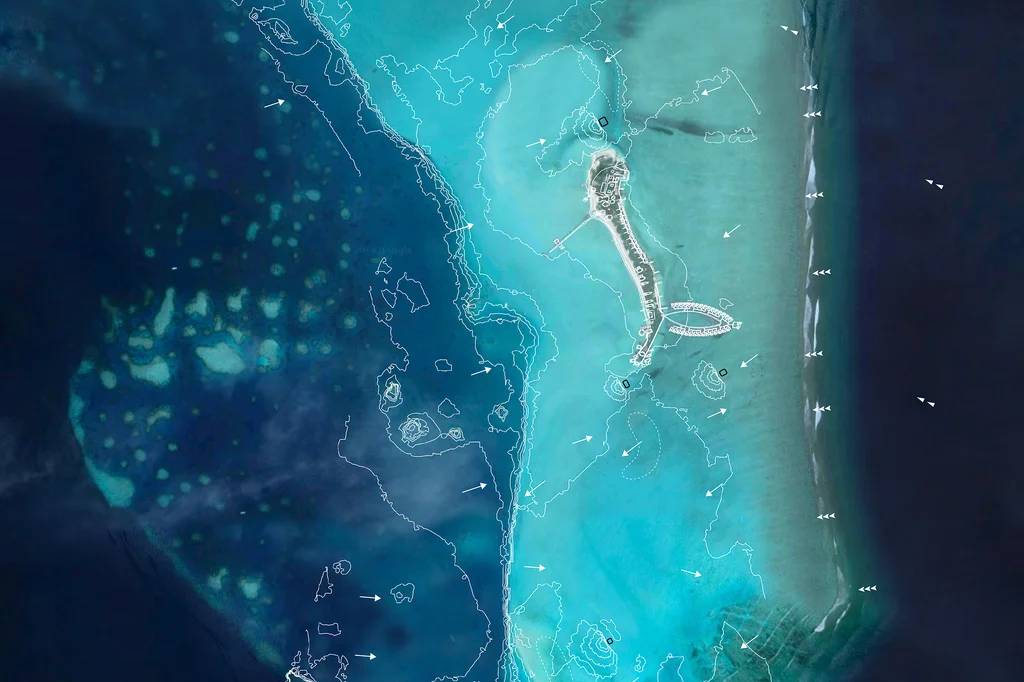
The company harnesses the power of artificial intelligence to analyze complex satellite imagery and ocean current data at a given shoreline. By processing this environmental data, the startup can meticulously plan the layout of custom-designed concrete blocks that interact with natural ocean waves to encourage sand to accumulate organically.
The technology relies heavily on predictive modeling to maximize its efficiency and impact. According to Skylar Tibbits, a professor in MIT’s architecture department who runs the university’s Self-Assembly Lab—a specialized research group that explores how materials and environments can transform themselves—the AI-driven approach shifts the entire philosophy of coastal protection.
“We take 10 years of data, and we say, where do we predict the critical areas of erosion will be in the coming months to year?” Tibbits explains. “And that tells me where the best place is to intervene—what’s the part that is most critical, where we should focus our time, effort, and money.”
In the case of the Maldives pilot project, the implementation involved the careful installation of 54 strategically placed blocks made from marine-grade concrete and local aggregate. Positioned roughly 150 feet offshore, these specially engineered structures work by dampening and dissipating wave energy. As the powerful waves lose momentum crashing against the artificial reef, their capacity to carry sand away is neutralized. Instead, the modified wave patterns help redirect sand back to the beach that was previously lost, while also anchoring the existing sand in place to prevent further washing away.
The research team maintains continuous oversight of the site, tracking changes to the coastline over time. The system allows for flexibility and adaptability; if nearby coastal development or changing weather patterns alter local wave behavior, the modular blocks can be adjusted to compensate.
Interestingly, this innovative approach to coastal engineering started entirely by chance. Tibbits recounts that the research was sparked when he happened to visit a sandbar in the Maldives that had formed naturally in the span of just one month.
“It was like, wait, what do you mean, this island formed in a month? We started to understand that we could tap into this process, and then it became a question of how you promote that to happen,” he says.
That observation led Tibbits and his team to reevaluate conventional coastal management practices, which he characterizes as short-sighted and fundamentally flawed. Traditional methods like seawalls and continuous dredging treat symptoms rather than causes, acting as expensive Band-Aids for a deeper environmental problem.
“It’s a continual process,” Tibbits notes, pointing to the unsustainable nature of current practices. “One of the resorts we visited is pumping sand 365 days. . . . It’s the sort of thing that everyone does as a Band-Aid.”
With the backing of its recent funding and the commercial momentum of Coastal Assembly, the MIT spinout aims to replace these temporary fixes with self-sustaining ecological solutions. By working in harmony with ocean dynamics rather than attempting to overpower them, the startup hopes to offer vulnerable island nations and coastal communities a durable, environmentally conscious way to protect their shores for decades to come.