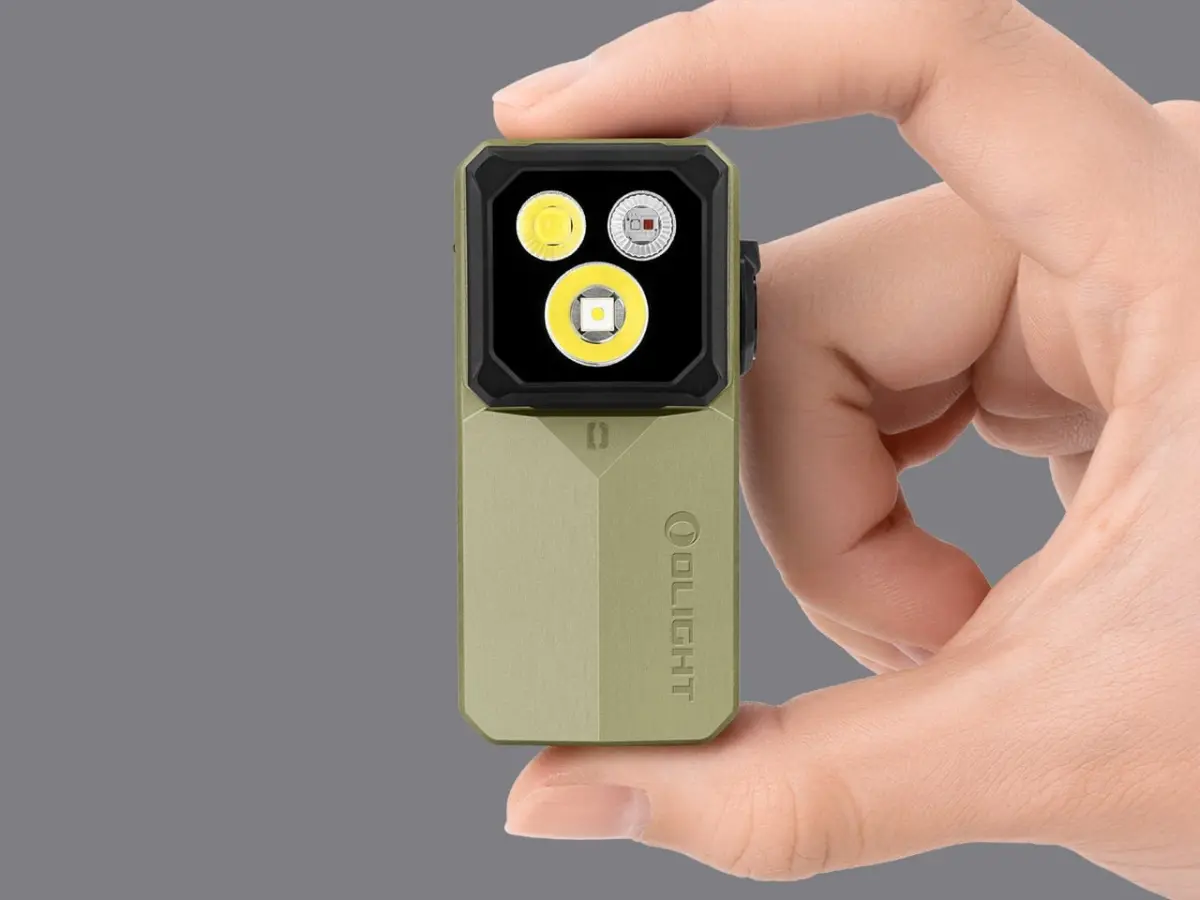
Flashlights rarely possess anything resembling a personality. Traditionally, their utility begins and ends with a binary function: they turn on, they turn off, and that mechanical boundary defines the full scope of the user relationship. For several generations, Olight’s popular Oclip line has successfully carved out a reputation as the compact clip light that consumers actually reach for in daily scenarios. Yet, even among its most loyal user base, a singular, recurring frustration persisted across multiple iterations. When Olight surveyed more than 5,200 existing Oclip owners to gather insights for the next generation of the device, nearly 30 percent of all user feedback pointed to the exact same ergonomic flaw: the light routinely pointed in the wrong direction, leaving users with no effective workaround short of unclipping the device entirely and starting the positioning process over from scratch.
When clipped to a hat brim, the beam frequently shone upward into the wearer’s eyes rather than down onto the trail or work surface. When secured to a pants pocket, it illuminated the ceiling or the ground rather than the immediate task at hand. The beam direction was entirely dictated by the constraints of the clip itself, rather than the needs of the user. This single, pervasive design challenge forms the foundational problem that Olight set out to solve with the development of the Oclip 2 Ultra. By completely reimagining how a compact clip light articulates, the engineering team has introduced a mechanical solution designed to eliminate the historical compromise between where a device attaches and where its illumination is required.
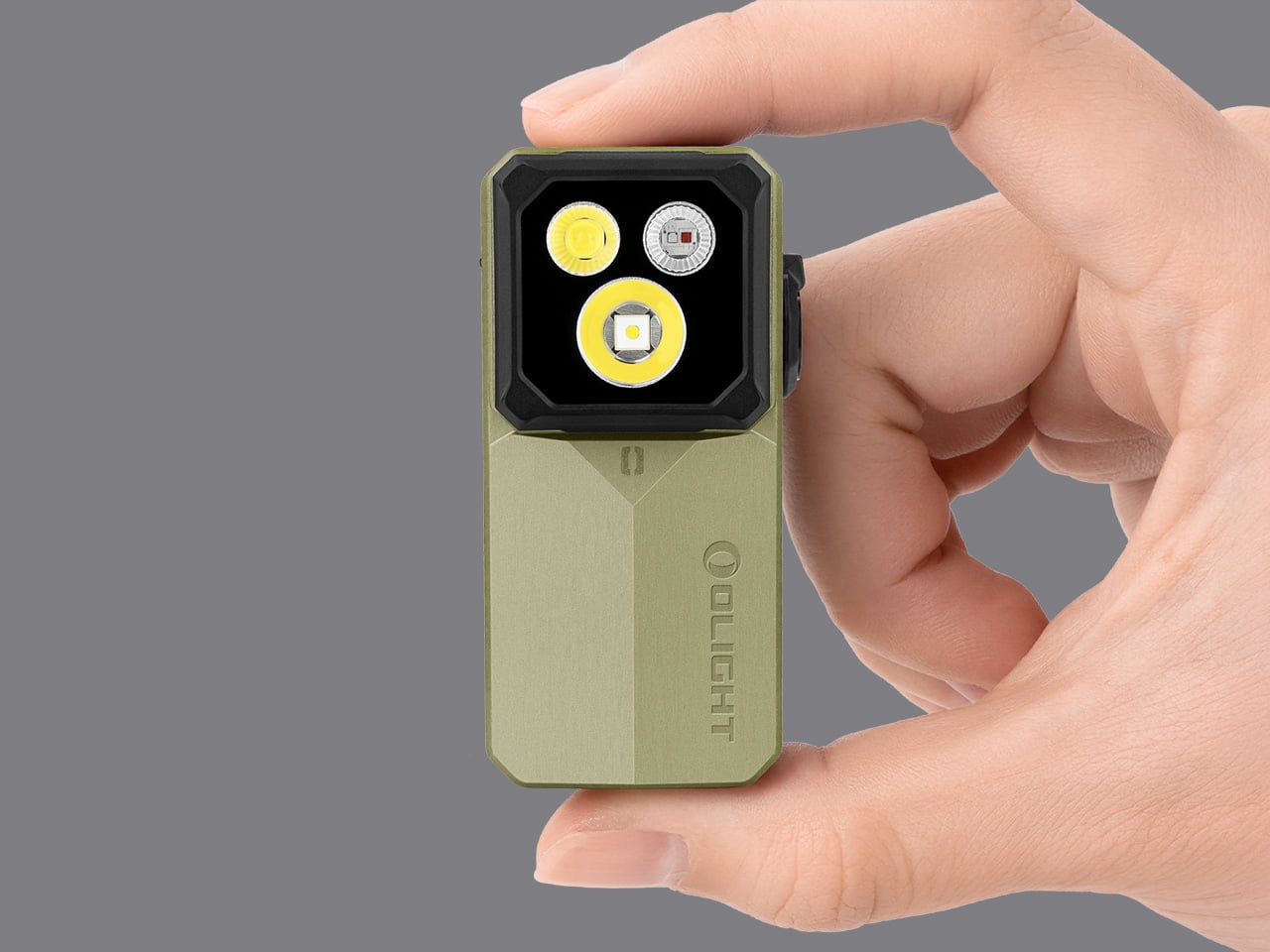
At the core of the Oclip 2 Ultra is a newly engineered dual-axis positioning system. A 360-degree rotating clip pairs seamlessly with a 115-degree pivoting head, allowing the user to attach the device to a wide variety of surfaces and then independently aim the beam exactly where the work is happening without ever needing to reposition the clip itself. To ensure long-term durability, both mechanical axes have been rigorously rated for 10,000 test cycles, ensuring that the articulation mechanism maintains its structural integrity and resistance rather than loosening over time. Beyond this articulating foundation, the Ultra tier introduces an OAL aluminum body, an innovative in-house dual emitter that combines red lighting with a 365nm UV source, and OclipBeat, a distinctive breathing indicator that dynamically shifts colors based on how frequently the light is utilized. Total output maxes out at 580 lumens with an impressive 130-meter beam throw, all housed within an IP66-rated chassis capable of withstanding drops from up to two meters. The lineup starts at $69.99 for the standard Ultra, while a Premium edition bundled with a 1,000 mAh charging dock is available for $94.99.
The real-world implications of this mechanical overhaul become immediately apparent in tight quarters. Consider being elbow-deep in a complex automotive engine bay with a traditional clip light, only to find the beam stubbornly pointed at an adjacent hose instead of the specific fastener that requires attention. Historically, that scenario left technicians and DIYers with just two frustrating choices: awkwardly contort their own bodies to catch the light or unclip the device and start the placement process over. The Oclip 2’s dual-axis mechanism effectively removes that compromise from the equation. Because the 360-degree rotating clip and the 115-degree pivoting head operate as completely independent adjustments, a user can attach the light to a secure edge, rotate the main body upright or sideways, and tilt the head directly onto the exact target zone while the mounting clip remains completely stationary.
Achieving this level of fluid articulation required extensive research and development. The mechanism went through hundreds of individual light-head optimization iterations during the design phase to strike the perfect balance of resistance. Olight engineers recognized that a light head which drifts out of position after being set would completely defeat the core purpose of an articulating system. The resulting design maintains a firm, reliable hold under consistent rotational tension, ensuring that once the beam is pointed at a target, it stays there despite ambient vibrations or movement.
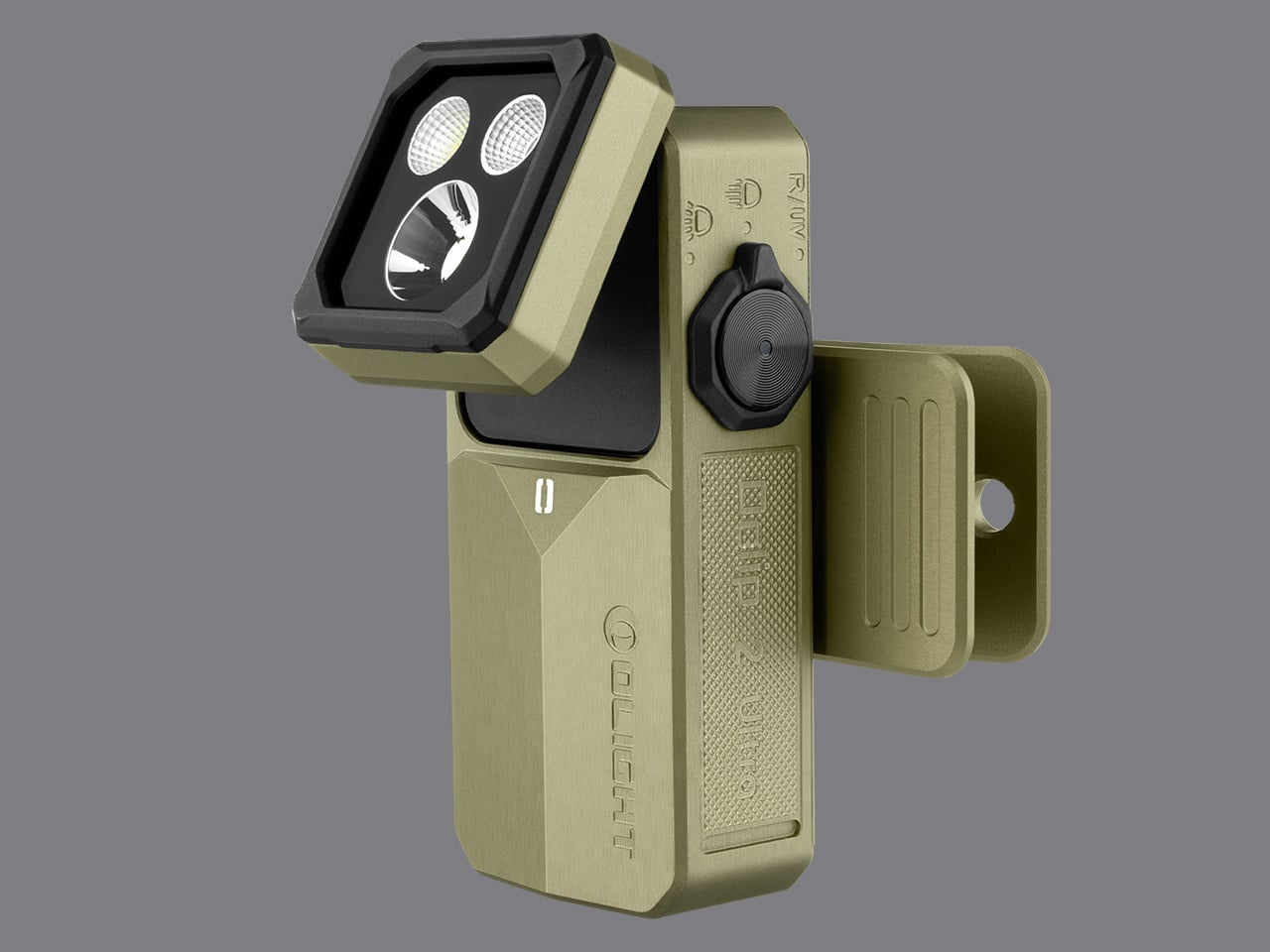
Illumination versatility is another major focal point of the Oclip series, and the Ultra pushes this capability even further by incorporating four distinct light sources into a single, compact body: floodlight, spotlight, and red light, alongside an industry-first, in-house-developed R/UV emitter. Traditional compact clip lights typically force users to choose between a red warning signal and UV detection capabilities, making Olight’s decision to integrate both into a single cohesive emitter a notable technical achievement. The ultraviolet output delivers up to 800 mW for rapid material inspections, currency checks, or forensic tasks. Meanwhile, the floodlight utilizes a specially engineered curved light cup designed to produce a clean, diffuse reflection rather than a harsh, blinding hotspot. The dedicated spotlight throws a focused beam up to 130 meters at 450 lumens, while the floodlight configuration opens up to a maximum output of 580 lumens.
Adding an unexpected touch of character to the device is OclipBeat, a breathing indicator feature that activates whenever the light head is rotated. The indicator shifts through various colors based on cumulative use over time, delivering a unique sense of partnership and feedback during everyday carry missions. While personality traits are rarely expected in utilitarian gear like portable illumination tools, Olight’s implementation introduces a subtle layer of engagement that distinguishes the Ultra from standard industrial equipment.
Placement flexibility is further enhanced by the physical design of the clip and its supporting hardware. The grip mechanism is capable of securing objects up to 14 millimetres in thick profiles, including heavy jacket collars, backpack shoulder straps, and tactical MOLLE webbing. Additionally, embedded magnets located at the magnetic charging tail and directly on the clip allow the device to snap instantly onto steel surfaces such as a vehicle hood, refrigerator door, or metal toolbox without requiring any supplementary adapters. For overhead illumination needs, the light can easily hang from a tent loop, wire hook, or cord, providing an ambient downlighting option when bouncing a beam off a ceiling or overhead surface is more effective than direct projection.
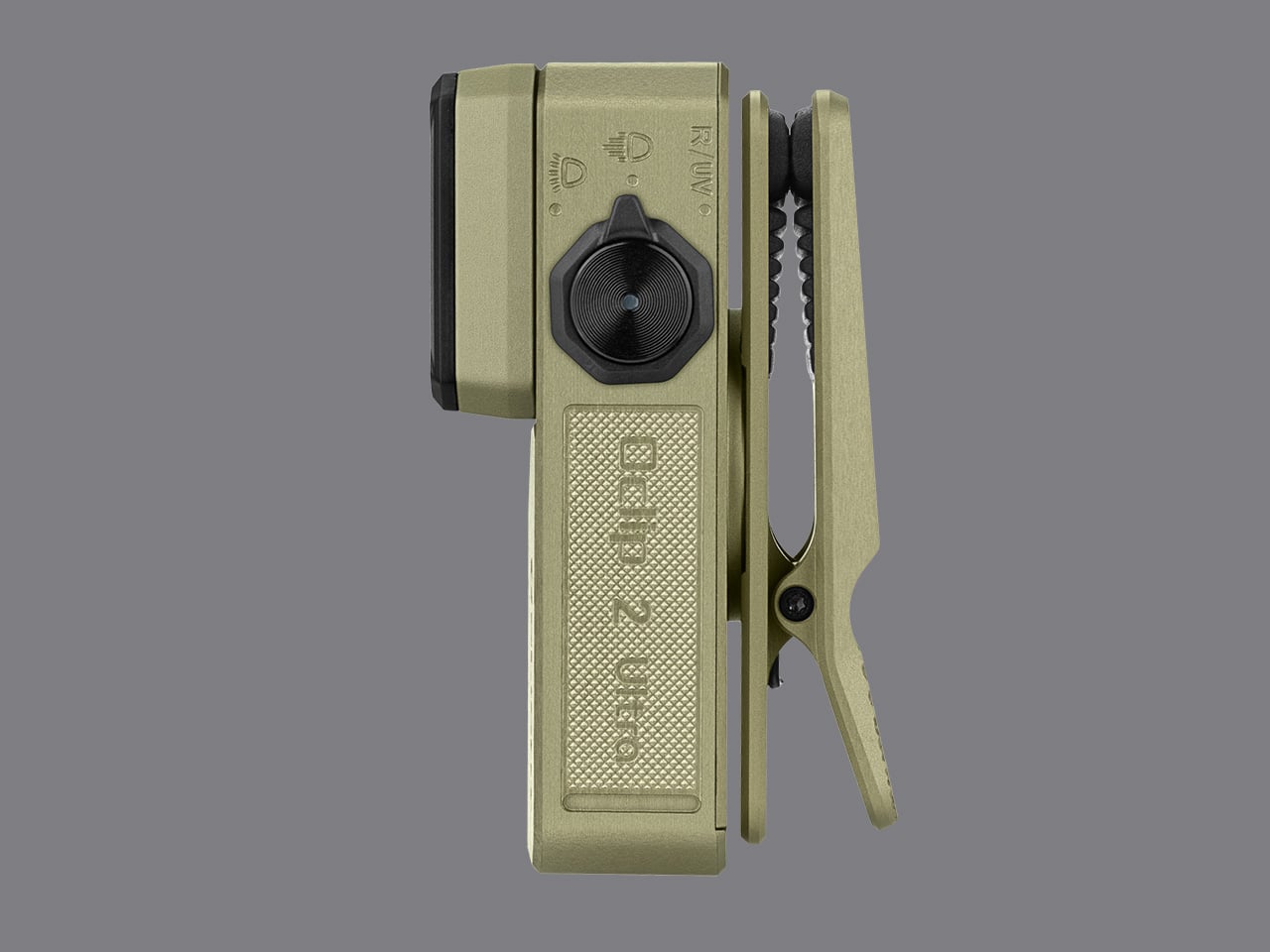
The entire system is designed around the principle of keeping both hands free during complex tasks. The combination of three distinct attachment modes, an articulating dual-axis head, and a rotating body delivers substantial placement versatility within a lightweight 79.5-gram package. Keeping the device powered across long deployment periods is addressed through multiple charging pathways, including standard USB-C, Olight’s proprietary MCC magnetic charging connector, and the Mobile Charging Dock included with Premium retail packages.
The 1,000 mAh Mobile Charging Dock serves as an intelligent on-the-go power bank that automatically tops up the flashlight’s internal battery, effectively doubling the total runtime while displaying real-time battery status levels for both the light and the dock at a glance. The inclusion of the dock directly addresses feedback from the roughly 13 percent of first-generation Oclip users who previously flagged short battery life as their primary critique. While the flashlight body itself carries an IP66 dust and water resistance rating, the Mobile Charging dock is rated to IPX6, and the combined Ultra Premium package weighs a modest 141.5 grams with the dock attached.
Material selection plays a critical role in the durability profile of the Oclip 2 Ultra. The housing is constructed from OAL aluminum, Olight’s proprietary high-strength and scratch-resistant alloy, while the clip components utilize standard AL6061 aluminum. While the visual contrast between the two aluminum grades is subtle, the superior scratch resistance of the OAL alloy is designed to withstand months of daily carry, where pocket wear and friction typically impact softer metallic finishes first. The main body measures 60.2 by 28 by 35 millimeters, making the final production design roughly 4 millimeters smaller than the initial pilot-production prototypes.
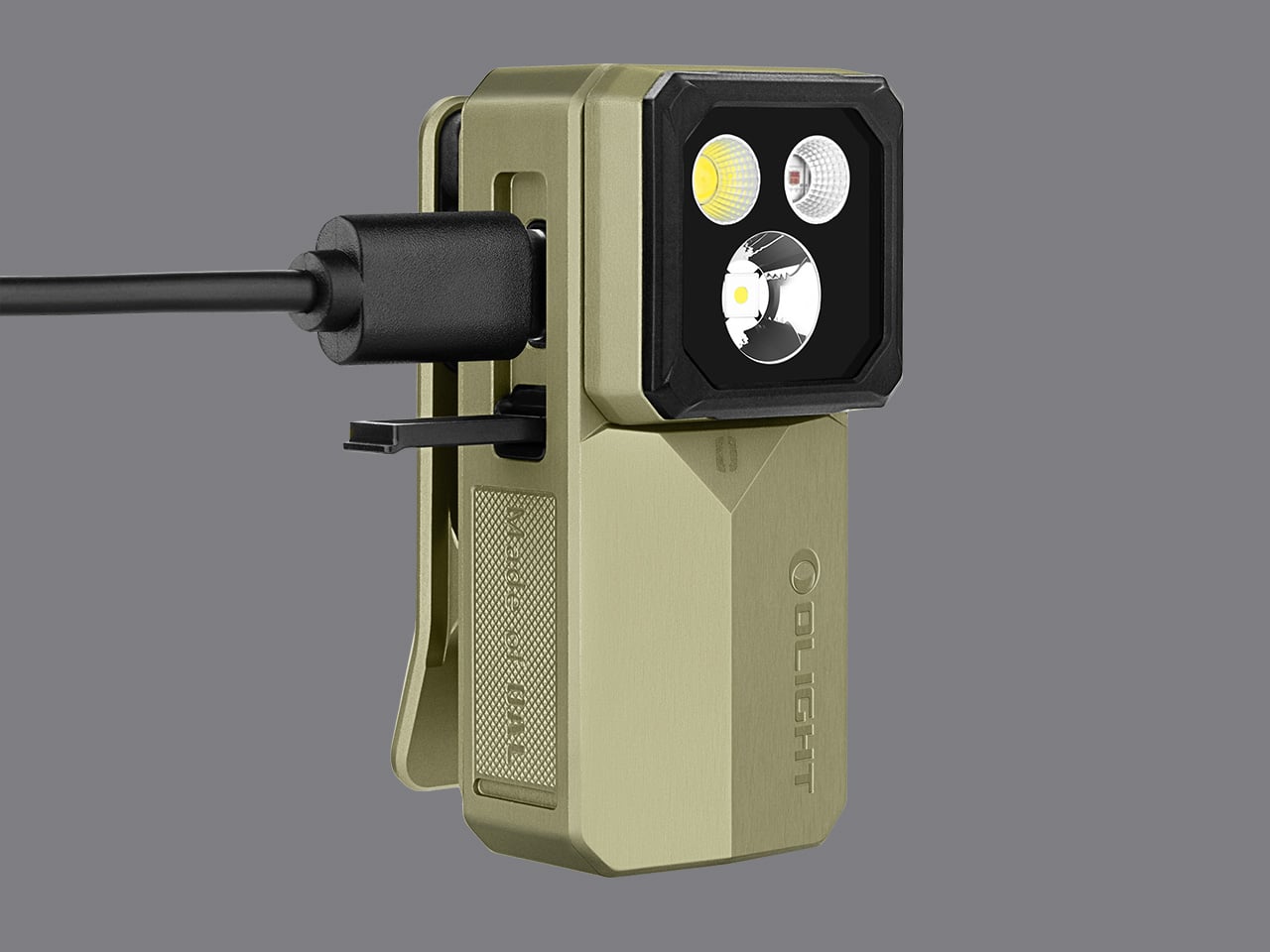
Combined with its IP66 environmental protection and two-meter drop test rating, the durability specifications align closely with the demanding automotive, outdoor, and professional patrol use cases that Olight is targeting with this release. The angular design language gives the Ultra a more deliberate, modern everyday-carry presence than the strictly utilitarian aesthetic typically found in the compact clip-light market segment, while the OclipBeat indicator adds a visual layer that builds character the longer the device remains in active rotation.
The broader Oclip 2 series spans four distinct stock-keeping units to accommodate varying user preferences and budget levels: the Pro priced at $49.99, the Pro Premium at $74.99, the Ultra at $69.99, and the Ultra Premium at $94.99, all of which are currently available directly through the manufacturer’s official sales channels. The Premium editions at both performance tiers include the 1,000 mAh Mobile Charging Dock as part of the bundled hardware. To underscore the durability of the hardware, Olight backs the flashlights with a lifetime warranty in select key regions including Australia, China, France, Germany, and the United States, and a five-year warranty in all other global regions, while the companion Mobile Charging Dock carries a separate two-year warranty coverage.