Trade negotiations between the United States and Mexico have reached an unexpected impasse following months of intensive talks between officials regarding a potential deal designed to reduce duties on critical imports from south of the border. According to a report from the Wall Street Journal, objections raised by U.S. Commerce Secretary Howard Lutnick precipitated the sudden breakdown in discussions, casting a shadow over the future of North American trade relations.
Prior to this roadblock, the two sides had been homing in on a limited bilateral agreement. The proposed arrangement would have drawn down American duties on key industrial sectors—specifically steel, aluminum, and automobiles—in exchange for certain policy concessions from Mexico. Officials on both sides, as well as private sector executives, had been openly buoyant about the prospect of securing a deal.
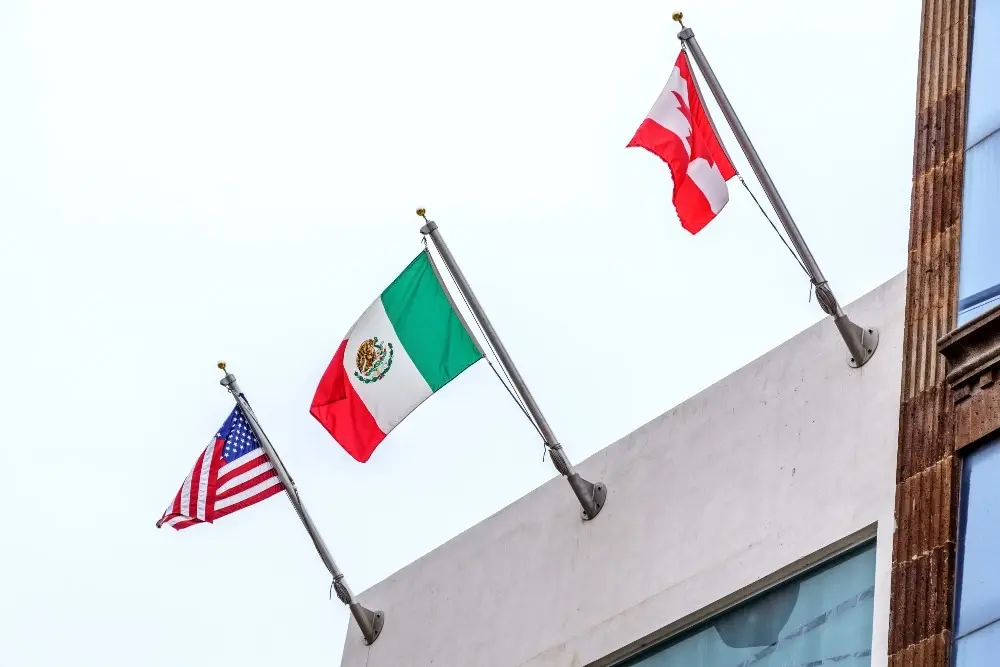
According to unnamed sources cited by the outlet, this interim agreement was intended to clear a practical path toward further, more comprehensive discussions about the future of the broader United States-Mexico-Canada Agreement (USMCA). The trilateral trade pact was notably left without a formal renewal after the U.S. declined to renew it during its six-year joint review over the summer.
Progress toward the interim accord began to lose momentum in recent days, the Wall Street Journal reported, largely due to lingering friction stemming from existing U.S. policies. These include the 25 percent U.S. tariffs on imported cars and the 50 percent duties on foreign metals, which the Department of Commerce is responsible for administering in the service of national security. Sources indicated that Secretary Lutnick has remained firmly resistant to reducing or rolling back these tariffs, creating an insurmountable hurdle for the negotiators who were hoping for a compromise.
Despite these reports, both governments have publicly denied that negotiations have completely stalled, insisting that officials from both nations remain heavily engaged in ongoing talks.
Even with diplomatic assurances, this latest development calls into serious question the long-term viability and future of the USMCA. The landmark agreement now faces the prospect of annual reviews stretching out until 2036—unless one of the three partner nations ultimately decides to formally pull out of the pact altogether.
This is not the first time that Secretary Lutnick’s intervention has derailed a near-final trade arrangement. Back in August, the United States and Canada were actively working toward a similar agreement based on lowering U.S. tariff rates for metals and vehicles. However, the Commerce Secretary similarly objected to the overall scope and terms of that arrangement. The subsequent collapse of those Canadian talks quickly escalated into a full-scale trade war between the two northern neighbors. Today, the U.S. and Canada have hit each other with bilateral tariffs of up to 50 percent on more than $20 billion worth of cross-border exports.
U.S. Trade Representative Ambassador Jamieson Greer had previously promised that interim trade agreements would be reached with both Canada and Mexico by the end of the year. The strategy was to draw down duties on critical economic sectors as a practical means of deferring larger, more contentious conversations about rules of origin, labor standards, and environmental protections until formal USMCA negotiations could resume. However, that objective now appears increasingly unlikely given the simmering trade tensions with Canada and the sudden deflation of hopes for a speedy, positive resolution with Mexico.
The broader implications for North American supply chains and corporate strategy were a central focus during a virtual roundtable on trade issues that took place on Thursday. Industry experts gathered to assess the shifting landscape and what it means for businesses operating across the continent.
"Some of the biggest questions for 2027 remain unresolved. One is the North American partnership," said Blake Harden, managing director of the Washington Council at Ernst & Young LLP, during the discussion.
Harden noted that while the trilateral trade agreement was not renewed in July, it was not terminated either, meaning it remains legally in force while the U.S. and Mexico continue their stop-and-go negotiations. "And some of those talks are expected to continue into 2027," she added.
Sameer Anand, EY-Parthenon Americas supply chain leader, echoed these concerns, pointing out that the region as a whole has shifted from a stable production base into a major risk variable for multinational corporations. Pointing to the breakdown in both bilateral and collective USMCA talks, as well as the steep 50 percent duties on Canadian vehicles levied under Section 338 in August as a direct result of the deteriorating relationship, Anand explained that companies are now being forced to rethink long-term strategies originally formulated with the trade agreement in mind.
"What happens to Canadian vehicles and parts that are facing 50 percent tariffs, and what happens to auto companies that are thinking about adding capacity, but now they may change direction without a USMCA agreement?" Anand asked during the roundtable. "A different choice needs to be made."
Unfortunately, with ongoing uncertainty continuing to swirl around Washington, Ottawa, and Mexico City, many businesses find themselves caught in a damaging cycle of what industry observers describe as "decision lag."
Harden added that while there remains a deep and persistent desire for policy certainty and economic stability on the part of corporations and manufacturers, organizations have increasingly learned that they simply have to operate within the pervasive uncertainty that is now projected to persist well into 2027.