The Brazilian left faces an urgent, existential need for a comprehensive rebrand that speaks to an entirely new generation of voters. But as the dust settles on Sunday’s dramatic first-round polling, the broader question remains: what do these seismic election results truly tell us about the trajectory of Latin America’s largest economy, and how did the political landscape shift so rapidly under the feet of the country’s established leaders?
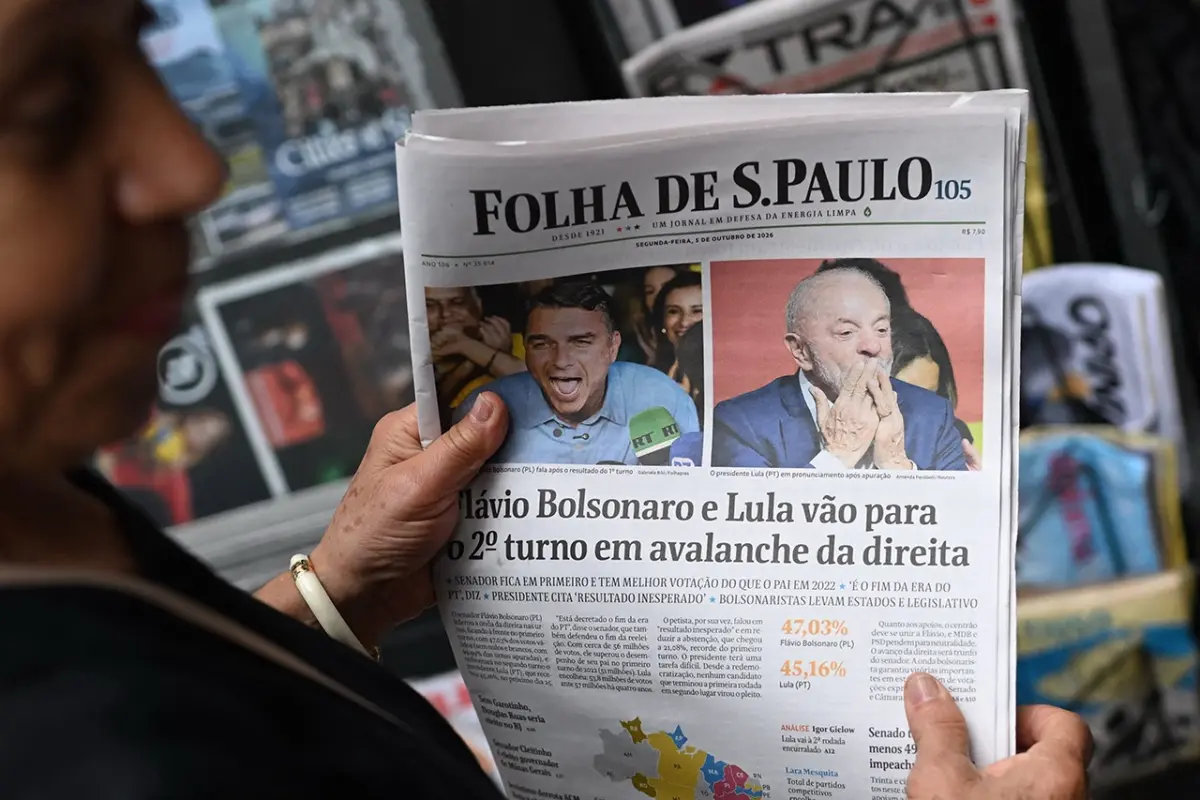
Brazil’s high-stakes presidential election is officially heading to a tense second-round runoff, featuring a clear and surprising frontrunner: Flávio Bolsonaro. The son of the controversial far-right former president Jair Bolsonaro heavily overperformed expectations in Sunday’s first-round polls. When the final tallies were counted, Flávio claimed an impressive 47 percent of the popular vote, outpacing the incumbent left-wing leader, Luiz Inácio Lula da Silva, who secured 45 percent.
The electoral race now barrels toward a high-stakes runoff scheduled for 25 October. Yet, the political momentum is unmistakably at the back of the younger Bolsonaro. Only months ago, political analysts had largely written him off. He appeared hopelessly bogged down by bitter political infighting and beset by a relentless cycle of scandals. His potential victory later this month, when paired with a much broader right-wing sweep across key gubernatorial, senatorial, and congressional races on Sunday, speaks absolute volumes about where the country is heading and how deeply the national mood has transformed.
The Ascendancy of the Conservative Right
First and foremost, the conservative right remains firmly and deeply in the ascendancy across Brazil. Despite the enduring, clichéd global stereotypes of samba, Carnival, and sun-soaked beaches that often dominate international perceptions of the nation, the real forces directing modern Brazil are vastly different. Today, the country’s cultural and political gravity is dictated by evangelical Christianity, deeply rooted "traditional values," and an all-powerful agribusiness sector. This colossal economic engine completely dominates Brazil’s vast interior states and heavily influences the wider national economy.
This formidable movement is intrinsically intertwined with the Bolsonaro family. In fact, they have so thoroughly shaped and defined this contemporary political wave that it has taken on their family name: bolsonarismo. Far from being a fleeting populist anomaly during the previous presidential administration, this brand of conservative politics has dug its roots deep into the institutional and cultural bedrock of Brazilian society, proving resilient in the face of legal battles, international scrutiny, and fierce partisan opposition.
A Stagnant Left and the Crisis of Ideas
Second, both the Brazilian left and its fractured centrist parties are in desperate, undeniable need of a profound reinvention. At 80 years of age, President Lula has inevitably drawn widespread, obvious comparisons to Joe Biden in the United States, even though the veteran Brazilian leader remains a notably sharper and more agile political operator. Lula’s most pressing problems are not cognitive; rather, they stem from a glaring lack of fresh ideas, modern policies, and forward-looking visions.
Lula has been a central fixture of Brazil’s tumultuous political scene for decades and is currently serving his third non-consecutive term as president. However, throughout the entirety of this recent campaign, he relied heavily upon a worn-out political playbook. His strategy leaned excessively on increased government handouts and paternalistic politics—methods that defined his earlier decades in power but fail to resonate today. Through both his outdated rhetoric and his conventional policy proposals, he has demonstrated a persistent inability to genuinely connect with a new generation of young Brazilians. Unlike their parents or grandparents, these younger voters do not wish to rely indefinitely on the state; instead, they seek individual economic mobility, digital integration, and personal autonomy.
What Happens Next?
So what happens now that the campaign enters its final, decisive weeks? Flávio Bolsonaro has already made his intentions crystal clear. Should he succeed in securing the presidency in the upcoming runoff, his absolute burning political priority will be to orchestrate a formal pardon for his father. The elder Bolsonaro currently finds himself confined to house arrest after being convicted of plotting a coup d’état following his own bitter defeat in the 2022 presidential election.
Beyond this immediate family objective, Flávio has remained relatively short on detailed legislative ideas and expansive policy proposals. Nevertheless, a potential Bolsonaro victory would almost certainly provide an immediate, welcome boost to Brazilian financial markets. Traders, brokers, and institutional investors are widely anticipating that Latin America’s largest economy would pivot sharply back toward free-market policies, moving decisively away from Lula’s state-centered, interventionist approach. More than anything else, the financial market will be banking on the hope that Flávio Bolsonaro can successfully restore a strict sense of fiscal discipline—an element that many critics argue has been sorely missing under Lula’s current administration and past left-wing governments.
In a grander, more structural sense, a definitive victory for Bolsonaro would solidify his family’s dominant position in Brazilian politics for decades to come. For a fleeting, brief moment early in this election cycle, it appeared possible that the coveted mantle of bolsonarismo might eventually pass to a moderate, centre-right candidate originating from outside the immediate family. Now, however, it is strikingly clear that this political clan is far from ready to bow out of the spotlight. In addition to his father and himself, Flávio’s three brothers and his stepmother have all established themselves as successful, high-profile politicians in their own right, demonstrating an extraordinary family-wide grip on elected office.
For Lula and his inner circle, this is a time for intense soul-searching and emergency political maneuvering. He has a mere 21 days left on the clock to overcome a daunting deficit of roughly 2.5 million votes. Having spent a lifetime at the pinnacle of national power, Lula has long been regarded as one of Brazil’s most cunning and resilient political survivors. As this fierce battle reaches its climax, it will serve as either his final, triumphant political hurrah or his definitive farewell to public office.