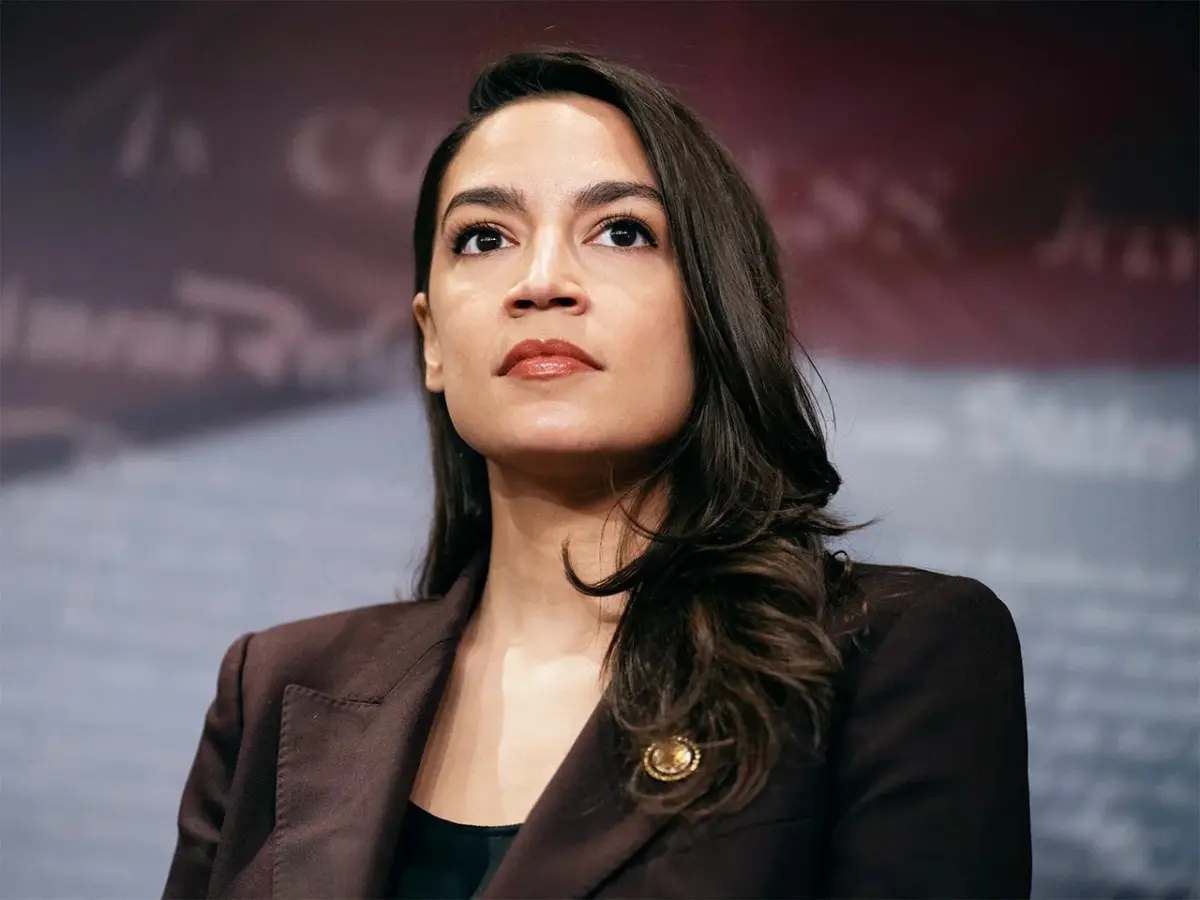
There has never been a more golden opportunity for a U.S. politician to campaign for the Senate—or for the presidency. As the American political landscape shifts beneath the weight of changing demographics, economic anxieties, and evolving party dynamics, ambitious leaders are finding pathways that were previously closed off to unconventional figures. At the epicenter of this transformation stands Alexandria Ocasio-Cortez, the prominent, energetic, and sometimes polarizing Democratic socialist congresswoman who has spent the last several years expanding her footprint far beyond the borders of her New York congressional district.
Last week, the 36-year-old lawmaker was on a high-profile barn-storming tour of rural Upstate New York, a geographical departure from her heavily progressive Queens base. The timing and the location of the tour are at once completely curious and entirely logical. Now serving in her eighth year in government, Ocasio-Cortez has emerged as the definitive leading figure of the Democratic Party’s progressive left wing. With the 2028 election cycle already looming large in the calculations of political strategists, she stands as both a potential presidential candidate and a formidable contender for the United State Senate. Consequently, the central question occupying the minds of political insiders in Washington and Albany is straightforward: which job is Ocasio-Cortez actively auditioning for? Is she laying the groundwork for a run at the presidency, or is she targeting a seat in the Senate?
The reality of contemporary American politics suggests that the exact office matters less than the broader ambition driving her movements. What remains clear is that Ocasio-Cortez is auditioning for something substantial, and she recognizes that the current political window might be her only definitive shot at higher executive or federal legislative office for the next decade, if not beyond. Addressing the high-stakes nature of her political timeline in a recent interview with The New York Times, she offered a blunt assessment of her trajectory. "It’s very all or nothing," she remarked. "If I were to run in this cycle and not win, I would be done."
Yet, Ocasio-Cortez harbors no illusions regarding the severe obstacles that stand between her current standing and long-term political survival. Criticism and public scrutiny came swiftly during the summer when she released a multi-part video series announcing her decision to freeze her eggs to preserve her fertility. The move, while intensely personal, served as a clear nod to a future of long-term career planning and a potential future campaign of some sort. For many supporters, the gesture was heartfelt, transparent, and endearing. For critics, however, it crossed the line into oversharing. Furthermore, the media-fuelled saga carried unintended collateral complications, forcing Ocasio-Cortez to publicly address the end of her decade-long relationship with her former fiancé, Riley Roberts. The resulting news cycle was brief, messy, and viewed by some skeptics as amateurish missteps for a politician positioning herself for a national campaign.
Ocasio-Cortez also endured a series of notable geopolitical fumbles during her appearance at February’s heavy-hitter-filled Munich Security Conference. Among the gaffes that circulated among foreign policy circles was an inaccurate geographic reference locating Venezuela below the equator. For critics, these early missteps on the international stage positioned her as a political lightweight who was not yet ready to lead effectively beyond the familiar confines of her loyal constituency in Queens.
Despite these stumbles, timing remains the ultimate currency in politics, and never before have the political alignments favored a major progressive candidate quite like they do for Ocasio-Cortez right now. The socialist wing of the Democratic Party is not merely having a momentary surge—it is actively consolidating its influence. Propelled by the historic election of New York mayor Zohran Mamdani last year, democratic socialists have successfully secured subsequent mayorships and key congressional victories in diverse districts nationwide.
Perhaps most consequentially, a shifting demographic and economic climate means that a growing number of Americans are receptive to progressive economic platforms. According to a recent Gallup poll, 43 percent of Americans now hold positive views of socialism. No single political figure is better positioned to capitalize upon this ideological makeover than Ocasio-Cortez, whose brand has long been synonymous with progressive economic policies such as universal healthcare and aggressive climate legislation.
When evaluating the practicalities of her upcoming electoral options, a Senate campaign represents the most direct and least obstructed path. Ocasio-Cortez would almost certainly enter a primary as the heavy favorite to unseat the incumbent, Charles Schumer, the Democrats’ longtime establishment figure who currently contends with some of the lowest approval ratings of any leading national politician in the United States.
Yet, the allure of the presidency remains a powerful counterweight. While Ocasio-Cortez commands immense national name recognition, she is still working to build the broad, bipartisan profile traditionally associated with figures like former Vice President Kamala Harris and California Governor Gavin Newsom, both of whom are widely anticipated to launch presidential bids in 2028. But in the modern media ecosystem, conventional rules of political ascension are frequently rewritten.
Ocasio-Cortez’s formidable star power has already proven exceptionally effective in generating campaign revenue. In the first quarter of 2025 alone, she raised nearly $10 million, though her prodigious fundraising machine has yet to face the rigorous test of a nationwide presidential primary apparatus. More importantly, she possesses an innate capacity to connect with crowds through authentic and unconventional public engagement.
While many figures on the American left spent the months following Donald Trump’s return to the White House lamenting the state of national politics, Ocasio-Cortez took directly to the road alongside veteran progressive Senator Bernie Sanders on their widely watched "Fighting Oligarchy" tour. The events were met with massive, enthusiastic crowds that treated the pair like rock stars. More than just a morale boost for the base, the tour demonstrated Ocasio-Cortez’s unique ability to bypass traditional party gatekeepers and rally working-class voters across different demographics.
Her public handling of her egg-freezing announcement, despite its initial complications, reflected a similar mastery of populist, feel-good theatrics. By framing a deeply personal medical choice as a broader statement on female empowerment—and contrasting it with policies from the Trump administration that she argues undermine reproductive freedoms—she showcased a sophisticated grasp of identity politics. This is precisely the kind of cultural resonance that figures like Harris struggled to fully capture during the 2024 election cycle, suggesting that Ocasio-Cortez could ultimately emerge as a more potent progressive standard-bearer than establishment alternatives like Newsom.
As for her earlier missteps in Munich, political history offers reassuring precedents for ambitious outsiders. Donald Trump possessed far less traditional foreign policy experience when he launched his successful presidential campaign in a decade prior, yet he managed to fundamentally reshape global politics.
Ultimately, Ocasio-Cortez’s formidable fundraising prowess, combined with her immense cultural footprint, provides her with the viable momentum required to launch either a historic Senate bid or a groundbreaking run toward the White House in the coming years. This trajectory could accelerate even further if democratic socialists continue to consolidate their influence through major midterm victories. If current trends hold, Ocasio-Cortez will not merely be riding the crest of a progressive wave—she may well prove to be the turn of the tide.