There has never been a more golden opportunity for a progressive US politician to launch a high-stakes campaign for the United States Senate or the presidency. The political landscape is shifting beneath the feet of establishment figures, creating a unique window of opportunity for leaders who can capture the mood of a changing electorate.
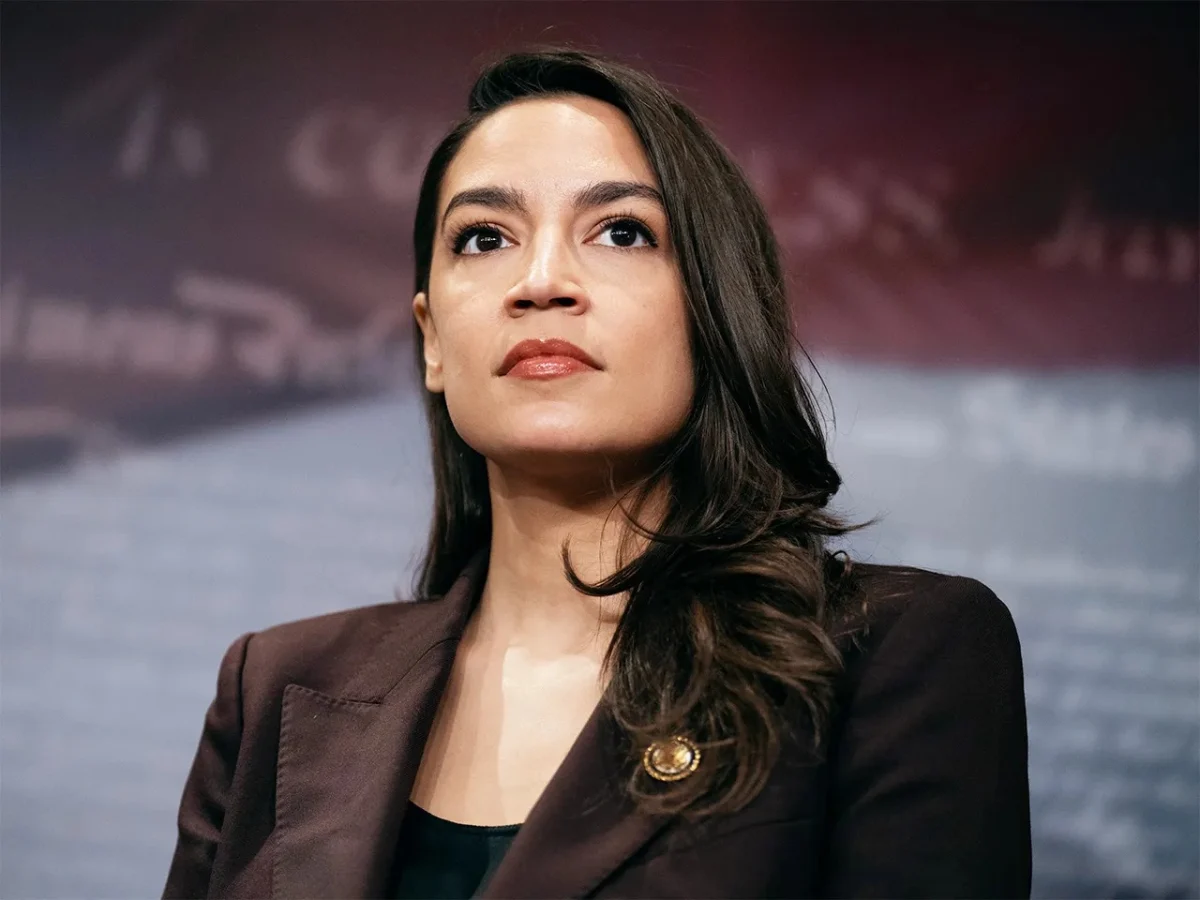
Last week, Alexandria Ocasio-Cortez, the prominent 36-year-old Democratic socialist congresswoman, was deep into a barn-storming tour across rural Upstate New York, far away from the familiar, progressive confines of her Queens base. The timing and the geography of the trip are at once completely curious and entirely logical for a politician whose national profile has grown exponentially over the past several years.
Now serving her eighth year in government, Ocasio-Cortez has firmly emerged as the leading figure of the Democratic Party’s progressive left wing. As political analysts and insiders in both Washington and Albany look ahead to the 2028 election cycle, a central question dominates discussions: which major political office is Ocasio-Cortez actually auditioning for—a run for the US Senate or a bid for the presidency?
The truth is that the specific office may matter less than the fact that she is clearly auditioning for something monumental. Most crucially, she recognizes that despite her youth, this moment might represent her only realistic shot at higher office for the next decade, if not beyond. As she candidly remarked in a recent interview with The New York Times, the stakes could not be higher. "It’s very all or nothing," she said. "If I were to run in this cycle and not win, I would be done."
Still, Ocasio-Cortez harbors no illusions about the formidable obstacles standing in her way as she attempts to navigate the treacherous waters of national politics and prevent her own political obsolescence. Criticism came swiftly this summer when she released a personal video series announcing her decision to freeze her eggs in an effort to prolong her fertility. The move strongly hinted at long-term future ambitions, but while the gesture was heartfelt and endearing to many supporters, it crossed into territory that some critics viewed as oversharing.
The media-fuelled saga forced Ocasio-Cortez to publicly address the end of her decade-long relationship with her former fiancé, Riley Roberts. The resulting news cycle was brief, but it played out in a manner that felt unnecessarily messy and somewhat amateurish for a politician widely viewed as laying the groundwork for a future national campaign.
Adding to her early-year hurdles, Ocasio-Cortez also endured a series of notable geopolitical fumbles during February’s high-profile Munich Security Conference. The gaffes, which included mistakenly placing Venezuela below the equator, drew sharp criticism from foreign policy experts and positioned her in the eyes of detractors as a political lightweight who was not yet ready to lead on the international stage beyond the loyal constituents of her New York district.
Yet, in politics, timing is often everything, and never before have political conditions aligned so portentously for a major progressive candidate. The socialist wing of the Democratic Party is not merely having a fleeting moment—it is actively owning the political conversation. Bolstered by the landmark election of New York Mayor Zohran Mamdani last year, democratic socialists have successfully secured subsequent mayoral victories and congressional wins in various parts of the country.
Perhaps most consequentially, a growing segment of the American public is increasingly receptive to progressive economic and social platforms. According to a recent Gallup poll, 43 per cent of Americans now hold positive views of socialism. No single political figure is better positioned to benefit from this ideological makeover than Ocasio-Cortez, who has spent years defining the national debate on issues ranging from healthcare to economic inequality.
When evaluating her potential electoral paths, a Senate campaign appears to be the most straightforward and viable move for Ocasio-Cortez. Under this scenario, she would almost certainly be positioned to challenge and win the seat currently occupied by Charles Schumer, the 75-year-old Democratic Senate leader who currently contends with some of the lowest approval ratings of any leading national politician in the United States.
Then, of course, there is the presidency. While Ocasio-Cortez is undeniably a major national figure, she is still reaching for the broader, more traditional bipartisan profile cultivated by figures like former Vice President Kamala Harris and California Governor Gavin Newsom, both of whom are widely considered likely contenders in the 2028 presidential race. Yet, for an unconventional politician who has repeatedly defied political gravity, that traditional framework may matter very little.
Ocasio-Cortez’s formidable star power has proven particularly effective when it comes to fundraising. In the first quarter of 2025 alone, she raised nearly $10 million, though her considerable fundraising apparatus has yet to be fully tested on a national presidential scale. More importantly, she possesses a rare, instinctive ability to connect with and wow a crowd through authentic and ingenious populist appeals.
While many figures on the political left spent the aftermath of Donald Trump’s return to the White House last year lamenting the state of the country, Ocasio-Cortez hit the road alongside Senator Bernie Sanders on their widely watched Fighting Oligarchy tour. The duo was received by enthusiastic crowds like rock stars, a dynamic that underscored Ocasio-Cortez’s unique knack for bypassing traditional party machinery to directly rally the grassroots base.
Her public announcement regarding egg-freezing displayed a similar talent for feel-good populist theater. Although she was forced to awkwardly navigate the disclosure of her single status, Ocasio-Cortez successfully framed a deeply personal medical decision as a broader tool for female empowerment, contrasting her vision with the policies of the Trump administration, which she argues compromise reproductive freedoms. This type of identity-politics mastery is something Kamala Harris attempted—and ultimately struggled to achieve—during her 2024 campaign, demonstrating why Ocasio-Cortez, rather than more conventional centrists like Newsom, could emerge as a true political force.
As for her high-profile stumbles in Munich, political history suggests that foreign policy inexperience is not necessarily an insurmountable barrier to higher office. Donald Trump had significantly less foreign policy experience than Ocasio-Cortez when he first ran for president in 2016, and a decade later, he remains a central figure reshaping the global order.
Ultimately, Ocasio-Cortez’s formidable fundraising capacity and cultural reach could propel her toward either a Senate seat or a historic presidential bid in the coming years. This momentum could accelerate significantly if democratic socialists further consolidate their influence with strong performances in the upcoming midterm elections. If those trends hold, Alexandria Ocasio-Cortez will not merely be riding a political wave—she just might be the turn of the tide.