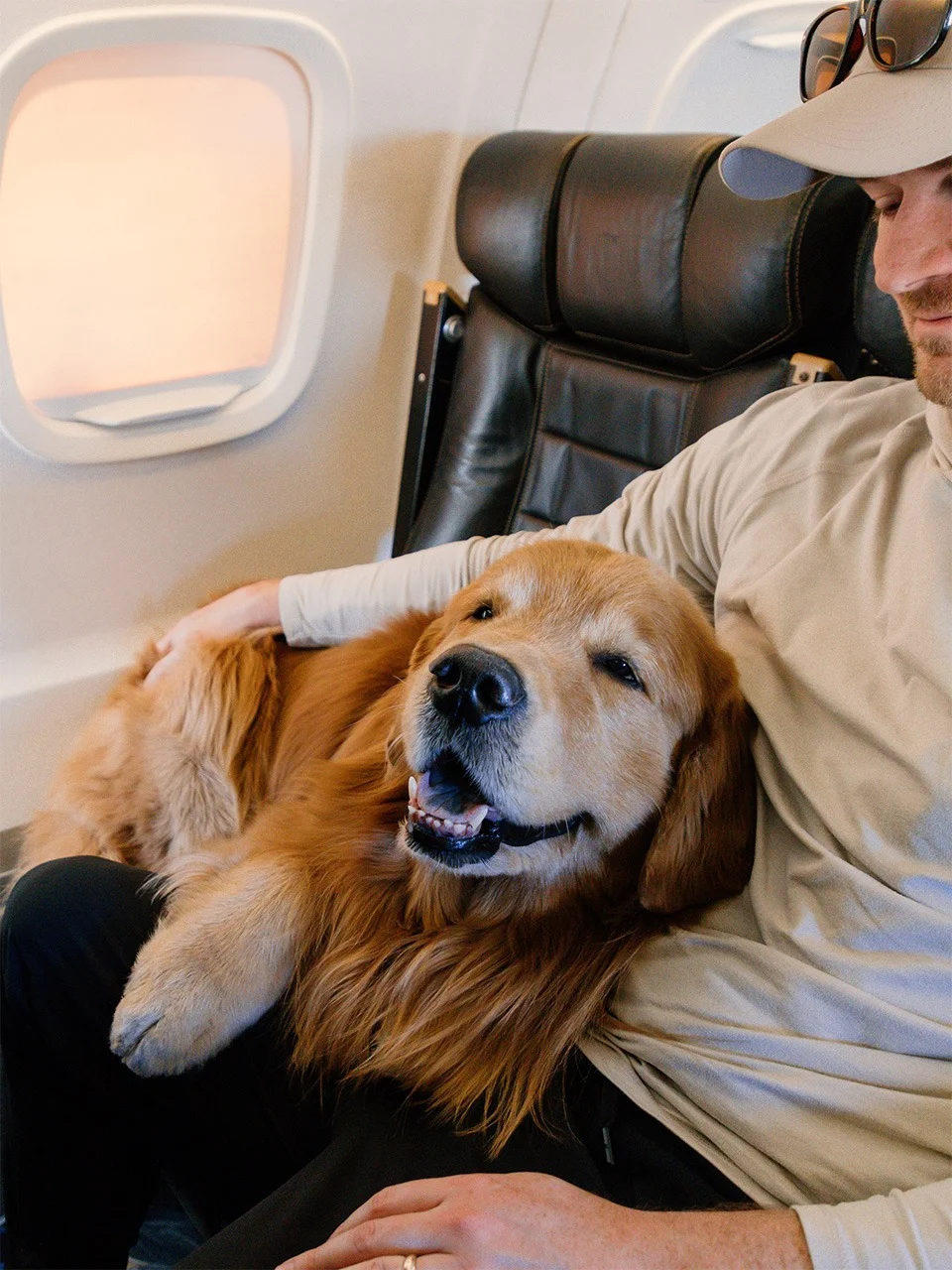
Airlines such as Retrievair, Bark Air, and ITA Airways are discovering that the sky is indeed the limit when it comes to accommodating four-legged passengers, ushering in a transformative era for pet-friendly commercial and semi-private aviation.
On a recent Saturday morning, an Embraer ERJ-135 jet departed from Farmingdale, New York, bound for Los Angeles, carrying a cabin full of highly unusual passengers. The specialized Retrievair flight was chartered to transport a unique delegation across the United States, featuring a mix of both two- and four-legged travelers, including two Bernese mountain dogs, a lively husky, and a gentle King Charles spaniel, among others.
The foundational premise behind Retrievair is wonderfully straightforward: to provide a genuinely relaxing, comfortable, and stress-free air travel experience for both pets and their devoted human companions. Founded in 2025 and currently operating across various US destinations, the startup welcomes dogs of virtually any size and breed, provided they are reasonably well-socialized, while cats are also welcomed aboard. Rather than flying straight through in a single monotonous leg, the jet utilizes a series of frequent stops to pick up and drop off pets along a carefully mapped itinerary. This particular cross-country journey touched down at private airports situated near major hubs like Chicago, Dallas, and Scottsdale, before finally arriving at its ultimate destination in Van Nuys, California, just north of downtown Los Angeles.
Although ticket fares are undeniably higher than those associated with a typical commercial airline service, the investment secures a dedicated passenger seat explicitly for the dogs. This ensures there is plenty of physical space for larger animals to stretch out comfortably during the flight, alongside ample legroom for their human owners. Standard safety protocols are maintained through the provision of specialized leads that are securely attached to each seat for takeoff, landing, and during periods of unexpected turbulence. Aside from these essential safety measures, Retrievair simply asks that dogs refrain from lying down directly in the cabin aisles where they might impede an emergency evacuation.
For decades, dog owners who wanted or needed to fly with their pets have generally found themselves in an extremely difficult position. Short of going to the immense expense of chartering an entire private jet exclusively for themselves, owners have faced severely limited and often undesirable options. They could either place their cherished pets—especially larger dogs—down into the cargo hold, an environment widely known to be intensely stressful for both the animal and the owner, or they could attempt to pass the dog off as a service animal, a practice fraught with personal guilt and constant questioning looks from airline staff and fellow passengers. Consequently, millions of pet owners have frequently opted to simply stay home or drive long distances instead of flying.
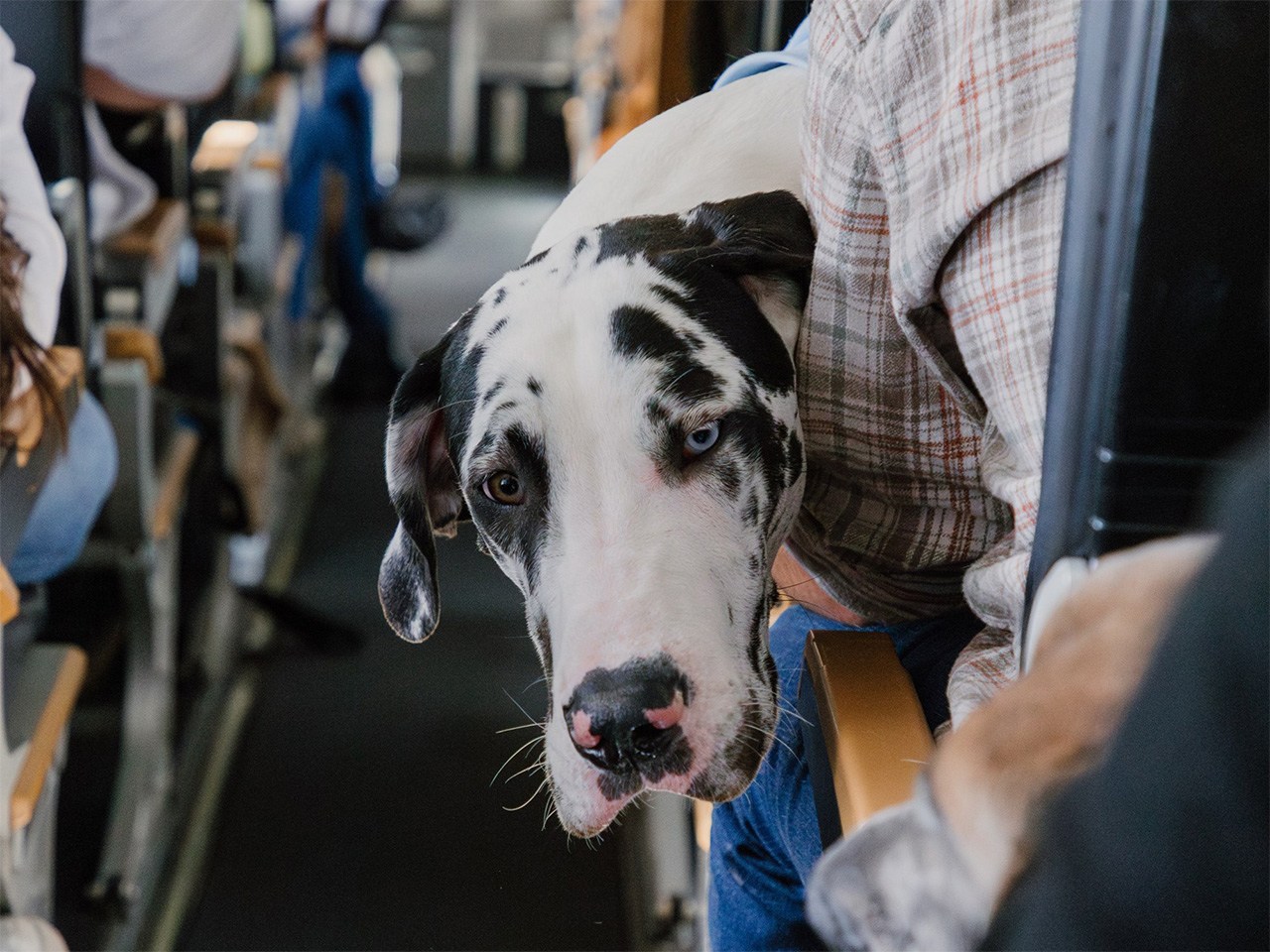
Retrievair operates as part of a rapidly growing, highly specialized market dedicated entirely to pet-oriented travel and hospitality. Another prominent player in this emerging sector is Bark Air, which occupies the higher, more luxurious end of dog-friendly charter services by offering international connections alongside upscale amenities. Some of the signature perks provided by Bark Air include dedicated spa services for animals and elevated, canine-appropriate menu items, such as warm bone broth. Additionally, semi-private scheduled charter operators such as Aero and JSX have begun carving out their own market share by offering dedicated pet seats to accommodate travelers looking for elevated short-haul options.
Traditional commercial carriers are also beginning to test the waters of canine-inclusive travel. Italy’s flagship carrier, ITA Airways, recently announced that it will begin offering dedicated tickets specifically for canines weighing up to 30 kilograms, or approximately 66 pounds. However, this particular scheme is currently limited to passengers traveling on domestic Italian flights within the business class cabin. Under the ITA Airways policy, eligible dogs are assigned the window seat directly next to their owner and are provided with a special, comfortable mat to rest upon the cabin floor.
Because boutique operators like Retrievair operate under fundamentally different regulatory frameworks than massive commercial airlines, their passengers are able to enjoy a wide variety of logistical perks. Travelers can bypass the chaotic and exhausting general terminal environments entirely, utilizing private fixed-base operators located at smaller regional airports. This allows them to skip the traditional, time-consuming TSA security screenings in favor of a remarkably quick identification check and a brief once-over with a handheld metal-detector wand before calmly walking out to board the aircraft.
As modern air passengers become increasingly demanding when it comes to travel choices, flexibility, and personalized customisation, airlines are more eager than ever to oblige—while charging a premium for the privilege, of course. The accelerating popularity of pet-first flights serves as a clear indication that many travelers have simply grown fed up with overcrowded airport terminals, delayed flights, and high-stress security queues. Most major international airlines traditionally set strict limits on the total number of pets allowed on any given aircraft, often restricting travel exclusively to smaller animals that can fit beneath a seat. This caution is partly driven by the necessity of managing other passengers’ potential sensitivities, fears, and animal allergies. The very existence and ongoing expansion of specialized services like Bark Air and Retrievair powerfully demonstrate that dedicated dog owners are more than willing to pay a significant financial premium to completely sidestep the traditional anxieties of air travel.
Onboard the recent cross-country Retrievair flight across the United States, the mood among the canine passengers remained remarkably tranquil, with tails staying mostly in a state of friendly wagging. Back at the departure point in Farmingdale, the dogs had effectively colonized the small private terminal and its comfortable sofas, resting patiently as they waited for boarding to commence. Once the canines were safely settled into their assigned seats on the aircraft—moving with a calm, unhurried demeanor—the overall atmosphere in the cabin was surprisingly serene during takeoff. Every single dog on board seemed completely at ease in the shared environment.
Soon after reaching cruising altitude, the cabin service began, establishing a routine that quickly became a highlight of the journey. Flight attendants first distributed a refreshing drinks and snack basket for the human passengers, immediately followed by a round of specialized treats for the pups. For the dogs participating in the multi-segment journey across the country, this sequence rapidly evolved into a highly anticipated post-takeoff routine—delivering a well-earned moment of joy for every single traveler, human and animal alike, sharing the cabin.