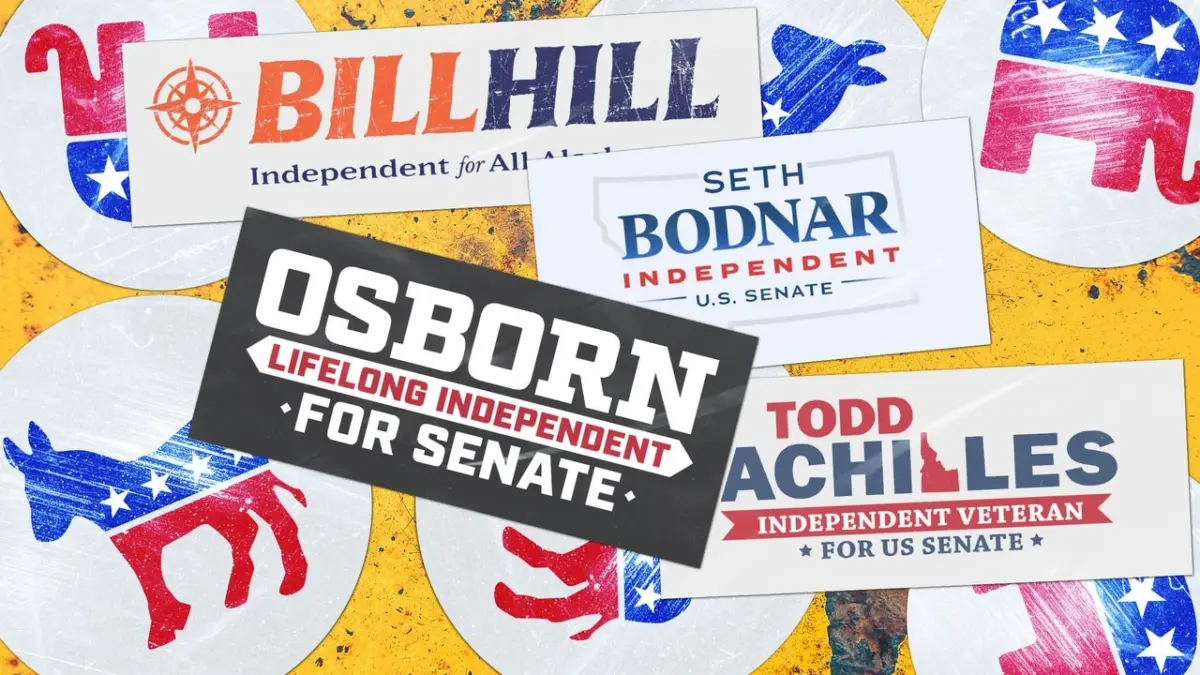
As both the Democratic and Republican parties grapple with enduring brand problems across the United States, independent candidates are turning to a sharp new visual strategy. To let voters immediately know that they stand with neither major party, politicians running outside the traditional two-party system are making a single word their most vital campaign asset: independent.
This branding shift is visible on yard signs, digital ads, and billboards nationwide, reflecting deep public dissatisfaction with traditional party politics. Nowhere is this trend more pronounced than in Nebraska, where the word independent has occupied a central place in U.S. Senate candidate Dan Osborn’s campaign logo since his inaugural run for office two years ago. After falling short by less than seven percentage points in that initial bid, Osborn is mounting another challenge. This time, he is using a slightly updated logo to emphasize that his political independence is a core part of his identity rather than a passing political fad.
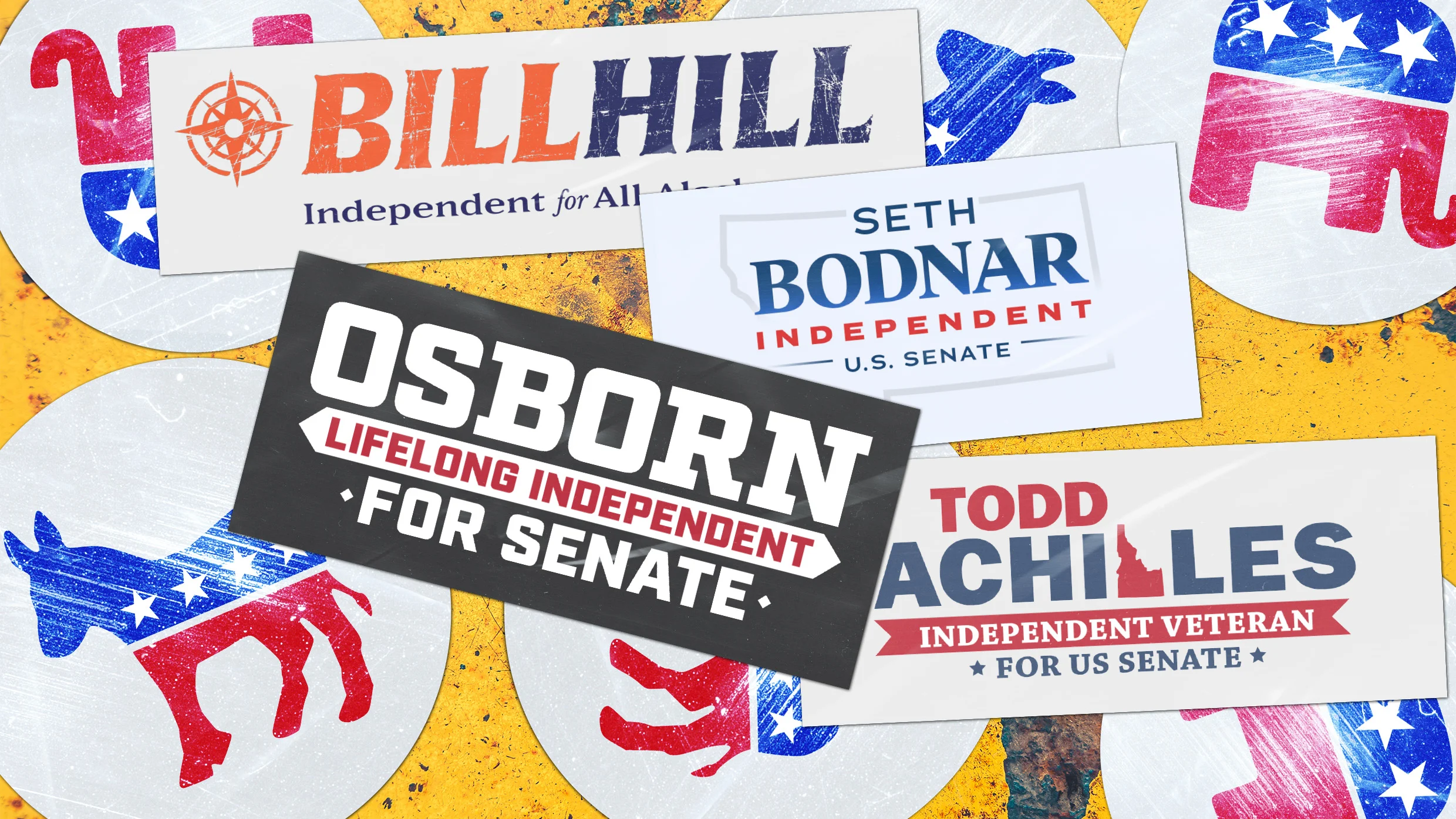
Osborn brings a distinct working-class background to the political arena. A U.S. Navy veteran, industrial mechanic, and labor union leader who famously led a high-profile strike against Kellogg’s in 2021, he first challenged incumbent Republican Senator Deb Fischer in 2024. That campaign utilized a striking red-and-white logo that spelled out his last name in all-capital letters using a mixed-serif font. Directly beneath his name, a clear and straightforward tagline read, "Independent for Senate."
Although Osborn’s 2024 run ultimately proved unsuccessful, it marked the best performance for an independent candidate in a U.S. Senate race in Nebraska history. Entering the race once again for the upcoming November election, this time facing incumbent Republican Senator Pete Ricketts, Osborn’s campaign has retained the distinctive wordmark for his last name while revising the tagline. The new iteration now reads "Lifelong Independent." By making this update, the campaign is doubling down on his political identity, framing the phrase less as a simple descriptor and more as a core piece of personal biography.
The strategic necessity of this branding is underscored by the unique political landscape of states like Nebraska, where Democrats cleared the field for both of Osborn’s Senate runs to give him a clear runway. Campaign internals suggest a tight race, with polling indicating that Osborn is currently tied with Ricketts. However, political analysts emphasize that pulling off an actual victory will require a delicate coalition. Osborn will need to secure the vast majority of the Democratic base, capture the support of crucial swing and independent voters, and—most importantly—peel off a significant block of registered Republicans who are unhappy with the current direction of the country, according to Kevin Smith, a professor of political science at the University of Nebraska-Lincoln.

"The Democratic Party brand is toxic in large parts of Nebraska," Smith notes, pointing to the stark realities facing non-Republican candidates in the state. "If you want to win a statewide race and you are not a Republican, being perceived as a true independent at least gives you a fighting chance."
This dynamic is not unique to Nebraska. Other red-state candidates have similarly looked to brand themselves as proudly and visibly independent to bridge deep partisan divides. Among them is Todd Achilles, a U.S. Army veteran and former Idaho state lawmaker. Achilles, who navigated a political evolution from Republican to Democrat before ultimately running as an independent for the U.S. Senate, has embraced a similarly deliberate visual identity. His campaign logo cleverly incorporates an Idaho state map into the first "L" of his last name, accompanied by a prominent banner that declares him an "Independent Veteran."
By embedding these explicit markers of independence directly into their visual branding, candidates like Osborn and Achilles are attempting to bypass the entrenched animosities of the national party system, offering voters an alternative symbol in an increasingly polarized political environment.