The cultural footprint of Rockstar Games’ upcoming open-world title, Grand Theft Auto VI, is poised to influence media across the entertainment spectrum over the coming months. Even the historically family-friendly and digitally polished world of Pixar Animation Studios is not immune to this cultural gravity. Any contemporary story focusing on a "couple in crime" inevitably evokes comparisons to the highly anticipated video game, a connection that Pixar’s new artist-driven short film, Fruit & Nut, playfully acknowledges right from the start. The film opens with a vibrant pink and cyan neon sign displaying its title, immediately channeling the retro-futuristic, high-contrast aesthetic associated with modern crime narratives.
However, any expectations of a conventional heist story are quickly shattered. The short film rapidly veers into a surreal, psychedelic territory, offering viewers a bizarre and highly unexpected origin story presented through a visual style that represents a radical departure from the CGI aesthetic Pixar pioneered and perfected over the last three decades.
Billed by Pixar as the "untold story of the most famous duo of all time," Fruit & Nut is a seven-minute animated short directed by studio veterans Rej Bourdages and Tony Maki. Both directors possess a deep pedigree within the studio, having contributed to some of Pixar’s most celebrated and visually complex modern feature films, including the Academy Award-winning Coco and Soul, the record-breaking box-office hit Inside Out 2, and upcoming projects such as Elio and Hoppers.
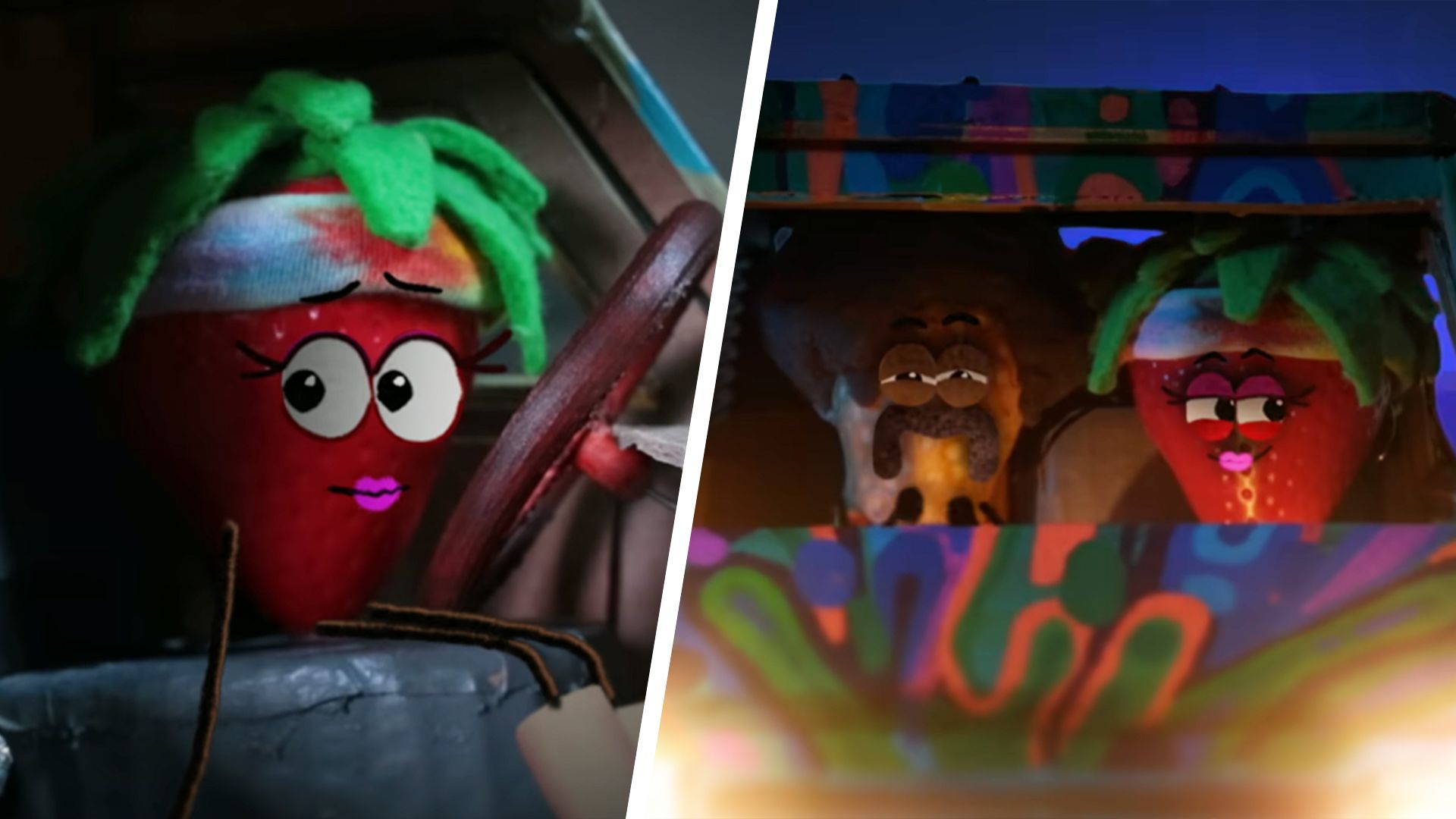
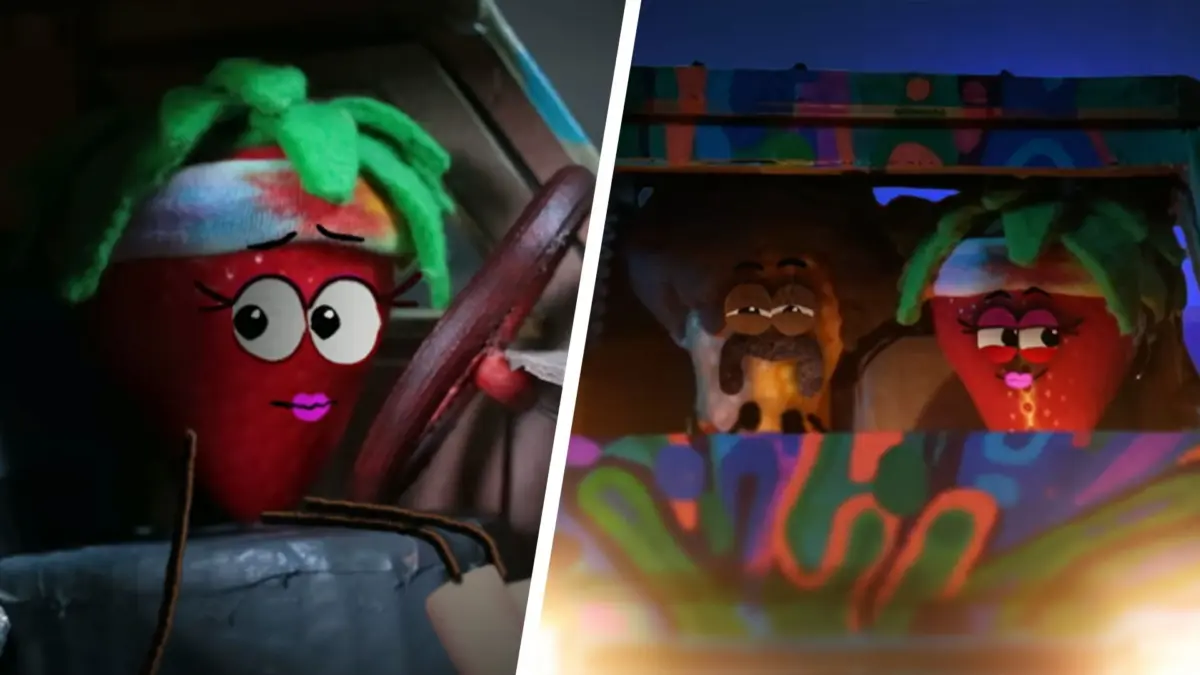
For Fruit & Nut, Bourdages and Maki chose to step away from the high-end computer-generated imagery that defines their day jobs. Instead, they embraced a meticulously handcrafted stop-motion animation style, utilizing physical puppets and tangible, miniature sets. To further elevate the film’s eccentric tone, the creators combined this tactile stop-motion foundation with stylized 2D animation sequences. The resulting aesthetic has a distinctly quirky, independent feel, closer to the look of a boutique art-house production than the ultra-smooth, mathematically precise 3D rendering pipelines associated with Pixar’s theatrical features.
This release marks a significant milestone for the studio’s production history. Fruit & Nut is only the second stop-motion film that Pixar has ever officially released to the public. It follows in the footsteps of the experimental short film Self, which debuted in early 2024 and first introduced audiences to the studio’s willingness to explore physical puppet-based mediums. The decision to return to stop-motion so quickly suggests a growing appetite within the studio’s creative ranks to explore alternative, tactile forms of visual storytelling.
The narrative of Fruit & Nut is a deliberately absurd, high-octane road trip adventure that draws structural and thematic inspiration from classic cinematic crime capers like Thelma & Louise. The story begins in a dingy, dimly lit dive bar, where a lonely peanut character finds himself in a tight spot. After attempting to flee the establishment without paying his tab, the peanut inadvertently sets off a chaotic chain of events. While making his hasty escape, he encounters a hitchhiking strawberry on the side of the road and decides to pick her up.
What begins as an uneasy alliance between two strangers quickly escalates into a wild, high-stakes crime spree. The strawberry, far from being an innocent traveler, turns out to be a bank robber. Before the bewildered peanut fully understands the situation, he finds himself serving as the getaway driver for a major bank heist. As the duo speeds away from the law, the film transitions into increasingly surreal and psychedelic sequences, blending the physical textures of the stop-motion puppets with fluid, hand-drawn 2D visuals that capture the frantic energy of their escape. The journey culminates in a surprising and highly unexpected twist ending that reframes the entire chaotic adventure as an origin story for a universally recognized food combination.
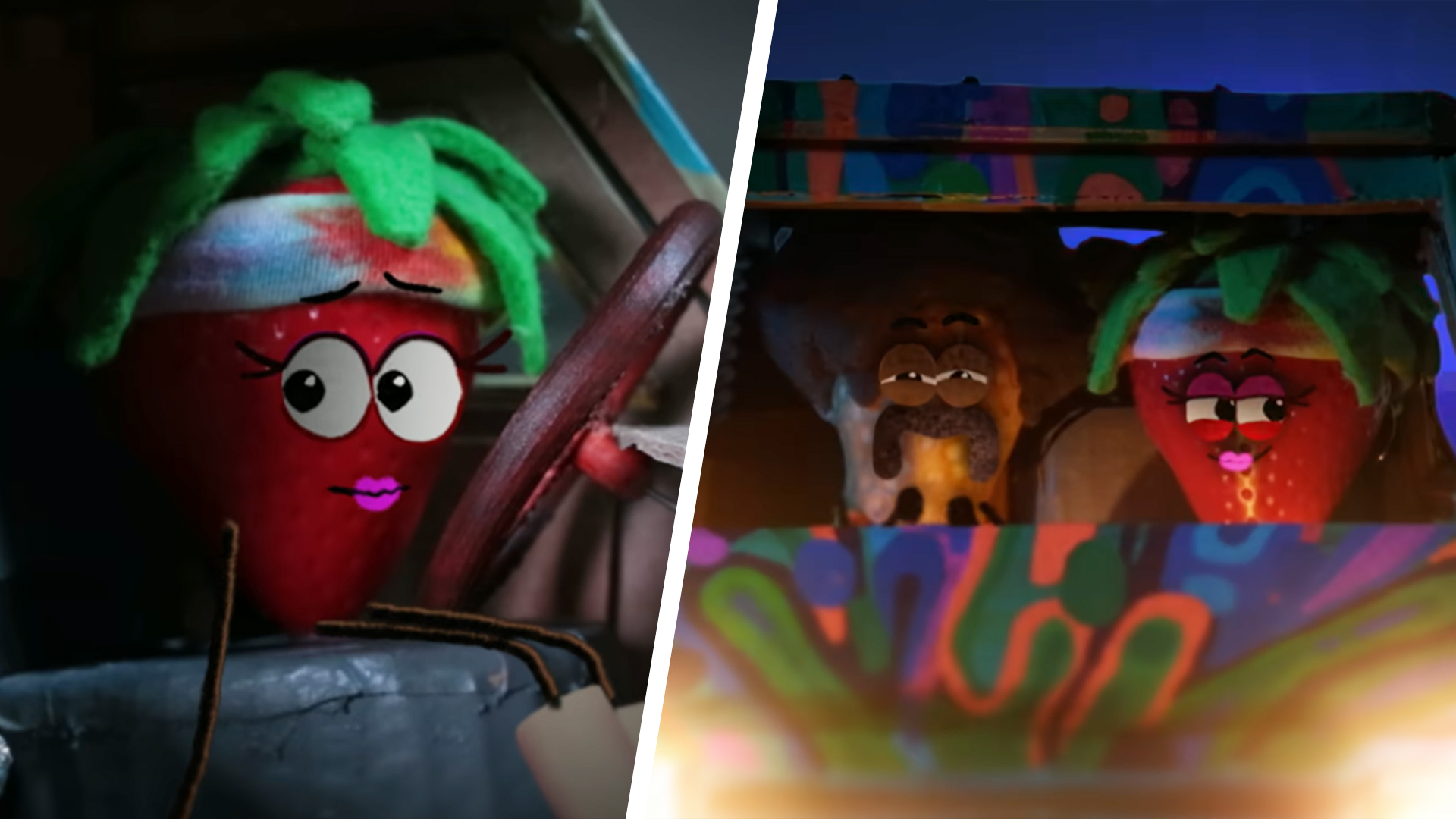
Since its release online, Fruit & Nut has generated significant discussion among animation enthusiasts and casual viewers alike. Many commentators on social media and video platforms have pointed out the film’s immense meme potential, sharing clips of the highly expressive, physically modeled characters and praising the sheer absurdity of the premise. Beyond the humor, a common theme in the audience’s reaction is genuine surprise that Pixar—a studio built entirely on the foundation of computer animation—would produce and distribute a film with such a bold, non-traditional aesthetic direction.
This stylistic departure is made possible by Pixar’s internal artist-driven program. Designed as a spiritual successor to the studio’s earlier SparkShorts initiative, the program functions as an internal incubator. It is specifically structured to give employees across various departments the creative freedom to experiment with different visual styles, production techniques, and narrative voices without the immense commercial pressures and rigid pipeline constraints of major theatrical releases.
While these artist-driven projects are typically released as short films directly to online audiences, their influence often extends far beyond their brief running times. These experimental endeavors serve as a vital testing ground for new technologies and artistic philosophies that can eventually trickle up into Pixar’s feature-length films. The studio has already shown a growing willingness to diversify its visual output, as evidenced by the integration of 2D animation styles in the promotional materials and production design of its upcoming project Gatto.
By allowing veteran artists like Bourdages and Maki to step outside their comfort zones and experiment with physical mediums, Pixar not only fosters internal creativity but also challenges public perceptions of what a "Pixar film" can look and feel like. Fruit & Nut stands as a testament to the value of these internal creative outlets, proving that even after decades of dominating the computer animation industry, the studio is still capable of surprising audiences with handcrafted, absurdist, and boundary-pushing art.