On the opening day of Abu Dhabi’s inaugural Livex liveability forum, Mohammed Ali al Shorafa set out an ambition that will require a lot more than good roads and handsome museums. The chairman of the Department of Municipalities and Transport (DMT) wants the emirate to become the world’s most liveable destination.
The three-day event brought together a diverse and high-powered gathering of urban planners, architects, property developers, Hollywood actors, and sporting royalty. Across numerous panels, keynote speeches, and roundtable discussions, the constant refrain returned to a fundamental question for modern city-makers: how do you turn a place into somewhere people actually want to put down roots?
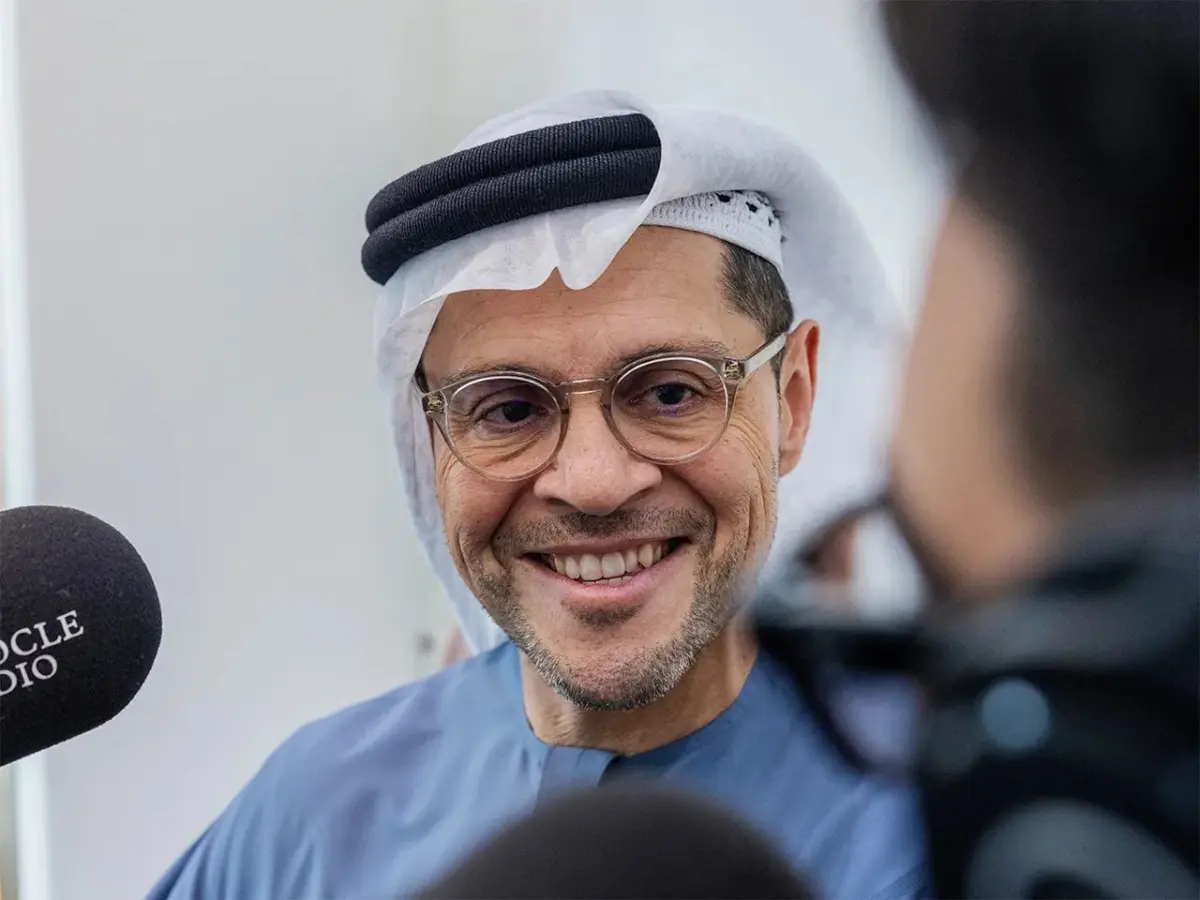
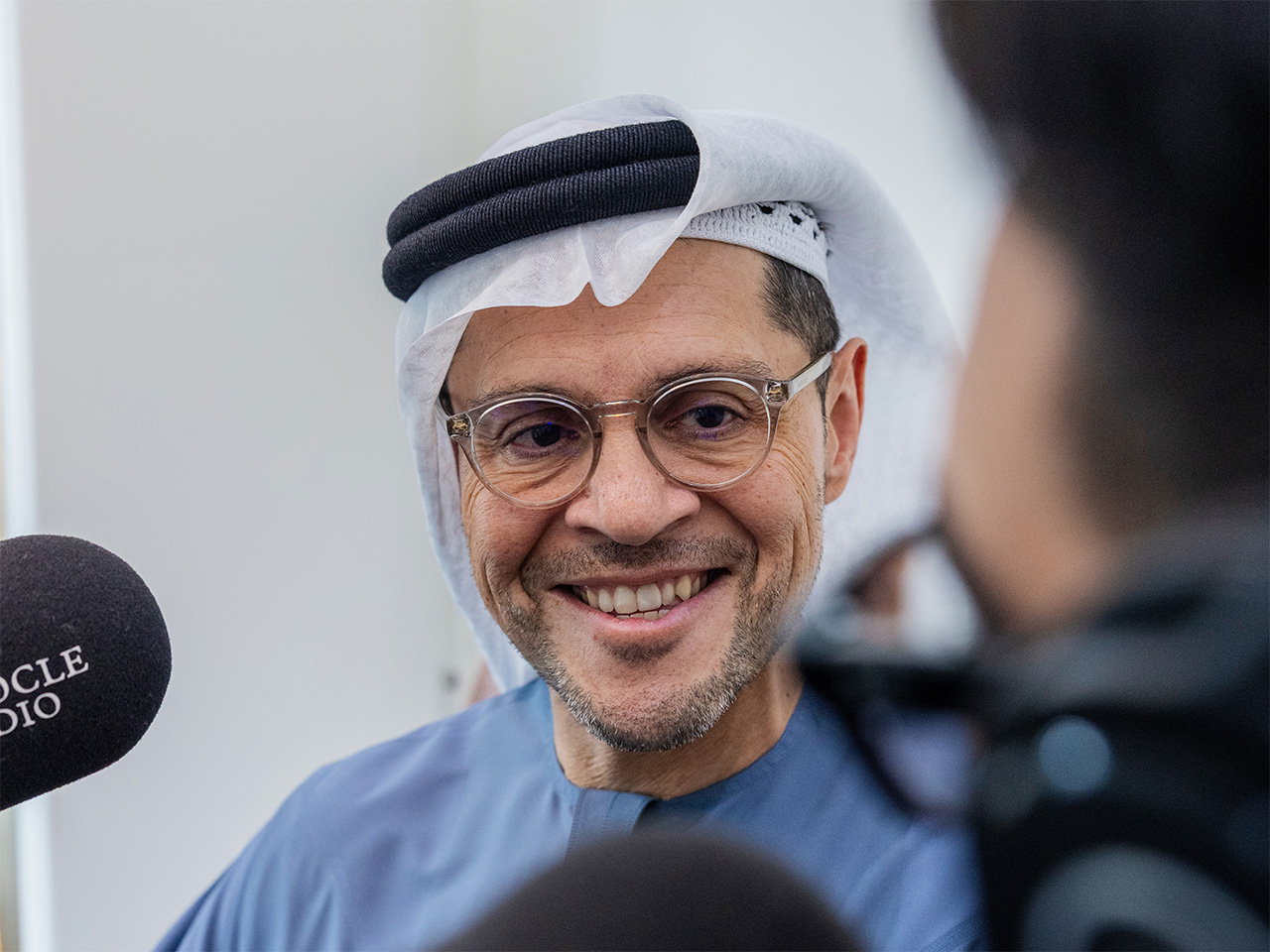
Speaking to Monocle Radio at the close of the event, Al Shorafa shared specific examples of what cities around the globe could take away from this week’s learnings, shedding light on the sophisticated data-driven machinery powering Abu Dhabi’s rapid urban evolution.
Why was this the moment to launch Livex?
When asked about the timing behind the creation of the forum, Al Shorafa emphasized the desire to communicate Abu Dhabi’s ongoing transformation to an international audience. The emirate has undergone immense physical changes over the past decade, establishing world-class cultural institutions, transit networks, and public spaces.
"We wanted to showcase to the world what Abu Dhabi is doing from a liveability perspective and how we are developing; how we’re using digitisation to better understand the needs of communities," Al Shorafa explained.
Rather than merely building infrastructure for its own sake, the Department of Municipalities and Transport has sought to anchor its development strategy in responsiveness. By leveraging advanced digital tools, the administration aims to stay closely attuned to the evolving dynamics of its neighborhoods, ensuring that physical expansion matches the actual daily experiences and requirements of residents.
What can other cities learn from Abu Dhabi’s approach to liveability?
A central theme of Al Shorafa’s vision is a departure from traditional, purely quantitative metrics of urban success. While many city indexes measure liveability by counting amenities, Abu Dhabi’s methodology goes far deeper into the experiential quality of those assets.
"In Abu Dhabi, every district has a score derived from 120 different data sets and those are not quantitative. It’s not about how many clinics, pedestrian roads, cycling tracks or parks you have. It’s what the quality of those assets is to that community," Al Shorafa noted.
Determining the true quality of urban infrastructure is no small feat, but the DMT achieves this by establishing a direct feedback loop with the public. "How do we understand the quality of the assets? Because we listen to the community. We always have our own surveys and the data that we capture through our AI systems," he added. This blend of direct public consultation and artificial intelligence allows the municipality to evaluate whether parks, walkways, and community centers are genuinely serving their intended purposes or falling short of resident expectations.
Do international liveability rankings reflect that approach?
Traditional global liveability indexes have long been dominated by legacy Western and European capitals, but Al Shorafa remains skeptical of how these reports evaluate urban centers. He argues that standard international scorecards miss the holistic, localized nuances that make a city truly functional and satisfying for its population.
"I don’t look at the liveability index, which is published annually, because it looks at the quantity of assets, rather than the quality required within those communities. Our components are additional to what they have in those indices," he stated. By prioritizing qualitative feedback and localized district scoring over generalized international benchmarks, Abu Dhabi is carving out its own distinct path toward urban excellence—one focused on hyper-targeted community wellbeing rather than checking boxes on a generic global checklist.
What makes somewhere lovable as well as liveable?
Beyond concrete urban metrics, Al Shorafa believes that true liveability must intersect with emotional and cultural resonance. Transforming a city from a temporary residence into a cherished home requires nurturing shared human values within the built environment.
"Family, health, safety, faith — all of these are values. And when you have these values translated or reflected in the way that people are living, the quality of life that they have, this is where you have people living in a happy environment," Al Shorafa observed. "We are trying to understand better what education this community needs. If we can translate the values of the UAE into the communities, including tolerance, people will be very happy."
This philosophical framework informs how neighborhoods are designed, ensuring that public spaces foster social cohesion, mutual respect, and a deep sense of belonging for a multicultural population. Architecture and urban design are thus deployed not merely as functional necessities, but as instruments for community-building and cultural harmony.
How do residents’ health needs influence what you build?
One of the most concrete examples of Abu Dhabi’s data-driven, integrated governance framework is its approach to public health within urban planning. Rather than applying a one-size-fits-all model to neighborhood amenities, the DMT tailors its infrastructure investments directly to the medical profiles of local populations.
"When we look at communities, we actually look at their health data as well," Al Shorafa explained. "So when we find a community that has a very high obesity rate or diabetes rate, the parks, cycle tracks or gyms that we develop are targeted to those people. If you have a new community with young people, we have a completely different programme for them based on their health needs. It’s a complete integrated government framework of liveability."
By bridging the gap between urban planning and public health ministries, Abu Dhabi is attempting to design preventative health measures directly into the urban fabric, encouraging active lifestyles through accessible and contextually appropriate recreational facilities.
Is the Guggenheim the final piece of Abu Dhabi’s cultural district?
Abu Dhabi’s cultural transformation on Saadiyat Island and across the wider emirate has captured global attention, establishing the region as a premier global hub for art, history, and entertainment. With major architectural marvels already completed and more on the way, some might wonder if the master plan is nearing its completion.
However, Al Shorafa was quick to dismiss the idea that the development pipeline is slowing down. "Abu Dhabi will always surprise you. If you’re asking me, is the Guggenheim the last piece of the puzzle? Maybe not. Disneyland and the Sphere are coming but that’s not the end of it. We have a complete plan until 2040 and we are not changing our course."
This long-term vision ensures that the emirate will continue to expand its cultural, recreational, and economic offerings over the coming decades, maintaining steady momentum as it pursues its ambitious liveability goals.
Will Livex return next year?
Following the successful conclusion of the inaugural event, the future of the Livex forum has already been secured, with plans underway to expand its reach far beyond the borders of the UAE.
Confirming the continuation of the forum, Al Shorafa stated, "100 per cent. And as I mentioned, we are taking Livex global as well. That’s the directive."