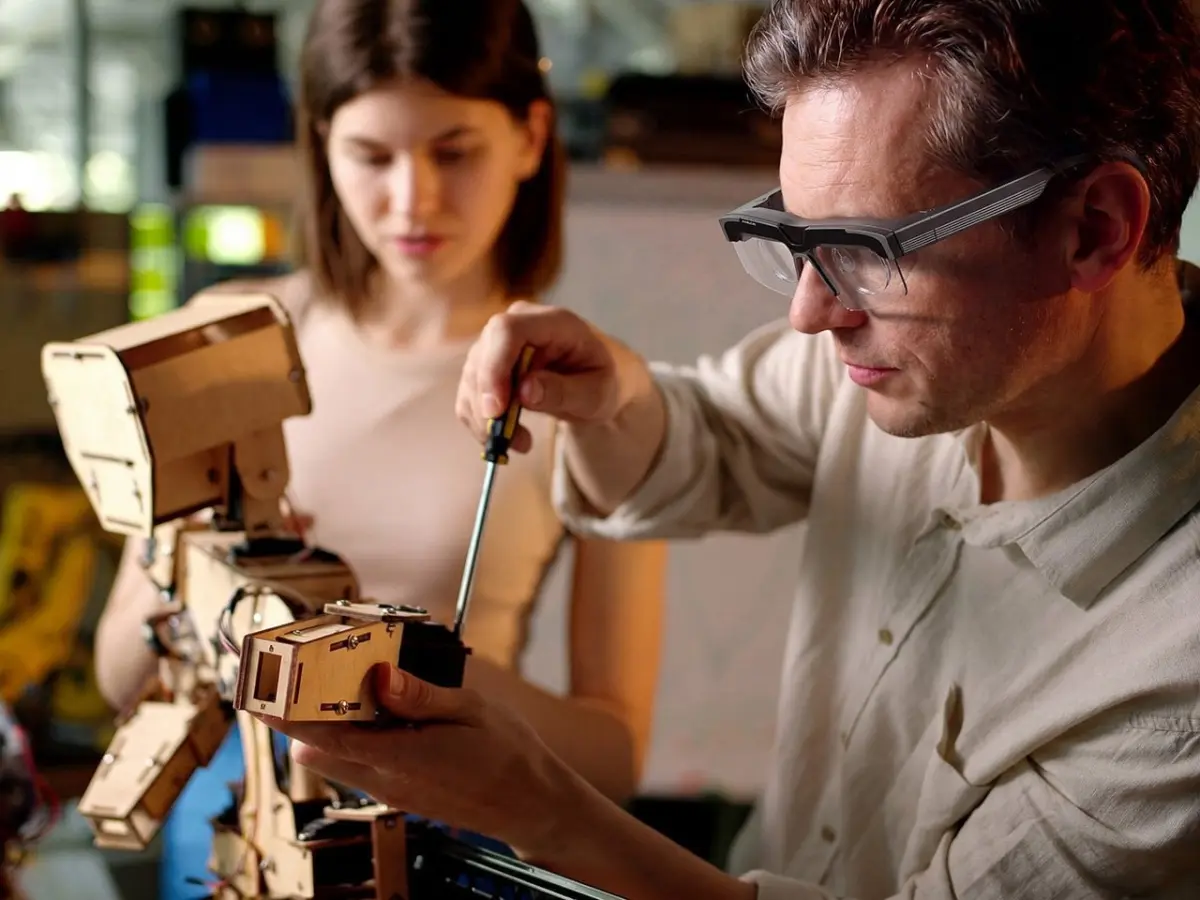
The technology that allows modern smartphones to instantly focus on a subject—firing an invisible laser pulse, measuring the bounce time, and commanding a microscopic motor to shift glass elements—has remained a standard consumer expectation for nearly a decade. Now, optical tech startup VIVIFoCAL has taken that identical hardware recipe, incorporating a time-of-flight sensor, a microcontroller, and an actuator, and applied it directly to a pair of everyday eyeglasses. Rather than pointing outward at a photographic subject, the VIVIFoCAL S1 measures the exact distance to whatever the wearer is looking at, calculates the precise optical power required by the human eye, and mechanically adjusts the lenses into position in under a tenth of a second. It represents a fundamental shift in wearable optics, effectively bringing autofocus technology from our pockets directly onto our faces.
Led by Dr. Zhao—who earned his doctorate at a world-leading university and previously directed an optical research and development laboratory at a major optics company—VIVIFoCAL has engineered its flagship S1 frame around a sophisticated piece of optical physics that has largely eluded commercial adoption until now. The S1 utilizes Alvarez lenses, an ingenious design comprising two complementary freeform optical elements that dynamically alter their collective optical power when one element slides horizontally across the other. Originally patented in 1967 by Nobel laureate Luis Alvarez, the concept languished for decades simply because it required a reliable, automated method for physical movement. Modern micro-actuators have finally solved that challenge. The resulting optical array covers a focal range stretching from eight inches to infinity, all packed within a lightweight frame that launches with VIP introductory pricing starting at $289.
A Laser, a Motor, and a 1967 Patent Working in Harmony
Achieving seamless, real-time autofocus required VIVIFoCAL to deploy a sophisticated sensor array rather than relying on a single input. The S1 relies on three distinct sensors working in concert: a time-of-flight laser to instantly read distance, a built-in G-sensor to monitor head posture and orientation, and an infrared wear-detection sensor that recognizes whether the glasses are actively being worn. This infrared sensor plays a crucial role in battery conservation, ensuring the internal electronics power down when a user pushes the frames up onto their head mid-conversation.
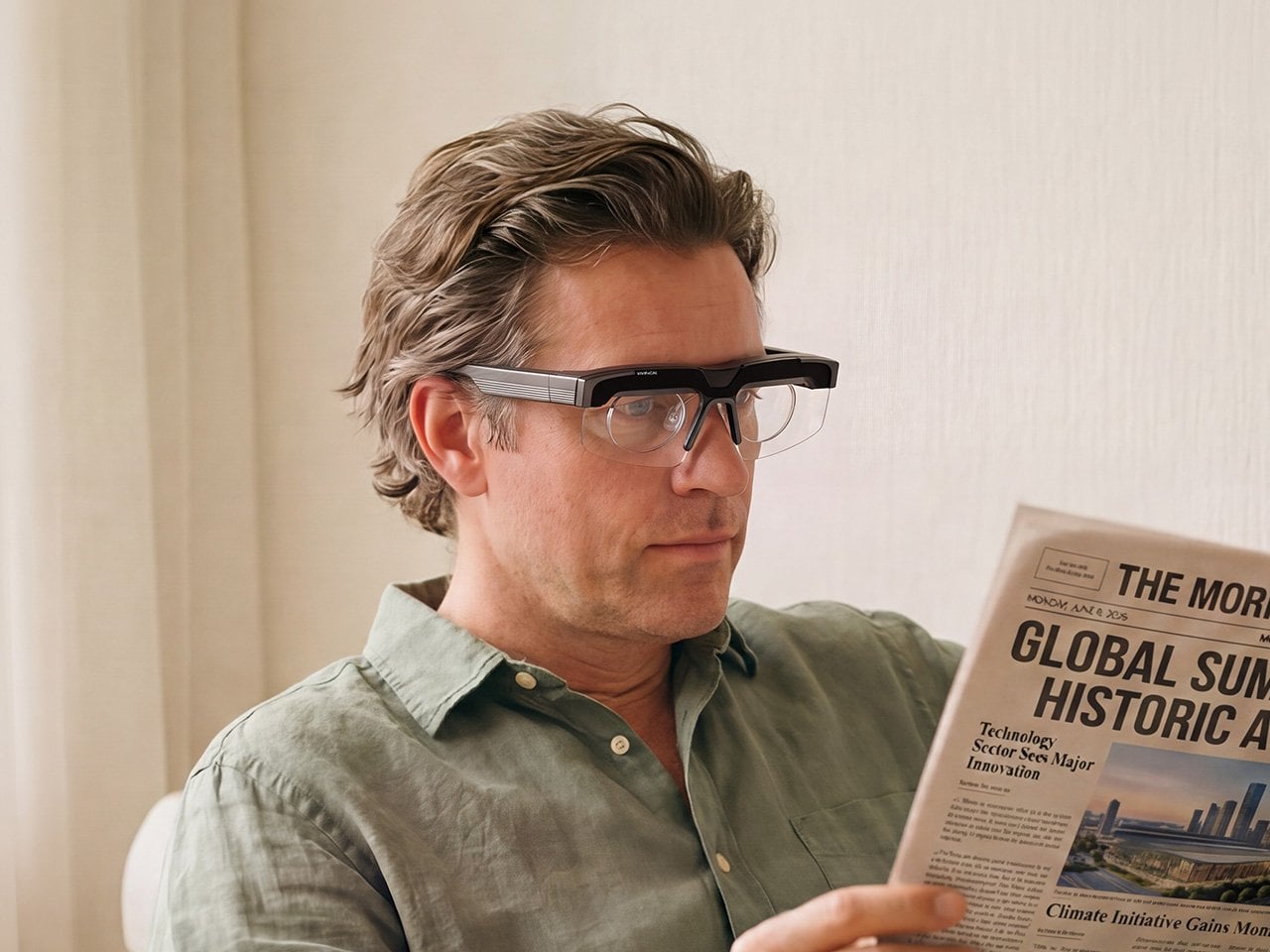
Positioned between these sensors is a dedicated microcontroller that instantly translates incoming distance measurements into precise lens position coordinates, issuing commands to the motor in a single, fluid pass. The lenses adjust their optical power dynamically to match the distance of the user’s focal point, performing the exact mechanical function that healthy human eyes handle effortlessly before the onset of age-related vision changes. VIVIFoCAL brands this continuous feedback loop as "Instant Focus." By leveraging the same miniature time-of-flight components that have successfully migrated into smartphones, robotic vacuum cleaners, and smart door locks over the past several years, the company has managed to make automated optical correction economically viable in consumer eyewear.
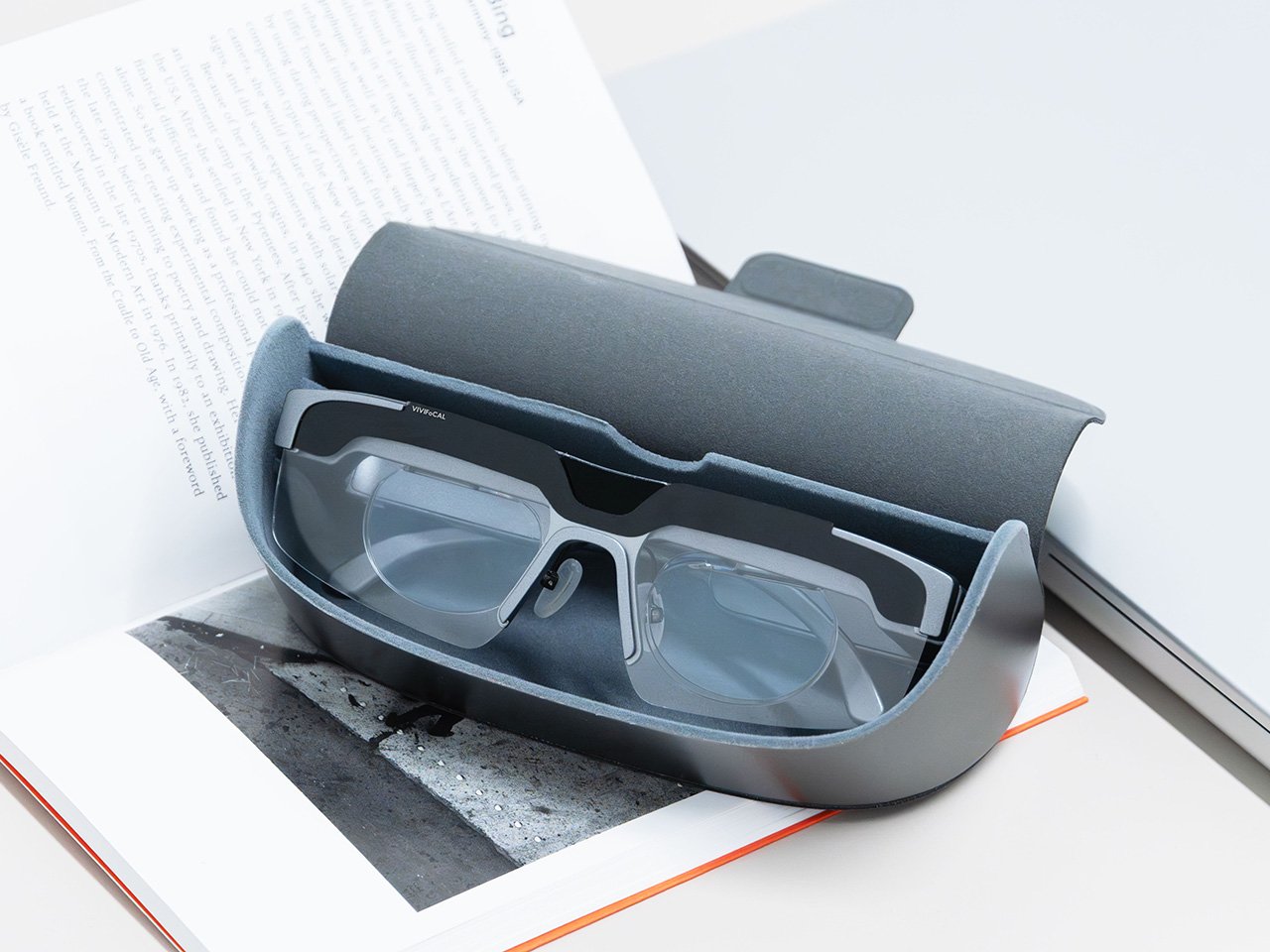
The engineering challenge was not merely writing the software, but housing a moving lens assembly, a laser rangefinder, a motion sensor, a microcontroller, a drive motor, and a power source within a chassis that still resembles ordinary spectacles. VIVIFoCAL successfully integrated the necessary electronics into the frame’s brow bar and temple arms, keeping the optical stack remarkably shallow. Measuring 160.5 by 160 by 43.5 millimeters, the S1 occupies familiar territory for standard spectacle dimensions, adhering to the principle that wearable technology should blend seamlessly into daily life rather than drawing undue attention to its internal mechanisms. Every design and packaging decision was made with a singular objective: enabling the wearer to see clearly across varying distances without ever consciously thinking about the machinery operating just millimeters from their eyes.
Progressive Lenses Demand a Chin-Tilt; the S1 Removes the Compromise
As global demographics shift, presbyopia—the gradual loss of the eyes’ ability to focus actively on nearby objects—is projected to affect an estimated 2.1 billion people worldwide by the year 2030. For decades, the standard optical remedy for this condition has been the progressive lens, which blends multiple prescriptions into a single piece of glass: near vision at the bottom, distance correction at the top, and intermediate zones smeared through the middle. Navigating this layout requires wearers to constantly tilt their chin at specific angles to find the correct optical sweet spot, a compromise that frequently results in a narrow tunnel-vision effect and peripheral optical distortion.
VIVIFoCAL positions its technology as an antidote to this traditional compromise through what it terms "Full-Lens Clarity." Because the Alvarez lenses adjust their overall refractive index physically, they deliver a single, consistent optical power across the entire surface of the lens at any given setting, entirely eliminating segmented viewing zones. There are no invisible boundaries to hunt for and significantly less peripheral distortion to navigate. For individuals accustomed to the repetitive chin-tilt adjustments required by traditional progressive lenses, the functional appeal of a uniformly clear field of view is immediate and substantial.
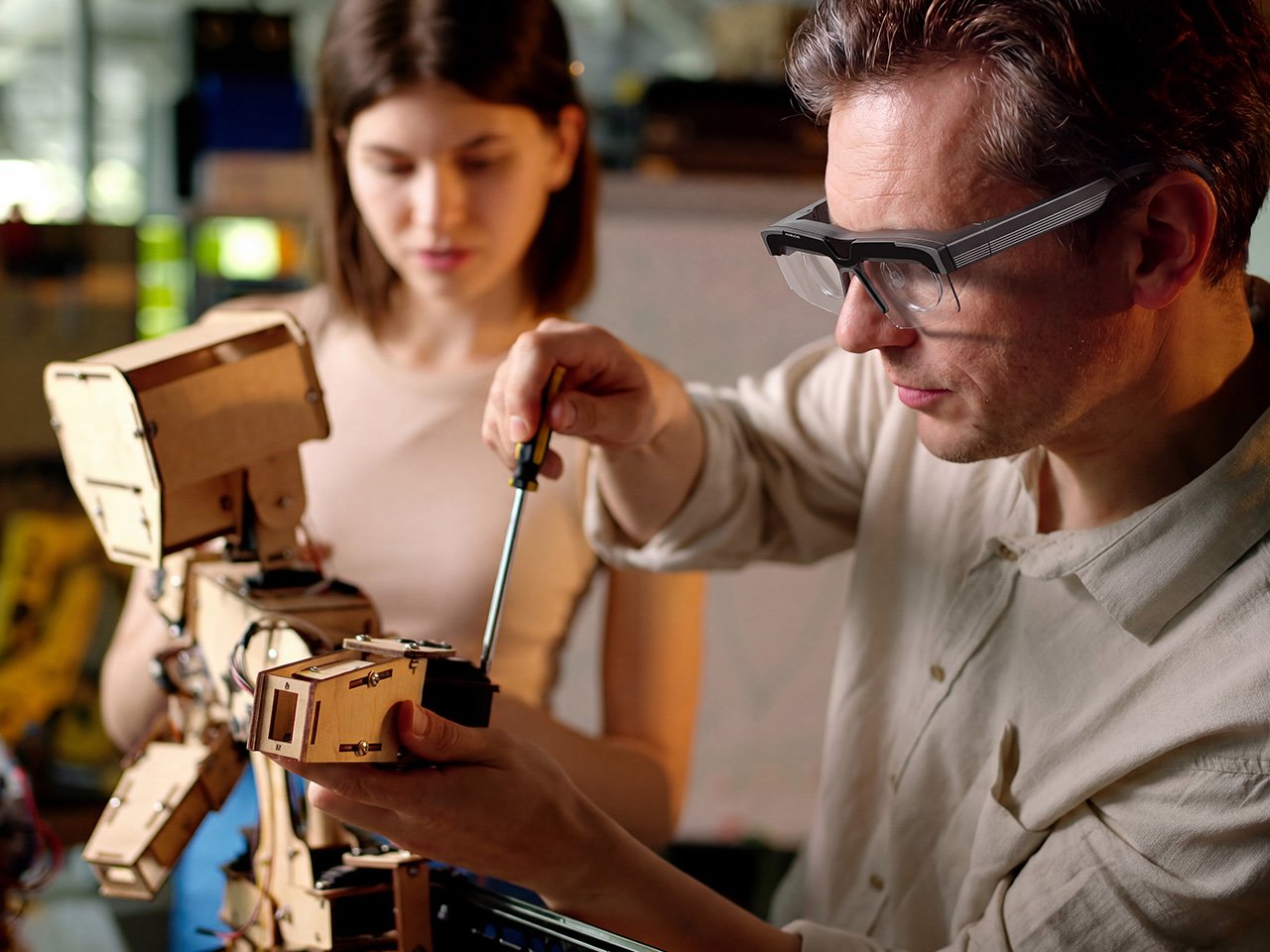
While traditional progressive glasses are primarily optimized for general daily tasks, people engaged in detailed close-up work often find themselves reaching for specialized reading glasses or physical magnifiers. The S1 addresses this limitation by extending its focusing range down to eight inches, bringing intricate fine detail within the capabilities of the same lenses handling distance viewing. During public demonstrations at WonderFest 2026, VIVIFoCAL showcased the S1 against complex precision hobby work, such as a 1/35 scale miniature model, drawing positive reactions from professionals and hobbyists alike. Early testers working in demanding technical environments, such as data centers, noted substantial productivity gains. Being able to walk past complex equipment and read tiny serial numbers instantly—without interrupting workflows to swap out glasses, don additional readers, or fumble with auxiliary visual aids—demonstrates the practical utility of an adaptive optical system.
Forty Grams, Three Nose Pad Sizes, and All-Day Power
Recognizing that human head shapes and bridge dimensions vary significantly more than standard mass-market eyewear accounts for, VIVIFoCAL equipped the S1 with flexible spring hinges and three distinct sizes of interchangeable nose pads to ensure a secure and comfortable fit across diverse facial structures. The frame weighs a modest 40 grams on its own, increasing to 50 grams when fitted with a magnetic front sunglass clip. Constructed using TR90 thermoplastic material—a substance that has quietly become a dominant standard for lightweight, durable frames and wearable device arms across the optical industry—the S1 is built for sustained daily wear. Minimizing physical weight is essential, as the fundamental value proposition of automated focus depends on the wearer forgetting the device is even there.
Power is managed by an integrated 250mAh battery designed to endure up to eight hours of continuous refocusing. For typical daily usage patterns involving intermittent focal shifts, the battery comfortably lasts a full day, and a standard USB-C connection restores a full charge in approximately one hour. Adapting to a pair of glasses that requires recharging represents a new behavioral adjustment for consumers, but one that the hardware attempts to minimize.
To accommodate individual prescriptions, a separate set of custom carrier lenses mounts directly behind the Alvarez elements, ensuring that near and far vision corrections are precisely tailored to the wearer’s specific ophthalmic needs. For outdoor use, magnetic polarized sunglass lenses snap onto the front exterior while the adaptive focus mechanism continues to operate seamlessly underneath. The polycarbonate lenses feature advanced anti-reflective and anti-smudge coatings, transmitting more than 90 percent of incoming visible light while maintaining a wide field of view exceeding 110 degrees. Furthermore, a companion smartphone application provides an additional plus-or-minus 0.5-diopter fine-tuning range, allowing the glasses to accommodate the gradual progression of presbyopia over time without necessitating an immediate lens replacement. For advanced cases where presbyopia exceeds 3.5 diopters, however, the S1 currently reaches the limit of its mechanical correction range.
The Industry Bet on Moving Glass
VIVIFoCAL is not alone in exploring the frontier of adaptive eyewear. Several competing research teams and startups are actively investigating alternative methods to achieve variable focus, utilizing liquid crystal layers or advanced eye-tracking algorithms rather than mechanical lens shifts. Because the smart eyewear category remains in its formative stages, these technological approaches continue to diverge. By committing to a strictly refractive, mechanical design philosophy—utilizing real physical glass in motion to alter optical power rather than simulating it through pixelated electronic layers—VIVIFoCAL has prioritized optical clarity and light transmission. Maintaining over 90 percent light transmission and a wide field of view ensures that the visual experience through the S1 behaves like traditional, high-quality optics rather than looking through an electronic screen.
The core principle behind Alvarez lenses remained an intriguing optical laboratory concept for nearly sixty years primarily because automated sliding mechanisms were simply too large to fit within the confines of a standard spectacle temple arm. The steady miniaturization of micro-sensors, compact actuators, and efficient microcontrollers has finally bridged that gap, rendering the S1 a notable achievement in physical packaging—the critical metric that ultimately determines the viability of most wearable technology. Just as autofocus revolutionized photography by operating so rapidly that photographers ceased to think about the mechanism, the S1 aims to achieve a similar disappearing act right in front of the human eye. Backed by a one-year warranty and a refundable deposit system designed to secure introductory pricing ahead of full market rollout, the S1 represents the culmination of a six-decade wait for a clever optical idea to finally meet the modern motor.