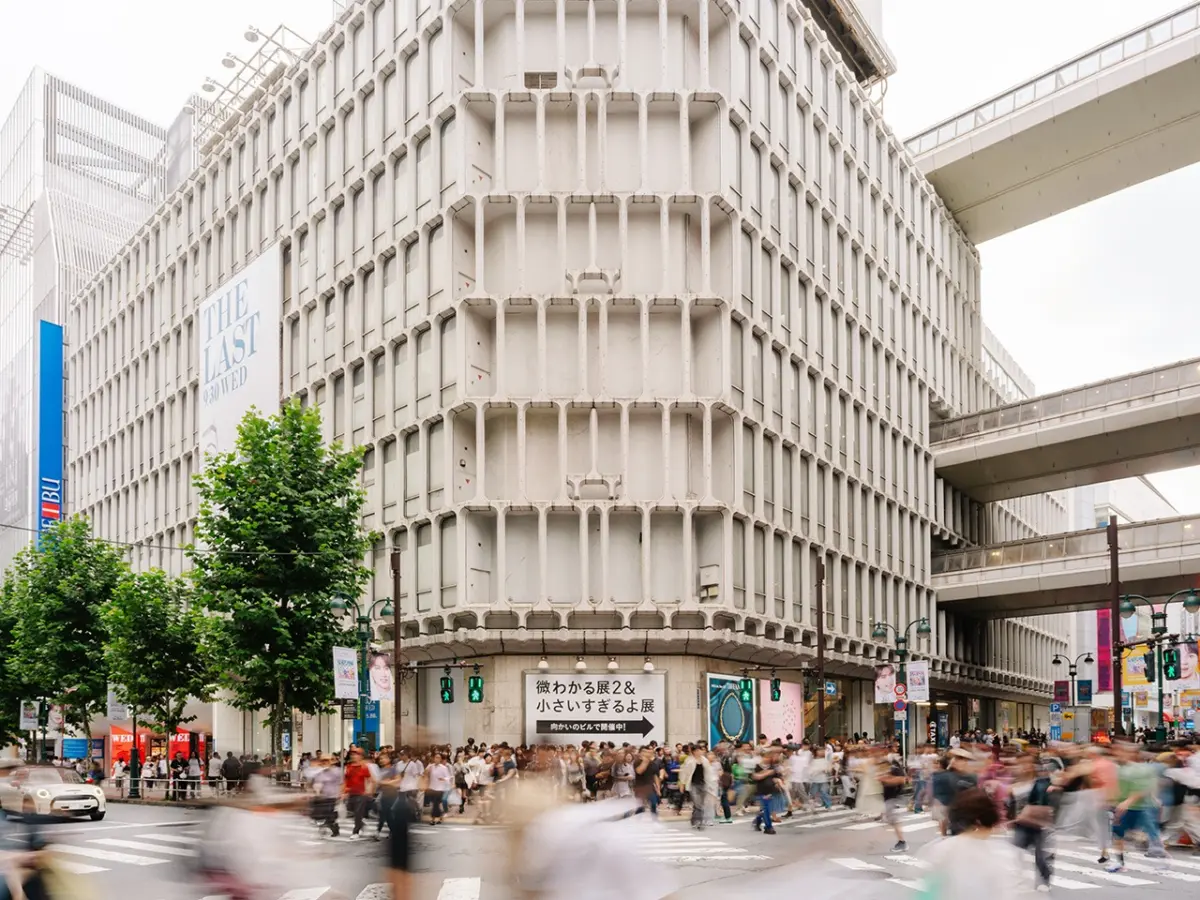
Tokyo’s vibrant Shibuya neighbourhood has said a poignant goodbye to one of its most defining retail and cultural institutions this week, as the historic Seibu department store officially closed its doors after 58 years in operation. The closure marks a watershed moment for a district that has long defined the pulse of Japanese youth culture, prompting thousands of nostalgic locals, long-time patrons, and architecture enthusiasts to turn out in droves during the final weeks of the store’s winding-down operations.
In the lead-up to the final shuttering, the atmosphere inside the sprawling complex was a mix of bargain-hunting frenzy and sentimental pilgrimage. Shoppers navigated crowded floors where everyday essentials—ranging from towels and kitchenware to designer handbags—were piled high and heavily discounted. Meanwhile, regular patrons sought out a final moment of reflection and comfort at the beloved Top’s café, a cherished fixture of the department store experience.
Beyond the commerce, people of all generations flocked to the building to capture photographs of its distinctive Shōwa-era architecture. This postwar architectural style, long overlooked or taken for granted, is only now being belatedly appreciated by the public just as bulldozers and redevelopment projects systematically erase examples of it across the Japanese capital. Visitors took time to record elegant, mid-century design details that are increasingly rare in modern urban landscapes, such as the sweeping staircases and the graceful arched walkways that once connected the distinct buildings of the Seibu complex.
Shaping Japan’s Youth Culture and Avant-Garde Design
For an entire generation, Seibu was much more than a place to shop; it was the cultural anchor that cemented Shibuya’s status at the heart of Japan’s postwar youth and fashion revolution. The flagship store opened its doors in 1968, arriving precisely as Japan was working to rebuild its national confidence following the Second World War amid a soaring economic boom.
The retail space was established by Seiji Tsutsumi, the son of the wealthy founder of the Seibu Railway company, in a prime location just a short walk from the bustling Shibuya Station. Under visionary guidance, the department store became a vital incubator for emerging creative talent. It famously helped launch the careers of a new wave of young Japanese fashion designers by giving them a dedicated platform in its "Capsule Corner." In this innovative retail space, renowned designer Shiro Kuramata created transparent plastic display pods to showcase cutting-edge clothing.
While Seibu certainly stocked prestigious international names to satisfy global tastes, its true legacy lay in its fierce championing of homegrown Japanese brands. It served as an early and crucial home for avant-garde powerhouses such as Issey Miyake, Comme des Garçons, and Yohji Yamamoto, helping propel them onto the global stage.
At the same time, the store embodied all the classic, beloved features of the traditional Japanese department store ecosystem. Generations of Tokyo residents grew up visiting its sprawling basement food hall (depachika), enjoying the lively rooftop play areas, and browsing the traditional pet shop—amenities that transformed the department store into an all-encompassing social hub for families and friends.
A Changing Retail Landscape in Shibuya
Shibuya has spent decades defining the cultural and fashion trends of the nation. From the distinctive Shibuyakaji (Shibuya casual) fashion movement of the 1980s to the innovative Shibuya-kei music scene of the 1990s, the district was an unstoppable trendsetting engine. It also served as the undisputed epicentre of gyaru culture, a bold and rebellious youth movement characterised by striking looks featuring exaggeratedly loose socks and deep mahogany tans. Shibuya truly became the place to be in the 1970s, a reputation cemented by the simultaneous emergence of other era-defining destinations such as Parco, Tokyu Hands, and the iconic fashion emporium Shibuya 109.
Today, while the crowds still flood Shibuya’s streets in massive numbers, the retail landscape has shifted dramatically, leaving historic giants like Seibu struggling to maintain their former cultural dominance. Other neighbourhood institutions have navigated these shifts with varying degrees of success. Shibuya 109 remains perpetually thronged with young shoppers, while Parco—though previously demolished—successfully reopened in 2019, managing to preserve its vibrant cultural programme of art exhibitions, independent theatre, and cinema.
Meanwhile, Tokyu Hands, which officially rebranded simply as Hands in 2022, has generally continued to thrive across its various locations, yet its flagship Shibuya branch is also facing an imminent closure, scheduled to shut its doors for good in November. The Shibuya branch of Hands has always occupied a unique, hard-to-define space in the retail ecosystem. It was a sprawling, multi-story wonder tucked into a cramped corner site where shoppers could purchase anything from a live hamster to a reconditioned boom box, all while relying on remarkably well-informed and attentive staff who could pinpoint the exact type of glue or kitchen cleaner needed for any household task. It was a place where locals could easily while away hours on a rainy weekend, making the Shibuya branch—the undisputed "mothership" of the brand—an irreplaceable part of the community’s daily life.
Real-estate company Hulic has already slated the site for major redevelopment, with plans to transform the beloved retail ground into a luxury hotel. For residents and regulars who frequented the store on a weekly basis, the idea of an urban landscape without these legacy institutions is difficult to comprehend.
Looking Toward a New Chapter
The closure of Seibu and the impending departure of institutions like Hands have naturally sparked a sense of loss among long-time residents, many of whom feel that Shibuya is gradually losing its unique character. Modern streets are increasingly dotted with homogenised global retail chains, while the distinct, sprawling department stores that once defined the skyline are disappearing. Even the world-famous Shibuya scramble crossing is now heavily besieged by international tourists, with police constantly attempting to shepherd stragglers who are determined to secure the perfect social media photograph.
Yet, urban observers note that it is unhelpful to view these transformations through a purely curmudgeonly lens. Instead, it is perhaps more realistic to recognize that Shibuya has always been a district defined by its transient nature, belonging ultimately to whoever happens to inhabit its streets at any given moment. Radical transformation, commercial novelty, and constant reinvention were foundational to the district’s original appeal.
Proof of this unending cycle of change is visible just across the street from the newly closed Seibu, where construction workers are currently applying the finishing touches to Japan’s first multi-story wooden retail complex, designed by renowned architecture firm Foster + Partners. As one storied chapter of mid-century commercial history closes, another entirely new architectural and cultural era for Shibuya officially begins.