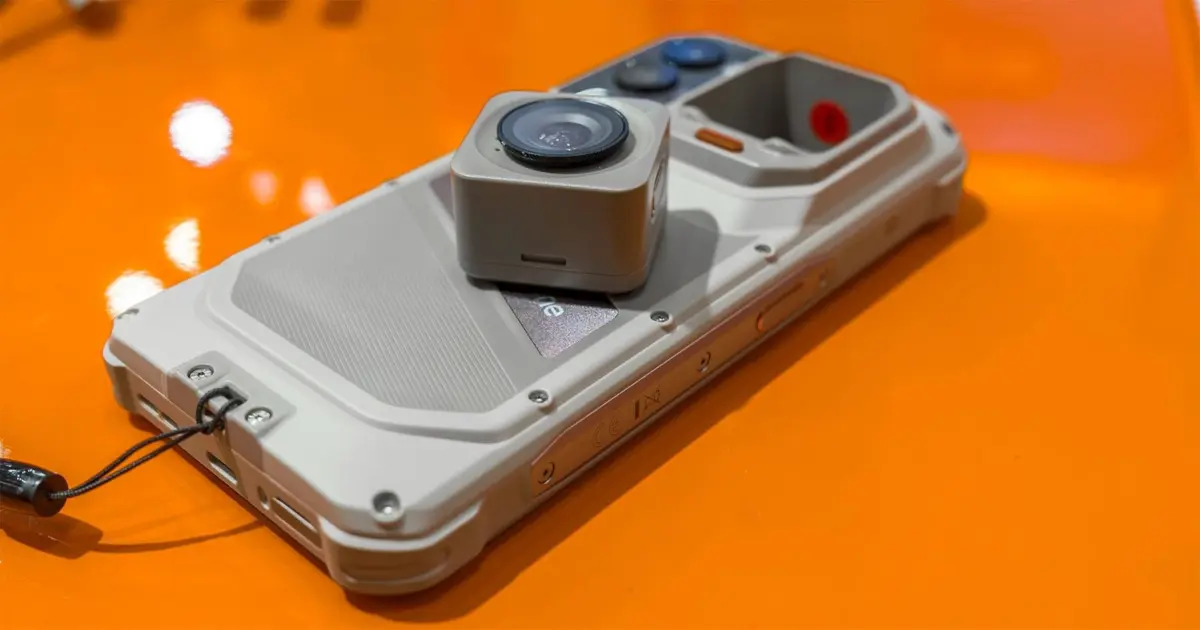
In the ever-evolving landscape of mobile technology, manufacturers continually seek novel ways to stand out in a saturated market. The latest device attempting to bridge two entirely distinct categories of consumer electronics is the RugOne Xsnap 7 Pro, a rugged smartphone that features a fully detachable action camera capable of snapping right off its main body. Unveiled to the public at the IFA 2026 trade show in Berlin last month and rolling out for release this month, the Xsnap 7 Pro arrives from an adventure-oriented sub-brand of Ulefone, a company widely recognized for manufacturing durable, heavy-duty mobile devices designed for harsh environments.
The core premise of the Xsnap 7 Pro centers on bridging the gap between everyday communication tools and extreme sports recording equipment. Its rugged design philosophy extends directly to the small, removable action camera module. Users can mount, wear, or hand off the compact camera entirely, allowing it to record independently while the main smartphone continues to function and shoot footage on its own. This ambitious engineering effort represents a truly unique concept brought to life as a commercial product. To gauge initial market interest, the device debuted on Kickstarter with an early-bird introductory price of €799, alongside a planned global retail availability slated for October at a suggested retail price of $999.
The Idea Behind a Phone That Splits in Two
The concept of separating a camera module from a larger electronic body is not entirely unprecedented. Action camera manufacturers, including Insta360 with its Go series, DJI with the Osmo Nano, and Dreame with the Leaptic Cube, have all experimented with modular camera designs. However, integrating this capability directly into a fully functioning smartphone is a striking departure from convention. At first glance, utilizing such a device feels unconventional, yet the Xsnap 7 Pro is not merely a futuristic prototype; it is a finalized consumer product ready for the market.
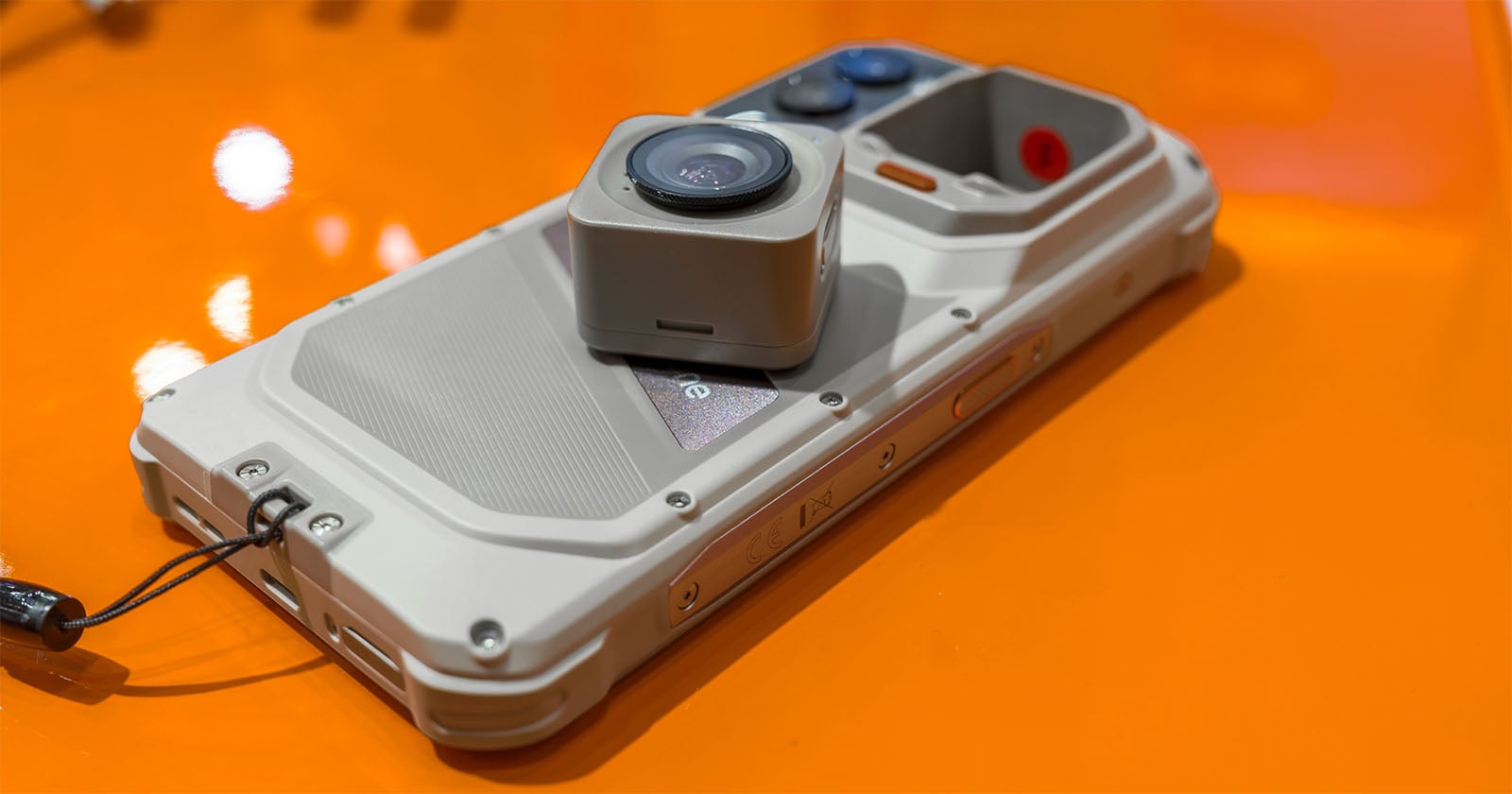
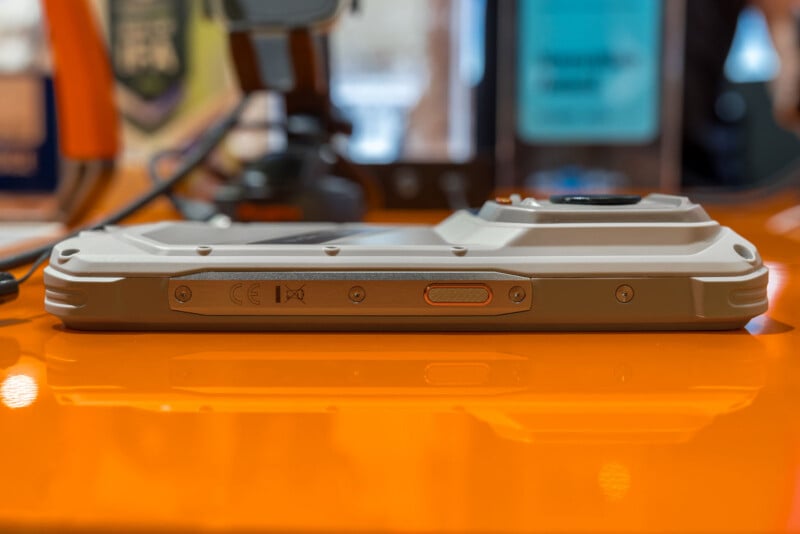
From an aesthetic and ergonomic standpoint, the device defies standard smartphone design paradigms. Rather than prioritizing a sleek, svelte profile, it resembles a traditional smartphone housed inside a thick, heavy-duty protective case. Measuring 6.79 by 3.29 by 0.75 inches—or 172.5 by 83.4 by 19.1 millimeters—and tipping the scales at 477 grams with the camera module attached, it sits at the absolute opposite end of the design spectrum from ultra-thin flagship handsets.
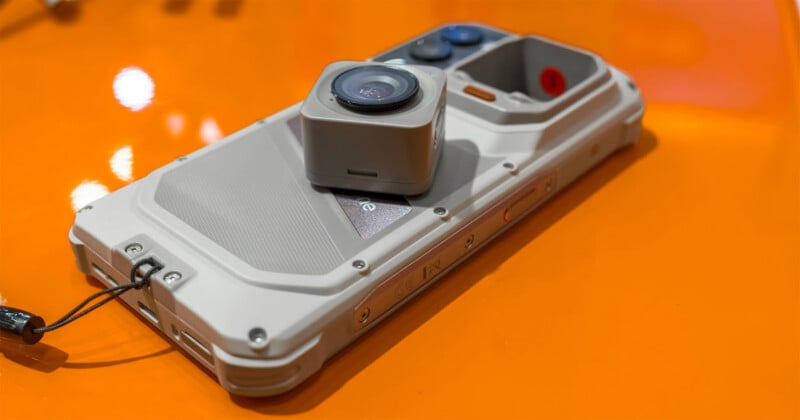
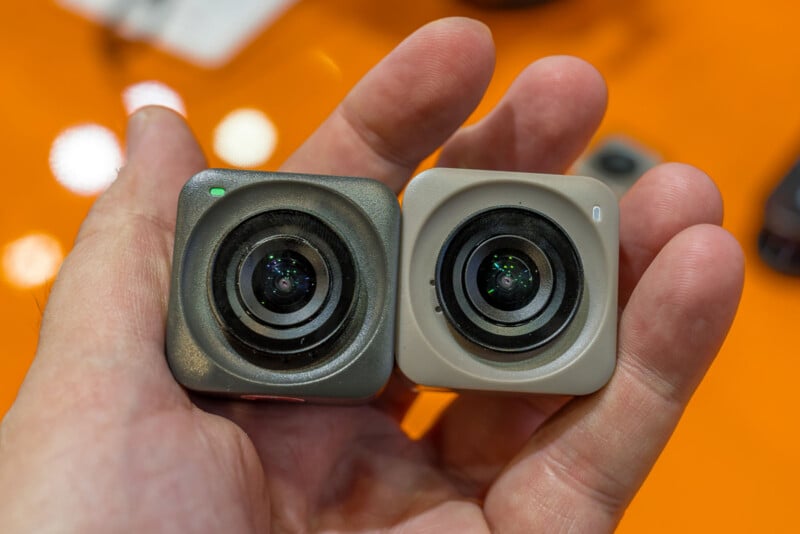
The cube-shaped camera module itself fits snugly into a dedicated recessed pocket on the rear panel of the Xsnap 7 Pro. Weighing 39 grams independently, the module relies on a powerful magnetic connection to secure itself into the rear housing, a docking position where it also automatically recharges its internal battery. Extracting the module requires a deliberate tug, as users must grip the camera by its lens and apply a reasonable amount of physical force to disengage it from the magnetic and mechanical locks.
The protruding component that serves as the gripping point is actually a specialized lens cap that can be unscrewed and replaced if necessary. While RugOne does not currently offer alternative filtered versions of these protective covers, the company indicates that such accessories are under consideration for future development. Designing the lens cap to be replaceable is a practical choice given the device’s intended use in rugged, high-impact scenarios. Should the outer glass ever become scratched, scuffed, or cracked during an outdoor excursion, a simple swap resolves the issue without requiring extensive repairs.
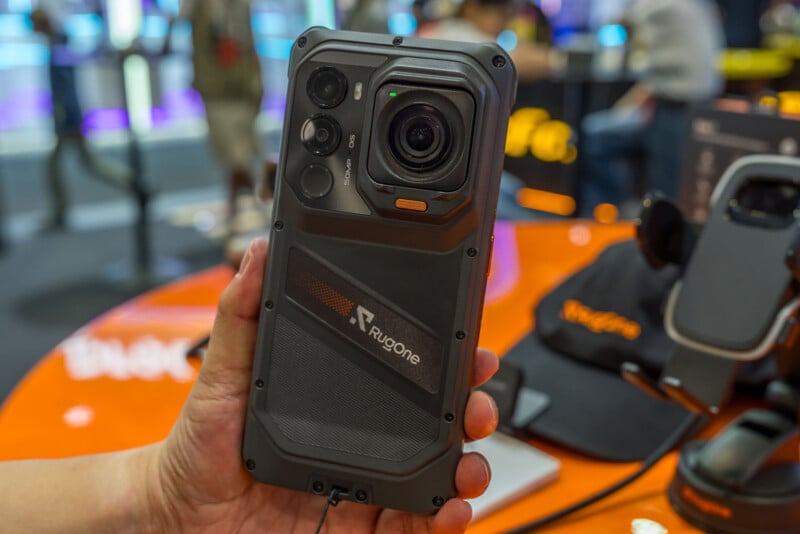
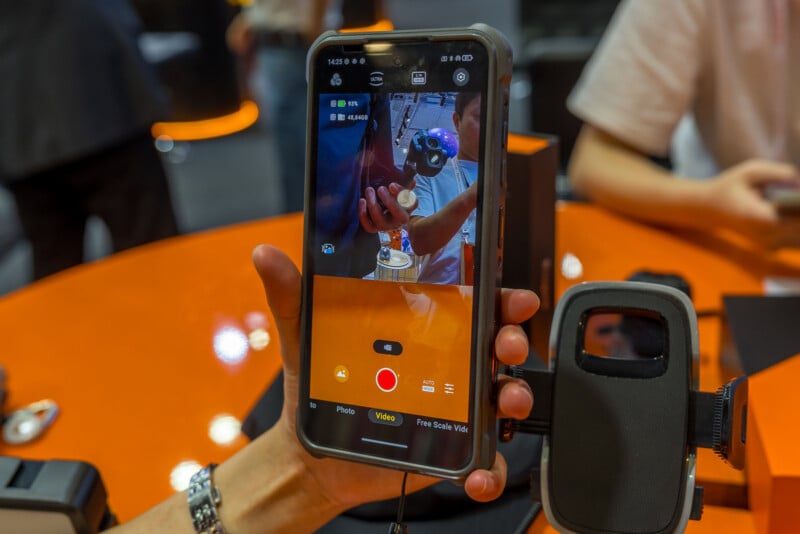
Once detached, the camera maintains a wireless connectivity range of up to 50 meters when paired with the host smartphone via the proprietary Xsnap Go app. This allows an adventurer—such as a mountain biker or motorcyclist—to initiate recording, mount the small camera securely to a helmet or chest harness, and control functions such as starting, stopping, or changing shooting modes directly from the phone screen without needing to physically interact with the camera module itself.
A major selling point of the hardware is its versatility in mounting configurations, allowing it to function similarly to dedicated action cameras from competing brands. Beyond helmet and chest mounts, the module can be secured to standard bike mounts or RugOne’s custom magnetic pendant accessory. To ensure stability during high-vibration activities, the mounting system utilizes a dual-locking mechanism equipped with physical latches rather than relying on magnets alone. Nonetheless, the rear magnets integrated into the phone body provide a quick and convenient way to snap the camera onto metal surfaces for impromptu recording angles while on the go.
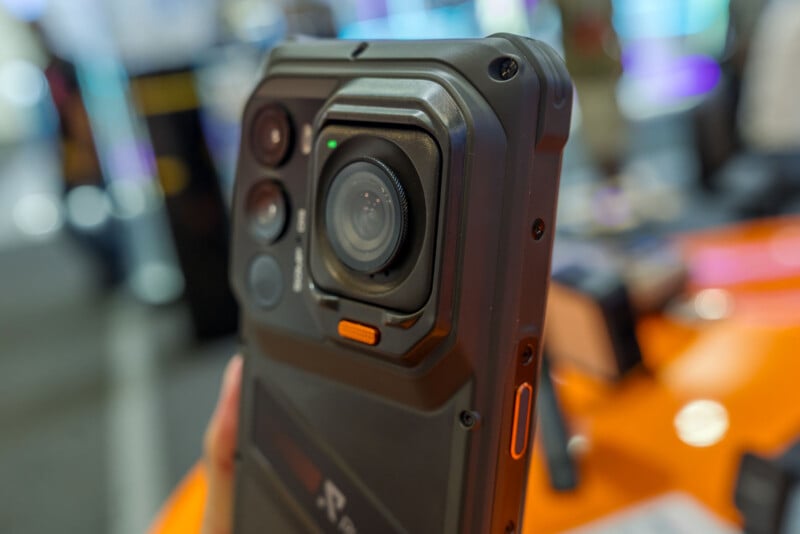
Furthermore, the hardware eliminates the need for bulky separate waterproof housings. Boasting IP68 and IP69K dust and water resistance ratings, RugOne certifies the standalone camera module for submersion in up to five meters of water. This allows users to capture shallow underwater imagery straight out of the box. However, the fine print included with the device notes that water protection is not guaranteed to be permanent and may naturally degrade over time due to normal wear and tear. Additionally, the manufacturer’s standard warranty does not cover liquid-induced damage, urging users to exercise caution despite the robust ingress protection ratings.
What the Detachable Module Actually Shoots
Despite the novelty of its modular design, the Xsnap 7 Pro features relatively modest imaging hardware housed inside its removable camera component. The module records video at a maximum resolution of 2.7K at 30 frames per second, paired with a 133-degree field of view. This provides a significantly wider perspective than a standard smartphone ultra-wide lens, though it remains narrower than the extreme fisheye optics found on dedicated action cameras. The unit utilizes a Type 1/2.7 image sensor, a specification more akin to older generations of action cameras than the advanced sensors currently utilized in contemporary flagship mobile devices. According to RugOne representatives, the module is also capable of capturing still photographs, including support for an HDR Photo mode, though the hardware is primarily optimized for video capture.
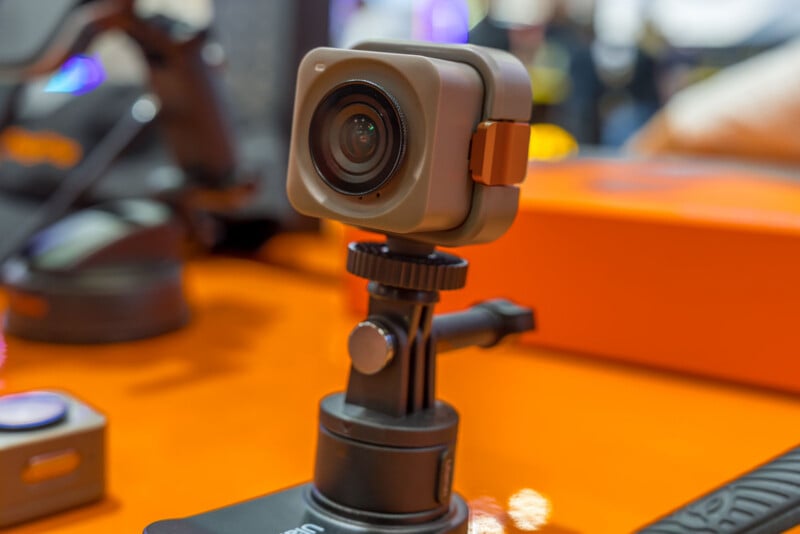
To enhance the recorded output, RugOne has implemented a suite of software features designed to stabilize and correct footage. SteadyX electronic stabilization helps mitigate handshake and vibration, though activating it incurs an in-sensor crop. Additionally, a Horizon Lock feature ensures the frame remains level even when the camera undergoes tilting or twisting motions, complemented by various timelapse modes for creative shooting.
When operated independently from the phone, the detachable camera can run continuously for up to 40 minutes of shooting time. Video files are stored directly onto 64 gigabytes of built-in internal memory within the module itself, which notably lacks a microSD card slot, though the main smartphone body retains expandable storage capabilities. Meanwhile, the phone boasts an exceptionally large 9,300mAh battery capable of recharging the detachable camera module roughly 20 times over. RugOne estimates this reserve provides approximately 800 minutes of cumulative recording time, making it feasible to document multi-day excursions far away from traditional electrical outlets.
The Phone’s Other Cameras
Beyond the modular camera system, the Xsnap 7 Pro features an extensive rear camera array housed on the main chassis. This setup is anchored by a 50-megapixel primary wide-angle camera utilizing a Type 1/1.57 Samsung Isocell GN9 sensor equipped with optical image stabilization. While this sensor may not challenge the absolute largest or most advanced photographic hardware on the market, its physical size positions it closer to upper mid-range smartphones, surpassing the smaller sensors historically found in many ruggedized handsets.
In a distinctive move, RugOne has also integrated a 64-megapixel infrared night-vision sensor, believed to be an OmniVision OV64B1B component. This sensor is supported by dedicated infrared LEDs rather than relying on the smartphone’s standard white-light LED flash. Designed as a true infrared-assisted imaging system, it is engineered to render visible monochromatic images in environments devoid of any ambient light. Demonstrations suggest the output closely resembles footage captured by security cameras or wildlife trail cameras. RugOne heavily promotes this feature as a tool to navigate total darkness for hikers, campers, or night-shift workers who prioritize situational awareness over traditional aesthetic photography. Because the system relies entirely on active infrared illumination rather than passive light gathering, its effective range and clarity will ultimately depend on the output intensity of the onboard IR LEDs, a factor requiring real-world evaluation.
The Rest of the Xsnap 7 Pro
Rounding out its hardware specifications, the Xsnap 7 Pro is built around a 6.67-inch AMOLED display featuring a 1.5K resolution and a smooth 120Hz refresh rate, protected beneath a layer of Corning Gorilla Glass Victus. Under the hood, the device is powered by MediaTek’s Dimensity 8400 processor. While positioned a tier below top-tier flagship silicon, this chipset is well-equipped to handle 4K-adjacent video encoding and the computational overhead required to manage the detachable camera module via wireless app control. The configuration is paired with 12GB of RAM and 512GB of internal storage.
In terms of durability, the hardware meets stringent military specifications, earning MIL-STD-810H shock certification alongside RugOne’s claims that the device is shockproof against drops from up to 1.5 meters. Running on the Android 16 operating system as part of its global release, the smartphone includes full integration with Google Mobile Services, though the manufacturer has not yet detailed whether the camera system will support voice control through Google Gemini or other digital assistants.
Ultimately, the RugOne Xsnap 7 Pro attempts to fulfill two distinct roles by merging a traditional mobile device with a dedicated action camera system. This combination introduces inherent compromises, most notably manifested in the physical size and weight of the hardware. Nevertheless, the underlying concept presents a novel approach to mobile photography. By enabling users to capture perspective shots from a helmet or bike mount without the necessity of carrying a secondary recording device, the Xsnap 7 Pro offers a unique proposition, leaving its long-term viability in the field dependent on its durability and reliability under real-world conditions as units begin shipping this month.