Nestled along the dramatic, glacier-carved shoreline of the Fusafjorden on Norway’s rugged west coast, the small village of Osøyro plays host to a quiet yet profound revolution in maritime heritage. Here, where the salt air mingles with the scent of freshly shaved pine and cedar, stands Oselvarverkstaden—the Boatbuilder Guild of Os. This specialized organization is entirely dedicated to the preservation, construction, and championing of the oselvar, the region’s legendary traditional wooden vessels.
The establishment of this unique workshop in 1997 was born out of necessity. Funded by the regional municipality at a critical juncture in Norwegian maritime history, the guild emerged as a bulwark against vanishing tradition. For generations, wooden boatbuilding was a cornerstone of coastal life in western Norway, with hundreds of independent artisans plying the trade. However, as the twentieth century progressed, the number of local boatbuilders dwindled dramatically. Modern industrial manufacturing and the widespread commercial adoption of lightweight, low-maintenance fibreglass alternatives threatened to render centuries of accumulated wisdom obsolete. Oselvarverkstaden was created to ensure that the knowledge of the past would not sink into oblivion.
Today, the center functions as a living laboratory and educational institution, keeping a remarkable 2,000-year-old craft alive through rigorous, hands-on immersion. Within its walls, master boatmakers instruct a new generation of apprentices, passing down techniques that predate modern industrial engineering by millennia. At the same time, the guild actively archives its working methods, documenting the nuanced physical practices of its masters to guarantee absolute authenticity for the future.
What sets this workshop apart from contemporary manufacturing environments is its absolute adherence to tactile intuition over digital or paper blueprints. "We don’t use drawings," explains director Vidar Langeland, pointing out that the construction of an oselvar relies almost entirely on physical instinct, inherited muscle memory, and a deeply trained, sharp eye. "Everything exists in the mind of the masters." Without the intermediary of a technical drawing, the creation of a vessel becomes an intimate dialogue between the artisan, the timber, and the accumulated traditions of thousands of years of Norwegian seafaring.
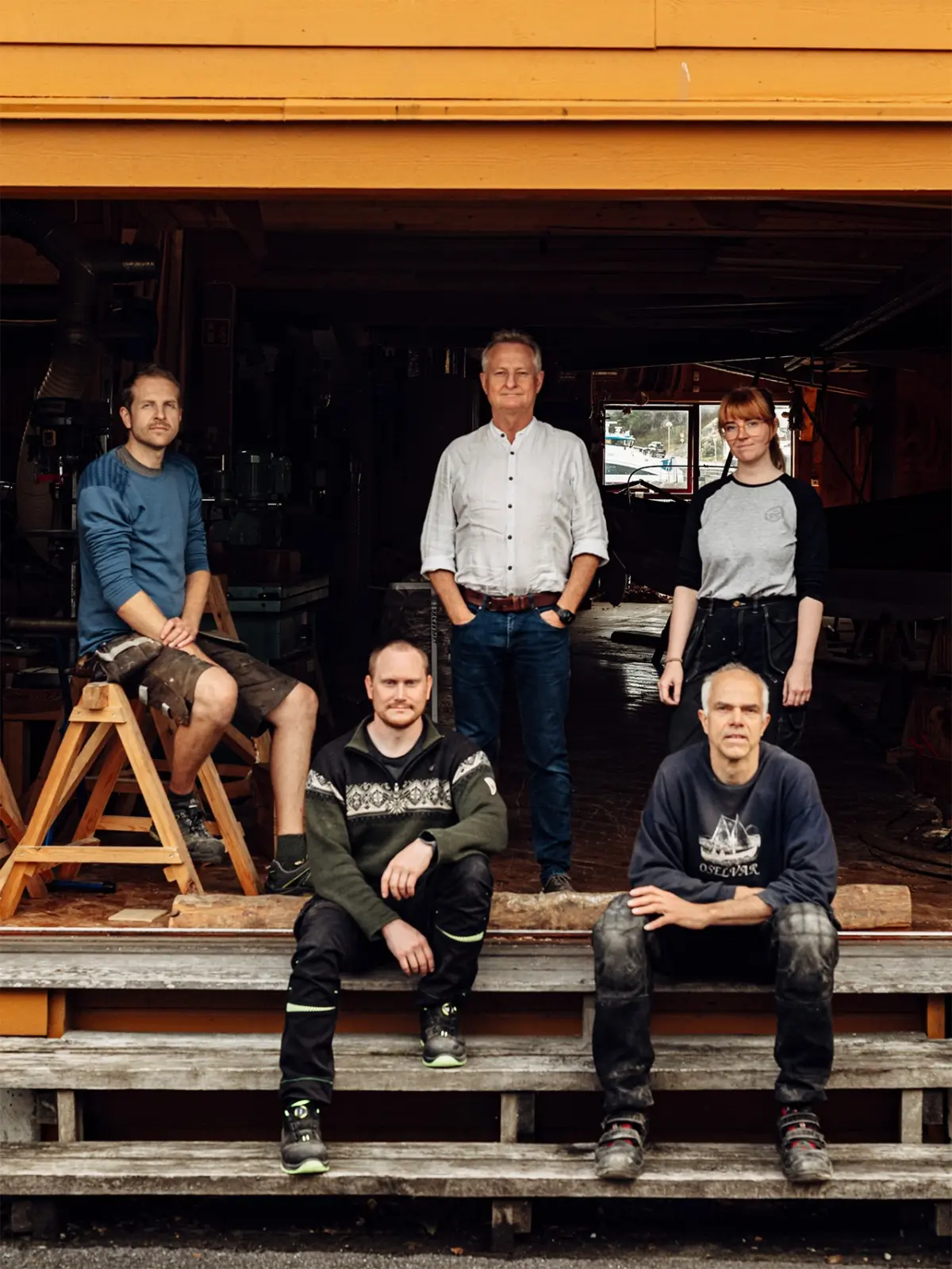
Operating within this exacting framework requires a dedicated team. Currently, the guildhall hosts a tight-knit core of five individuals, combining the seasoned expertise of veteran masters with the fresh perspective of dedicated newcomers. Among them is 27-year-old apprentice Ashley Hallén, who made the journey from Stockholm, Sweden, driven by a desire to step away from modern desk-bound industries in search of a tangible, hands-on career.
For Hallén, the transition from contemporary urban employment to the rhythmic, physical demands of a historic boatyard has been transformative. "This is a lot more physical and, in a way, more thoughtful," she reflects, contrasting the deliberate pace of Oselvarverkstaden with typical white-collar professions. In an era where many young people find themselves disconnected from the physical outcomes of their labor, the guild offers a rare environment of mentorship and tangible accomplishment. "I have more guidance here," she adds, emphasizing the value of learning directly from masters who are fully invested in the transmission of their expertise.
The rhythm of work inside the guildhall is governed by the natural properties of wood and the uncompromising standards of traditional craftsmanship. Building a single oselvar is a painstaking, labor-intensive endeavor that can take up to 400 hours of focused work. Consequently, prospective customers who commission these vessels must exercise patience, often waiting months for their handcrafted boat to be completed.
Patience is equally vital for the apprentices who walk through the guild’s doors. Before a newcomer is ever permitted to begin constructing a vessel, they must undergo a lengthy period of foundational training. Apprentices are taught how to carefully select the right timber for every individual project, understanding how the grain, density, and natural quirks of the wood will affect the final performance of the hull on the water. Furthermore, apprentices must learn to make their own tools from scratch.
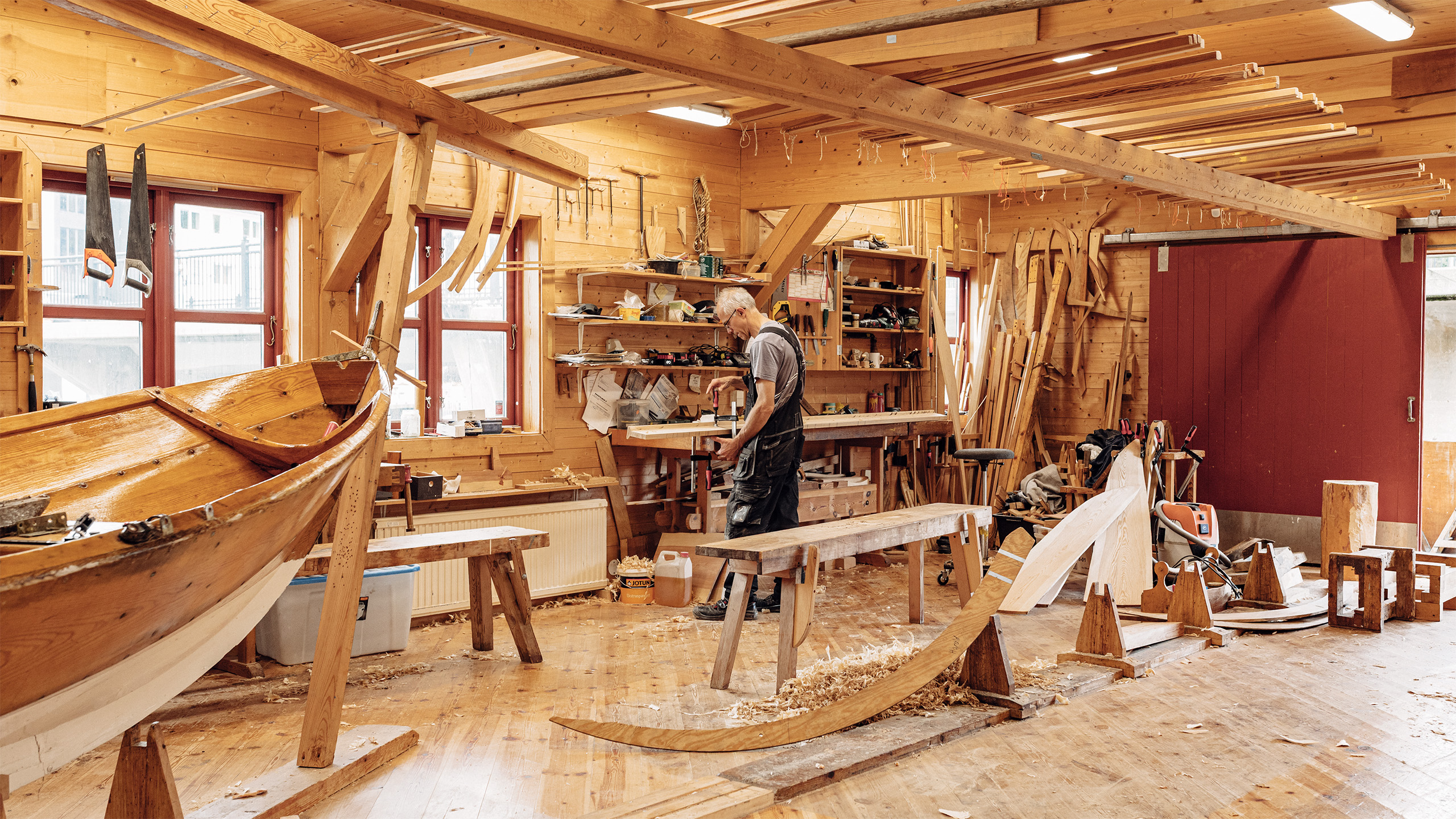
Many of the specialized hand tools utilized at Oselvarverkstaden cannot be purchased in a standard hardware store. Because the five distinct models produced by the workshop each possess unique profiles and hydrodynamic characteristics, the tools must be custom-designed and hand-forged to match the specific curves and contours of each boat type. This deep integration of toolmaking and boatbuilding ensures that an apprentice understands the craft from its most fundamental elements.
The subtle variations between the boats produced at the guild are a testament to the sophistication of the tradition. "The differences can be almost invisible," notes Stig Salbu Henneman, the guild’s master boatbuilder. Yet, to the trained eye of a seasoned professional, these minute details carry immense meaning. "An experienced craftsman can recognise who made a vessel just by looking at its lines."
This level of discernment is cultivated through the unique social and structural environment of the guild. Knowledge transfer is not confined to formal one-on-one instruction; it is a community endeavor. Henneman describes how the builders regularly gather around newly completed boats to scrutinize the finished product. They examine tiny variations in shape, sometimes evaluating curves down to fractions of an inch. While this serves as a rigorous form of internal quality control, ensuring that every boat meets the uncompromising standards of the institution, it also doubles as an invaluable lesson for the apprentices observing the critique.
The advantages of this immersive guild environment extend far beyond technical competence. Apprentices are exposed to the entire lifecycle of the craft, observing and participating in the process from the initial selection of timber in the forest all the way to the final launch of the finished boat into the waters of the fjord.
Oselvarverkstaden’s dedication to holistic education and the preservation of intangible cultural heritage has not gone unnoticed on the international stage. The guild has received official recognition from UNESCO for its exemplary efforts in safeguarding living cultural traditions and maritime history.
Yet, for master craftsmen like Henneman, the true measure of the guild’s success is not merely the physical vessels that roll out of the workshop doors, but the perpetuation of a system of human knowledge. "The purpose is to preserve knowledge," he states plainly.
Though Oselvarverkstaden is relatively young by international institutional standards, it punches well above its weight in the global movement to protect endangered traditional trades. By keeping an ancient system alive, the guild reinforces a timeless principle: that the most complex and valuable skilled trades cannot be mastered through books or screens alone, but must be learned by spending time side-by-side with those who already know them best.