Last week at Qualcomm’s annual Snapdragon Summit in Hawaii, instead of soaking up the warm sun or digging my toes into the sand, I heard an awful lot about agentic AI. Everywhere I turned during the multi-day industry gathering, the concept of the “AI agent” followed me like my own shadow. At first, I was deeply skeptical. While I still harbor reservations, my time at the summit has forced me to look past the relentless marketing and consider the actual possibilities. Could an agentic AI actually make my working life better?
(Disclosure: Qualcomm paid for my travel and accommodations to the Snapdragon Summit. However, the company exercised zero input or editorial control over this story or any other coverage produced regarding the products and technologies unveiled at the event.)
During the opening keynote of the summit, I was bombarded by references to agentic AI. Over and over again, executives deployed the same buzzwords and key phrases. We were told that agentic AI is deeply “personal to you” and “knows everything,” while simultaneously being entirely “private and secure.” We were assured that it would fundamentally “change my life” and that I would never have to “waste my time” again. While these quotes may not be verbatim, I heard variations of these talking points what felt like 25 times each in less than two hours.
As I sat taking notes during the presentation, I messaged our editor-in-chief, Jaron Schneider, lamenting a future where an algorithm might intimately know my personal beliefs, routines, and ideals. We had been promised an AI agent designed to understand everything about me and my daily life.
“Why would I want that?” I asked him, not so hypothetically. At that moment, I definitively did not want it, and I am still wrestling with whether I ever truly will.

The Industry Shift Toward Agentic AI
Agentic AI was the inescapable focal point throughout the Snapdragon Summit. It is not just Qualcomm that has placed its financial and strategic weight behind the concept; it has emerged as the primary topic of conversation across the entire technology sector.
As the Senior News Editor for Technology here at PetaPixel, I am expected to maintain a deep, obsessive interest in technology. I certainly remain “in the know” about industry developments, but the relentless hype cycle of the modern AI era has genuinely worn down my once-strong passion for all things tech.
I still enjoy learning about new innovations, and I like writing about them, but I purchase significantly less of the newest hardware than I used to. In fact, I only just bought my first standalone camera since 2017 last month. Yet, my overarching optimism regarding the state of technology and the direction we are heading is vastly lower today than it was a decade ago. My eyes have rolled into the back of my head during the ongoing AI boom so many times that I am genuinely surprised they haven’t gotten stuck there permanently.
I believe a significant part of that cynicism stems from a feeling that most new technology is not actually solving problems I encounter in daily life. This is especially true within the generative AI space, where I weigh nearly every new development against its environmental impact, the ever-widening income gap, and the obscene power and control afforded to major tech conglomerates and their executives. These days, I weigh real-world ethical costs and societal impacts, whereas years ago, I would simply salivate over the coolest new gadgets.
Very rarely does artificial intelligence come out on top in my personal ethical arithmetic. I appreciate tools like Generative Remove because they make routine photo editing easier without stripping away anything I fundamentally value. I like that I can use AI to automatically keyword my photo libraries, and I am certain there is plenty of underlying AI supporting various random utilities I rely on day-to-day. I appreciate AI the most when using it feels like operating an older, manual tool—just made a bit more efficient.

Weighing the Burden of Tedious Work
Putting those ethical qualms aside for the moment, as I watched presentations and tested hands-on demos throughout the Snapdragon Summit, I began to think: Hey, that could actually save me time and make my life easier. I saw the light, at least to the extent that my deeply ingrained skepticism allows.
I know I am not alone in my apprehension toward artificial intelligence, a reality that Qualcomm itself acknowledged during its presentations. The industry is beginning to recognize that AI’s biggest hurdle may not be technological capability at all, but rather public perception. I belong to a relatively large demographic of consumers who remain, at best, deeply wary of AI integration.
When industry leaders talk about agentic AI, they are describing autonomous software systems that live directly on personal devices and maintain simultaneous control over a wide range of tasks and data streams. A broadly effective AI agent requires deep access to a user’s email, calendar, photo libraries, private messages, applications, and potentially even sensitive financial information like credit cards and bank accounts.
It is easy to understand why a privacy-conscious individual would instantly reject this premise. But when I step back and examine my daily professional routine, I am reminded that I still perform a mountain of tedious, repetitive tasks that I would gladly delegate. To solve those logistical bottlenecks, an AI would inevitably need robust control over my device environment.
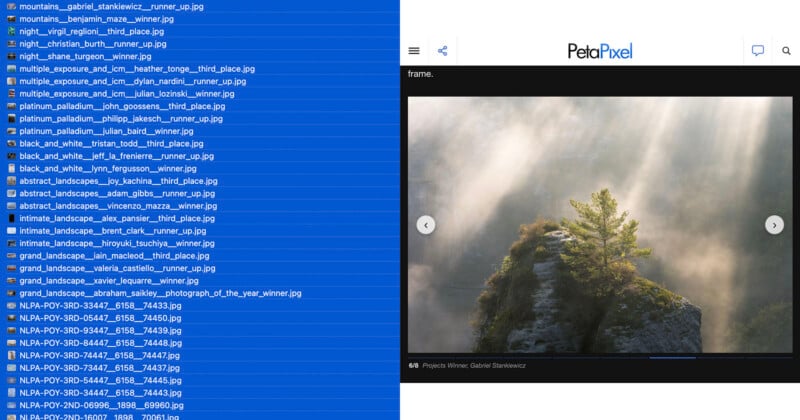
Consider the sheer amount of time I could save if an agentic AI could automatically locate the specific files I am looking for, open them in Adobe Photoshop, resize them to precise dimensions, rename them based on their visual content, generate caption metadata using information pulled from a separate document, and upload them to our publishing system.

That workflow accurately describes what is required to prepare images for a typical photo contest news feature. Nothing about prepping image batches and copying and pasting caption information supplied by an external contest organizer requires unique human creativity or emotional energy. It simply consumes hours of time. That time would be far better spent actually evaluating photographs and writing thoughtfully about how artists captured their subjects.
Managing and organizing local files consumes countless hours while leveraging zero human creativity. If there is no inherent artistic or intellectual value in performing a tedious digital chore, why should I spend my finite time doing it manually?
Envisioning Hardware and Real-World Applications
Beyond software workflows, the market is flooded with AI-infused hardware, including smart glasses. Personally, I wear standard, traditional eyewear—the kind that merely helps me see better. It is entirely antiquated technology by modern Silicon Valley standards.
I am certainly not about to run out and purchase a pair of smart glasses, but listening to the discussions in Hawaii allowed me to imagine potentially interesting ways such devices could aid photographers in the field.
Imagine walking through a landscape while wearing connected smart glasses that understand your background, preferences, and current activity. What if an agentic AI could synthesize your profile as a travel photographer, recognize that your camera is actively with you, and factor in your current geographic location to provide real-time compositional recommendations for nearby areas, accounting for immediate weather patterns and lighting conditions?

An assistant might prompt: “Hey Jeremy, since you have your camera with you right now, I know of a spot just half a mile away that is very popular with photographers in these weather conditions. Do you want me to lead you there?”
Or perhaps: “Hey Jeremy, here’s a preview of what that area looks like with a 50mm lens frame overlay to give you an idea of what type of shots you might be able to get from the publicly accessible area.”
Another prompt might offer: “Hey Jeremy, this photographer you follow on social media has shot here before. Do you want me to show you what they captured?”
If you are a novice photographer looking at a complex scene through smart glasses, unsure where to begin or how to frame your shot, the educational potential becomes apparent. We have seen that AI can serve as a useful educational resource through features like Google’s Camera Coach, but integrating visual intelligence with personal experience data could take real-time instruction to an entirely new level.
With two decades of experience behind the lens, I often take my knowledge for granted, forgetting what it felt like to have absolute zero understanding of shutter speed, ISO, and aperture. I learned those fundamentals through painful, arduous trial and error, much like a caveman. Smart glasses paired with contextual AI could flatten that steep learning curve for beginners out in the field.
If you do not know how to achieve a specific look, an AI might. If you are struggling to find a buried setting on a specialized camera body, an AI can guide you. If you have attempted a specific composition and failed previously, an AI could theoretically recognize that past attempt based on your library metadata and help you correct your approach.
If you had asked me a few weeks ago whether I would ever want an AI assistant operating with that level of intimacy, I would have dismissed it as invasive. To be fair, it still might be. But I can now more easily summon the mindset I held 15 years ago, back when I still felt unbridled excitement toward emerging technology: That is so cool.
I do not think I will ever fully return to that wide-eyed state of mind, but my time at the Snapdragon Summit brought me closer to it than I have been in years. I am still figuring out how to feel about that realization.