The Madrid Audiovisual Cluster (MAC), a prominent economic interest group representing nearly 100 dynamic companies based in the Spanish capital, has curated an ambitious two-day industry networking and peer-learning program for the upcoming Iberseries & Platino confab. Scheduled to run from September 29 to October 2 in Madrid, the program places a significant emphasis on the evolving role of technology in the entertainment sector, with artificial intelligence once again taking center stage.
However, rather than treating the technology as a fleeting trend, this year’s initiative attempts to delve much deeper into the hot-button topic. Organizers have lined up eight distinct industry case studies designed to examine innovation across every link of the audiovisual value chain. From script development and pre-production planning to international localization, post-production workflows, and real-time animation, the showcase offers a comprehensive look at how modern tools are reshaping the global media landscape.
"While AI is a common thread running through the projects, the session takes a broader view of innovation, covering new business models, emerging technologies, and evolving production and creative workflows," explained Teresa Azcona, managing director of the Madrid Audiovisual Cluster. "Together, they show how innovation is transforming the industry and opening up new opportunities across the value chain."
This enthusiasm for technological advancement is balanced by a steadfast commitment to human-centric storytelling. As Iberseries & Platino Industria co-Director Samuel Castro pointed out ahead of the event, the foundation of the entertainment business must remain rooted in human ingenuity. "The ability to create stories should always be based on a fully human, author-driven concept and development," Castro noted. "AI should be used as a tool, not as an end in itself."
Operating under the official banner of "Innovation — Case Studies in the Audiovisual Industry: New Business Models, AI and Emerging Technologies," the core workshop is set to run from 12:00 noon to 2:00 p.m. on September 29. The fast-paced session will feature all eight case-study presentations, with approximately 12 minutes allocated to each participating company to demonstrate how they are applying technology to solve practical challenges in the field.
The momentum continues into the following day on September 30, which features a high-profile conversation between renowned producer Rosa Bosch and Tanja Meissner, Director of Berlinale Pro. Meissner oversees several of the international film industry’s most influential platforms, including the European Film Market, the Co-Production Market, Berlinale Talents, and the World Cinema Fund, promising a compelling dialogue on the intersection of global distribution, financing, and market strategies.
The centerpiece of the MAC program remains its diverse lineup of case studies, each highlighting a different facet of technological and business innovation within the Madrid audiovisual ecosystem.
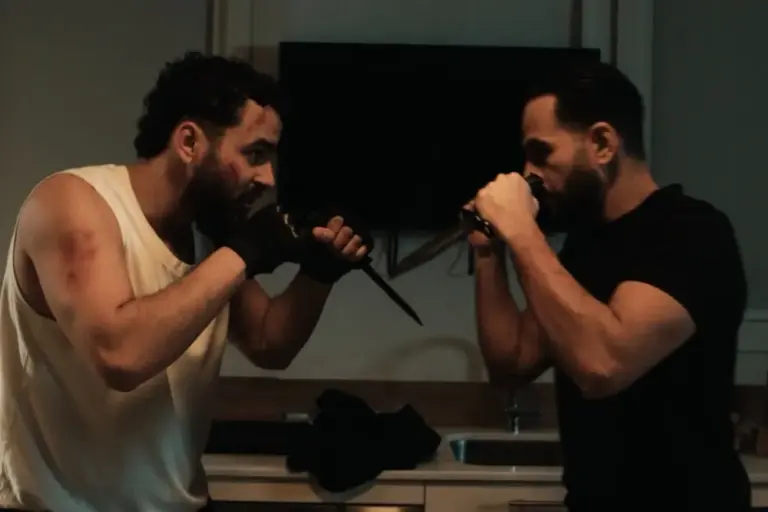
Leading the presentations is PLIA, an AI-powered production platform designed specifically for film and audiovisual projects. The company has developed an integrated production-management solution aimed at consolidating the vast amounts of information generated throughout the creative and production lifecycle into a single, accessible platform. PLIA will present its real-world application on the feature film "Playback," demonstrating how the technology handles script breakdown, pre-production planning, and production tracking. By bringing together scripts, notes, budgets, location photography, and detailed production breakdowns, the platform seeks to streamline information management across complex production workflows. The presentation will be led by Jose Velasco, CEO of PLIA.
Another major player participating in the showcase is TBS — Tech Brand Stories, formerly known as Telefónica Broadcast Services. Operating as the Telefónica Group’s creative production company and audiovisual agency, TBS handles live production, broadcast services, branded content, and entertainment. With a team of more than 450 professionals managing major sporting events, live broadcasts, non-fiction programming, documentaries, and current-affairs content, the agency is uniquely positioned to explore large-scale technical integration. Their case study will examine the convergence of virtual production, augmented reality, motion graphics, and artificial intelligence, illustrating how these tools are being woven into contemporary production environments. Insights will be shared by Alberto Gonzalo, Graphics Supervisor, and Luis Miguel Boedo, Technical Coordinator.
Localization and global distribution form the core of the presentation by Hark Media — Go Global. Specializing in entertainment localization, the company provides translation, subtitling, dubbing, and voice-over services to major streaming platforms and production companies. Their session will explore the emerging role of artificial intelligence in dubbing, investigating how hybrid workflows that combine cutting-edge technology with human expertise can effectively support the localization of content for diverse international markets. The presentation will be delivered by Paula Ferrari, Founder and CEO of Go Global.
Post-production and visual effects innovation will be highlighted by Xpost Studios, a subsidiary of the Secuoya Content Group based out of Madrid Content City. As a premier post-production and VFX facility equipped with advanced infrastructure for editing, color grading, sound design, and digital workflows, Xpost Studios sits at the heart of Spain’s production infrastructure. Marcos Requena, Post-Production Manager, will lead the session focusing on the practical application of new technologies to VFX and post-production pipelines, demonstrating how these innovations are altering the speed and quality of content delivery.
Bridging the gap between creative talent and industry decision-makers is Story Pitcher, a digital platform created to connect screenwriters, directors, and independent audiovisual creators with production companies and content platforms. The platform utilizes a model that blends AI-powered matching algorithms with robust legal-protection tools, designed to foster more direct and secure connections within the industry. Frank Belyeu, CEO of Story Pitcher, will present the platform’s methodology during the showcase.
Complementing the technological presentations, creative strategist and talent manager Mercedes Santalla will address the vital commercial and strategic steps required to bring innovative projects to fruition. Santalla works extensively at the intersection of creative practice and technology, helping emerging projects navigate the journey from initial development to the open market. Her session will tackle the evolving dynamics between artistic talent, emerging technologies, and sustainable business models in the contemporary marketplace.
Location scouting, a traditionally labor-intensive and localized phase of production, is the focus of Scoutters, a digital search and management platform developed by the Spanish firm Scout & Film. Drawing on extensive practical experience in managing locations for major film and advertising productions, the platform connects location scouts, agencies, production companies, and regional film commissions with optimal shooting sites. Rubén Souto and Jose Díaz, co-founders of Scout & Film, will explore how modern digital tools are fundamentally transforming the way production teams source, manage, and present filming locations.
Rounding out the case studies is Paramotion Films with its HaMo real-time animation system, developed through the Next Lab Generation R&D initiative. HaMo is an advanced real-time motion-capture system built for 3D animation and digital puppetry. By utilizing inertial sensors to capture an operator’s physical movements and integrating with Unreal Engine, the system translates physical performance into a CGI character in real time. This breakthrough technology allows virtual characters to perform live alongside human presenters and audiences, opening up expansive new possibilities for studios, live events, and social media content. Jose Luis Farias, CEO of HaMo, and Alfonso Fulgencio, CTO of HaMo, will present the system as a prime example of research and development successfully transitioning from prototype to production-ready technology.