Most modern Bluetooth speakers look and feel entirely interchangeable. They are typically round, black, rubberized objects engineered to quietly disappear onto a bookshelf, slip into a beach bag, or blend into the background without ever asking anyone to look at them twice. That pervasive sameness represents a quiet compromise that the consumer technology industry rarely talks about. Over the years, everyday society has largely accepted that everyday consumer electronics are allowed to look utilitarian and boring as long as they function properly. In doing so, consumers have quietly let go of the idea that an object used daily should also carry deeper meaning, cultural resonance, or emotional weight.
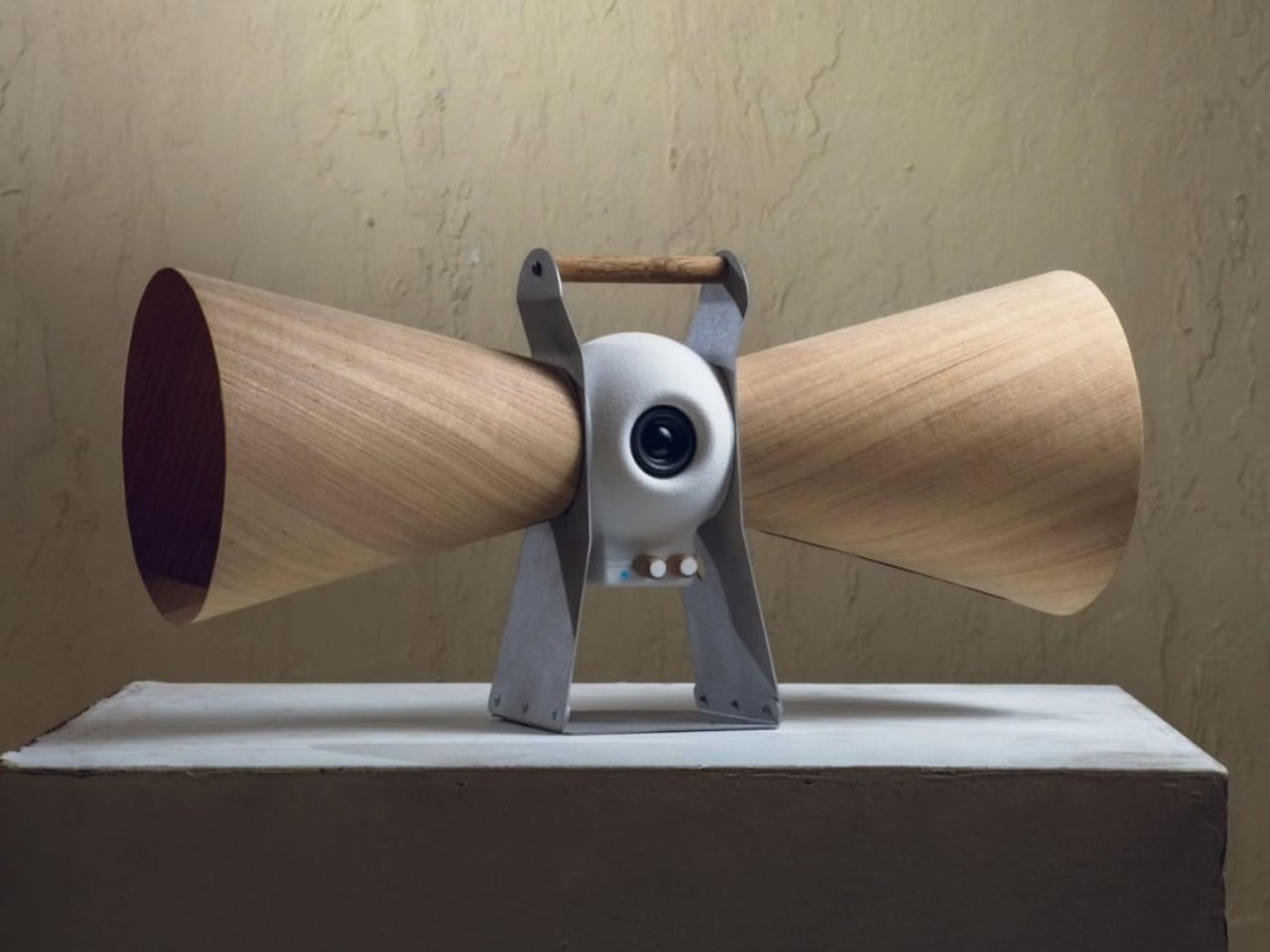
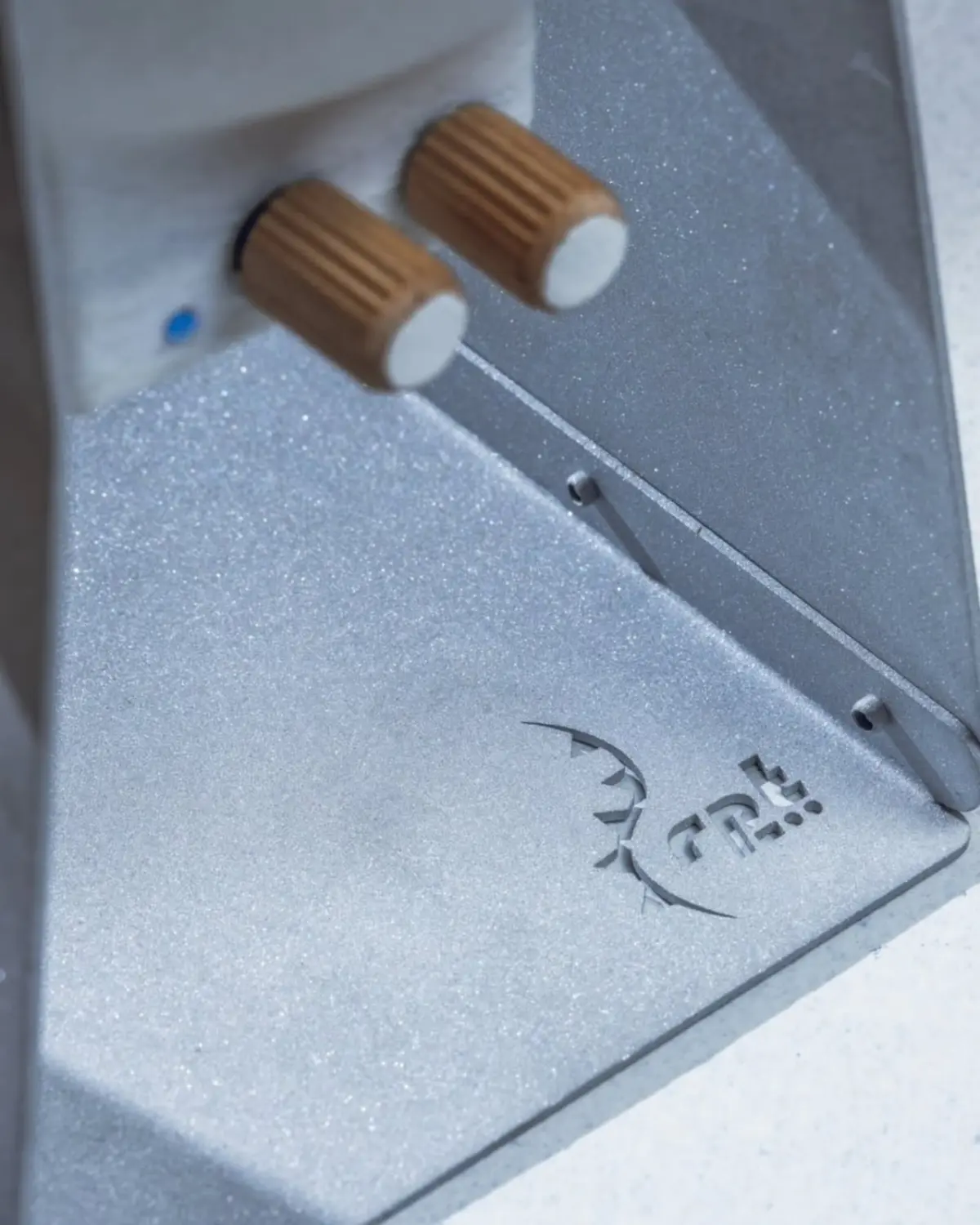
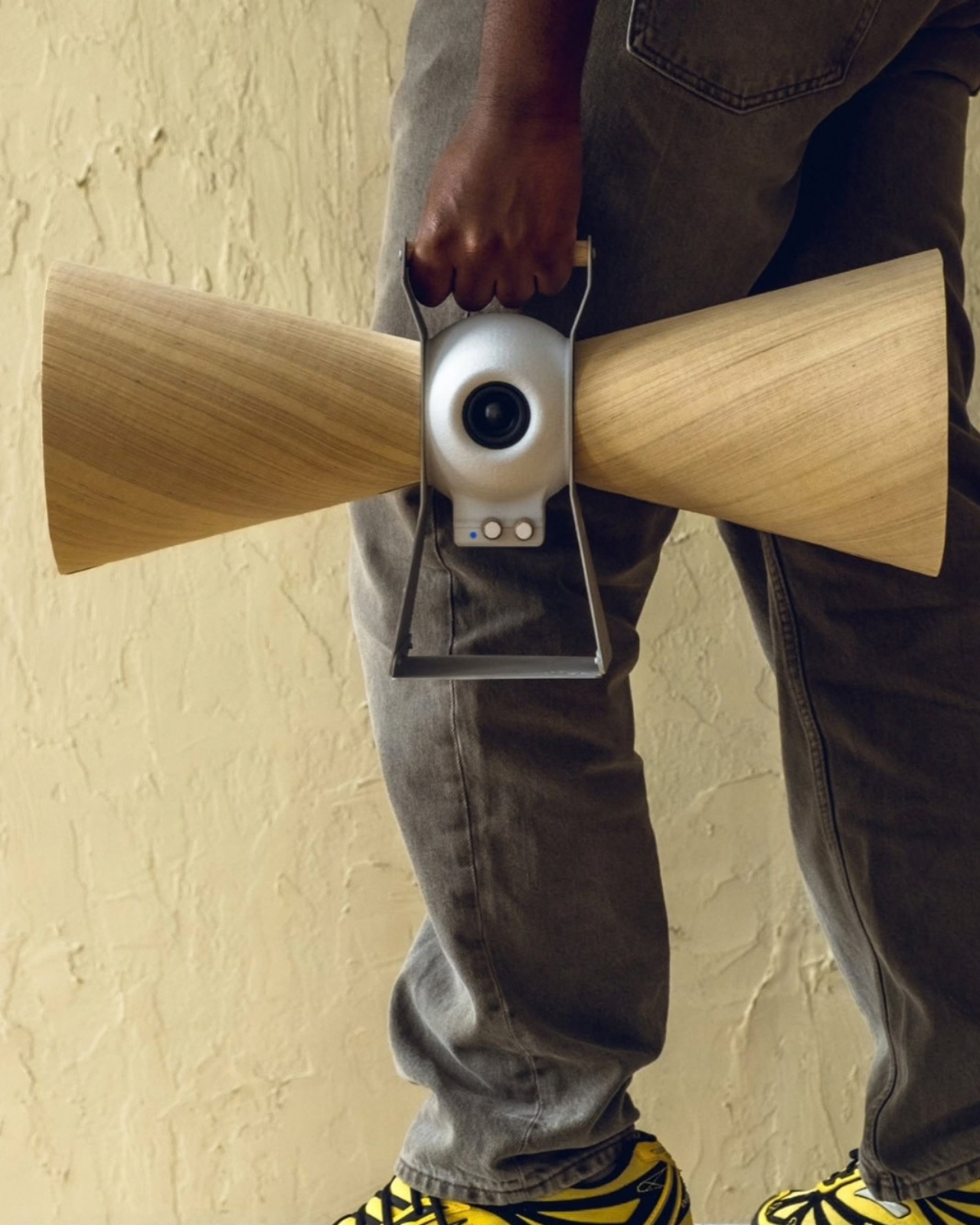
Chicago-based architect and designer Larry Tchogninou is pushing back against that universally accepted trade-off with his latest creation. Rather than starting his design process from a generic plastic pod shape, Tchogninou built his entire object around the form of the gankéké—a traditional double bell used in ceremonial and communal music across Benin, the country where Tchogninou is from. The resulting device is a wireless speaker shaped like two flared acoustic cones meeting precisely at a center point. It is meticulously wrapped in a warm wood veneer and mounted gracefully on a sandblasted aluminum frame, with an authentic oak dowel handle running through the top. Visually, the piece looks nothing like a standard piece of consumer technology. Instead, it resembles a traditional musical instrument that coincidentally happens to stream a modern Spotify queue.
Tchogninou’s background heavily informs this unique approach to hardware design. As a Chicago-based architect and designer who was mentored early in his career by the late visionary Virgil Abloh, that elite creative lineage shows up clearly in how he treats physical materials. Rather than using wood, metal, and plastic merely as surface finishes to mask internal components, Tchogninou treats them as active carriers of cultural and historical meaning. He has noted that the inspiration for the Gankéké speaker struck him after he realized how many audio gadgets he had accumulated as gifts over the years without ever truly understanding how any of them worked internally or where their aesthetic came from. Rather than accepting another mass-produced box, he decided to build his own audio device from scratch. Crucially, instead of hiding the engineering inside a sterile plastic shell, he designed a housing that elevates the mechanics and the sculptural form into the primary reason to look at the object.
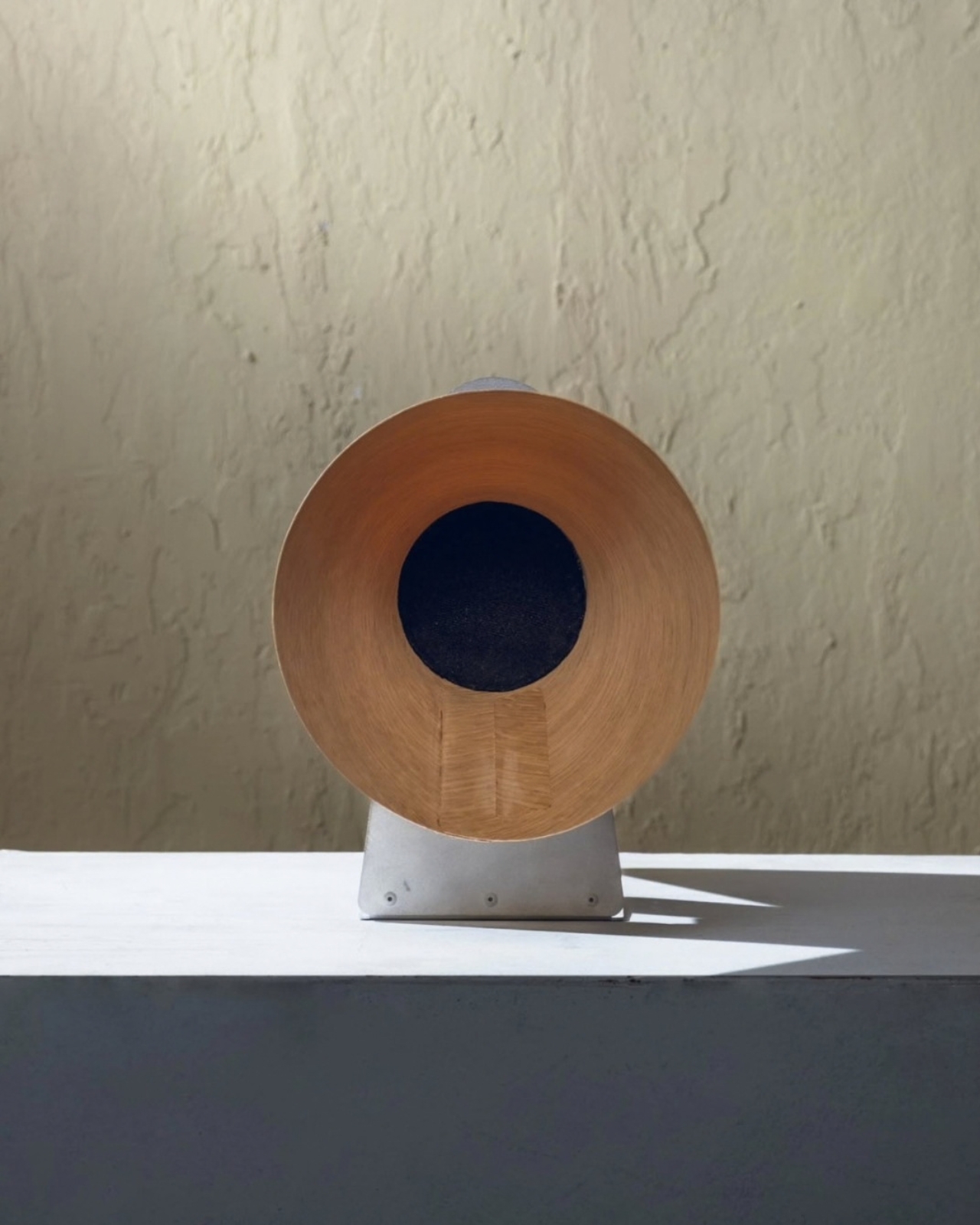
Beneath its artistic exterior, the Gankéké features a thoughtfully engineered acoustic architecture. Housed inside the dual wooden horns are lateral speakers paired with a central subwoofer positioned neatly between them in a magnet-to-magnet configuration to ensure structural stability and reduce unwanted vibrations. The user interface remains refreshingly analog for a wireless device, honoring the tactile nature of traditional instruments. Physical volume and power controls are neatly positioned on the right side of the device, while a dedicated bass dial sits independently on the left side, giving listeners direct control over their sound profile. For physical connectivity, the unit includes a standard micro-USB charging port alongside a traditional line-in jack for users who prefer a wired audio connection. Tchogninou notes that the internal battery holds approximately three hours of continuous playback at medium volume. While that battery life will not outlast a cross-country flight to Los Angeles, extended portability was never the primary design goal or pitch for the product.
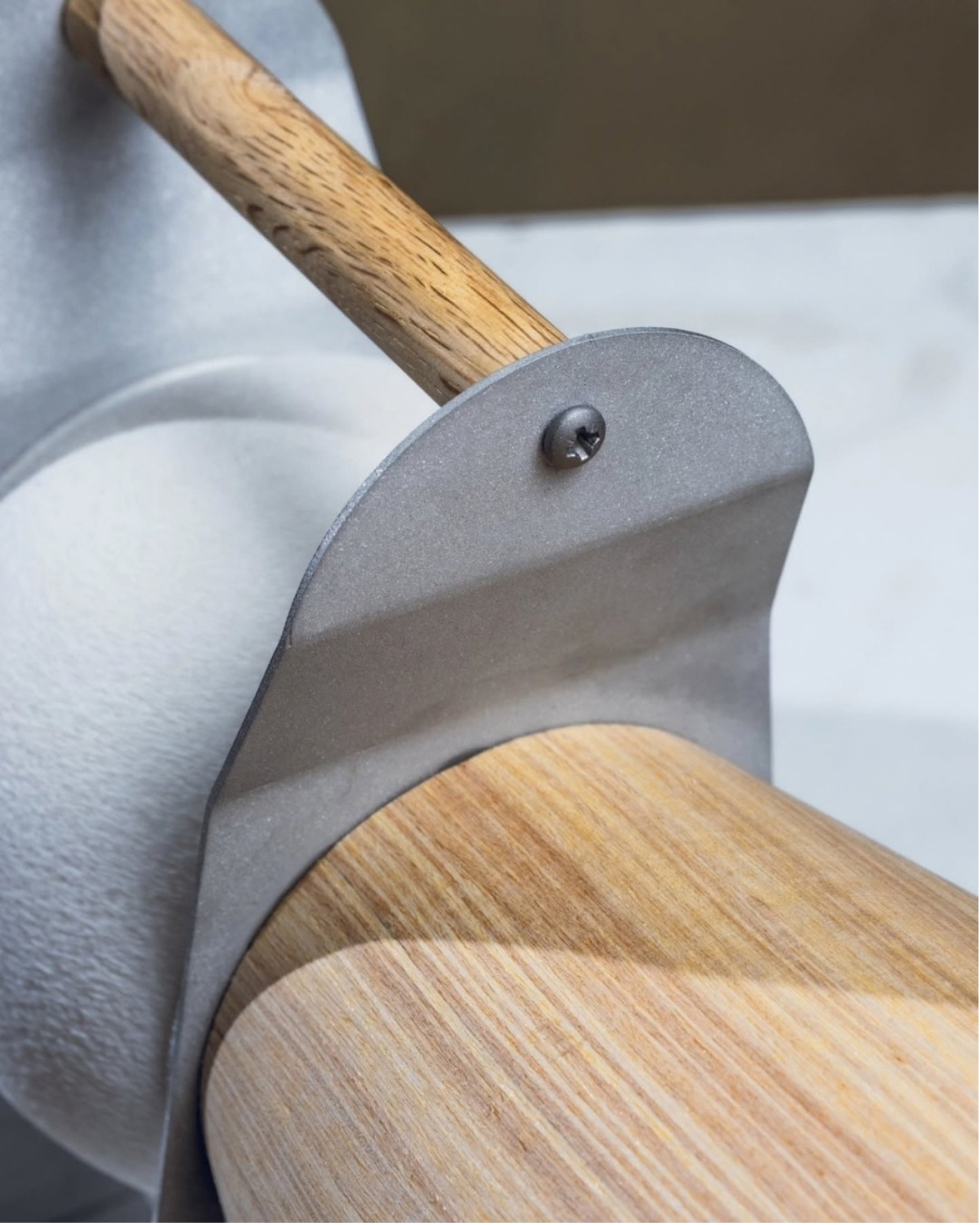
What truly elevates the object and justifies its presence in a modern living space is the level of dedicated craftsmanship involved in its production. Every single unit of the Gankéké is made to order, constructed meticulously from plastic components, wood veneer, oak dowels, and sandblasted aluminum, resulting in a strict four-week lead time before the product is ready to ship to a buyer. That kind of unhurried patience is remarkably rare in a consumer electronics category where most purchasers expect same-day delivery for a gadget they will likely discard or forget about within a year. Priced at $700, the Gankéké sounds steep when compared next to a mass-produced Bluetooth speaker found at a local big-box retailer. However, that price point shifts into perspective when evaluating what the consumer is actually paying for. Buyers are not merely purchasing an electronic audio component; they are acquiring a handcrafted sculpture with a fully functional speaker built directly into its conceptual logic, fabricated by a single designer who understood the cultural significance of the shape long before he worried about the internal circuitry.
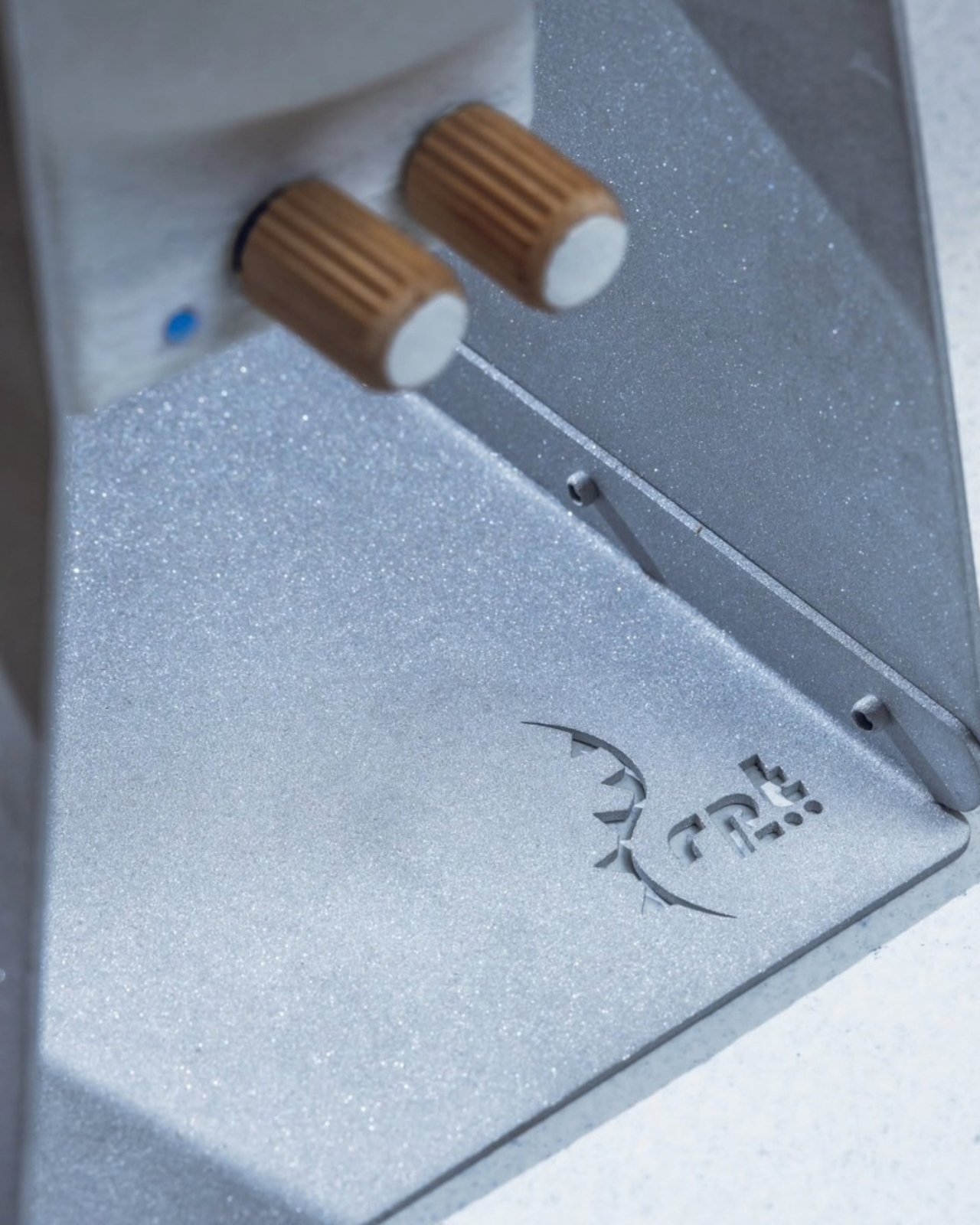
What makes the project particularly compelling is that it refuses to sand down its cultural specifics to appeal to a broader, more generalized global audience. A significant portion of industrial design aimed at the mass market tends to neutralize culturally specific forms until they read as generically modern and frictionless. The Gankéké does precisely the opposite. It keeps the distinct double-bell silhouette fully legible, retains the authentic traditional name, and allows its rich backstory to sit right on the surface of the object rather than tucking it away in a press release that most consumers would never read. That intentional design choice transforms the object from a disposable lifestyle accessory into a tangible act of cultural memory that happens to connect effortlessly to a smartphone via Bluetooth.
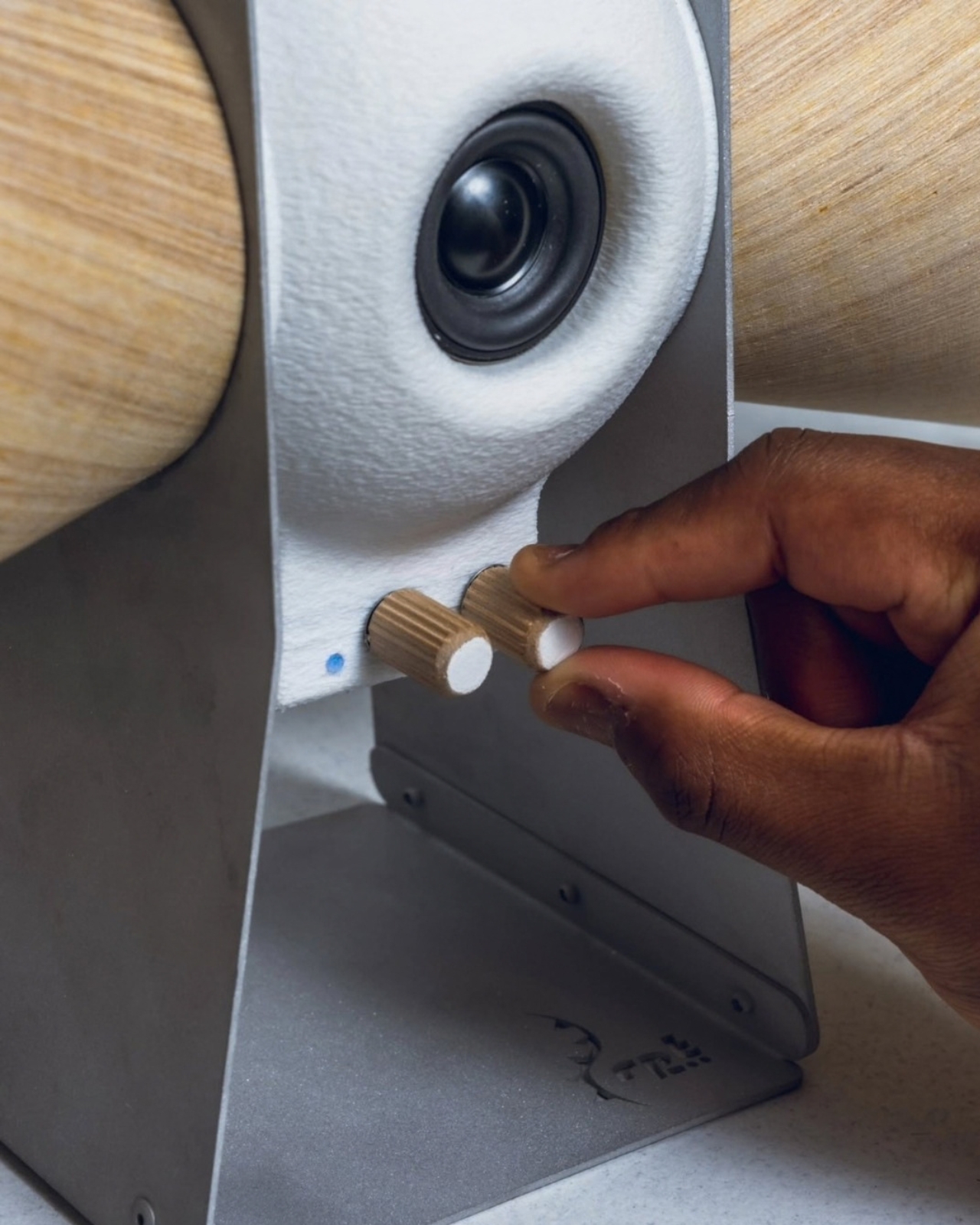
Objects of this caliber will likely never replace the fifty-dollar portable speaker tossed haphazardly into a gym bag, but that was never the intended competition. Instead, the Gankéké competes directly with the pervasive idea that a speaker has to be visually forgettable and emotionally hollow to be considered useful. It proves that an everyday electronic device can successfully embody a historic shape passed down through generations, sit proudly on a shelf as a striking piece of fine art, and still deliver clear audio playback when called upon. Striking that delicate balance is far more difficult to execute in practice than it sounds, and Tchogninou has managed to achieve it without ever making the resulting object feel like a costume or a superficial novelty.