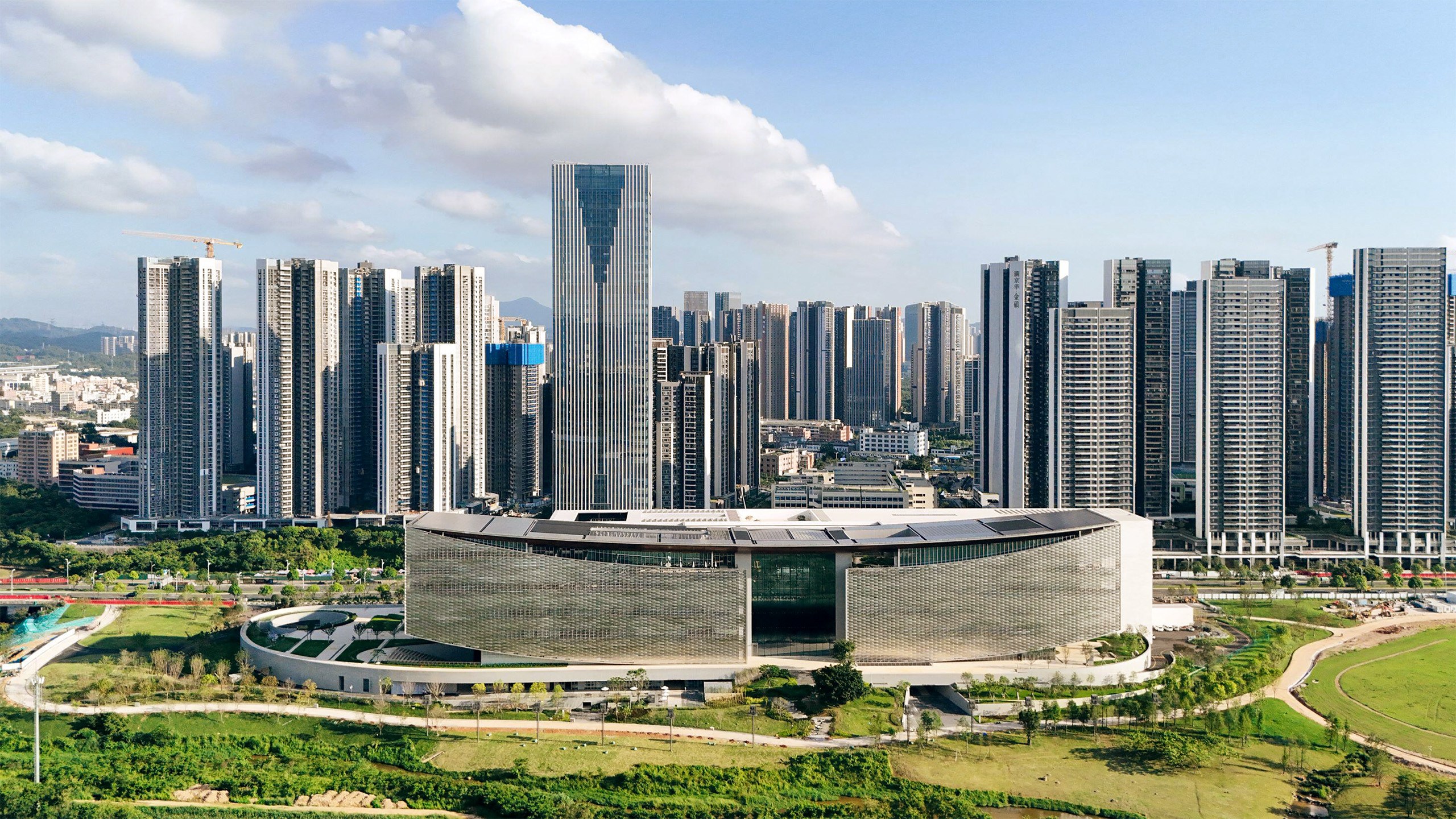
China’s high-tech supercity, Shenzhen, is experiencing an entirely different type of boom: a cultural and museum renaissance. Long defined by relentless manufacturing, electronic markets, and software development, the megacity is rapidly expanding its artistic footprint. The Shenzhen International Art Museum opened in May, accompanying the simultaneous launch of two other state-funded institutions dedicated to everything from cutting-edge design to paleontology.
This trio of high-profile openings is already drawing in weekend day-trippers from nearby Hong Kong, and urban planners promise there is much more to come. If this unfolding cultural shift takes deep root, it could permanently alter global perceptions of China’s Silicon Valley, a metropolis that has frequently been dismissed by critics as a hyper-efficient corporate hub without a soul.
During the megacity’s remarkably brief life so far, it has largely functioned as a transactional landscape—a place where people arrive explicitly to get something. Historically, visitors and migrants came for a factory job, a knock-off gadget or garment, a cheap manicure, a soothing massage, or a cut-price dinner. Until recently, there was virtually nothing in the way of high culture to see, and remarkably, virtually no one in the city—not even the founding executives of its most famous global tech giants, such as Tencent, BYD, and Huawei—was actually born in Shenzhen.
Over the past three decades, these massive tech conglomerates have generated astronomical fortunes, fundamentally transforming the futuristic skylines of the Futian and Nanshan districts. Their lasting cultural and economic influence extends directly to the legions of immigrant workers who arrived from all corners of China, eventually putting down permanent roots and starting families.
Today, a brand-new generation of native-born residents, possessing entirely different demands and expectations compared to their migrant parents, is entering the city’s notoriously diligent and fast-paced workforce. Consequently, Shenzhen often feels much more like a high-octane workplace than a traditional place to live. Autonomous drones, advanced robots, and other whizzy, AI-enabled gadgets form an inescapable part of the city’s hyper-productive, work-oriented daily rhythm.
The Rise of Private Arts Institutions
Amid this corporate landscape, the upcoming debut of the Róng Museum of Art stands out as one of the most highly anticipated additions to Shenzhen’s expanding cultural framework. Scheduled to open next year, the private arts institution is backed by Tencent founder Pony Ma and will form an integral part of the M80 architectural complex designed by renowned architect Ole Scheeren. The complex’s name is a deliberate nod to 1980, the milestone year when Shenzhen was officially designated as mainland China’s first special economic zone.
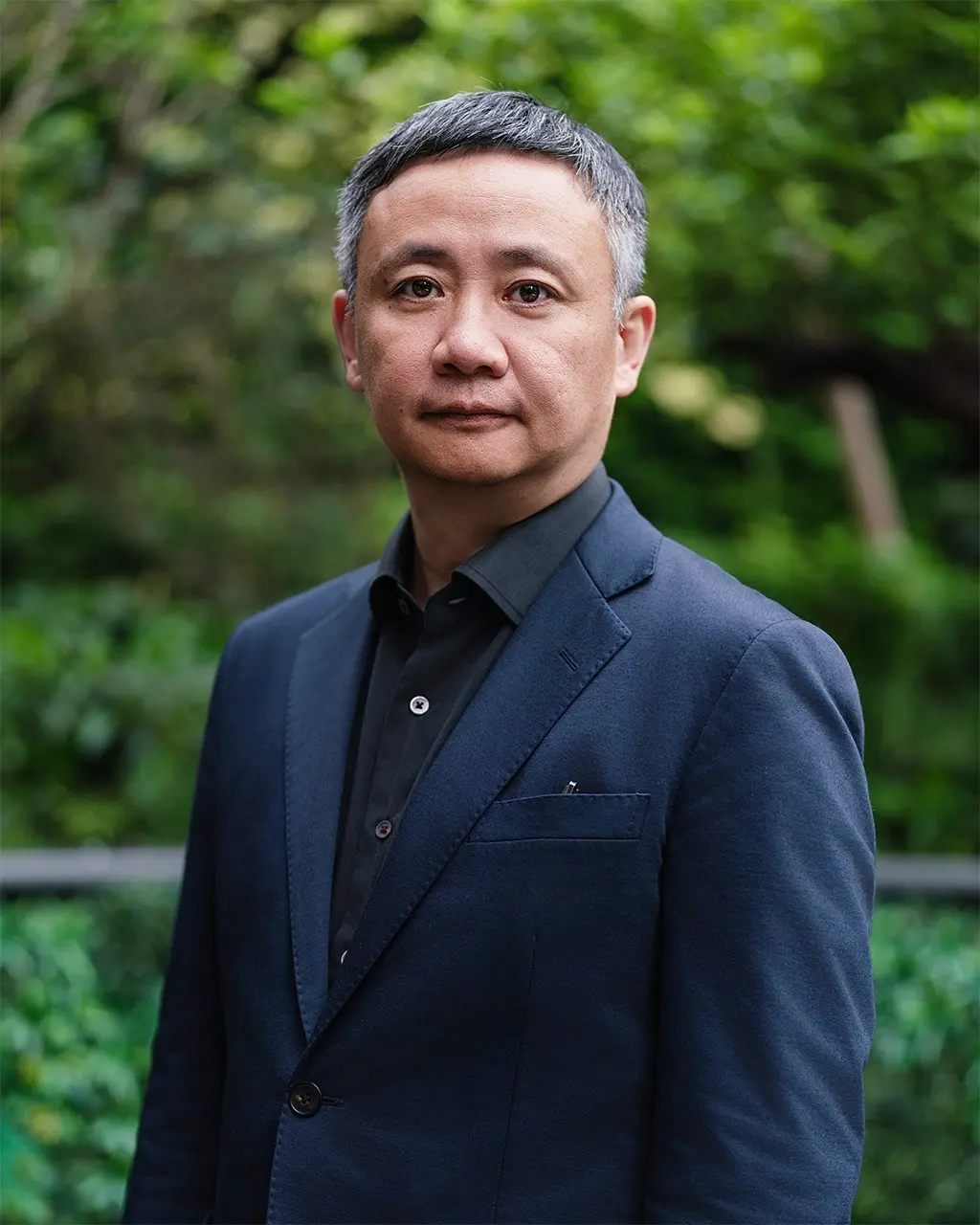
The museum’s founding director and very first employee, Pi Li, brings a wealth of international expertise to the role, having spent the past 12 years working at major Hong Kong arts institutions including M+ and Tai Kwun. Born in Wuhan, Pi spoke with media about Shenzhen’s bold cultural vision and the unique gravitational pull that successfully lured him back across the border to the mainland.
When asked about the current museum boom, Pi emphasizes that such a dramatic transformation does not happen overnight. The local government has strategically made the development of these cultural facilities a mandatory condition for urban real estate development over the past 10 to 15 years. Driven by an ambitious vision, the Shenzhen City Planning Bureau aims to transform the entire metropolis into an expansive, open-air exhibition space showcasing the very best of both Chinese and international architecture.
A Twin City Dynamic With Hong Kong
The historical and economic development of Shenzhen has always been intimately attached to Hong Kong. Naturally, the most densely built-up and economically vibrant areas of Shenzhen are located in close proximity to the border. For many years, when young local artists traveled internationally, they would inevitably rely on a familiar geographic shorthand, noting that when they stated they were from Shenzhen, they always had to add an extra explanatory phrase: "the city next to Hong Kong." According to local observers, however, that linguistic caveat is becoming increasingly unnecessary as Shenzhen establishes its own distinct global identity.
This distinct identity is largely embodied by the shen er dai, a popular term currently circulating to describe "the second generation of Shenzhen." Many of the museum’s own staff members, born after the 1980s, proudly refer to themselves by this moniker. Born to parents who migrated from other provinces, they grew up entirely within the unique ecosystem of Shenzhen. Demographic statistics highlight this stark generational and cultural divide: the average age in Shenzhen hovers around 32 or 33 years old, compared to 47 or 48 in neighboring Hong Kong. Furthermore, a remarkable 80 percent of Shenzhen’s population is of working age, a proportion that is double that of Hong Kong.
This intense demographic focus on labor presents distinct logistical hurdles for cultural institutions. The Róng Museum of Art is located in Houhai, a district whose Chinese name literally translates to "the back of the sea." A visitor walking down the district’s high street before 2:00 PM will find virtually no pedestrians on the pavement because everyone is hard at work. Pi notes that this reality poses a major challenge for arts management. Because every museum fundamentally requires an audience to thrive, leadership is currently evaluating unorthodox operating hours. Instead of adhering to a traditional 10:00 to 18:00 schedule, the museum is considering shifts like 12:00 to 20:00, or even keeping doors open from midday until 22:00 to accommodate the local lifestyle.
Despite these hurdles, Pi was drawn back to the mainland by an intangible, infectious energy. People in Shenzhen are fundamentally unafraid of the new. Even amid regulatory and bureaucratic limitations, residents display a fierce determination to make things happen through creative means. That entrepreneurial drive is vital when building a cultural institution from the ground up. Pi views Shenzhen as a dynamic twin city to Hong Kong, yet recognizes a distinct atmospheric vibe across the border—one that makes him feel capable of pioneering entirely new approaches. While Shenzhen remains the city situated next to Hong Kong, it is charting a course that refuses to simply repeat its neighbour’s historical story.
Redefining Contemporary Art and Collections
When asked to introduce the institution’s core mission, Pi explains that the Róng Museum of Art focuses squarely on 21st-century visual arts, performing arts, and digital culture. The Chinese character róng carries multiple rich meanings, including merging, combining, and harmony. The museum aims to serve as an open, porous platform where diverse people can coexist and learn from one another. Plans are underway to introduce international culture and creativity to Shenzhen while simultaneously presenting localized works that help audiences understand the city’s fascinating cultural history within a broader global context—tracing a trajectory that stretches all the way from the world’s factory of shanzhai copy culture to advanced, open-source artificial intelligence models.
Unlike many of its predecessors, the museum does not currently possess a permanent collection. While future acquisitions are planned, the immediate priority is establishing a robust, innovative programming schedule that breaks sharply with past models. The historical evolution of private museums in China has moved through distinct phases. The first generation of private museums in the 1990s was heavily supported by real-estate developers attempting to convince prospective buyers to purchase property in the burgeoning city. The second generation was subsequently initiated by prominent private collectors seeking dedicated spaces to share their personal holdings with the general public. In contrast, the Róng Museum aims to build an institution rooted in collective memory and forward-thinking programming rather than mere asset accumulation.
Comparing Shenzhen’s local audience to those found in China’s other tier-one cities reveals a refreshing lack of pretension. Beijing remains a traditional city of culture, where people deeply revere established artists and writers whose names carry institutional weight. Hong Kong, conversely, is characterized by a highly educated, well-traveled populace that eagerly anticipates the arrival of major international art stars and generally follows authoritative curatorial voices. Shanghai occupies a middle ground between the two.
Audience members in Shenzhen, however, tend to focus purely and directly on what they personally feel and see. Big international names alone will not automatically influence their decision to attend an exhibition—unless the featured artist happens to be a global phenomenon like Takashi Murakami or Yoshitomo Nara. It is precisely this open-minded curiosity and lack of artistic dogma that grants the city’s new cultural directors the freedom to experiment with bold and unconventional ideas.