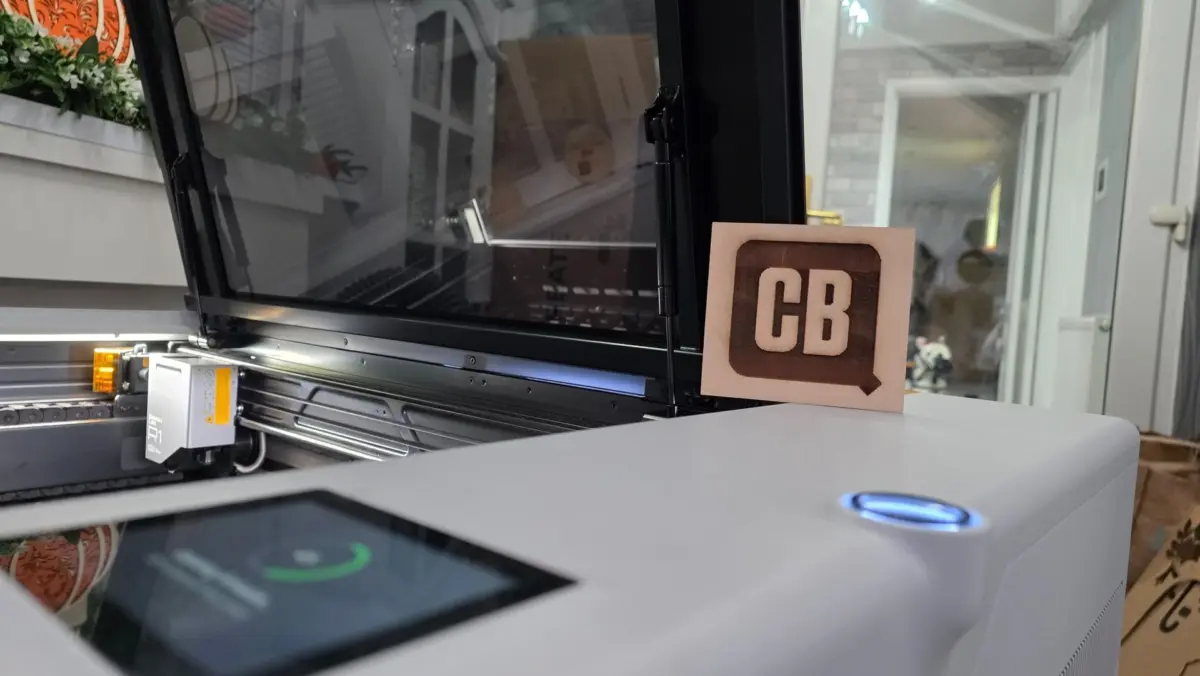
Bambu Lab, a dominant force in the desktop 3D printing industry for nearly half a decade, has officially announced its entry into the standalone laser cutting and engraving market with the launch of the Bambu Lab R1. This 55-watt CO2 laser cutter represents a major milestone for the company, marking its first-ever product outside of its highly successful 3D printing ecosystem. Known for manufacturing some of the most user-friendly and advanced 3D printers available today, Bambu Lab is now directly challenging established laser brands like xTool and Glowforge. The introduction of the R1 signals a bold diversification strategy, bringing the company’s signature focus on automation, premium design, and accessible user interfaces to the desktop laser cutting segment.
For the past five years, Bambu Lab has built a formidable reputation by transforming the consumer and prosumer 3D printing landscape. Before their arrival, high-speed, multi-color printing was largely the domain of dedicated hobbyists willing to spend hours calibrating and troubleshooting complex machines. Bambu Lab simplified this with plug-and-play systems, robust auto-leveling, and seamless software integration. By moving into the standalone laser market, the company is attempting to replicate this disruptive formula. While Bambu Lab has previously experimented with modular crafting tools—most notably integrating laser cutting and blade-cutting capabilities into its latest H-series 3D printers, such as the Bambu Lab H2S—the R1 is a dedicated, high-power machine built from the ground up to handle demanding cutting and engraving tasks.
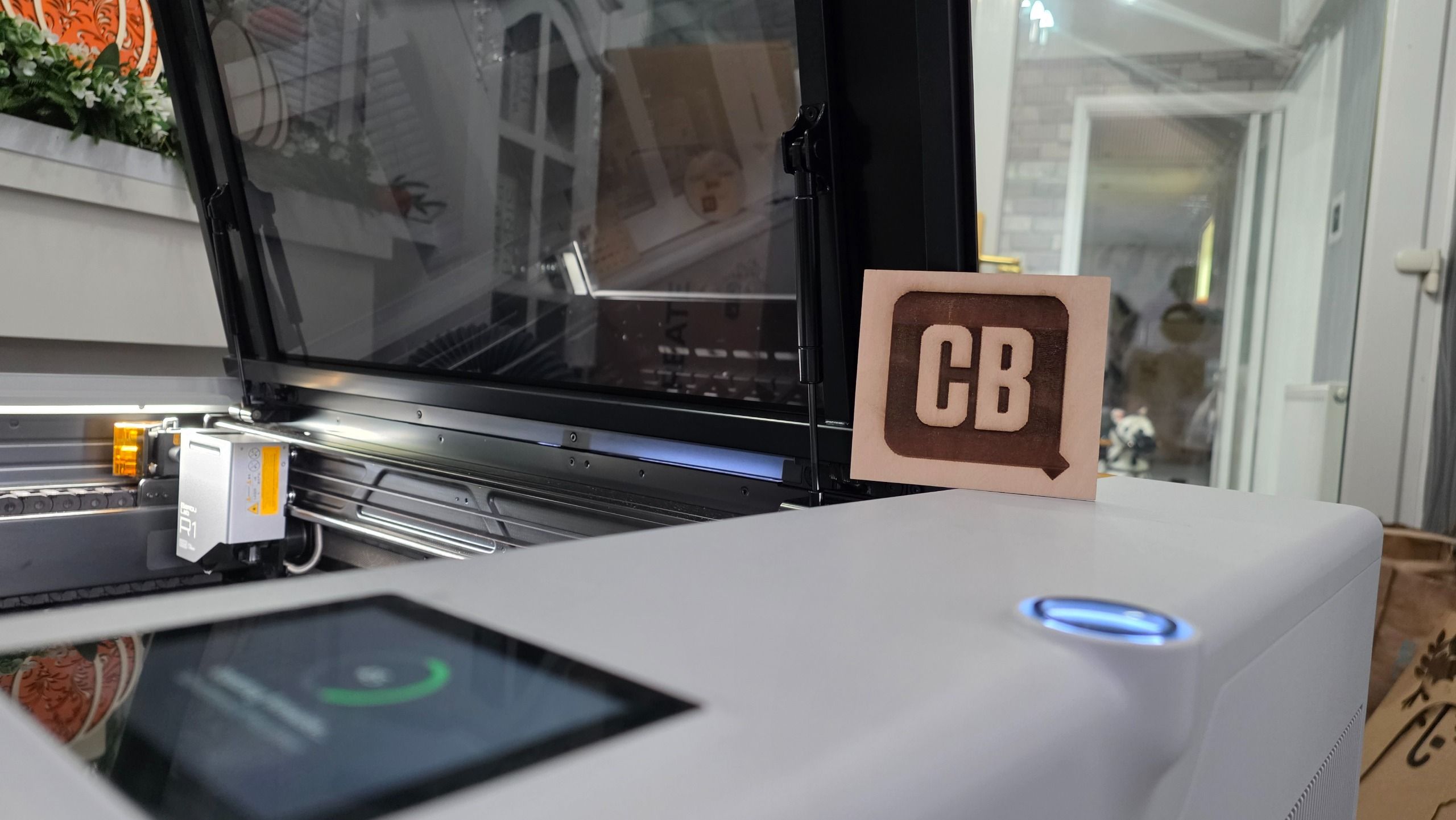
One of the most compelling aspects of the Bambu Lab R1 is its aggressive pricing structure. Desktop CO2 lasers have traditionally been premium, high-barrier-to-entry machines. The R1 is priced at $2,499.00 in the United States, £2,249.00 in the United Kingdom, €2,499.00 in Europe, and AU$3,849.00 in Australia for the base unit without additional add-ons. To put this into perspective, competing entry-level desktop CO2 laser systems, such as the xTool P2S, launched with a manufacturer’s suggested retail price of approximately $4,299. By positioning the R1 at a significantly lower price point, Bambu Lab is making professional-grade CO2 laser technology far more accessible to individual makers, small businesses, and educational institutions, potentially forcing a broader price correction across the industry.
Historically, the single greatest barrier to entry for CO2 laser users has been the complex and often frustrating process of optical path alignment. Because CO2 lasers rely on a series of mirrors to direct the laser beam from the tube to the cutting head, even minor physical shifts can misalign the beam, resulting in poor cuts or complete operational failure. On traditional machines, correcting this alignment is a painstaking manual chore. Users must tape thermal paper over mirror mounts, fire test pulses to observe the burn marks, and manually adjust fine screws on each mirror bracket until the path is perfectly straight. Bambu Lab addresses this head-on with its proprietary TriSense System, which enables the R1 to automatically align its own optical path. In addition to optical alignment, the TriSense System automates material detection, surface height calculations, and tool head path mapping with a single click, eliminating the trial-and-error setup phase that has long plagued desktop laser users.
To ensure the machine maintains its precision over long-term use, Bambu Lab has developed the Vision Encoder, a specialized calibration board sold as an optional accessory. Over hundreds of hours of operation, mechanical drift—caused by belt stretching, thermal expansion, or general wear and tear—can gradually degrade a laser cutter’s accuracy. The Vision Encoder measures and automatically corrects this mechanical drift, ensuring that the R1 remains highly precise throughout its operational lifespan. This emphasis on self-calibration aligns with Bambu Lab’s broader engineering philosophy of reducing the maintenance burden on the end user.
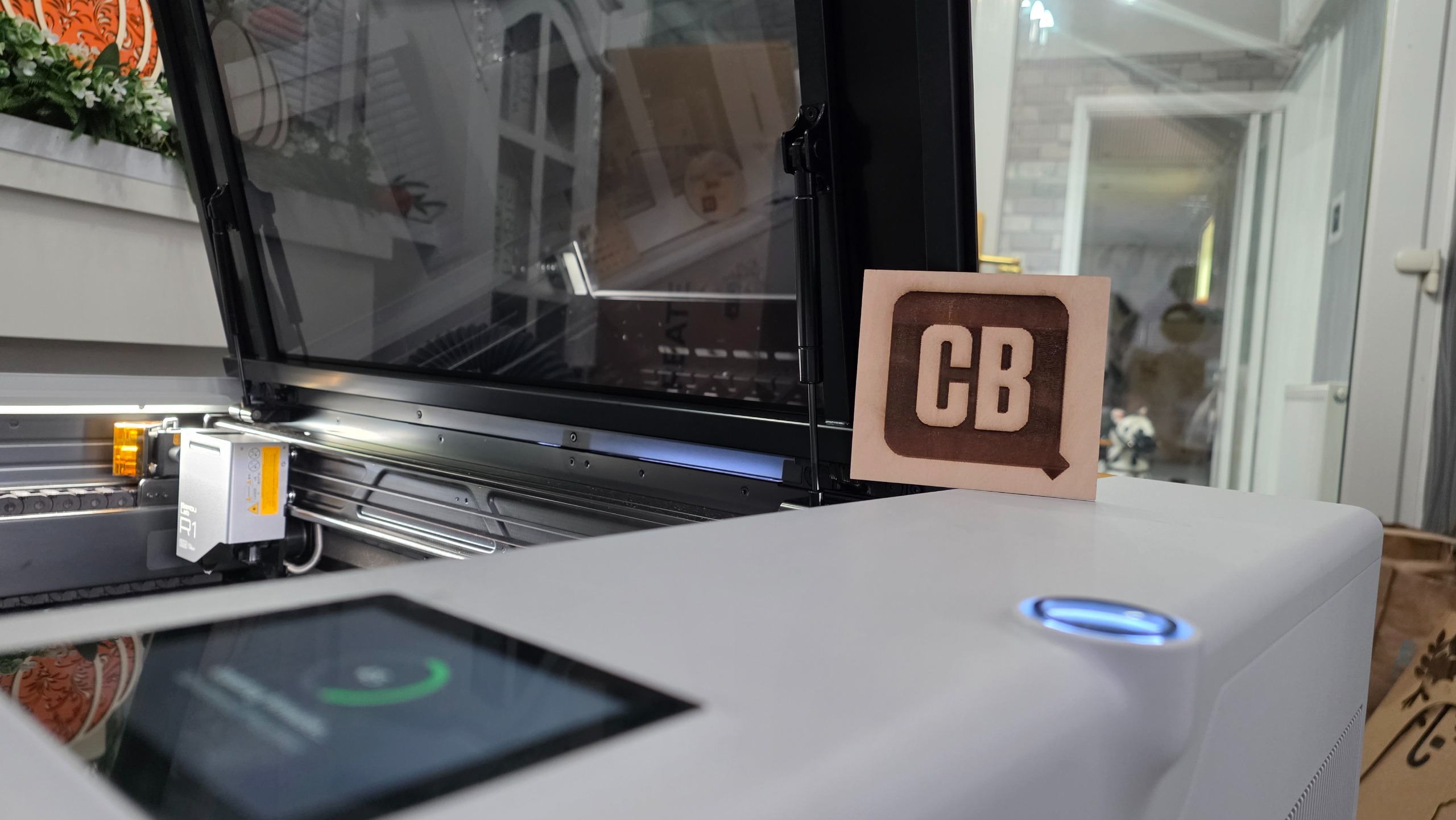
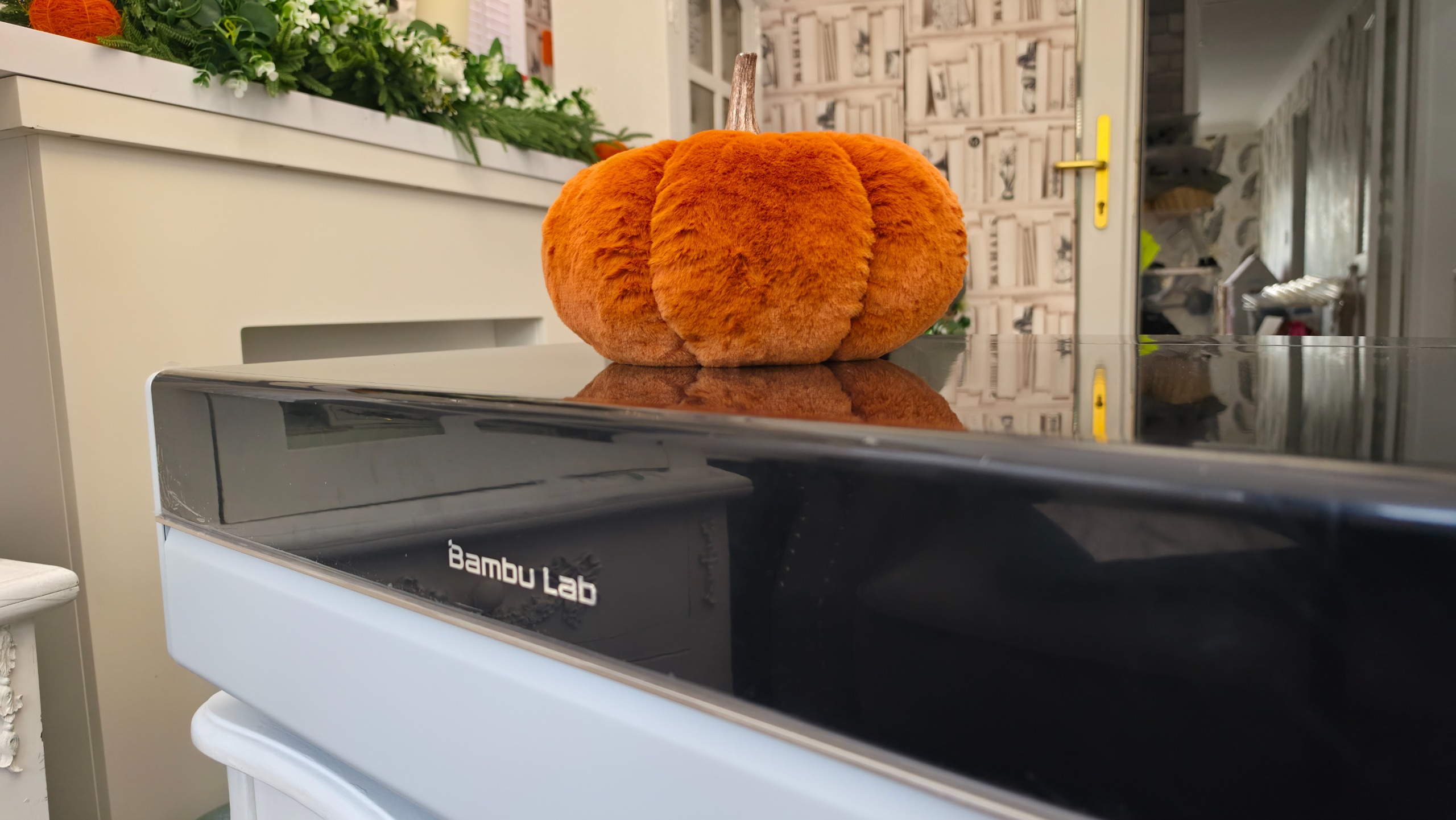
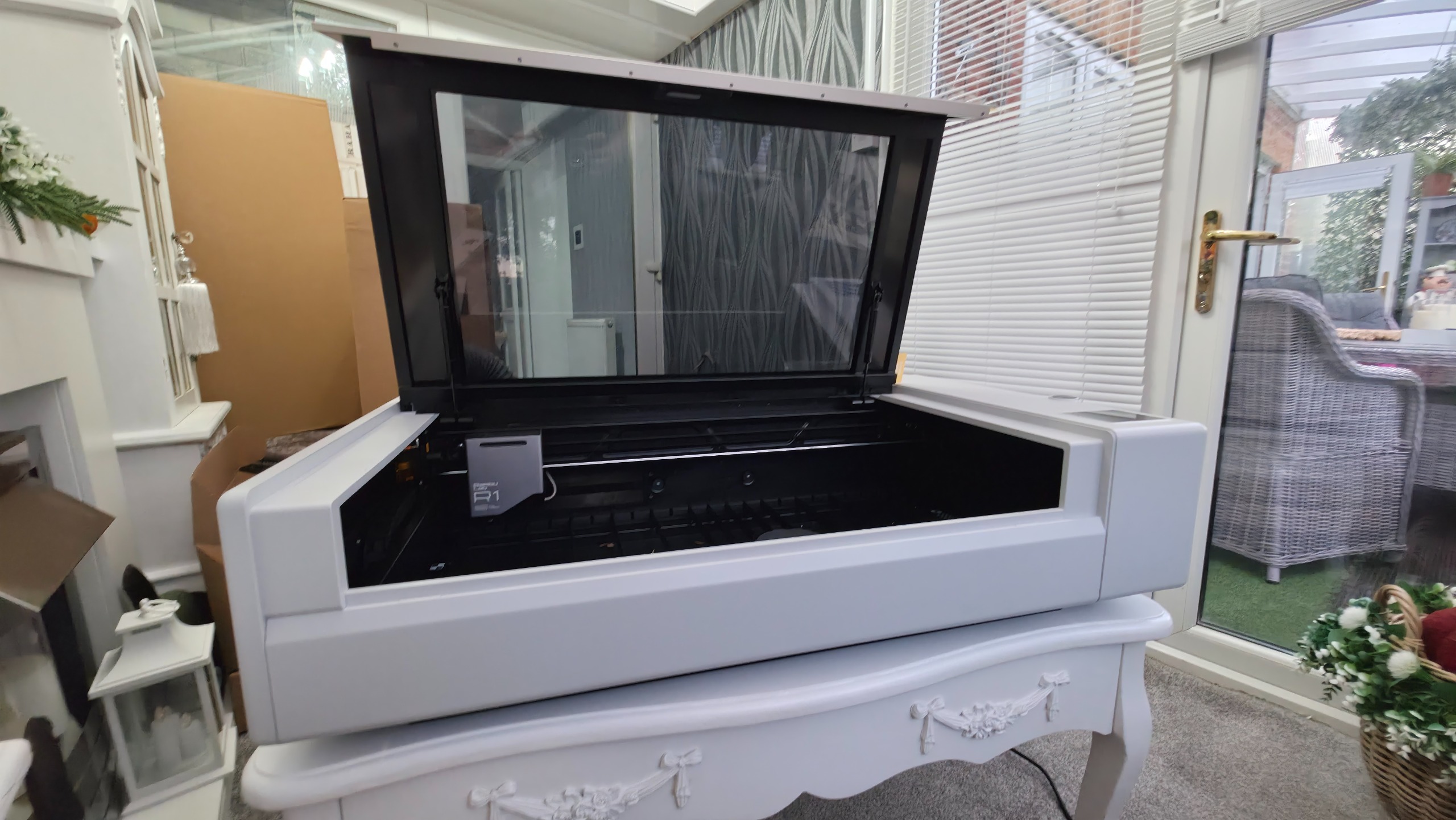
Physically, the Bambu Lab R1 is a substantial piece of hardware. Described as a heavy and bulky machine, the unboxing and initial setup process is firmly established as a two-person job. Despite its hefty footprint, Bambu Lab has designed the chassis to maximize space efficiency. According to the company, the R1 delivers a working area comparable to standard desktop CO2 lasers while occupying approximately one-third less physical space than its direct competitors. This relatively compact design is a crucial consideration for makers working out of home studios, garages, or small workshops where desk space is at a premium.
The standard working bed measures 600 by 300 mm, which is spacious enough to comfortably accommodate two sheets of Bambu Lab’s basswood plywood side-by-side. For users requiring even larger capabilities, such as those working on furniture components or oversized signage, Bambu Lab offers an optional conveyor attachment sold separately. This accessory extends the machine’s feed-through capability, allowing for continuous processing of materials up to 3,000 mm in length.
The 55-watt CO2 laser tube at the heart of the R1 provides substantial cutting and engraving power. Early hands-on testing indicates that the machine cuts through dense materials like clear acrylic with exceptional ease, performing smoothly and reliably. The CO2 wavelength is highly versatile, allowing the R1 to work with a broad spectrum of materials. It can cut wood, clear acrylic, leather, paper, and fabric, and is capable of high-detail engraving on glass, stone, and coated metals. While certain materials are not officially supported at launch due to software compatibility, testing has shown that the machine can successfully engrave alternative materials like PLA, though users are urged to strictly adhere to official safety guidelines to prevent toxic fumes or fire hazards.
Existing members of the Bambu Lab ecosystem will find the R1’s interface and software environment immediately familiar. The physical machine features a touch-screen control pad with a user interface that closely mirrors the design language of Bambu Lab’s 3D printers. The machine also integrates seamlessly with the Bambu Handy mobile app, allowing for quick setup and remote control. For desktop design and preparation, Bambu Lab is introducing Bambu Suite, a dedicated, 100% free software package. Unlike some competing design platforms that lock advanced features behind subscription paywalls or require users to purchase AI generation credits, Bambu Suite is entirely free of hidden costs. The software includes intuitive creator tools, such as automatic background removal and image-to-SVG tracing tools, enabling users to convert raster images into vector cutting paths in seconds. However, at launch, Bambu Suite is only available as a desktop application, meaning users who rely solely on tablets or smartphones for their design workflows will need to adapt.
To aid in precise design placement, the R1 features a built-in BirdsEye camera mounted in the lid. This camera provides a top-down view of the working bed, allowing users to accurately position their digital designs over physical materials. It is important to note, however, that the camera does not currently support live remote monitoring or video recording of active cutting jobs through the app. Consequently, operators must remain in close physical proximity to the machine during operation—a standard safety practice for all high-power desktop lasers.
Safety is a major focus of the R1’s design. The machine is Class 1 certified, meaning the laser is fully enclosed during operation, eliminating the need for protective safety goggles and making it safe for use in environments with children or pets. Built-in safety features include a prominent physical emergency stop button, an automatic pause function that triggers the moment the lid is opened, and integrated flame detection. For added security, users can purchase an optional Auto Fire Extinguishing System that works in tandem with the flame sensors to automatically suppress any flare-ups inside the chamber.
The launch of the R1 represents a pivotal moment for both Bambu Lab and the wider maker community. By stepping outside the boundaries of 3D printing, Bambu Lab is signaling its ambition to become a comprehensive digital fabrication brand. Early feedback from the beta testing phase suggests that the R1 is a highly polished, reliable, and powerful machine that delivers on the company’s promise of simplified automation. Pre-orders for the Bambu Lab R1 are currently live through the official Bambu Lab online storefront, with initial shipping scheduled to begin in October. As the first units prepare to reach consumers, the R1 is poised to bring a new level of competition and technological innovation to the desktop laser cutting market.