For more than four decades, human interaction with digital technology has been governed by a familiar visual grammar. Ever since the commercialization of the Graphical User Interface (GUI) pioneered by systems like the Xerox Star and popularized by the original Apple Macintosh, software has relied fundamentally on point-and-click mechanisms. To achieve virtually any digital outcome—whether booking a flight, purchasing footwear, or searching for health information—users have been required to navigate an intricate labyrinth of visual controls. The modern web experience routinely forces users to open dozens of browser tabs, adjust range sliders, fill out tedious multi-step forms, dismiss intrusive cookie consent pop-ups, and continuously cross-reference fragmented data points. Over time, digital consumers have accepted an unspoken burden: spending more time managing software mechanics than actually accomplishing their primary goals.
That long-standing contract between humans and computers is undergoing a foundational shift. Powered by rapid advancements in artificial intelligence and large language models, a new design philosophy known as Intent-Driven Design is taking hold across the digital industry. Rather than requiring users to master complex navigation hierarchies or maneuver through rigid sales funnels, intent-driven platforms operate by capturing high-level human objectives and quietly executing the necessary technical steps in the background.
This transformation draws heavily on established principles from human-computer interaction (HCI), built upon Don Norman’s foundational theories of human-centered design and Golden Krishna’s widely cited philosophy that "the best interface is no interface." As web architecture evolves, the core objective of modern digital design is moving away from crafting prettier visual controls or flashy animations toward eliminating interface friction altogether—or at least minimizing the visual overhead that has defined software for generations. For user experience (UX) designers, this evolution requires a fundamental re-evaluation of their discipline: shifting focus from designing visible visual elements to orchestrating transparent, intent-based artificial intelligence experiences.
The Death of the "10-Click" Process
To understand the trajectory of modern web design, it is necessary to examine the friction that users have long accepted as standard operating procedure. Under the traditional point-and-click interface paradigm, simple tasks are broken down into dozens of manual micro-steps.

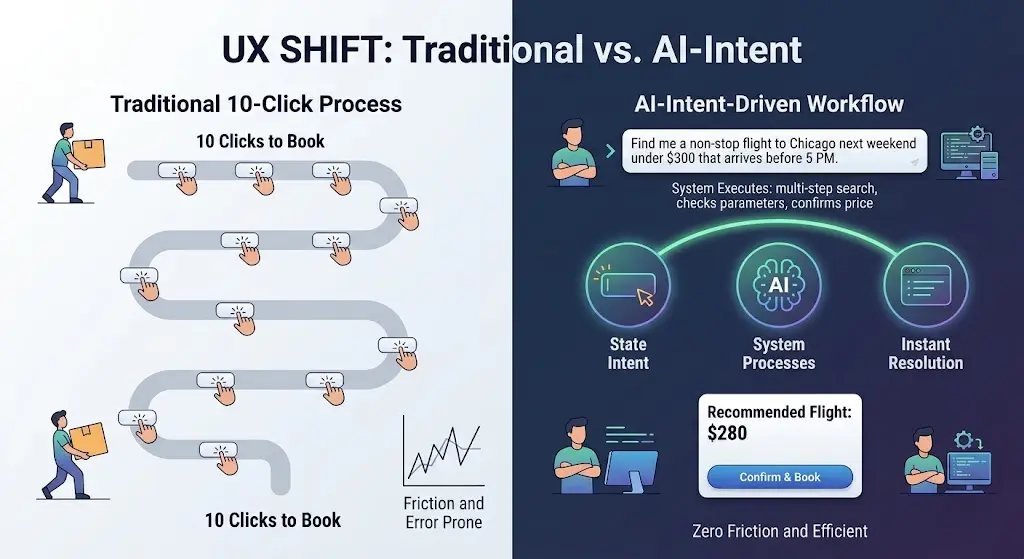
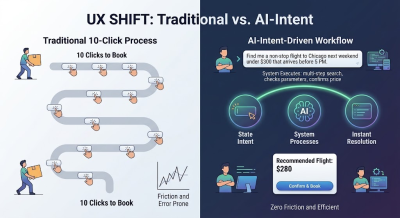
Consider the conventional workflow required to book an airline ticket online. A user must navigate to a travel portal, click into search fields, manually select origin and destination cities, toggle calendar widgets to pick departure and return dates, select the number of passengers, apply price and duration filters, scan through long lists of results, open multiple flight details in separate windows, enter passenger information into form fields, and click through sequential confirmation screens.
In this classic model, the computer functions as a passive container of static data, while the human acts as an operational orchestrator—manually inputting parameters, interpreting raw outputs, and executing every incremental command.
Intent-Driven Design completely flips this traditional dynamic. Instead of forcing the user to navigate the mechanical specifics of how to perform a search, the software presents a fundamentally different starting point by focusing entirely on what the user wants to achieve.
When a user expresses a clear, natural-language goal—such as requesting a non-stop flight to Chicago next weekend for under $300 arriving before 5 PM—the software interprets the core underlying intent. Behind the scenes, the system executes multi-step search queries across external databases, filters conflicting constraints, compares timing across airlines, and presents a single, actionable resolution. What was previously a ten-step manual process condenses into a single expression of human intent.
Real-World Platforms Replacing Buttons with Intent
This transition toward intent-driven architecture is not merely a theoretical vision for the future of web design. Several widely accessible web platforms demonstrate how capturing user intent is already actively replacing traditional visual menus and manual workflows.
1. Perplexity AI: Search Without the Open Tabs
For decades, traditional search platforms operated primarily as directory indexes. Users entered a targeted keyword query, and the interface responded with a page of ten blue links. The cognitive labor of clicking through multiple links, skimming long articles, dodging aggressive ad placements, and manually synthesizing an answer remained entirely on the user. While traditional search engines have begun integrating AI summaries at the top of query results, intent-driven platforms have reimagined the search paradigm from the ground up.
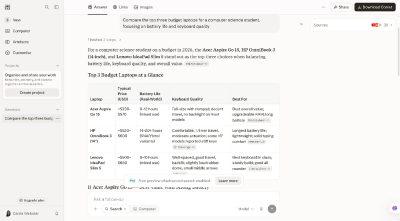
Perplexity AI illustrates how intent-focused search operates without traditional browser clutter. Instead of presenting links that require manual navigation, the platform interprets complex natural-language queries—such as comparing technical specifications across budget laptops—and directly synthesizes a tailored, contextual response complete with verified citations. By focusing on the user’s intent to extract synthesized information rather than index links, the interface eliminates the need to manage dozens of open browser tabs.
2. Vercel v0: Web Design Without Dragging and Dropping
Historically, building digital interfaces required intensive visual manipulation. Designers and developers spent countless hours inside visual design applications like Figma or manual web editors, painstakingly drawing layout containers, selecting hexadecimal color values, fine-tuning CSS padding properties, and manually writing structural code.
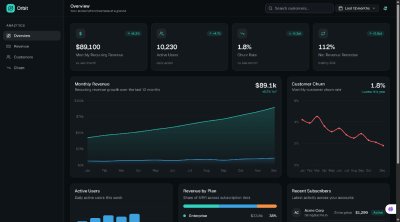
Vercel’s v0 platform demonstrates how generative interfaces can replace traditional visual building tools. By allowing users to input natural-language descriptions of an intended user interface—such as requesting a complex SaaS analytics dashboard—v0 processes the visual and structural intent to instantly generate production-ready code components. Rather than manually arranging components on a canvas click by click, creators specify the desired outcome, allowing the system to handle component construction dynamically.
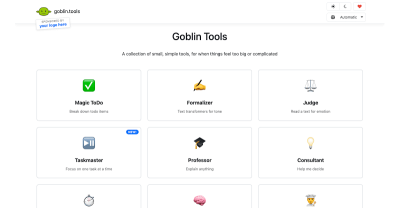
3. Goblin.tools: Breaking Down Overwhelming Tasks
Traditional productivity platforms typically require users to manually structure their projects. Users are expected to create task lists, construct multi-column Kanban boards, drag cards across workflows, and assign individual micro-deadlines. For neurodivergent individuals or users experiencing cognitive overload, managing the operational overhead of the software itself can become an insurmountable barrier.
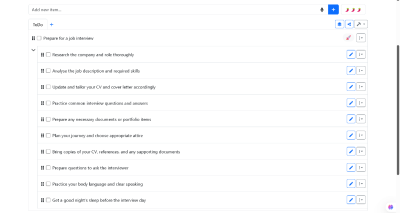
Goblin.tools provides a zero-friction alternative designed to simplify task execution. Operating as a free, single-page suite of specialized AI tools, the platform requires no account setup, complex configurations, or manual board building. When a user inputs a daunting high-level objective—such as preparing for a job interview or organizing a household move—the system automatically analyzes the request and breaks the overwhelming task down into a clear, manageable checklist scaled to the user’s preferred level of detail.
The Core Pillars of Intent-Driven Web Design
When traditional menus, navigation bars, sidebars, and input forms are stripped away, web systems must rely on new structural mechanisms to remain functional and intuitive. Practitioners leading the transition to intent-driven interfaces rely on three core foundational pillars.
High-Level Goals and Ambient Context
An effective intent-driven interface does not rely solely on waiting for direct user prompts; it actively leverages context to anticipate user needs. Drawing from established usability guidelines, such as Apple’s Human Interface Guidelines on Contextual & Ambient Design, modern software reads environmental metadata—including device state, location, interaction patterns, and user history—to trigger proactive actions.
Rather than expecting a user to manually select options through static dropdown menus, the system utilizes ambient context to streamline interaction. Input shifts from precise micro-actions (clicks, toggles, and parameter selection) to high-level goals informed by natural language and environmental awareness.
Generative UI
In traditional web development, interface design is static; every user sees the exact same visual layout regardless of their unique circumstance. An e-commerce portal, for example, displays the identical navigation menu to a first-time visitor looking for customer support as it does to a returning customer attempting to track an active shipment.
As highlighted in the Nielsen Norman Group’s research on artificial intelligence as a new user experience paradigm, computing is undergoing a structural shift from command-based interaction to outcome specification. This shift enables the deployment of Generative UI—interfaces that are dynamically rendered on the fly based on the user’s immediate intent. Rather than forcing every interaction through a fixed layout, the interface constructs context-specific widgets or visual components precisely when needed, dissolving them once the underlying task has been completed.
Autonomous Execution by AI Agents
Traditional point-and-click interfaces are designed around mistake prevention, frequently interrupting user workflows with intrusive modal pop-ups and explicit confirmation requests.
Intent-driven architecture adapts classic usability principles—such as Jakob Nielsen’s ten usability heuristics regarding user control and error recovery—by shifting the safety architecture from friction-heavy prevention to frictionless reversibility. Because background AI agents execute actions on behalf of the user, product designs must prioritize immediate control and easy rollback mechanisms. Prominent undo controls, intuitive refinement options, and clear audit logs replace repetitive confirmation dialogues, allowing autonomous agents to operate efficiently while keeping the human in control.
Navigating the Hidden Risks of Automated Interfaces
While removing interface friction offers immense operational benefits, removing explicit visual controls introduces serious product design challenges. When digital software acts on inferred intent rather than direct point-and-click instructions, product teams must carefully navigate critical technical and ethical boundaries.
The Illusion of Control
When an application autonomously makes decisions on behalf of a user, the experience can quickly cross the line from helpful to invasive or patronizing. Research from the Stanford Human-Computer Interaction (HCI) Group emphasizes that automated systems must maintain explicit boundaries to preserve user agency and prevent frustration.
Additionally, ethical guidelines articulated by the Center for Humane Technology warn that product designers must actively guard against manipulative defaults and predatory automation patterns. To maintain trust, designers must establish a clear operational line: routine administrative tasks can be automated in the background, but high-stakes actions—such as processing financial transactions, publishing public content, or altering security settings—must explicitly prompt the user for confirmation.
The Black Box Problem
In a traditional user interface, when a system yields an unexpected result, the user can easily diagnose what went wrong—such as realizing they selected an incorrect date filter or checked the wrong box.
In an intent-driven interface, diagnosing errors is far more challenging because the underlying execution is hidden from view. To solve this transparency challenge, the Google PAIR (People + AI Research) Guidebook recommends building clear, continuous feedback loops into the interface. Intent-driven systems must explicitly state how they have interpreted a command—displaying visible status indicators such as "Searching for non-stop flights to Chicago under $300"—allowing users to immediately calibrate trust, verify context, and correct misinterpretations before an action is finalized.
A New Mandate for UX Designers
As artificial intelligence reshapes software development, the day-to-day responsibilities of user experience designers are undergoing a profound shift. The traditional practice of drawing static wireframes, building rigid form flows, and pushing pixels across fixed artboards is no longer sufficient for complex, non-deterministic systems.
Instead of designing static screens, modern UX professionals must master the art of mapping dynamic design systems. Designers must focus on crafting ambient feedback indicators, developing natural inline prompts, and establishing transparent system states. By mastering these evolving interaction patterns, designers can ensure that screenless and agent-driven tools remain ethical, predictable, and firmly centered on human needs.
Redefining Success Metrics for the Modern Web
For decades, the software industry has evaluated digital success through metrics rooted in user engagement. Product teams optimized for high click-through rates, prolonged time spent in-app, maximized page views per session, and continuous interaction volume. Digital platforms were deliberately engineered to keep users tapping, scrolling, and clicking for as long as possible.
The philosophy behind Intent-Driven Design, echoed by Golden Krishna’s assertion that "the best interface is no interface" and supported by the Center for Humane Technology’s Time Well Spent movement, fundamentally challenges these legacy metrics. In an intent-driven web ecosystem, high interaction volume is recognized not as a sign of deep engagement, but as evidence of operational friction.
The ultimate metric of success for modern software design is shifting. Digital products are no longer judged by how visually captivating their buttons are or how long they can hold a user’s visual attention, but by how efficiently they capture intent, execute tasks, solve the user’s underlying problem, and get out of the way.