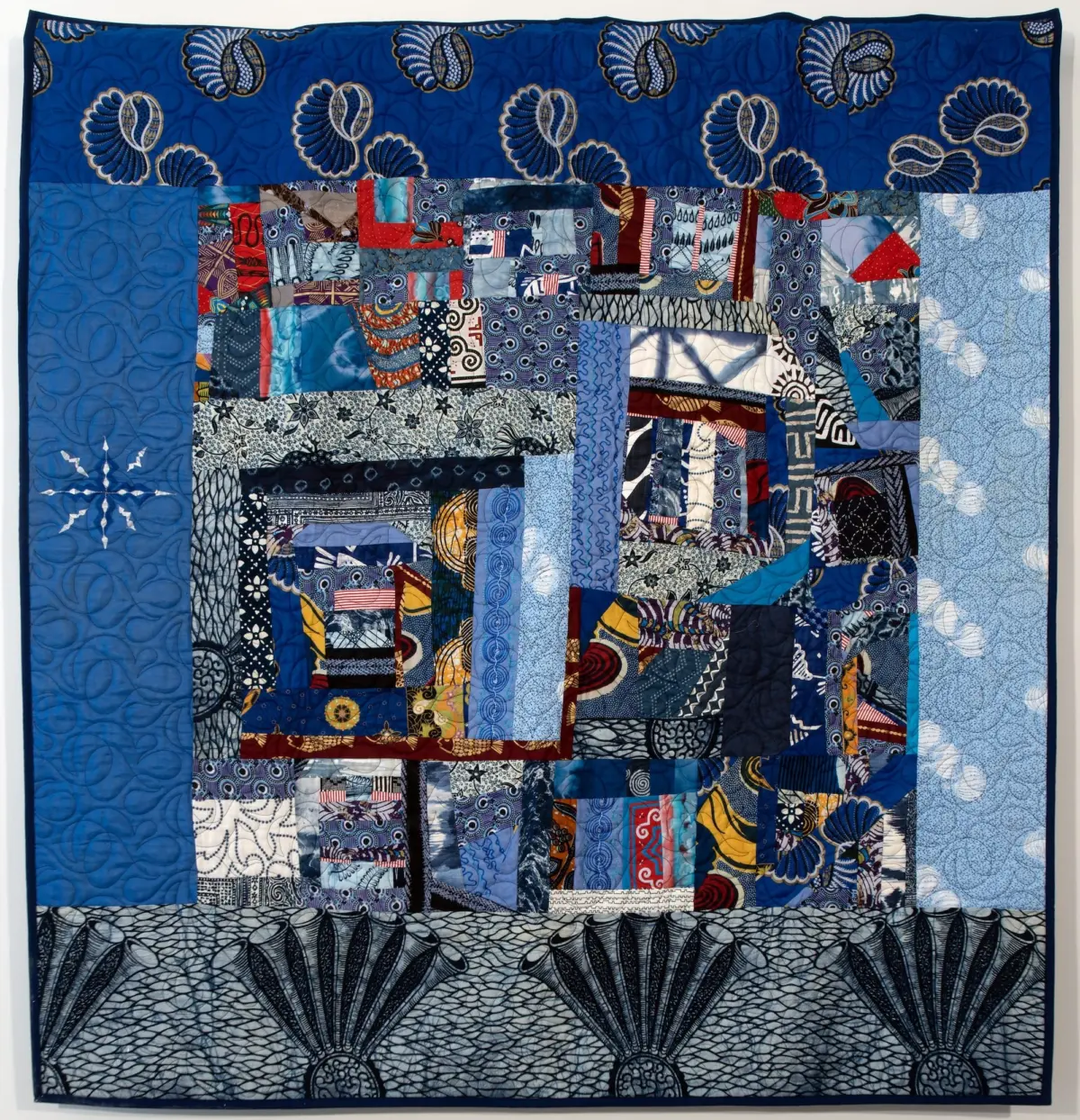
In the heart of Harlem, at the Claire Oliver Gallery, a compelling new group exhibition is challenging traditional perceptions of textile art while serving as a powerful visual archive of Black history, resilience, and creativity. Titled We’re Still Here: Quilted Works Curated by Carolyn Mazloomi, the expansive showcase brings together the visionary works of 15 contemporary artists who are pushing the boundaries of what a quilt can be. Rather than functioning merely as stitched bed coverings meant for warmth, the pieces on display transcend their domestic origins, surging into the realm of high art through bold portraiture, intricate storytelling, and a fearless engagement with historical and social themes.
At the center of this landmark exhibition are members of the Women of Color Quilters Network (WCQN), an organization founded in 1985 by historian, curator, and quilter Carolyn Mazloomi. For decades, Mazloomi and the network have worked tirelessly to elevate the visibility and appreciation of Black quilters, preserving a rich material culture that has often been overlooked or marginalized by mainstream art institutions. In We’re Still Here, this mission takes on an urgent, contemporary resonance, offering a direct response to modern political efforts to sanitize or erase complex histories.
Threading Resistance and Memory
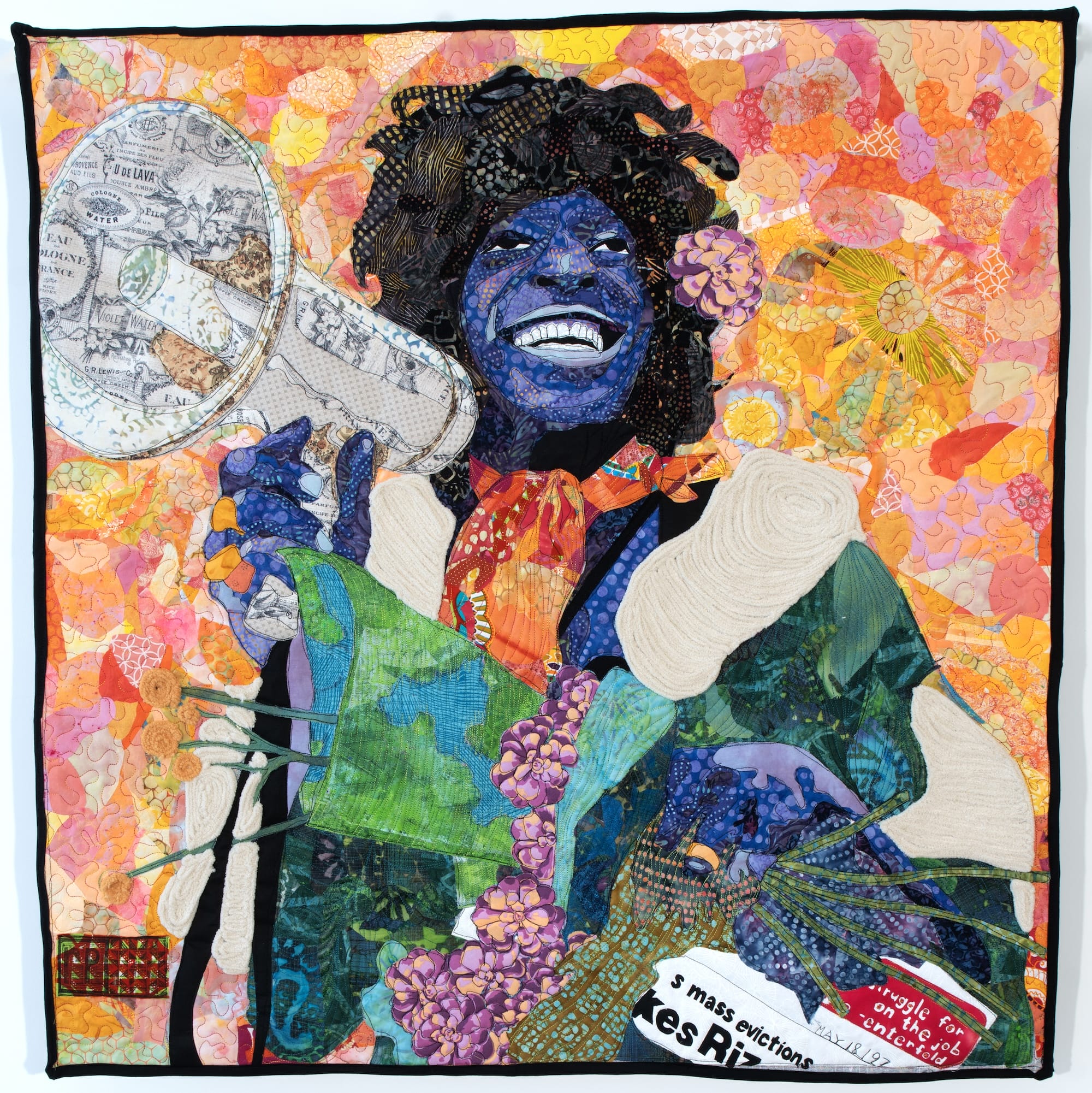
The exhibition’s temporal anchor stretches from the foundational struggles for civil rights and liberation to deeply personal expressions of community, family, and Afro-futurism. Among the most striking pieces in the show is Rosy Petri’s tribute to Marsha P. Johnson, the iconic Black transgender woman whose legacy continues to loom large over the global fight for LGBTQ+ rights.
Johnson’s activism is deeply intertwined with the history of the Stonewall uprising, which erupted in the wee hours of a busy Saturday morning on June 28, 1969. Police raided The Stonewall Inn, a renowned hangout for the LGBTQ+ community located in Manhattan’s Greenwich Village. During the 1950s and 1960s, few businesses openly welcomed gay people, and the legal system was severely stacked against them. Even two consenting adults engaging in private relations within their own homes could face years in prison or institutionalization in a psychiatric facility if convicted of sodomy.
While bar raids were a common occurrence during this era, the June 28 raid quickly spiraled out of control due to the sheer volume of patrons packed into the venue. A spontaneous riot broke out, sparking days of protests that fundamentally transformed the movement for gay and transgender liberation. Among those standing on the front lines from the very beginning of the raid onward was Marsha P. Johnson—whose middle initial “P” famously stood for “Pay It No Mind.”
Advocating throughout the 1960s and 1970s for gay and transgender rights, vulnerable LGBTQ+ youth, and individuals affected by the HIV and AIDS epidemic, Johnson became a beloved fixture of lower Manhattan. Affectionately known as "The Saint of Christopher Street"—a nod to the well-known and welcoming thoroughfare for the gay community that also housed The Stonewall Inn—she was widely recognized for her effervescent smile, creative and eccentric clothing, and the fresh flowers she would routinely wear in her hair. In Petri’s large-scale textile work, Johnson’s vibrant personality and enduring spirit are captured with reverence, transforming fabric and thread into a monument of queer liberation.
Reimagining Historical Narratives
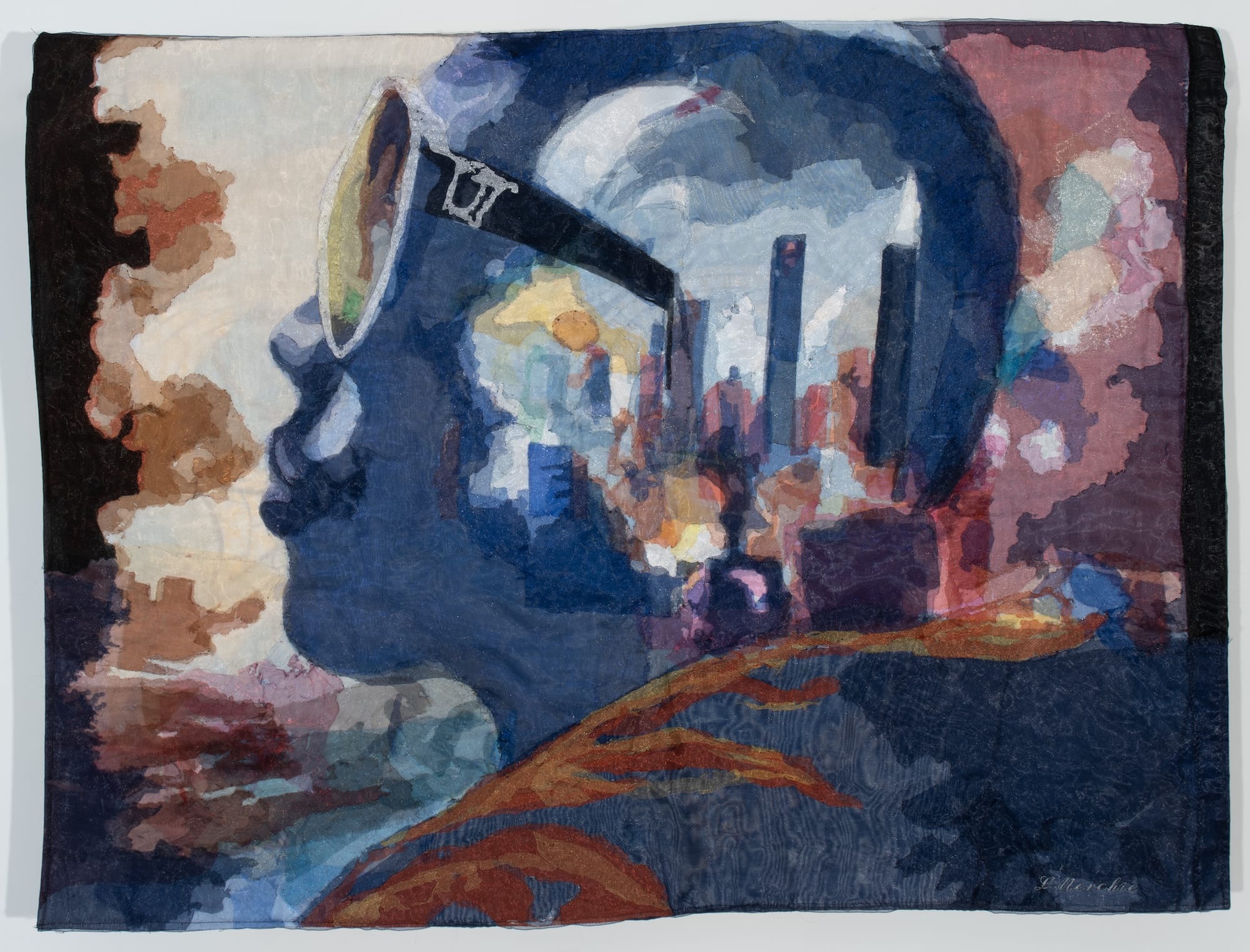
History, collective memory, and visionary futures collide across the gallery walls through the distinct techniques and narratives of participating artists. L’Merchie Frazier’s textile composition, titled “Climate Change in my Head: Afro Future Still Here,” utilizes layers of nylon fiber to achieve a luminous, watercolor-like appearance. The piece places an urgent contemporary crisis directly into the visual framework of Afro-futurism, prompting viewers to consider environmental justice through a cultural lens.
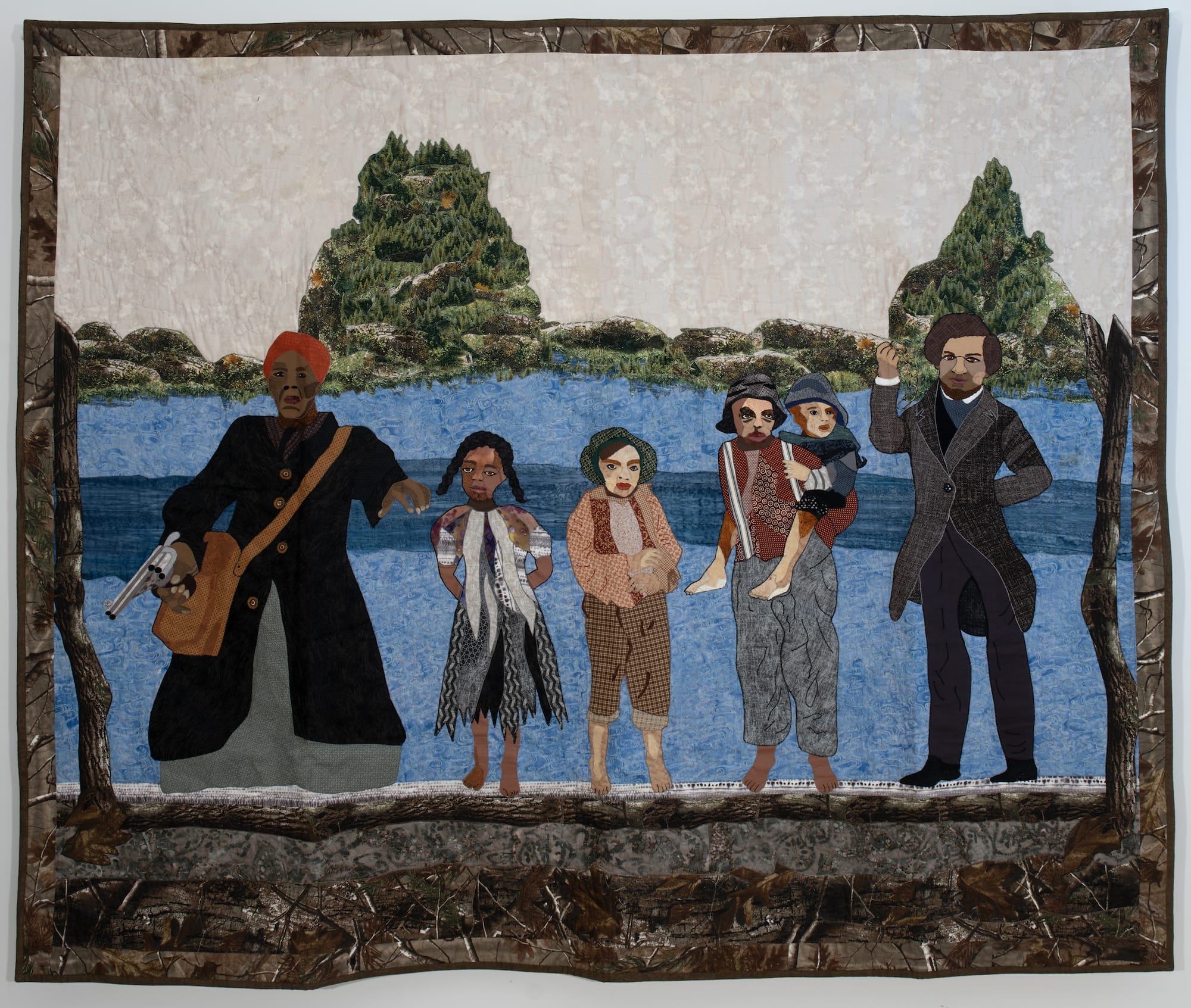
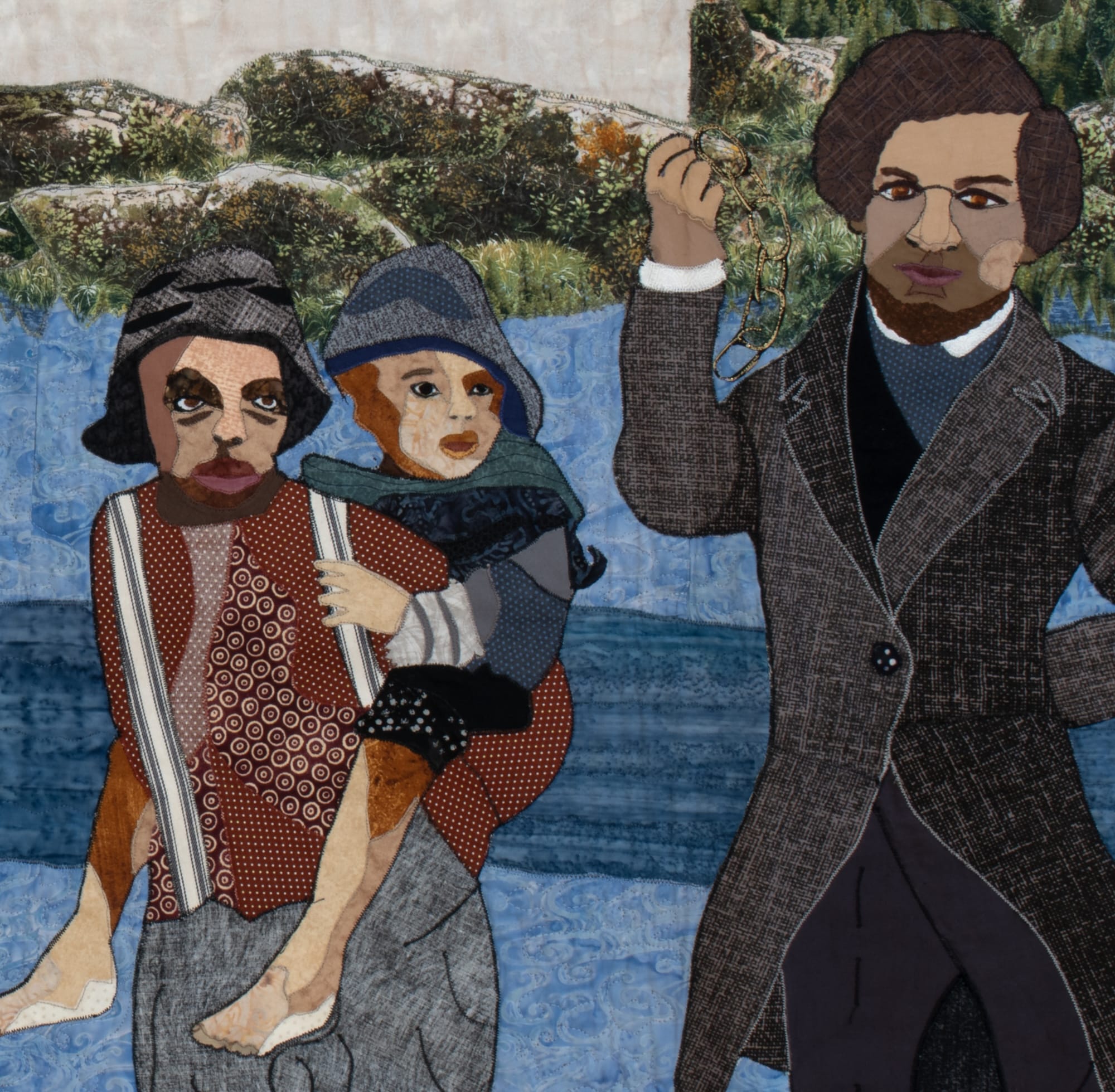
Other artists in the exhibition turn their gaze toward pivotal moments in American history, reinterpreting foundational narratives through sophisticated portraiture and symbolic iconography. Alita Aldridge’s quilt, “Underground Takes a Village,” reflects the immense collaboration, solidarity, and courage required to make the Underground Railroad a viable pathway to freedom for enslaved people seeking escape. The intricate machine-appliquéd work highlights the communal network that sustained freedom seekers, honoring figures such as Harriet Tubman and Frederick Douglass.
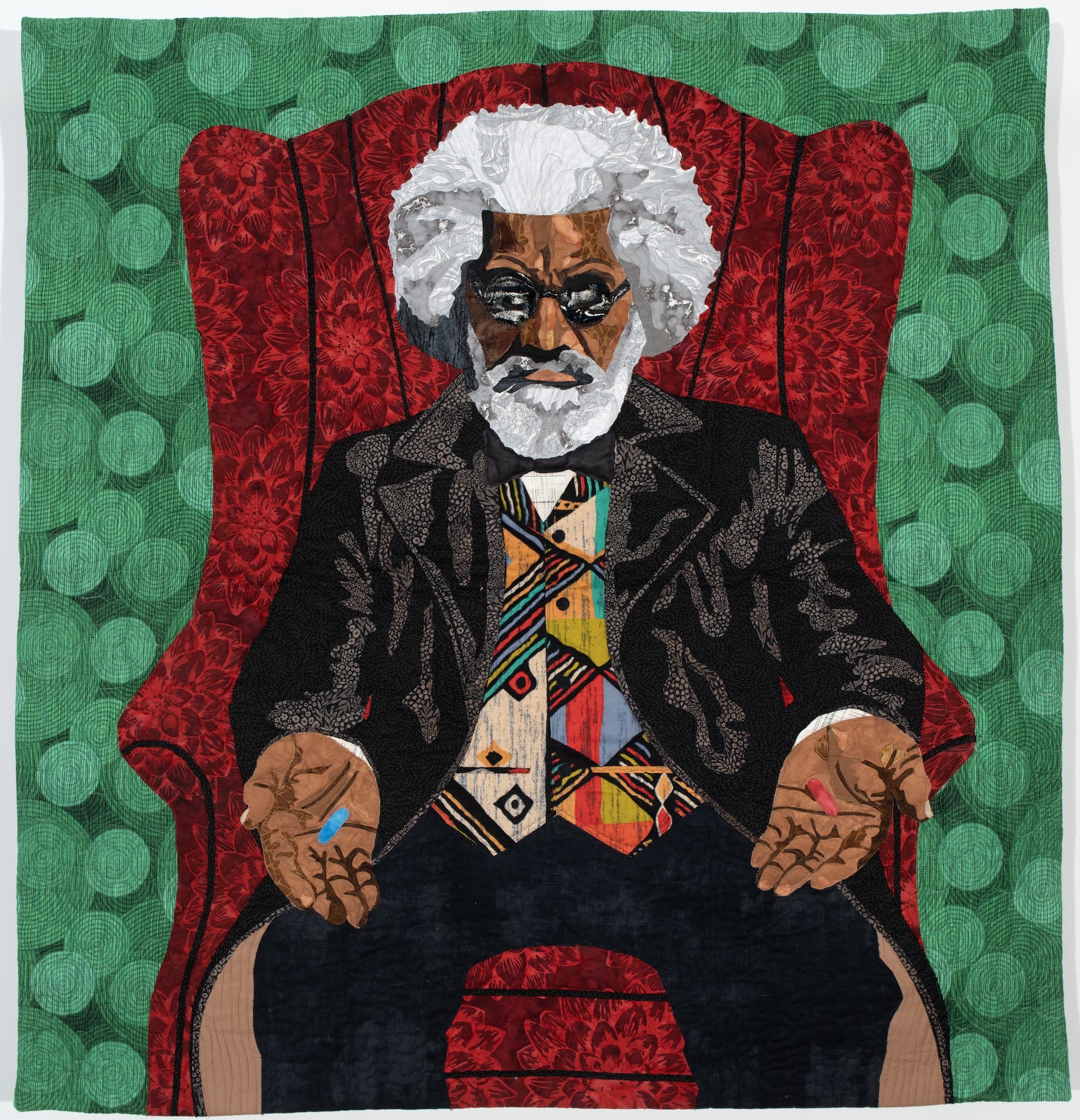
Frederick Douglass also takes center stage in April Anue Shipp’s compelling work, “The Oracle of Liberation.” In this piece, the legendary abolitionist is depicted seated in a red chair wearing sunglasses, holding red and blue pills in each hand. The striking visual serves as a direct reference to the 1999 sci-fi film The Matrix, in which characters are presented with a definitive choice between confronting harsh reality or remaining comfortably ignorant. By juxtaposing a 19th-century intellectual titan with modern cinematic iconography, Shipp bridges historical abolitionism with contemporary philosophical questions about truth and societal awareness.
Bold Portraiture and Cultural Triumph
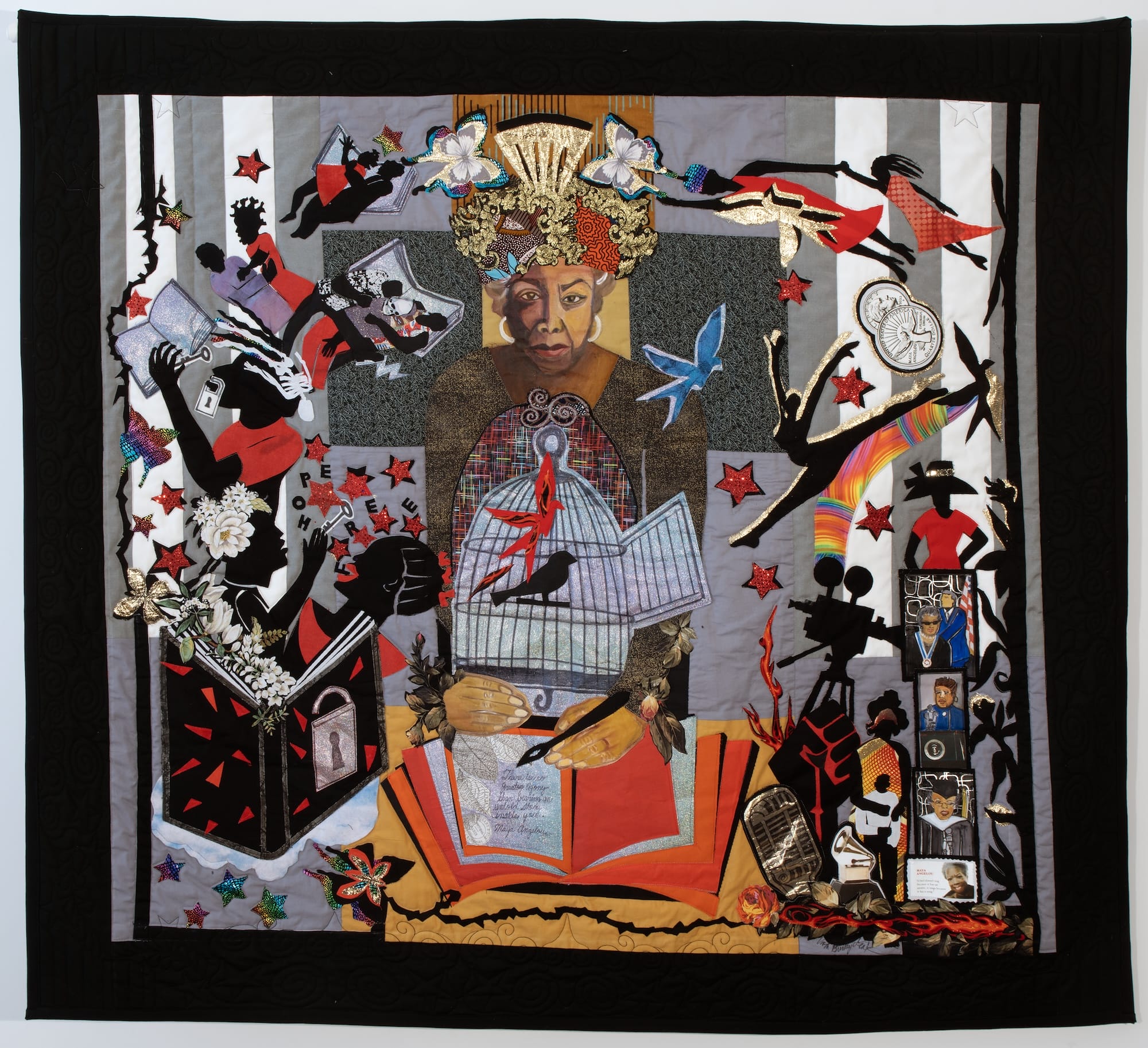
Bold portraiture serves as a powerful recurring motif throughout We’re Still Here, anchoring the exhibition in the lived experiences and intellectual contributions of Black icons. In Viola Burley Leak’s appliquéd and hand-painted quilt, “Maya Angelou II,” the renowned writer and civil rights activist peers outward from a backdrop rich with symbolic references to her extraordinary life and literary career. Among the intricate details is a bird fleeing an enclosure—an unmistakable nod to her seminal memoir, I Know Why the Caged Bird Sings.
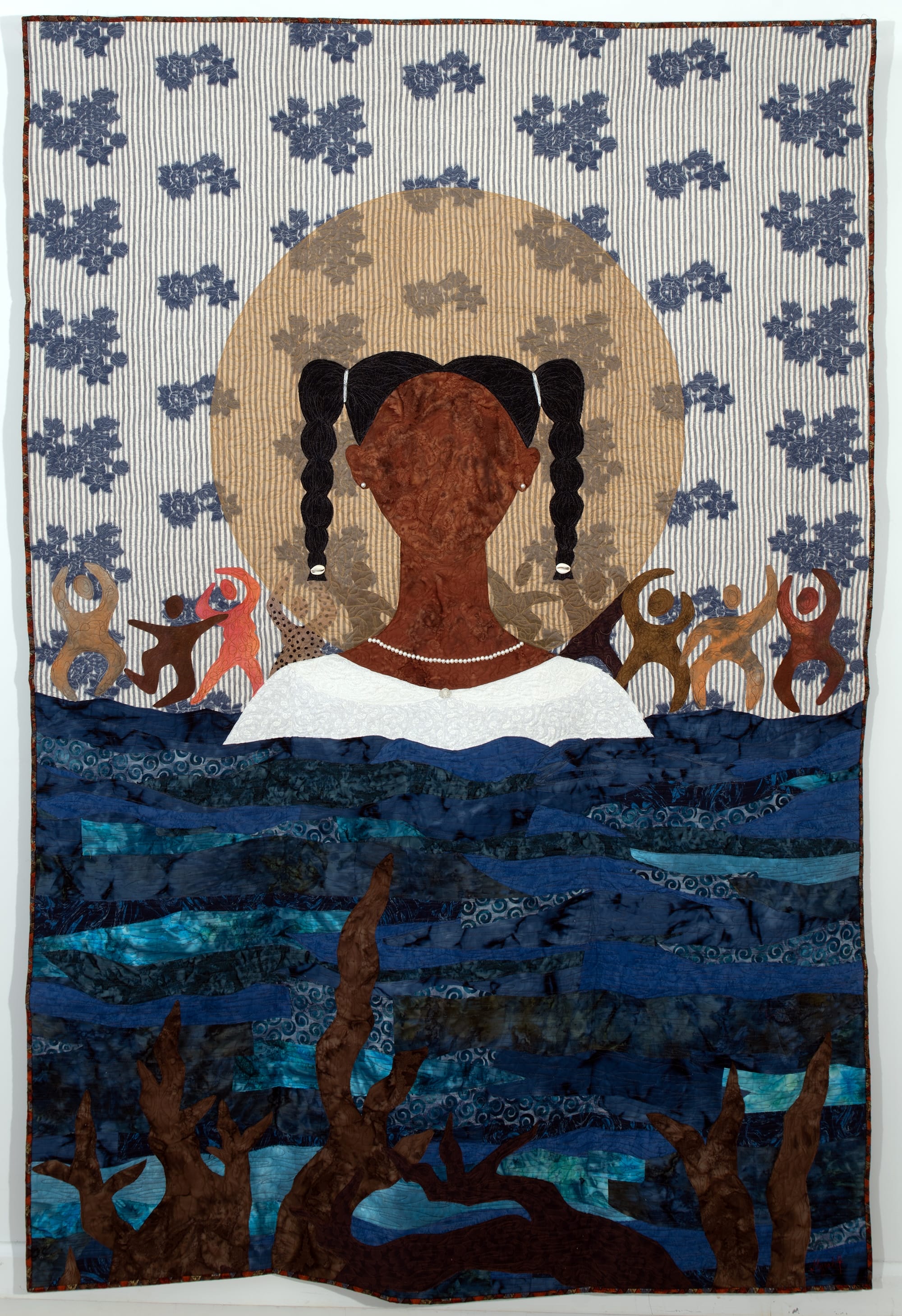
The exhibition also features works like Myrah Brown Green’s “The Baptism,” a hand-dyed and free-motion quilted composition incorporating cotton, silk, lace fabrics, and freshwater pearls. The piece portrays a faceless young Black girl with intricate braids, half-submerged in water against a floral background, framed by a halo-like circle and accompanied by silhouettes of dancing figures in the distance. Similarly, Josie Love Roebuck’s mixed-media work, “I Am Still Standing, Yeah Yeah,” incorporates screenprint ink, acrylic, up-cycled fabrics, rope, rivets, studs, gold leaf, and even a horseshoe to depict a young person on horseback, surrounded by textures and motifs celebrating resilience.
Ed Johnetta Miller contributes to the dynamic visual dialogue with “A Gathering of Cultures: A Joyful Connection,” an abstract embroidery and cotton piece utilizing repurposed fabrics that emphasizes community connection and artistic synergy.
Preserving a Vital American Heritage
For Carolyn Mazloomi, the works featured in the Harlem exhibition are part of a continuous, living tradition that defies political attempts at historical revisionism.
"All of the work I make, and the work of my fellow quilters, deals with Black history and material culture," Mazloomi states. Through her leadership with the WCQN, as well as her extensive curatorial projects and tireless advocacy for the art form, she remains dedicated to raising critical public awareness of Black quilters’ historic and contemporary practices.
"This exhibition is our way of saying that our history cannot be erased by any politician or revisionist force; our work will always showcase our triumphs, suffering, creativity, courage, bravery, and the genius of my people," Mazloomi adds. "Black history is American history."
We’re Still Here: Quilted Works Curated by Carolyn Mazloomi remains on view at the Claire Oliver Gallery in Harlem through January 7. The exhibition arrives alongside a growing national renewed interest in the medium, paralleling recent publishing milestones such as Chronicle Books’ release of Stories in the Seams: A People’s History of Black Quilts and Their Makers by Sharbreon Plummer. Together, these exhibitions and literary works ensure that the stitches, stories, and struggles embedded within Black textile traditions continue to be seen, studied, and celebrated for generations to come.