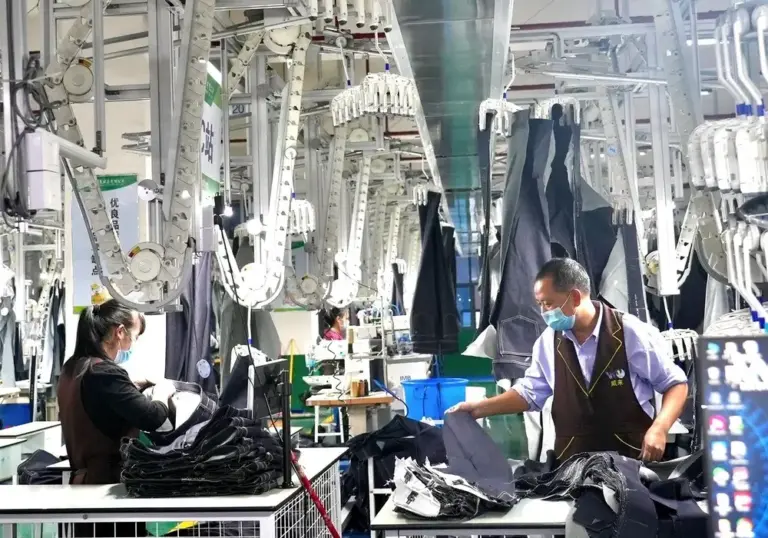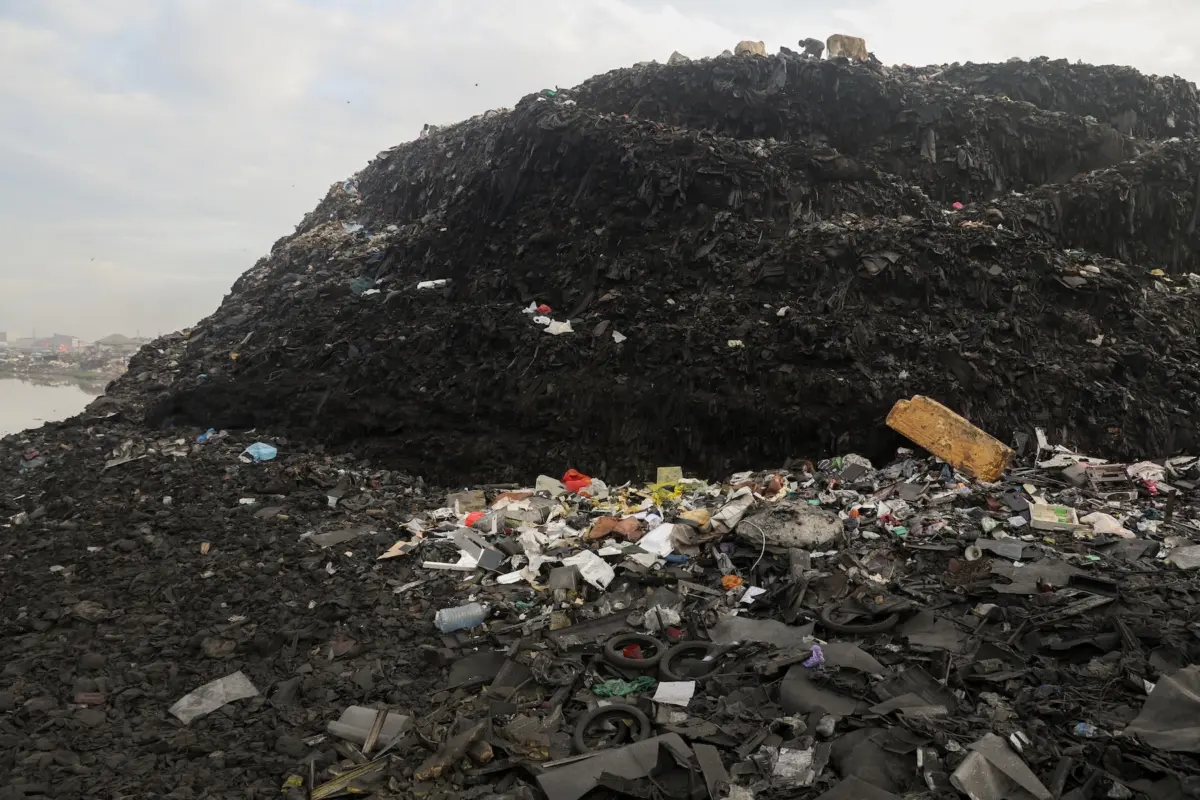
Discarded synthetic clothing released an estimated 878,000 metric tons of microplastics into the environment in 2024, a staggering total that marks nearly a fourfold increase compared to modeled levels from 2000. That is according to a comprehensive new report released by research consultancy Earth Action, which highlights the hidden, long-term environmental toll of post-consumer textile waste accumulating in landfills, dumpsites, and open natural spaces across the globe.
The newly published findings suggest that the ecological footprint of a garment extends far beyond its time in a consumer’s wardrobe or its initial disposal. The estimate of 878,000 metric tons encompasses garments that have been discarded over decades, many of which continue to fragment slowly in waste sites and the open environment. Depending on variations in the model’s core inputs, Earth Action puts the plausible leakage range for 2024 between 588,000 and 1.11 million metric tons.
“The microplastic footprint of clothing does not end when a garment leaves our wardrobe,” said Julien Boucher, Earth Action’s co-founder and head of research, in a statement accompanying the release of the report. “Discarded synthetic clothing is a ticking time bomb. What is already in waste sites will keep breaking down for generations, and every year we add more, increasingly in countries least equipped to contain it.”
Titled “The Microplastic Ticking Time Bomb,” the report was commissioned and funded by Cotton Incorporated. Jesse Daystar, chief sustainability officer at Cotton Incorporated, co-authored the report, while technical experts from the organization reviewed the final documentation.
“A synthetic shirt can keep shedding microplastics long after its last wash,” Daystar noted in the accompanying statement.
Detailing the independence of the research, Boucher told Sourcing Journal in written responses that Switzerland-based Earth Action maintained total editorial and analytical control. The consultancy set the project scope, selected the underlying data, spearheaded the modeling and analysis, and drew the final conclusions. According to Boucher, Cotton Incorporated held no right to approve or alter the study’s conclusions, and both organizations simply agreed upon a mutually acceptable publication date without any other third parties providing financial or in-kind support.
The sophisticated environmental assessment merges a vast array of datasets, including global fiber production figures, international clothing trade statistics, municipal waste management metrics, and climate records, alongside published scientific research concerning plastic fragmentation. The model specifically tracks the synthetic portion of apparel—including blended garments containing synthetic fibers—long after those items are thrown away.
According to the model, discarded synthetic clothing generated an estimated 2.4 million metric tons of microplastics in 2024 alone. While a significant portion of that degraded plastic remained contained within engineered waste sites, a disproportionate amount escaped into the surrounding environment.
The report highlights a stark disparity between contained waste and open dumping: garments dumped in the open accounted for roughly 5 percent of all synthetic apparel deposited historically, yet they were responsible for a staggering 90 percent of estimated microplastic leakage in 2024.
The environmental persistence of these materials varies drastically based on how they are managed after discard. Synthetic clothing left exposed in the open environment could shed half its total mass as microplastics in approximately four years, driven by the erosive power of direct sunlight and weathering. In contrast, for buried clothing sheltered inside landfills, researchers estimate that same degradation period stretches from 60 to 112 years, with the plastic ultimately breaking down into smaller, persistent fragments.
Modern landfills utilize protective covers that shield buried waste from direct sunlight, while leachate collection and water treatment systems capture runoff to prevent microplastics from migrating into local ecosystems. The Earth Action model operates on the assumption that these vital protective infrastructures function effectively for centuries. However, the authors caution that the model omits the inevitable deterioration of landfill liners, daily covers, and drainage networks over long time horizons, meaning actual leakage could eventually surpass current projections.
To map out global disposal habits, the researchers drew upon municipal waste data from the World Bank’s What a Waste 3.0 database, applying each nation’s documented waste-treatment shares consistently across every historical year studied. By leaving historical shifts in waste collection and treatment out of the trendline, Boucher acknowledged that the model might slightly underestimate how much clothing was dumped or poorly contained in developing nations during earlier decades.
“The increase since 2000 could be somewhat less steep, but the central finding holds: today’s leakage is driven by decades of accumulated deposits,” Boucher explained. He added that the low and high boundaries of the leakage estimates were generated by altering model inputs, though the team did not calculate formal statistical confidence intervals or attempt to quantify the direct harm inflicted on human health or broader ecosystems.
Independent peer review of the underlying methodology through the Plastic Footprint Network remains ongoing. Boucher indicated that the network’s specialized textile fragmentation module and accompanying data tables are expected to be finalized around the end of 2026, pending the completion of the review process. Earth Action is currently evaluating options for how to make the proprietary model publicly accessible.

Reflecting on the data limitations, Sarah Perreard, Earth Action’s co-founder and stakeholder engagement lead, wrote in the report’s foreword that “field data on how textiles fragment in disposal settings remain scarce, and waste statistics are weakest in the regions that receive the most used clothing.”
To place the new findings in context, Earth Action compared its estimated 707,000 metric tons of microplastic leakage in 2019—originating from clothing discarded over prior decades—with a previous independent study’s estimate of roughly 110,000 metric tons stemming strictly from the manufacturing and washing of garments in that same year. While the earlier figure focused exclusively on wastewater releases from active use and production, Earth Action’s broader model accounts for land, air, and water pathways, though it notably excludes fibers shed into the air during wear because a reliable global estimate does not yet exist.
The report also sheds light on the massive cross-border trade of second-hand garments. Earth Action estimates that Europe and the United States exported approximately 1.35 million metric tons of used synthetic clothing to regions classified as lower-income in 2024, while a mere 14,400 metric tons moved in the opposite direction. Globally, the model calculates that 14 percent of all synthetic clothing waste was ultimately disposed of outside the country where the garments were originally purchased and worn.
Because researchers lacked empirical data regarding the exact duration second-hand garments remain in active use abroad, the model assumes that imported clothing is discarded within the calendar year it arrives. Boucher noted that if these garments undergo a secondary period of wear, some of the resulting leakage in importing nations would naturally shift further into the future.
Highlighting the overwhelming scale of these imports, Marie France de Crécy, head of L’Upcyclerie at Caritas Geneva, noted in a commentary featured in the report that “the volumes of donated clothing far exceed both what we can sort and what the local area needs.”
Geographically, the burden of this pollution is heavily skewed toward the Global South. Earth Action estimates that 45 percent of the total microplastic leakage recorded in 2024 originated from clothing discarded within Sub-Saharan Africa. Meanwhile, East and Southeast Asia accounted for 18 percent of the leakage, and South Asia contributed 15 percent.
“Responsibility for their afterlife, therefore, cannot end at the point of sale,” said Katia Osei, head of environmental justice at The Or Foundation, in commentary included within the publication.
In total, Earth Action calculates that active waste deposits worldwide still harbor an astonishing 284 million metric tons of synthetic apparel that has not yet fragmented, alongside 27.4 million metric tons of microplastics that have already formed but remain trapped within those waste sites.
The researchers derived their outdoor fragmentation rates from short-term laboratory tests, while drawing on studies of other types of plastic to estimate the degradation rates of buried textiles. The model also presumes that all openly dumped garments receive unobstructed, full sunlight. According to Boucher, the 2024 leakage estimates were most sensitive to three primary variables: the proportion of synthetic textiles utilized in global apparel manufacturing, the speed at which garments break down under solar radiation, and the volume of synthetic clothing consumed within lower-income nations.
If discarded clothing piles remain shaded, they would shed fewer microplastics on an annual basis, thereby extending the timeline of continuous leakage, Boucher noted, though specific global or regional figures for shaded scenarios were not provided.
Conversely, simulations within the report demonstrated that systemic improvements to waste management infrastructure could curb future pollution significantly. When countries operating under the weakest waste systems gradually transitioned to the advanced disposal practices of high-income nations over a 30-year span, annual leakage by the year 2100 plummeted to 80 percent below the baseline. A separate model simulation projected an 88 percent reduction under the hypothetical scenario where virtually no synthetic clothing reached open waste sites by that time.
“The most immediate lever for brands is keeping garments in use for longer,” Boucher said, pointing to industry strategies centered on enhanced product durability, repair services, resale markets, rental models, and comprehensive take-back initiatives.
While the report stops short of prescribing exact financial models, the question of who should ultimately pay for waste remediation remains central to the discussion. Boucher suggested that a portion of the funds generated through emerging textile extended producer responsibility (EPR) schemes could be directed toward upgrading waste collection and treatment facilities in the developing regions that receive the lion’s share of the world’s used clothing.
“Deposited apparel keeps releasing microplastics for decades,” Boucher concluded, “so solutions need to cover existing deposits as well as future waste.”