When most people picture a basket, a familiar set of images comes to mind. It might be a traditional household object woven from straw, sweetgrass, or pliable willow branches, complete with a sturdy handle for carrying harvested garden vegetables or organizing pantry staples. These humble objects have served utilitarian purposes for millennia, deeply rooted in the history of global craft, domestic labor, and localized traditions. However, a forthcoming exhibition in Miami is challenging viewers to look past these conventional associations and reconsider the boundaries of both object and medium.
Opening late this November at the Mindy Solomon Gallery, a vibrant and ambitious new survey titled Interwoven: Basketry As Expanded Practice seeks to upend traditional perceptions. Curated by Dee Clements of Studio Herron, the exhibition takes a critical look at how time-honored basketmaking techniques extend far beyond the functional parameters of a splinted white ash garden trug or a simple kitchen container. Instead, the showcase positions basketry as a dynamic, open-ended artistic language, asking audiences to reconsider what happens when a historic craft tradition is liberated from functional constraints and embraced as contemporary sculpture.
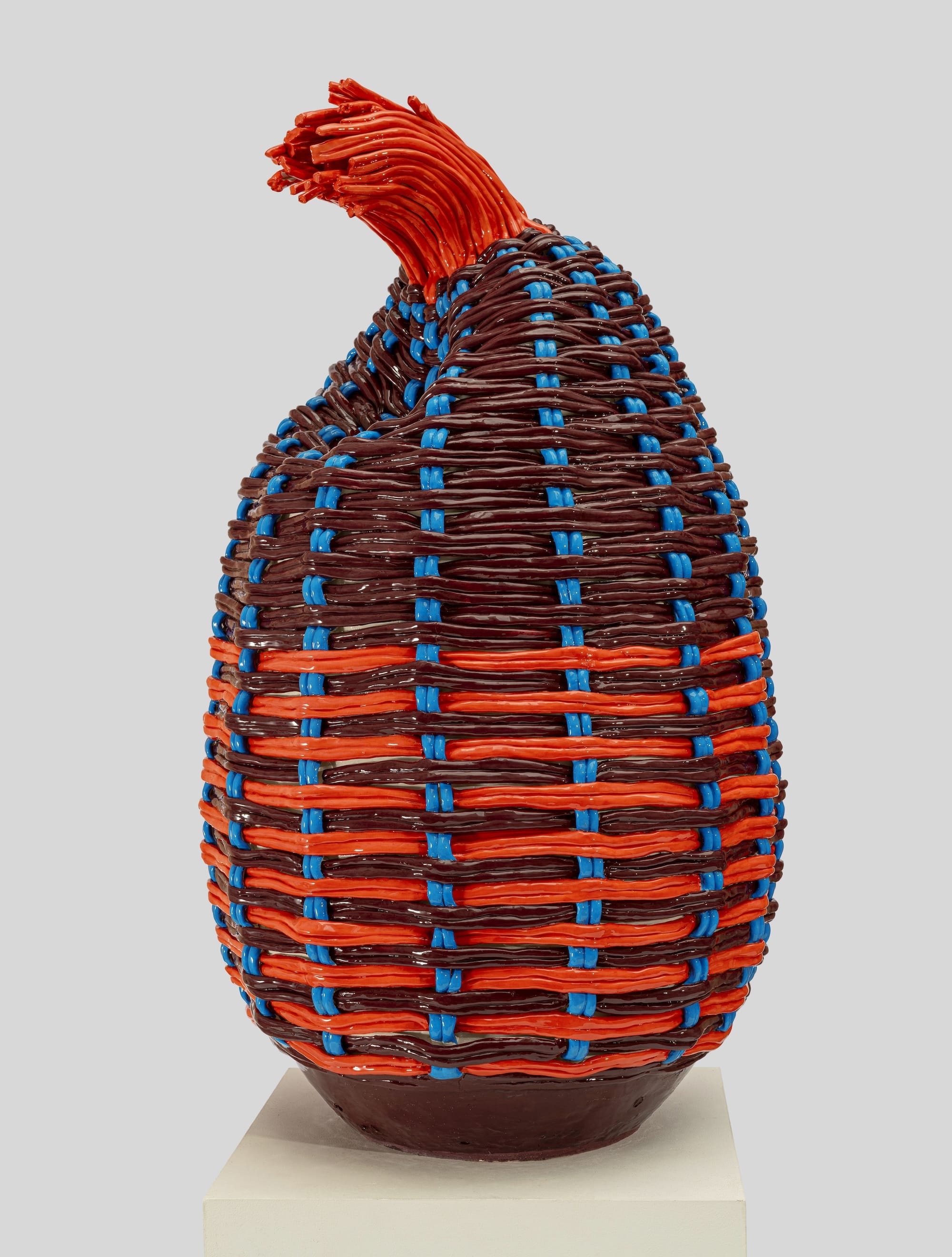
According to Clements, the survey deliberately breaks traditional craft boundaries, positioning the foundational techniques of weaving, coiling, and plaiting as sophisticated vehicles for contemporary artistic expression. Rather than treating basketry as a fixed category defined by utility, the nearly two dozen participating artists featured in Interwoven use the language of the vessel to explore abstract form, spatial rhythm, conceptual storytelling, and material innovation.
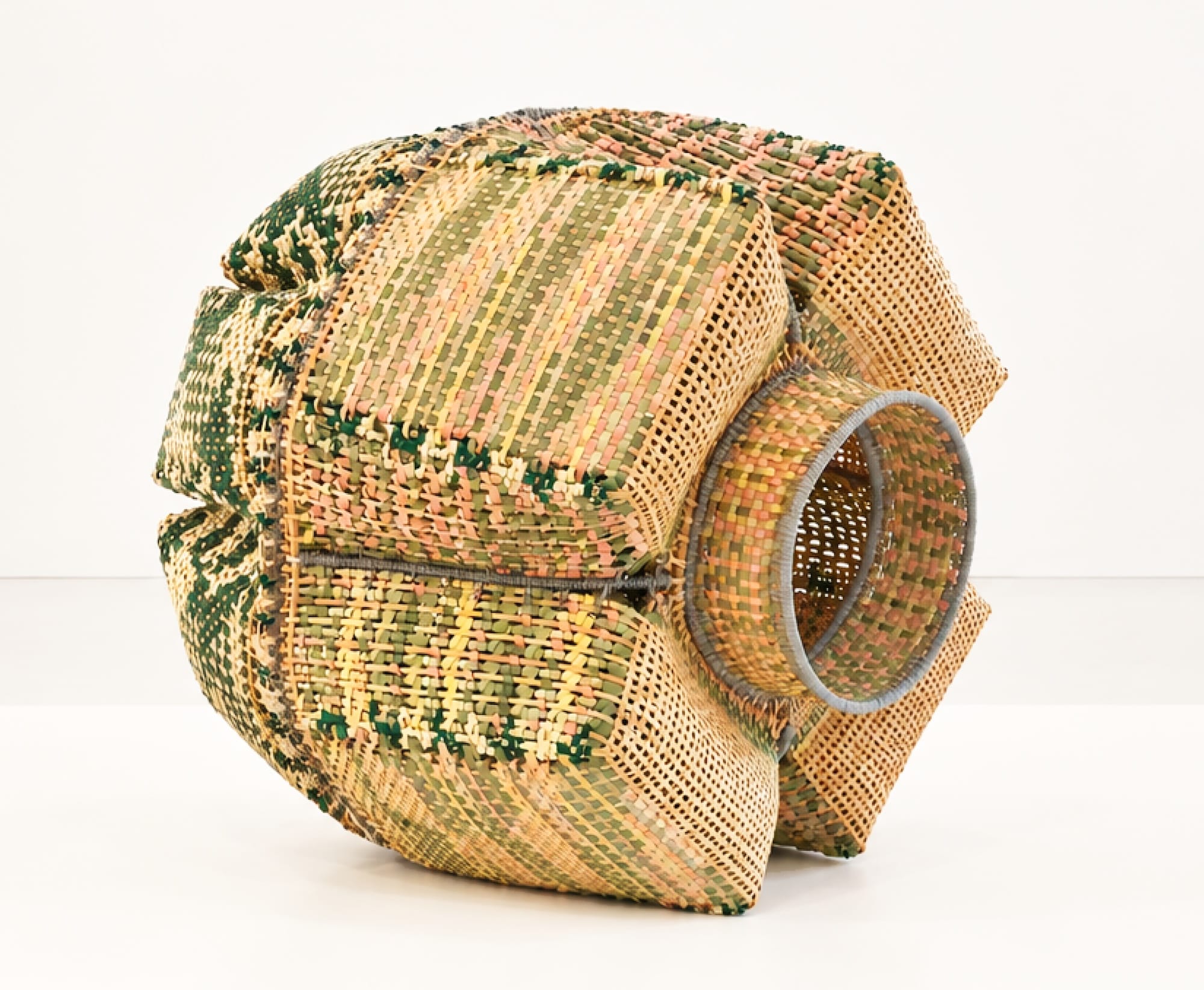
The exhibition demonstrates this expansive vision through an eclectic array of media, moving far beyond organic plant fibers to incorporate unexpected substances such as glazed ceramics, aircraft cables, stainless steel, industrial rebar ties, cotton, artist paper, and even emergency Mylar blankets. By subverting traditional materials, the artists underscore the versatility of structural intertwining, transforming techniques once used strictly for containment into powerful statements about form and space.
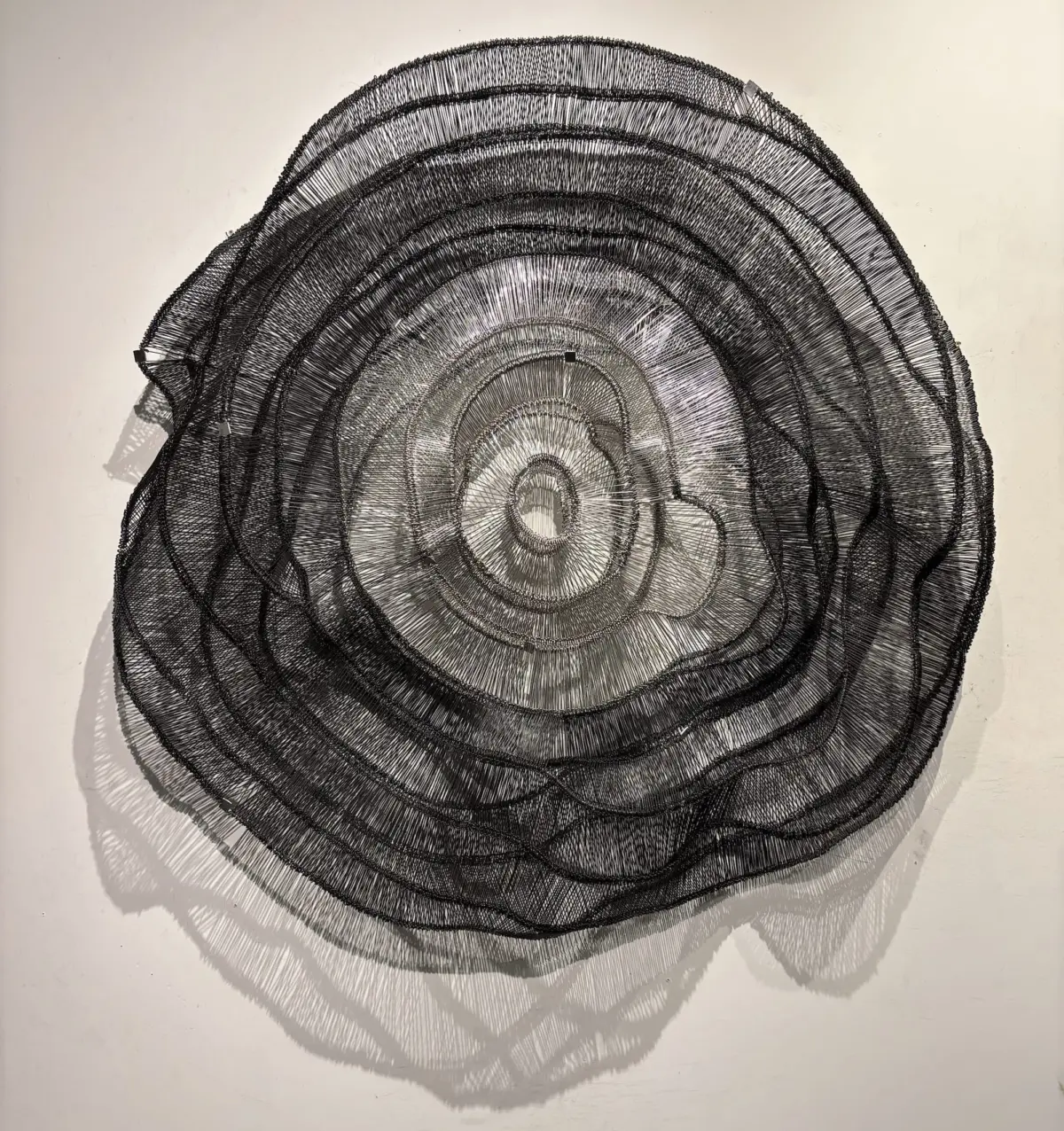
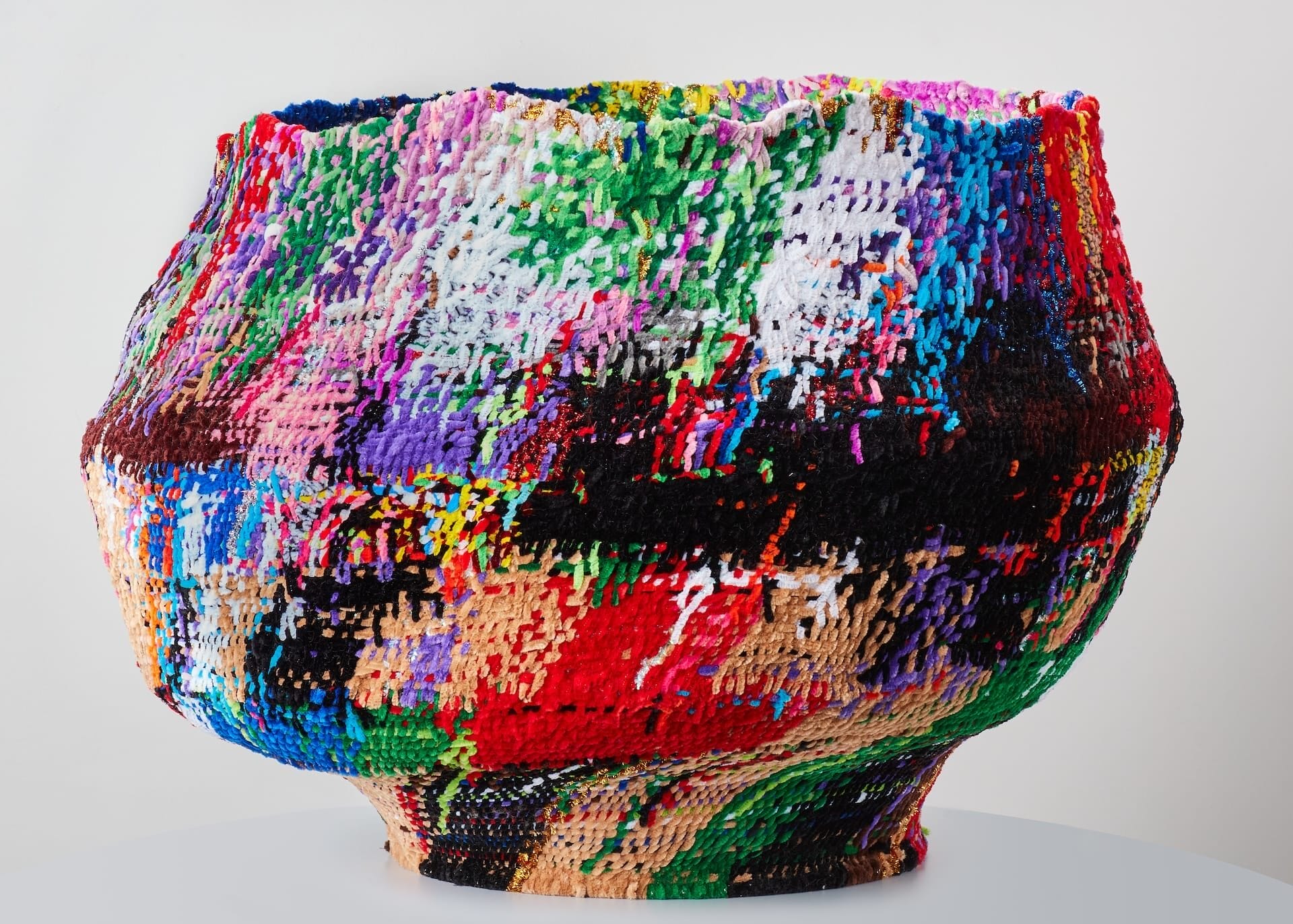
Among the standout works in the exhibition is Salvador Dominguez’s playful yet sophisticated series of vibrant pipe cleaner vessels, which injects a sense of pop-art whimsy and unconventional texture into the gallery space. These colorful creations find a compelling foil in the wall-mounted works of Eric Gushee, whose intricate wire sculptures utilize heavy industrial materials—specifically aircraft cable and black and stainless steel rebar ties—to create undulating, metallic formations that echo the rhythms of traditional basketry on a monumental, architectural scale.
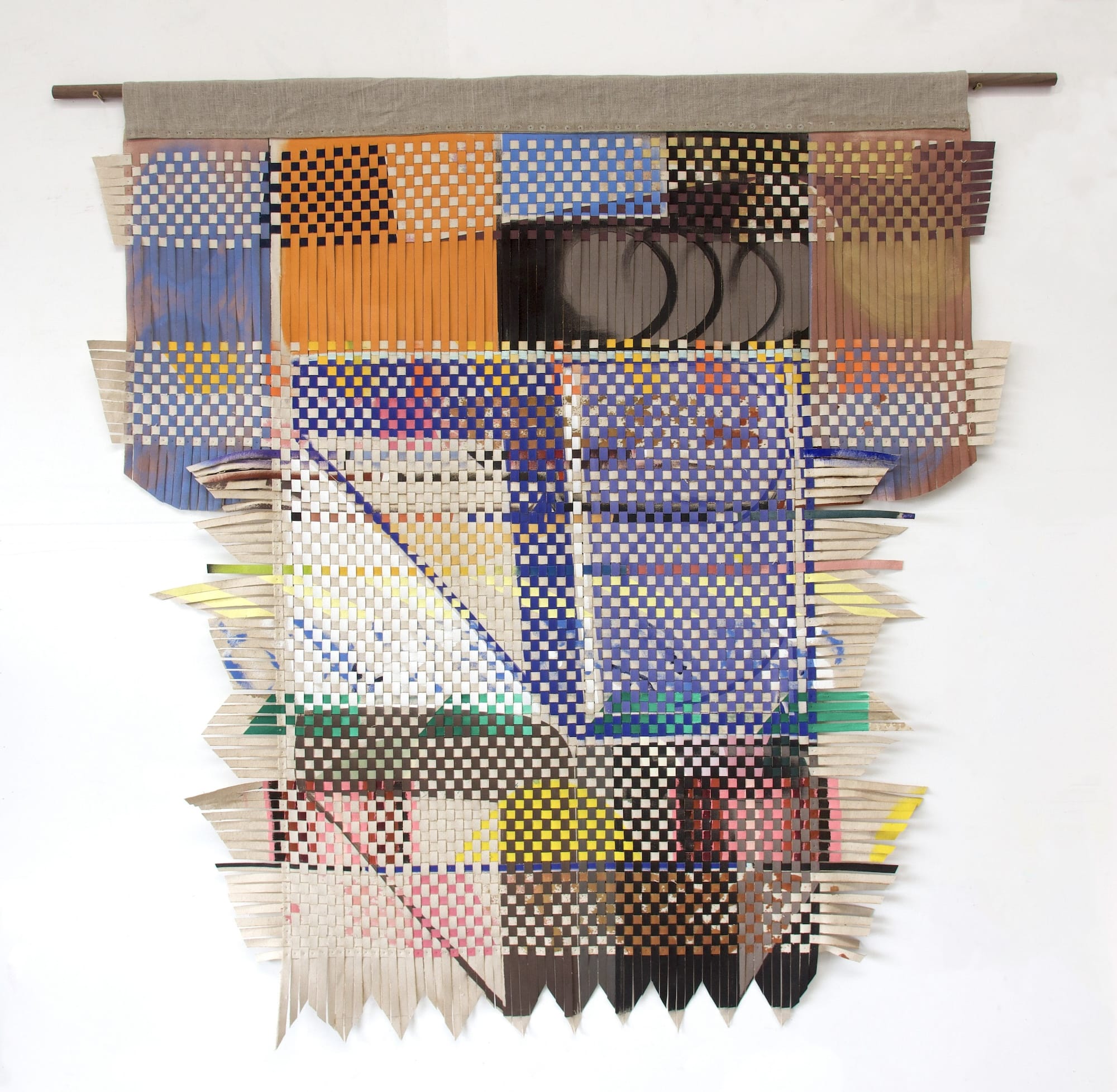
Similarly, Miguel Arzabe engages with structural interlacing through deconstructed paintings in his striking piece Fantasma (2026). Composed of woven acrylic on canvas and linen suspended from a walnut rod, Arzabe’s work blurs the line between two-dimensional painting and three-dimensional fiber art, literally dismantling the picture plane and stitching it back together using textile methodologies.
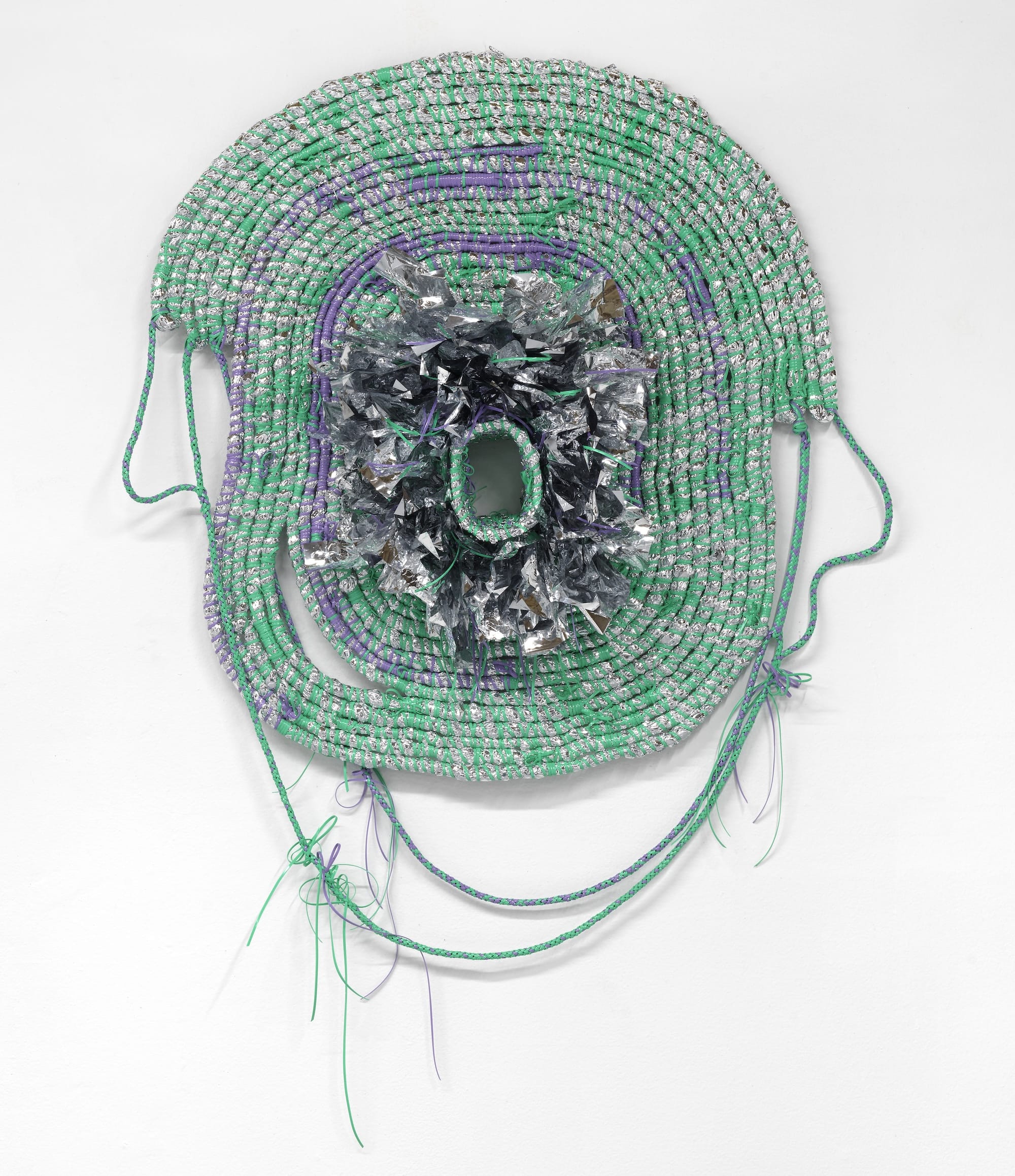
The breadth of material exploration continues with contributions from artists such as Dienke Dekker and José Santiago Pérez. Dekker’s geometric sculptures, including Spatial Rhythm 1 (Geometric Greens) (2025) and Spatial Rhythm 2 (Titan White/ Ultramarine) (2025), are constructed using acid-free Hahnemühle artist paper, lightfast Lascaux acrylic paint, Blauband cane, and waxed cotton cord. These precise, architectural forms play with color, light, and negative space, challenging the viewer’s understanding of structural integrity. Pérez turns toward poignant socio-political and personal narratives by utilizing unconventional industrial surpluses, crafting deeply textured wall sculptures out of Mylar emergency blankets and craft lacing, as seen in his evocative piece First Portal (Healer’s alter seven generations ago) (2021).
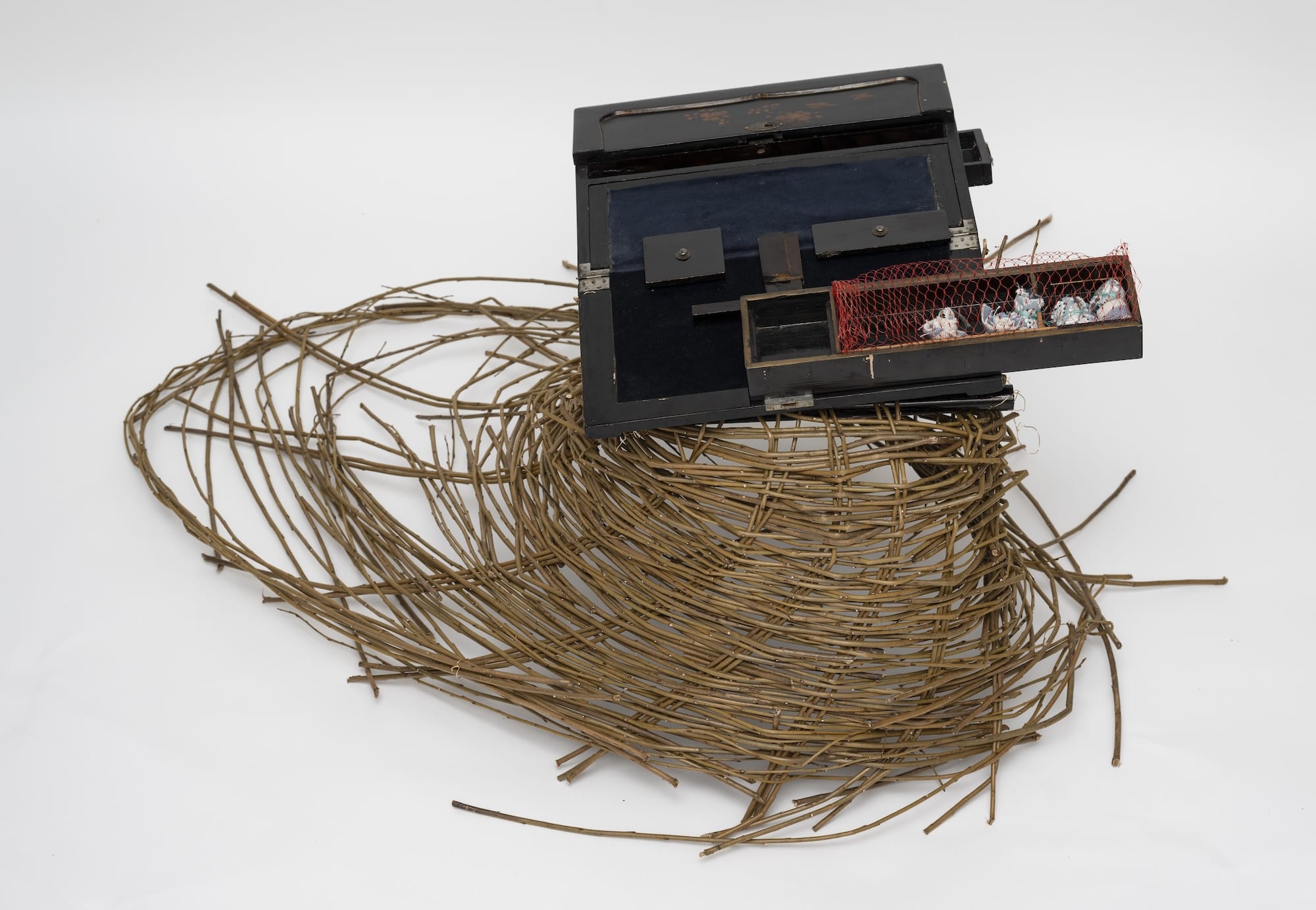
Colossal readers and contemporary art enthusiasts will also recognize the contributions of acclaimed creators Xanthe Somers and Sonia Barrett, who are among the diverse roster of international artists included in the exhibition. Somers’ large-scale glazed stoneware piece Never an end to holding (2026) commands attention with its voluminous form and intricate surface detailing, merging ceramic traditions with textile-like aesthetics. Meanwhile, Sonia Barrett’s inventive installation Desk 10 (2026) integrates a traditional Chinese lacquer desk with willow, netting, and fabric, blurring the boundary between furniture, sculpture, and historical artifact.
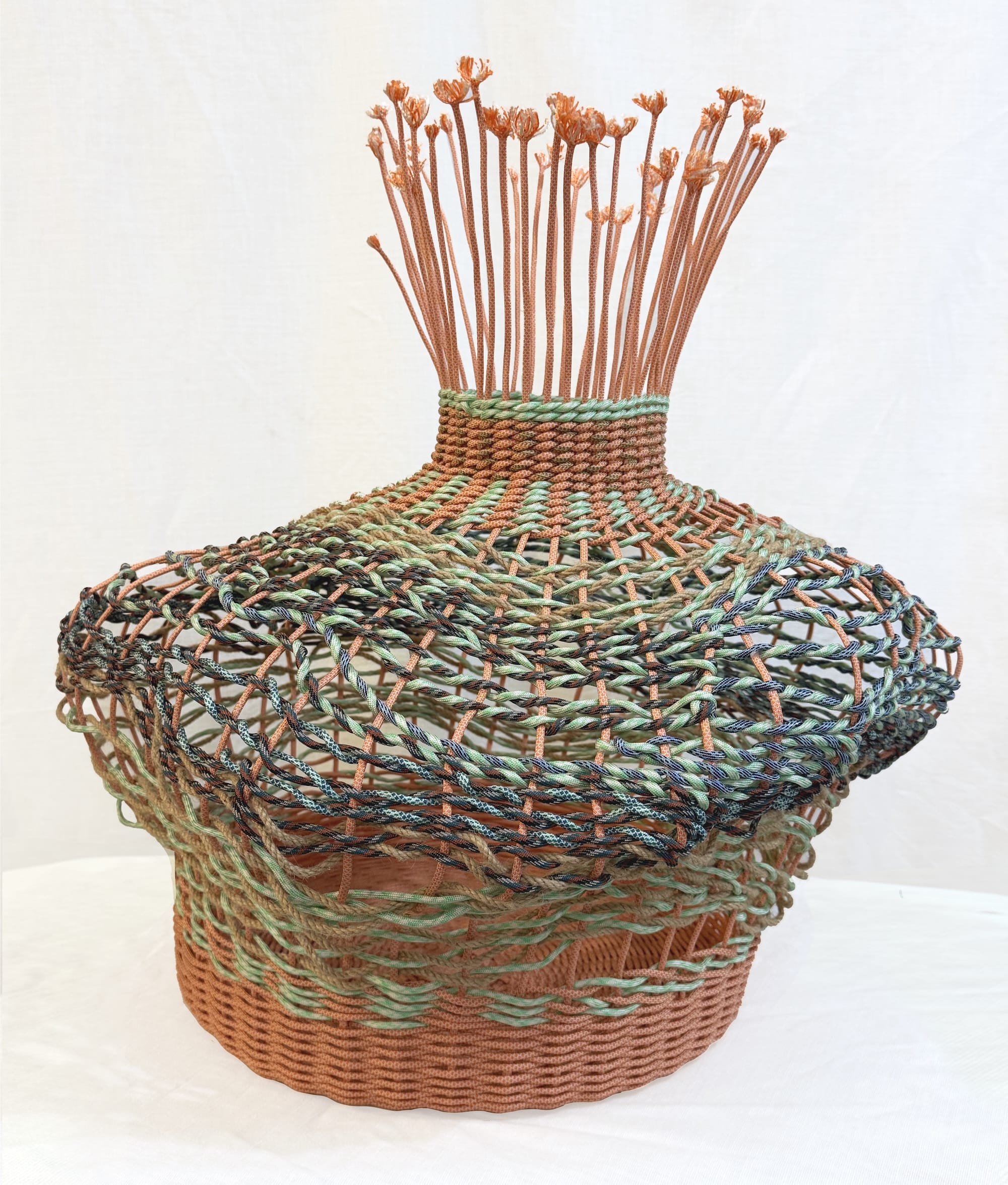
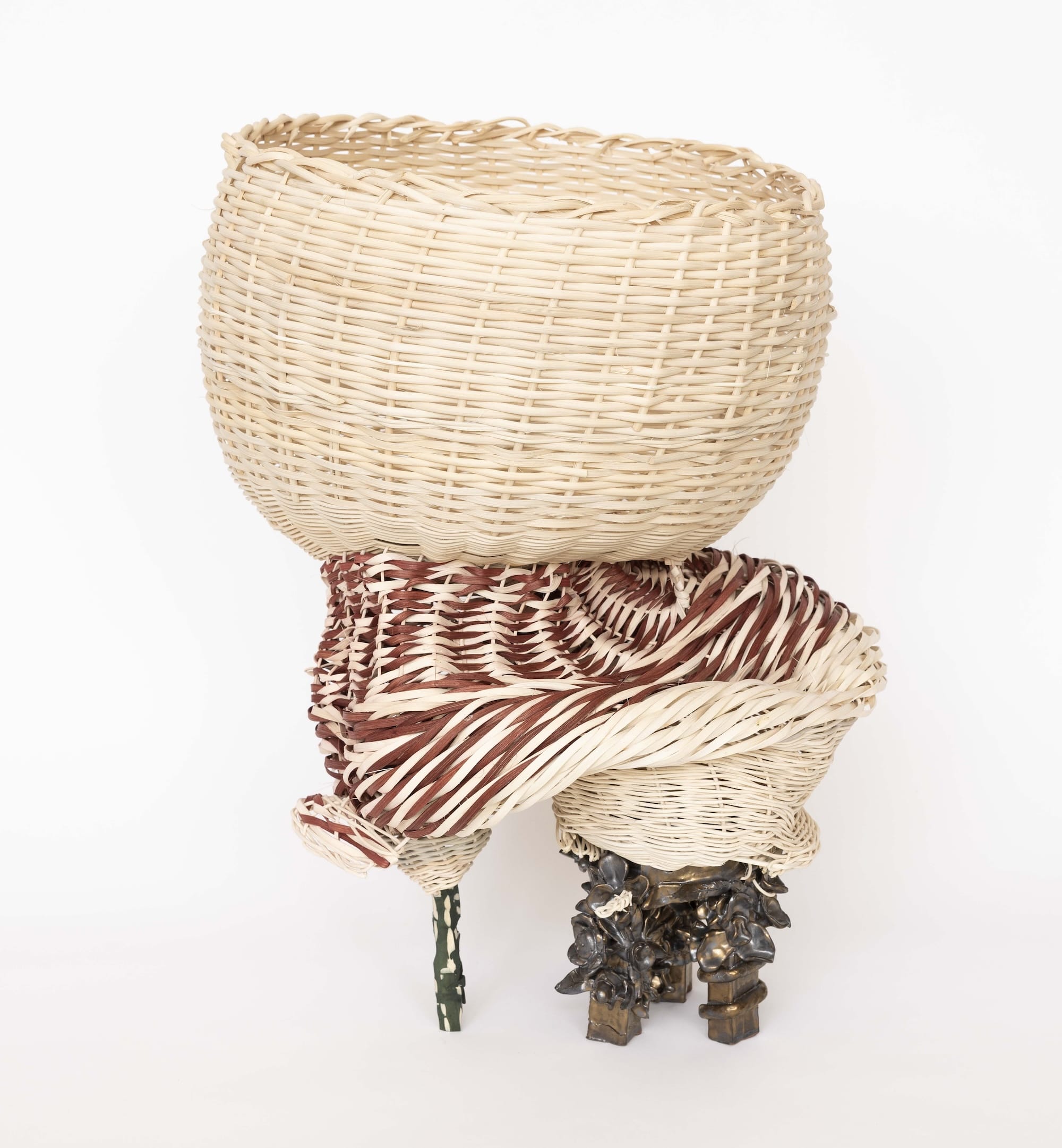
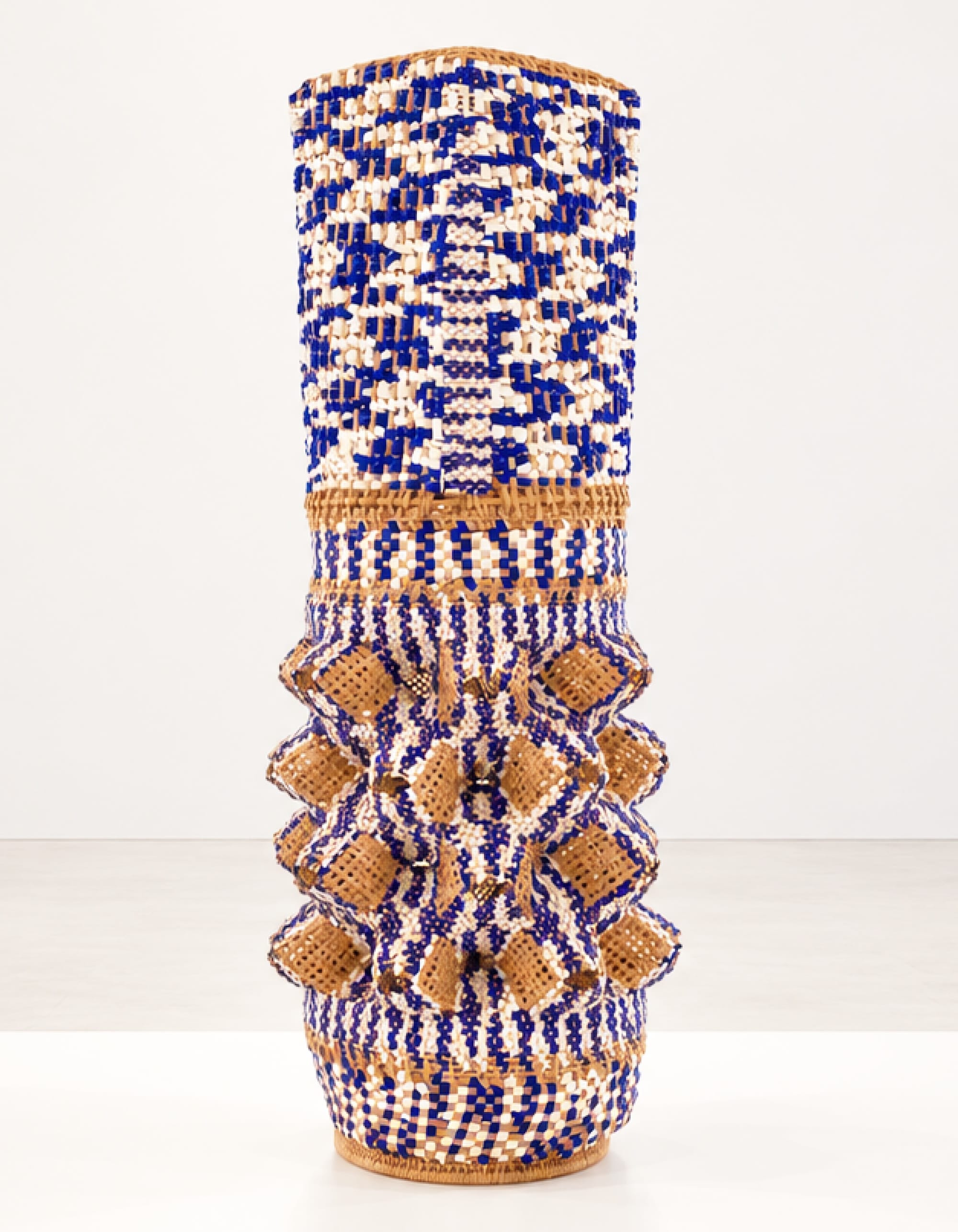
Curator Dee Clements also contributes her own sculptural work to the lineup, including Crone (2026), a striking piece made from ceramic, woven reed, dye, and dyed basswood that evokes subtle figurative qualities while honoring traditional reed-weaving techniques. Additional explorations come from artists like Jessy Nite, whose piece Peach Basket (2026) employs paracord and hemp to form a wide, scrunched body featuring a distinct neck with individual tines reaching upward, further subverting the archetype of the traditional container.
Interwoven: Basketry As Expanded Practice opens on November 29 and runs through January 9 at the Mindy Solomon Gallery in Miami. By gathering artists who push the structural and conceptual limits of weaving and coiling, the exhibition offers a timely reminder that ancient human techniques can continually reinvent themselves within the landscape of contemporary art.