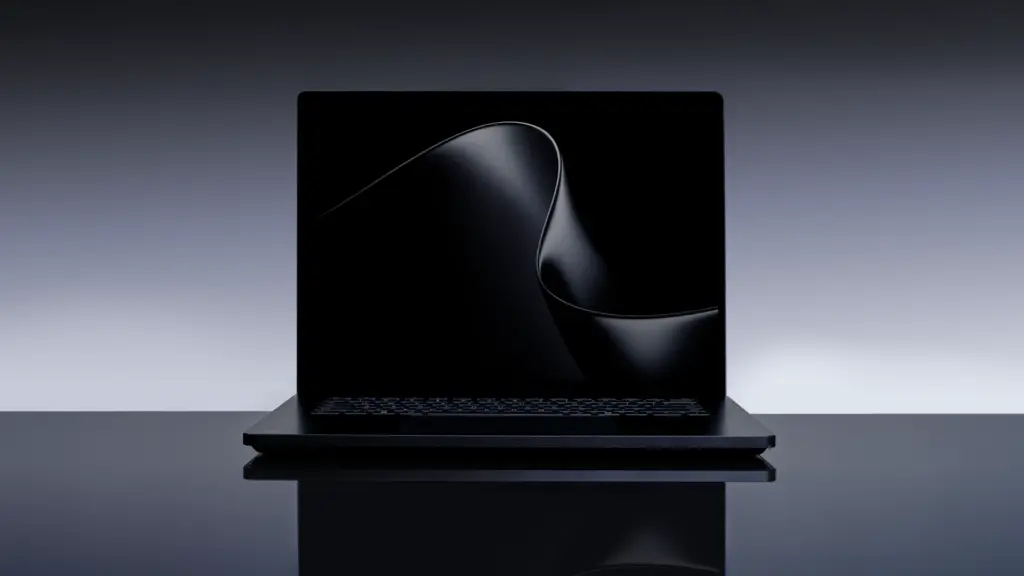
Microsoft has officially announced the pricing and release schedule for its highly anticipated Surface Laptop Ultra, signaling a direct and aggressive challenge to Apple’s long-standing dominance in the high-end creative professional market. With pre-orders now officially open starting at $2,599, the technology giant has confirmed that shipments are scheduled to begin on October 16. The launch marks a pivotal moment for Microsoft as it attempts to capture the loyalty of designers, 3D artists, video editors, and software developers who have traditionally gravitated toward macOS devices.
For years, the creative industry has viewed Apple’s MacBook Pro line as the gold standard for portable performance. The combination of high-resolution displays, optimized creative software, and, more recently, Apple’s unified memory architecture has made the MacBook Pro the default choice for demanding workflows. With the Surface Laptop Ultra, Microsoft is aiming to disrupt this status quo. The company is pitching the new laptop as a direct rival that matches or even exceeds the MacBook Pro in terms of raw processing power, graphics capability, and overall portability, specifically tailoring the machine to the needs of creators who run highly intensive, multi-application workflows.
At the heart of the Surface Laptop Ultra’s appeal to creative professionals is how the machine manages its system memory, a feature that addresses one of the most common performance bottlenecks in mobile computing. Traditional PC architectures typically split memory resources between the system RAM and the dedicated video memory (VRAM) on the graphics card. This segregation often forces the system to constantly copy data back and forth between the CPU and GPU, creating latency and limiting the complexity of the assets that can be processed at any given time.
The Surface Laptop Ultra bypasses this limitation by utilizing an innovative RTX Spark chip. This specialized hardware allows the processor and the graphics subsystem to share a single, unified pool of up to 128GB of memory, rather than dividing resources between the two components. In practical terms, this unified memory architecture means that complex 3D scenes, massive high-resolution textures, and long, multi-layered video timelines that would typically overwhelm the dedicated graphics memory of a standard laptop can run smoothly. By allowing the GPU direct access to a massive pool of shared memory, Microsoft is promising a workflow experience where artists no longer have to compromise on the scale or detail of their projects due to hardware limitations.
The real-world implications of this architectural choice were a major focus of Microsoft’s official showcase. To demonstrate the capabilities of the Surface Laptop Ultra, the company highlighted a complex, multi-stage creative workflow that would typically bring a standard portable workstation to a crawl. In the demonstration, a creator constructed a highly detailed 3D scene in Blender, passed the assets directly into Unreal Engine for real-time rendering and environment design, and then transitioned the project into Adobe Photoshop for final compositing and post-processing. According to Microsoft, this entire multi-application pipeline took only hours to complete, compared to the multiple days that such a process would traditionally require on older or less integrated hardware.
In addition to this sequential workflow demo, Microsoft made bold claims regarding the laptop’s raw multitasking capabilities. The company asserted that the Surface Laptop Ultra is powerful enough to run heavy software development code, render a high-resolution film in DaVinci Resolve, and run a demanding AAA video game all at the same time. While these extreme multitasking claims are designed to showcase the absolute upper limits of the hardware, they also highlight Microsoft’s confidence in the thermal management and processing efficiency of the new device. However, as is always the case with manufacturer-provided demonstrations, independent and rigorous real-world testing will be required to verify how the laptop performs when subjected to sustained, heavy workloads, such as rendering a packed Premiere Pro timeline or compiling massive codebases under real-world conditions.
Beyond its performance in traditional rendering and design applications, the Surface Laptop Ultra is being positioned as a powerful platform for the rapidly evolving field of artificial intelligence. Through a close collaboration with Nvidia, Microsoft has designed the laptop to run large AI models directly on the local hardware, rather than relying on cloud-based processing. According to Nvidia, the platform is capable of running local AI models containing up to 120 billion parameters.
For digital artists, programmers, and researchers who are increasingly incorporating machine learning and generative AI tools into their daily routines, this local processing capability represents a significant shift in how work is done. By running these massive models directly on the machine, creators can avoid the latency, recurring subscription costs, and potential data privacy concerns associated with sending sensitive project files to external cloud services. To back up these capabilities, Microsoft has quoted an AI performance figure of up to 1 petaflop. While this is a theoretical manufacturer specification that has yet to be verified by independent hardware analysts, it underscores the massive computational power that Microsoft and Nvidia have attempted to pack into a portable form factor.
This ambitious integration of high-performance hardware, unified memory, and local AI processing is being framed by Microsoft as a revolutionary laptop ecosystem. To achieve this, the company has drawn on partnerships with some of the biggest players in the creative technology space, ensuring that industry-standard software suites are optimized to take full advantage of the unique hardware architecture. The success of the Surface Laptop Ultra will likely depend on how well these partnerships translate into tangible software performance, as creative professionals are notoriously sensitive to software stability and optimization.
The announcement of the Surface Laptop Ultra raises critical questions for the creative community, particularly regarding its starting price of $2,599. While this represents a significant financial investment, it is a price point that positions the device squarely against high-end configurations of the MacBook Pro. For professional creators who require maximum memory configurations for heavy 3D modeling, virtual production, and high-end video editing, the ability to access up to 128GB of shared memory on a portable Windows machine could make the Surface Laptop Ultra a highly compelling alternative to Apple’s ecosystem.
With pre-orders currently active and the official shipping date set for October 16, the industry will not have to wait long to see if Microsoft’s latest hardware can deliver on its immense promise. If the Surface Laptop Ultra performs as advertised in independent benchmarks and real-world studio environments, it could very well establish itself at the top of the market for mobile creative workstations, offering a level of flexibility and raw power that has previously been difficult to achieve on the Windows platform.